

PFAS Water Filter Claims: A UK Buyer’s Evidence Checklist
PFAS evidence guide / UK
A practical way to check the exact cartridge, named substances, test conditions, capacity and maintenance evidence before you buy.

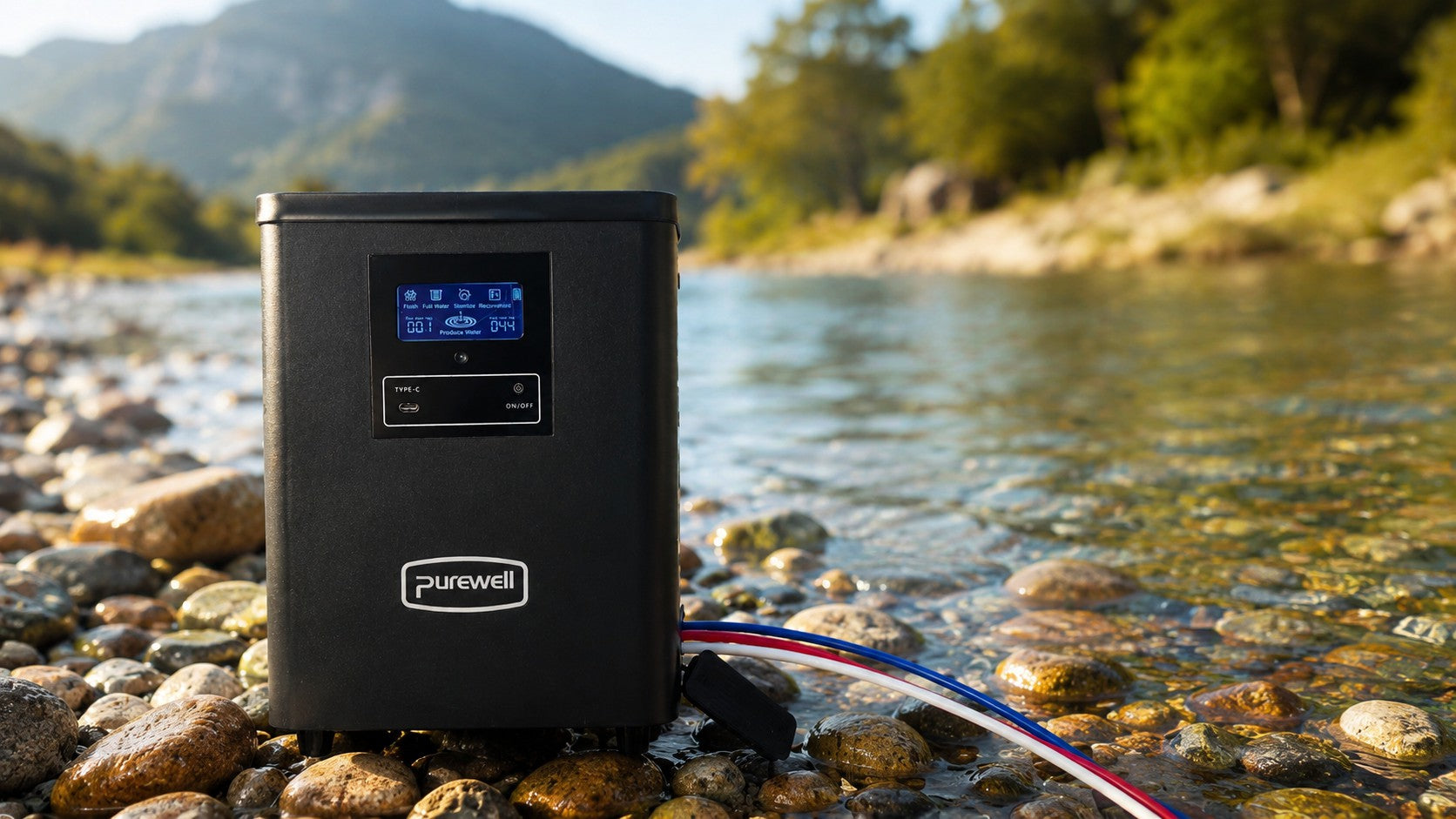
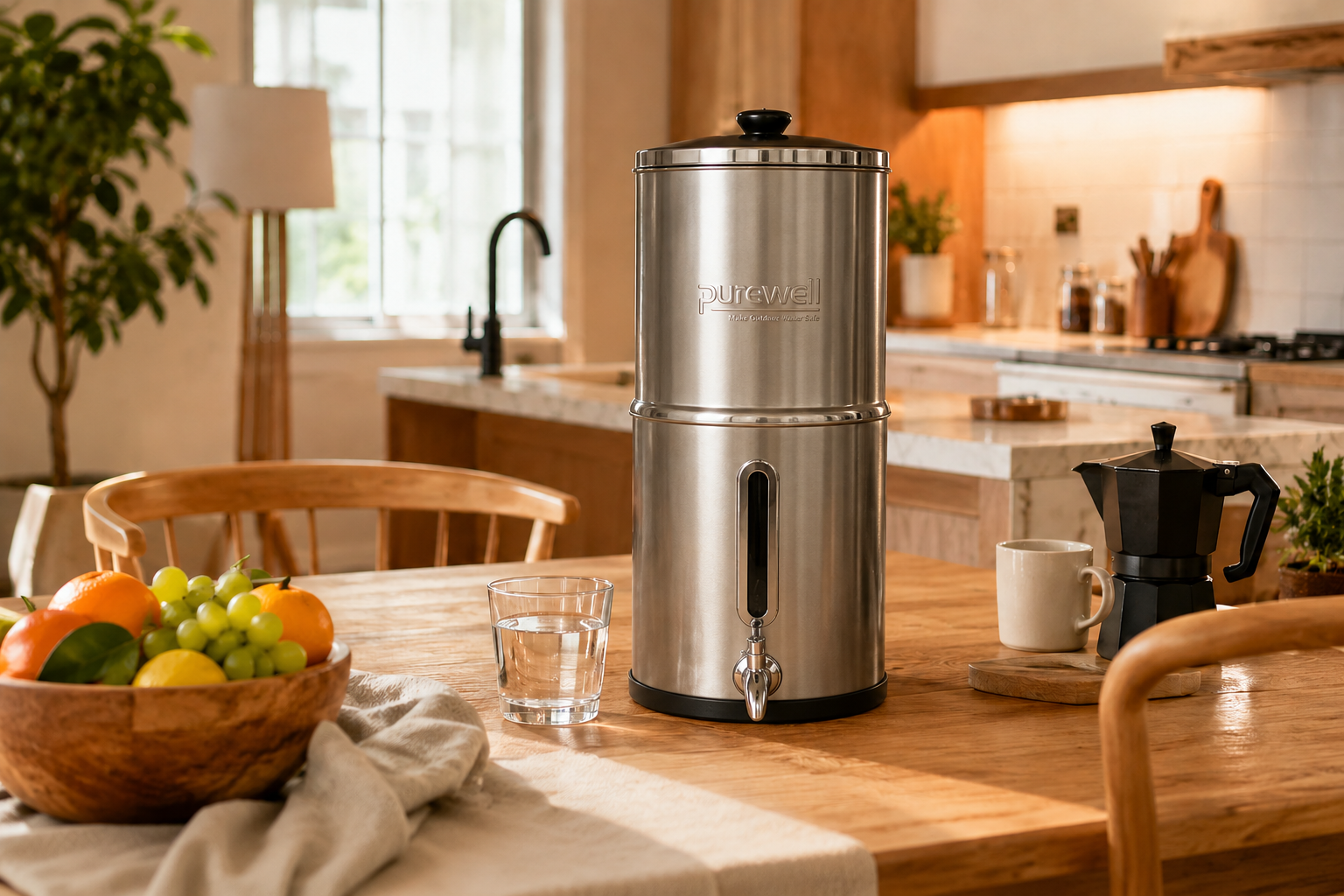
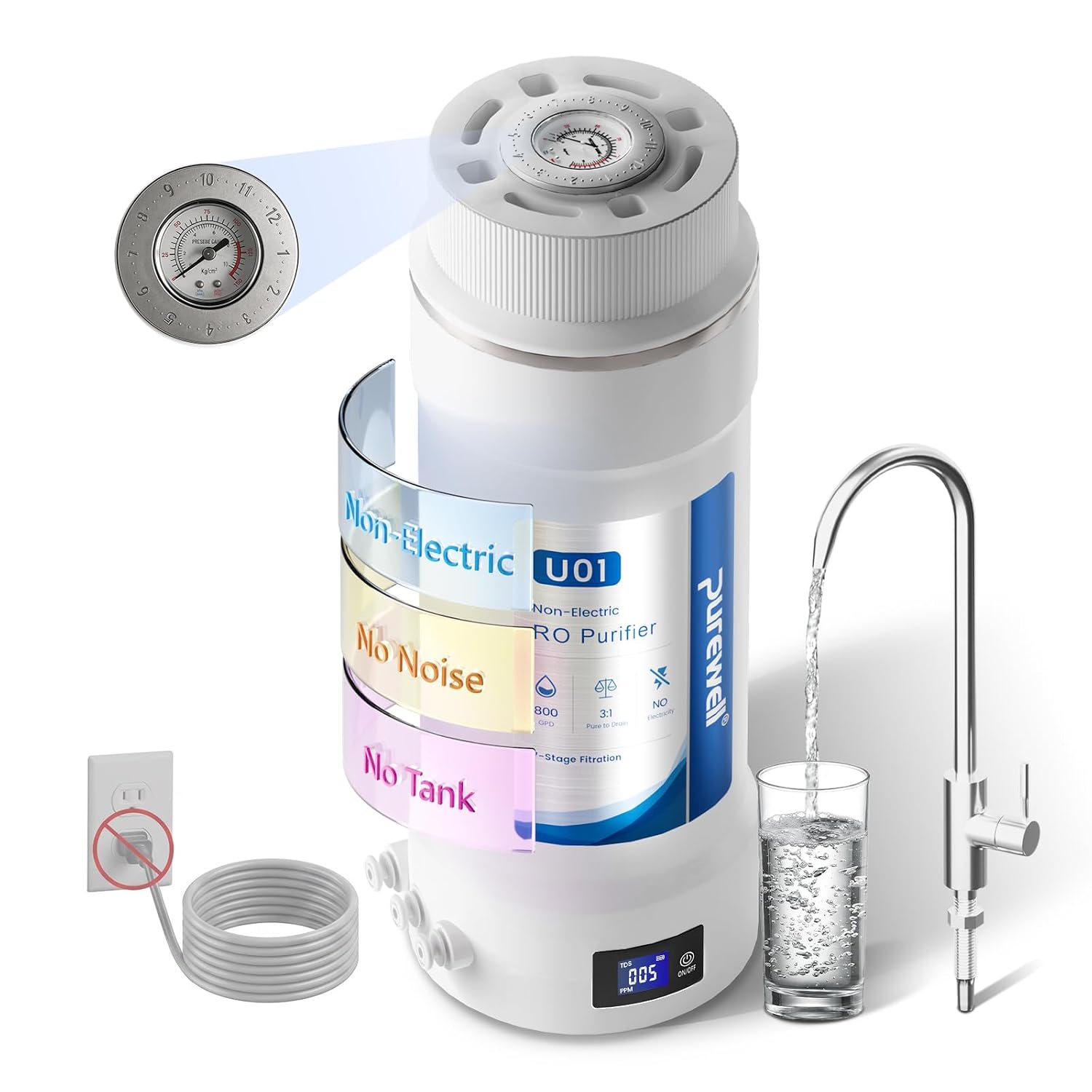
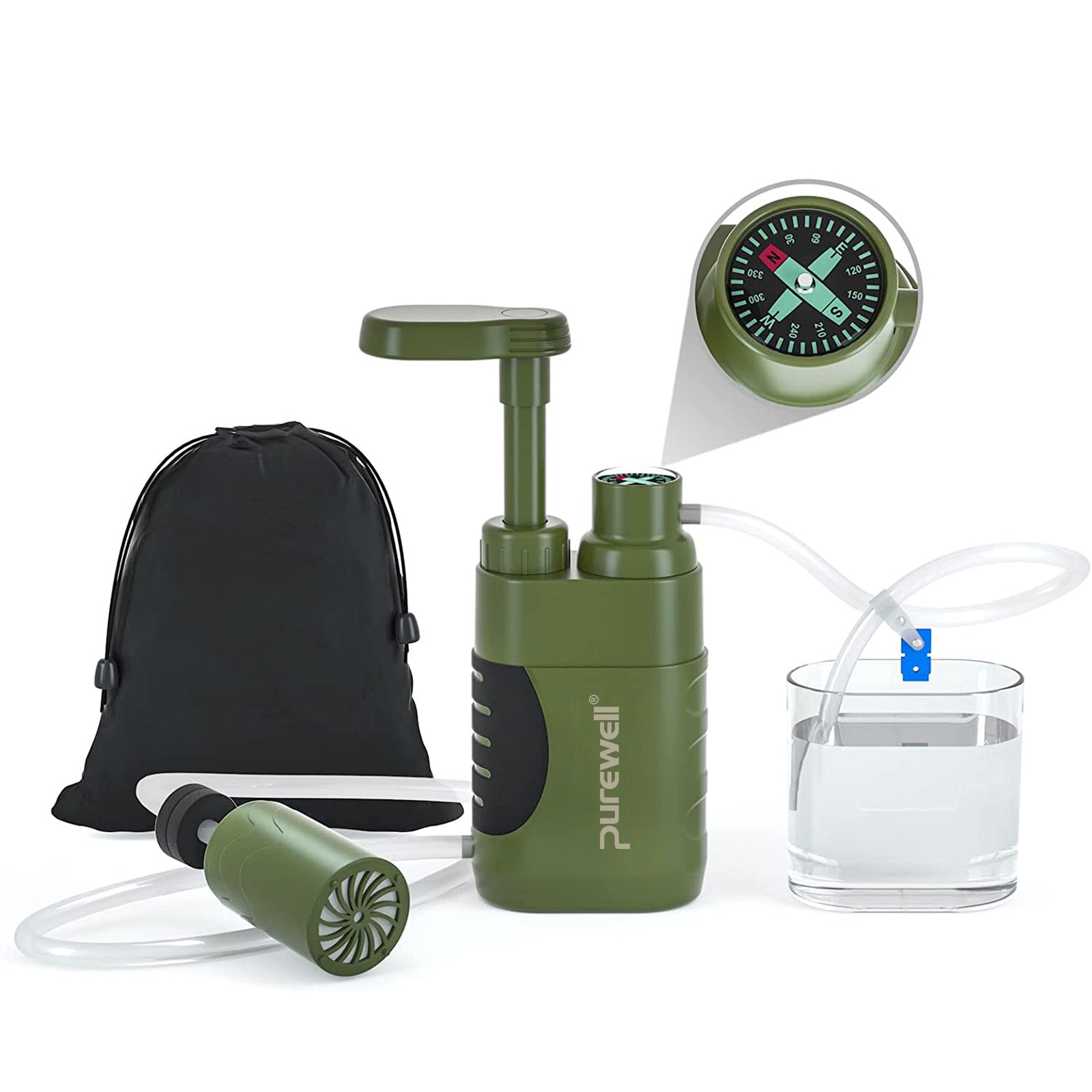
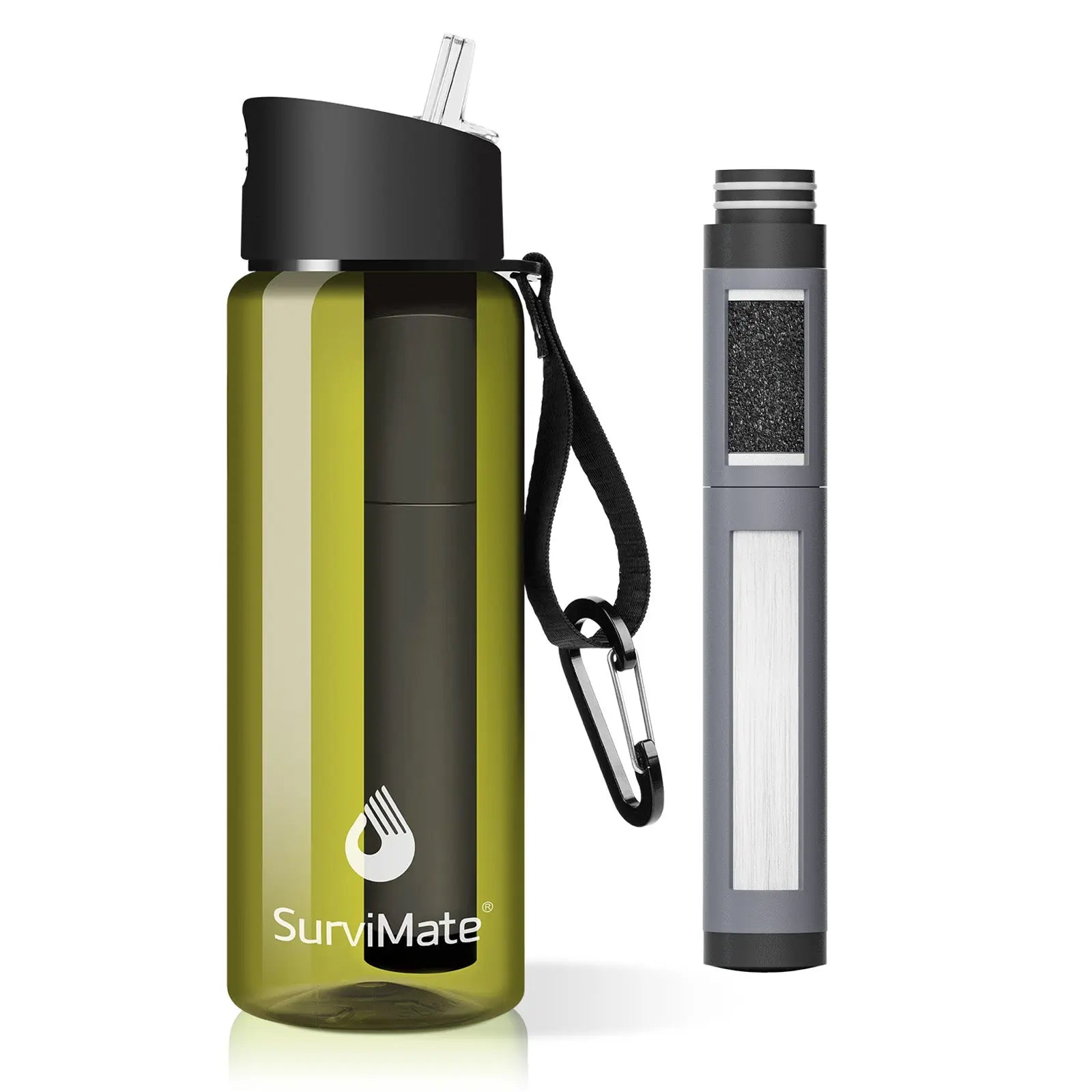
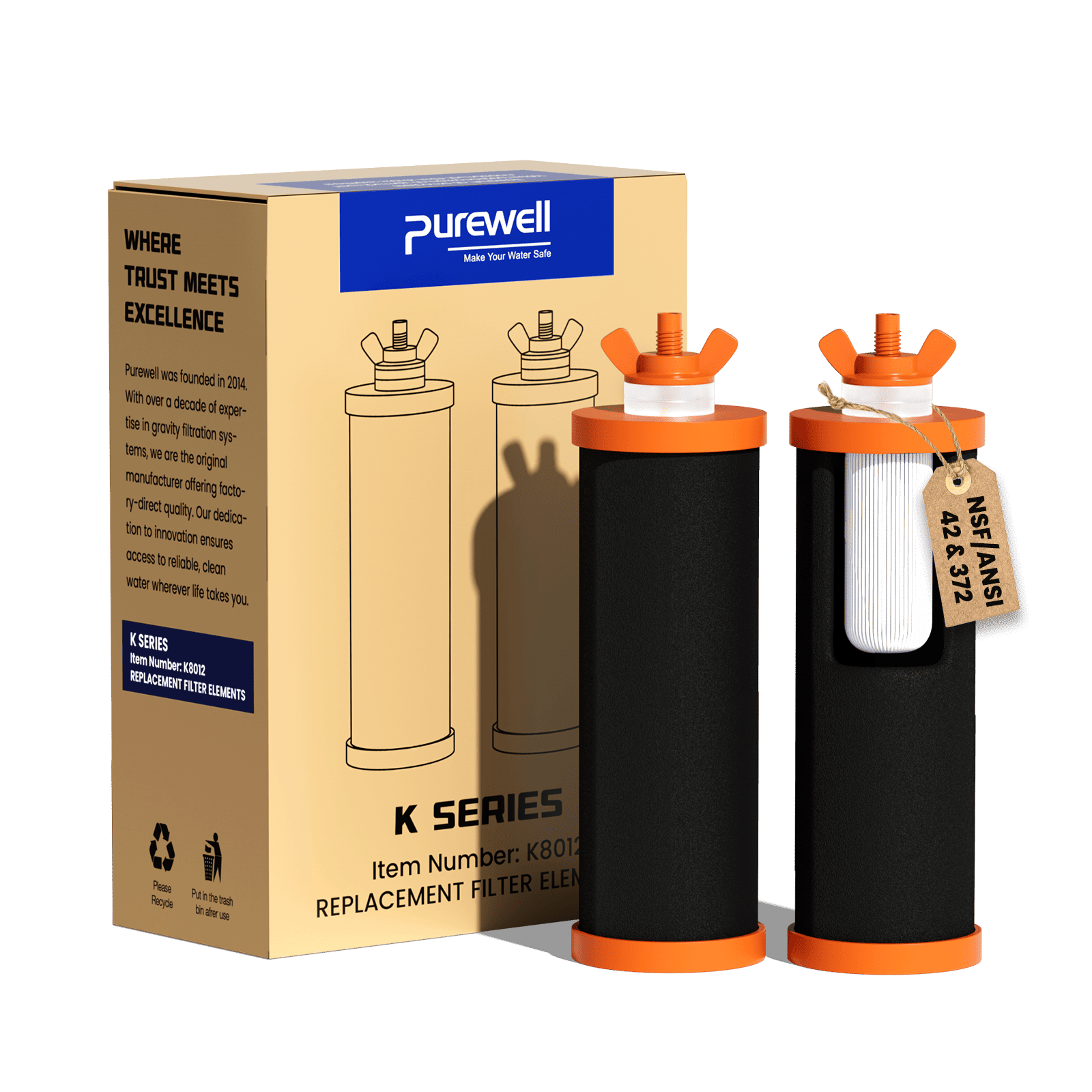
Illustrative Purewell product setting. Product appearance may vary by configuration.
A filter can have credible evidence for reducing certain PFAS without proving that it removes every PFAS in every home. Start with the exact cartridge and the named claim, then read how the product was tested and when it must be replaced.
What the UK PFAS guidance does—and does not say
PFAS are a large family of persistent chemicals. PFOS and PFOA are two members of that family, so a result for one compound should not be presented as a result for every PFAS.
The Drinking Water Inspectorate says there are currently no statutory PFAS standards for drinking water in England and Wales. Its precautionary guidance uses a tiered approach and a guideline value of 0.1 micrograms per litre for the sum of 48 named PFAS. DWI also says public drinking-water supplies in England and Wales are safe and that detecting traces as monitoring expands does not by itself show that water has been unwholesome.
The UK Government published a cross-government PFAS Plan in February 2026 and updated it in August. The plan covers sources, pathways and exposure reduction. It is policy context; it is not a certification programme for household filters.
These distinctions matter when reading a product page. A filter claim should be evaluated against the evidence for the exact product, not inferred from a news report, a river-water benchmark or a general description of filter media.
For the local news context, read our Thames Water PFOS trial explainer. For household monitoring, see PFAS in London tap water.
Six checks for any PFAS filter claim
-
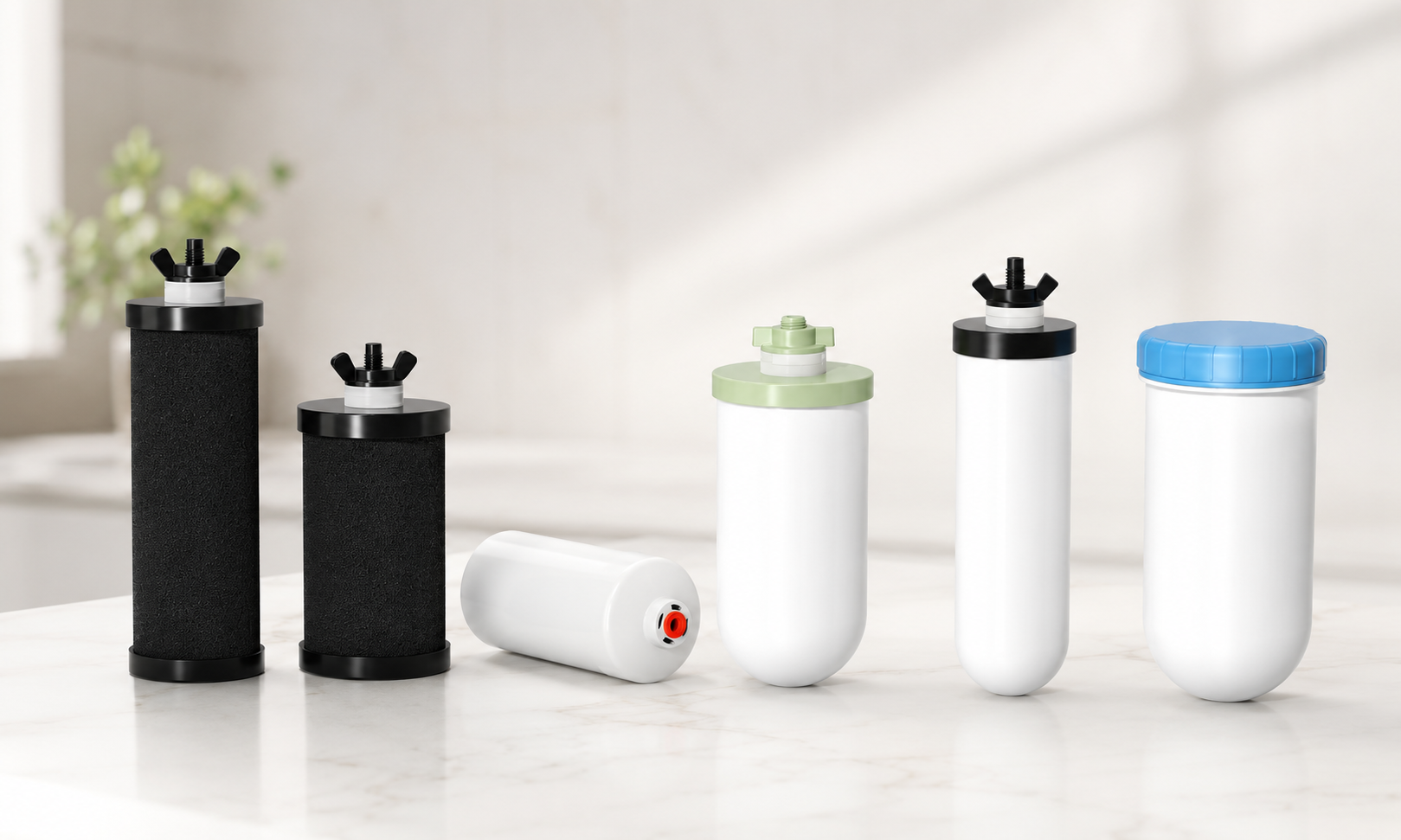
Identify the exact cartridge.
Record the housing, cartridge model, number of cartridges and selected variant. Evidence for one option does not automatically cover another cartridge sold in the same system. -
Find the named PFAS.
Does the evidence name PFOA, PFOS, a stated PFAS total or another defined group? “Forever chemicals” is a topic label, not a measurable performance claim. -
Label the evidence correctly.
Is it a certification listing, a laboratory test report, a materials statement or marketing copy? “Tested to” and “certified to” do not mean the same thing. -
Read the test conditions.
Look for the incoming challenge concentration, water chemistry, flow, number of elements, test method and reported treated-water result. A percentage without conditions is difficult to compare. -
Check the tested capacity.
A strong initial result does not establish performance forever. Find the volume or time covered and whether the result changed across the test. -
Follow the replacement rules.
Maintenance is part of performance. Source-water quality, usage and incorrect preparation can shorten practical service life or slow flow.
Certification, test report and materials compliance
| Evidence type | What it can tell you | What to verify |
|---|---|---|
| Certification listing | A certification body lists a product and specific scope | Exact model, standard and named reduction claim |
| Laboratory report | Results for the tested sample and stated conditions | Sample identity, method, challenge level, volume and result |
| Materials or lead-content compliance | Information about components in contact with drinking water | Do not confuse it with removal of lead or PFAS from incoming water |
| Media or pore-size description | How the cartridge is constructed | It does not replace a model-specific performance result |
For a detailed explanation of standards language, use our water filter certification guide.
Why capacity matters more than a headline percentage
PFAS treatment is not only about whether reduction occurred at the start of a test. Buyers also need to know how much water was treated while the claim remained within the reported result.
Do not reuse an unrelated lifetime
A cartridge may have different capacities for different substances. Do not treat the largest number on a product page as a universal PFAS service life.
Your water affects upkeep
Hard water, sediment and other source-water conditions may affect flow or service life. A slower filter is a maintenance signal, not proof that a PFAS claim has failed or remains valid.
Our guide Does a water filter remove PFAS? compares activated carbon, appropriate ion-exchange media and reverse osmosis at the technology level. Use the checklist on this page to move from a technology category to a specific product decision.
Move from a PFAS question to the right product evidence
Use these links to compare system formats, replacement parts and supporting documents. A collection or product name is not proof of PFAS reduction. Before buying for a PFAS concern, match the exact cartridge and configuration to a relevant report or certification listing.

Start with the exact system and cartridge
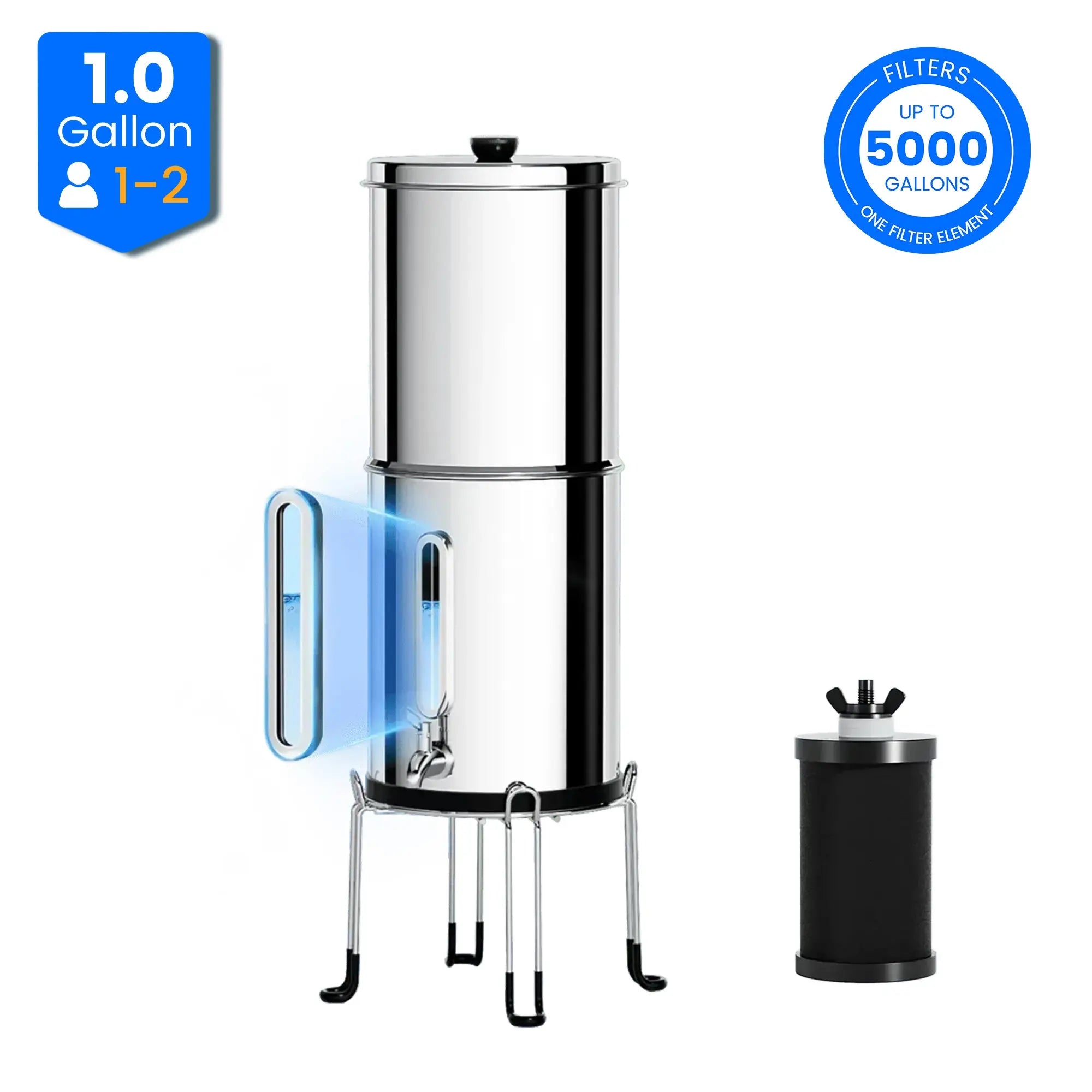
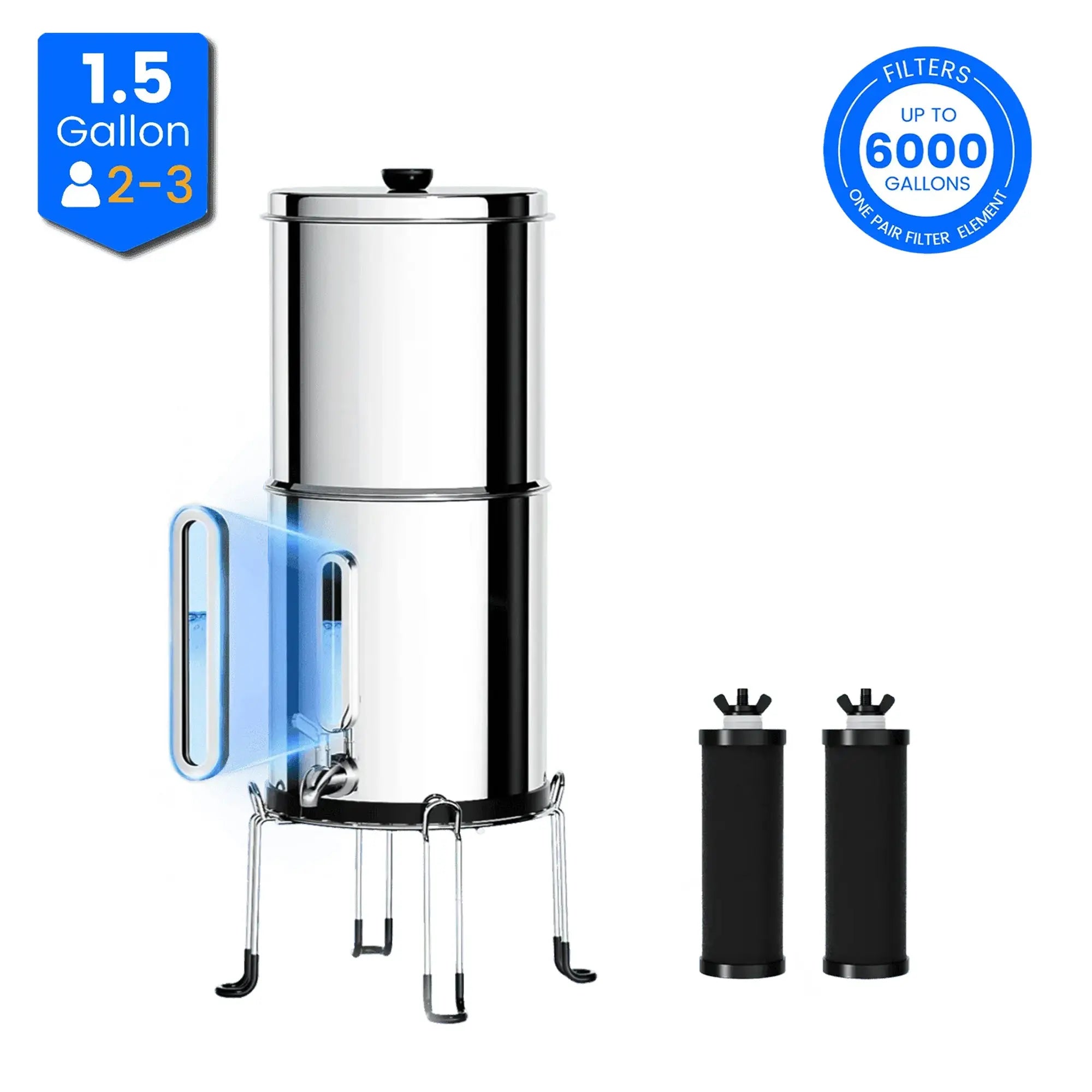
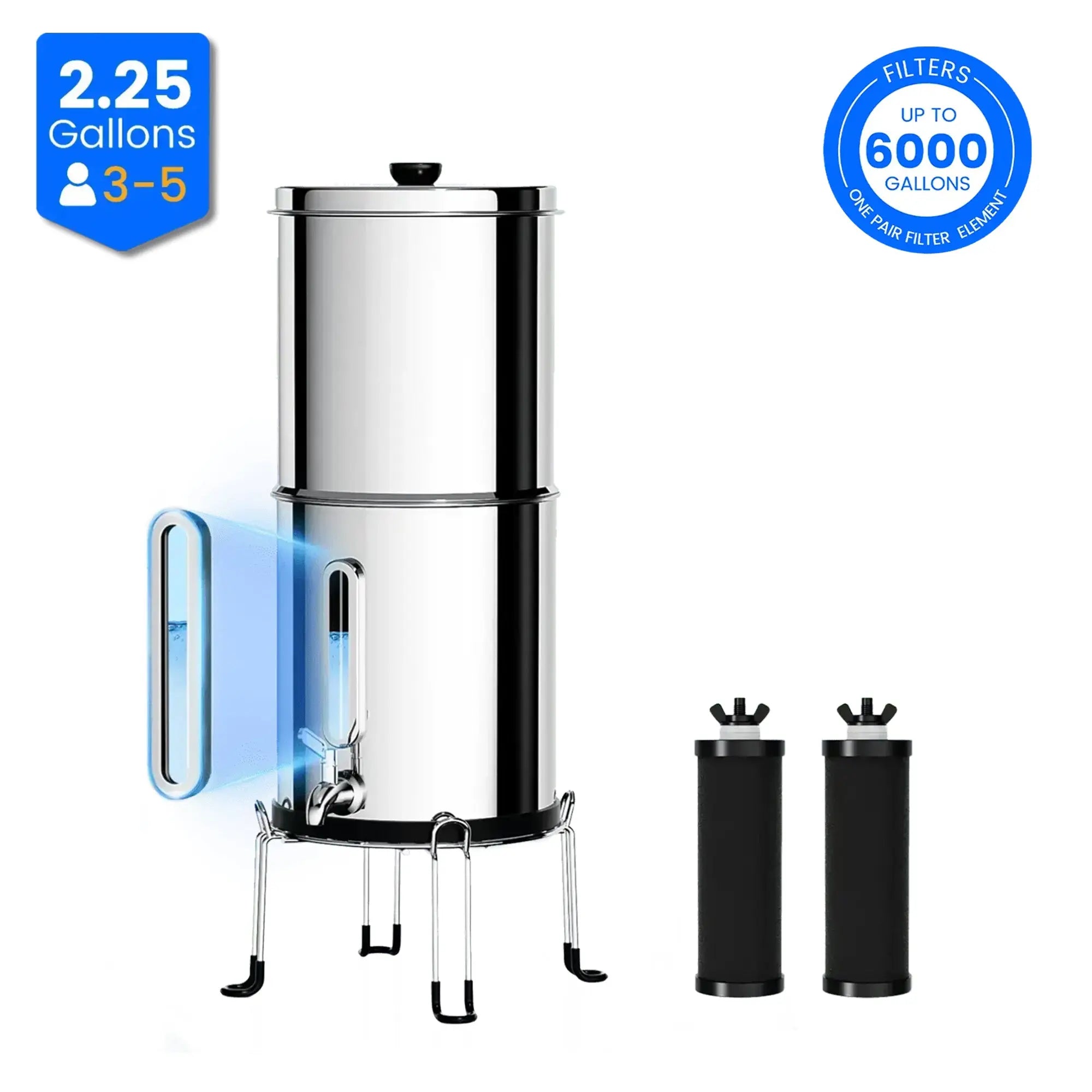
The K Series 2.25-gallon and 1.5-gallon systems have their own product pages. Variant names and cartridges differ, so record the selected configuration before checking evidence.
Compare UK gravity systems →K Series 2.25 gallon
View the current UK product page, available cartridge choices, price and delivery information.
View the 2.25-gallon system →K Series 1.5 gallon
Compare the smaller countertop format. Check the selected cartridge separately from the vessel size.
View the 1.5-gallon system →Replacement filters
Confirm fit, preparation and replacement instructions for the exact cartridge installed in your system.
Shop replacement filters →Reports and certificates
Check whether a document names the exact product, cartridge, substance, conditions and tested capacity.
Open the evidence library →See a Purewell gravity system in use
This short video gives a quick visual introduction to the product. Use it for orientation alongside the instructions supplied with your exact system and cartridge.
The video demonstrates product use; it is not laboratory evidence of PFAS reduction. If playback is unavailable, watch the video on YouTube or browse the official Purewell channel.
Five ownership questions before checkout
Performance evidence should sit beside the practical details that decide whether you will maintain the system correctly.
- Which replacement cartridge fits this exact configuration?
- Is the replacement currently available for delivery to my postcode?
- What preparation, flushing or conditioning is required before first use?
- What should I do if flow becomes slower, and when should I replace rather than clean?
- What is the complete first-year cost, including the system, initial filters, replacements, delivery and any applicable charges?
These questions reflect recurring ownership concerns seen in customer feedback: setup clarity, slow flow, replacement availability, leakage caused by assembly or parts, and confusion about TDS. They should be answered directly in instructions and product support rather than hidden behind a long contaminant list.
A conventional gravity filter may not be designed to lower TDS. A TDS meter cannot, by itself, verify PFAS reduction. Likewise, a low TDS reading does not identify which substances were reduced.
Frequently asked questions
Does activated carbon remove every PFAS?
No universal claim should be made from the media name alone. Performance varies by PFAS, cartridge design, water conditions, contact time and capacity. Check the evidence for the exact cartridge.
Does a lower micron rating prove PFAS reduction?
No. PFAS are dissolved chemicals, so a particle-size statement is not a substitute for relevant adsorption, ion-exchange or membrane performance evidence.
Can I use a TDS meter to test for PFAS?
No. A consumer TDS meter estimates dissolved ionic content; it does not identify PFAS and cannot validate a PFAS reduction claim.
Should I buy a filter because of the Thames Water story?
First separate pilot or source-water information from the drinking water supplied to your address. If you still want treatment for a defined concern, compare model-specific evidence and upkeep.
What if the seller will not provide the full evidence?
Treat the claim as unverified for your decision. Choose a configuration whose model, conditions, capacity and maintenance information you can examine.