

Water Filter Certifications: NSF 42, 53, 58 & 372
Evidence guide / US edition
What NSF/ANSI 42, 53, 58 and 372 tell you—and how to verify the claim on the filter you actually buy.
Match the model, the standard and the specific claim. One certification number does not cover every contaminant.
What do 42, 53, 58 and 372 mean?
| Standard | What it addresses | What to check |
|---|---|---|
| NSF/ANSI 42 | Aesthetic effects, such as chlorine taste and odor | The specific reduction claims listed for the model |
| NSF/ANSI 53 | Specific contaminants with health effects | The named substance—not just the number 53 |
| NSF/ANSI 58 | Reverse osmosis drinking-water systems | The listed system and applicable performance claims |
| NSF/ANSI/CAN 372 | Lead content in drinking-water system components | Materials compliance; this is not proof of lead removal |
The numbers are not quality scores. A higher number does not make a filter better for your water. Start with the treatment requirement and read the actual model listing.
Tested, certified and made with certified components
A laboratory test report
Describes the sample tested, the method and reported results. Read its scope before applying the result to a different cartridge or complete system.
A certification listing
Identifies the certified product and scope. Find the exact model and claims in the issuing certification body’s directory.
Why wording matters
“Tested to” a standard and “certified to” a standard make different claims. A marketing phrase is not a substitute for the underlying document. Likewise, a certified component does not by itself establish every claim made for the assembled system.
When a seller gives you a logo or a cropped certificate, ask for the full listing or document. It should be possible to connect the item you buy to the model named in the evidence.
A five-step check before you buy
- Write down the exact configuration. Record the housing name, cartridge model and number of installed elements. Save the selected variant, not just the collection page.
- Identify the evidence type. Is it a test report, certification listing or materials statement? Label it correctly.
- Open the issuing body’s directory. Search by manufacturer and model. Check spelling, model suffixes and the applicable standard.
- Read the specific claim. Match the substance you care about with the listed reduction claim and any conditions or limits.
- Keep the maintenance instructions. Record the replacement criteria and source-water limitations for that filter. Save the evidence and the date you checked it.
System: ___ · Cartridge: ___ · Substance: ___ · Evidence type: ___ · Listing/report link: ___ · Capacity and conditions: ___ · Checked on: ___
A document that is difficult to locate is a reason to ask for clarification. It is not enough evidence to declare a product either certified or uncertified.
Apply the check to PFAS, fluoride and lead
PFAS: look for the particular reduction claim
EPA recommends checking certifications for PFAS reduction under NSF/ANSI 53 or 58 and matching the product to the type of PFAS of concern. Certification is not a blanket promise to remove every PFAS or to achieve every regulatory threshold. Use EPA’s guide and links to certification directories.
Fluoride: identify the actual cartridge
A filter range may include a separately named fluoride option. Do not transfer that option’s claim to a standard carbon cartridge. Ask for model-specific evidence and read the tested capacity and conditions before making a purchasing decision.
Lead: separate materials from treatment
NSF/ANSI/CAN 372 concerns lead content in components. It does not demonstrate that the filter reduces lead already present in incoming water. A lead-treatment claim needs relevant performance evidence for the actual configuration. Check the scope of 372.
How to read a test report without overreading it
Begin with the sample identification and report date. Then find the test method, incoming challenge level, reported treated-water result, volume tested and any notes. If the report identifies only a cartridge, do not silently relabel it as evidence for every system sold by the brand.
Ask what the result covers
Was one substance tested or several? Does the sample match the current product? Is the result tied to an initial test or a stated treatment volume?
Ask what remains unknown
Does the report explain service life for your concern? Is a claim missing from the supplied pages? Request the full document instead of filling gaps with assumptions.
Do not treat pore size, a “multi-stage” label or the number of substances in marketing copy as a replacement for this check. Those details do not provide a complete performance comparison.
Checking a Purewell filter option
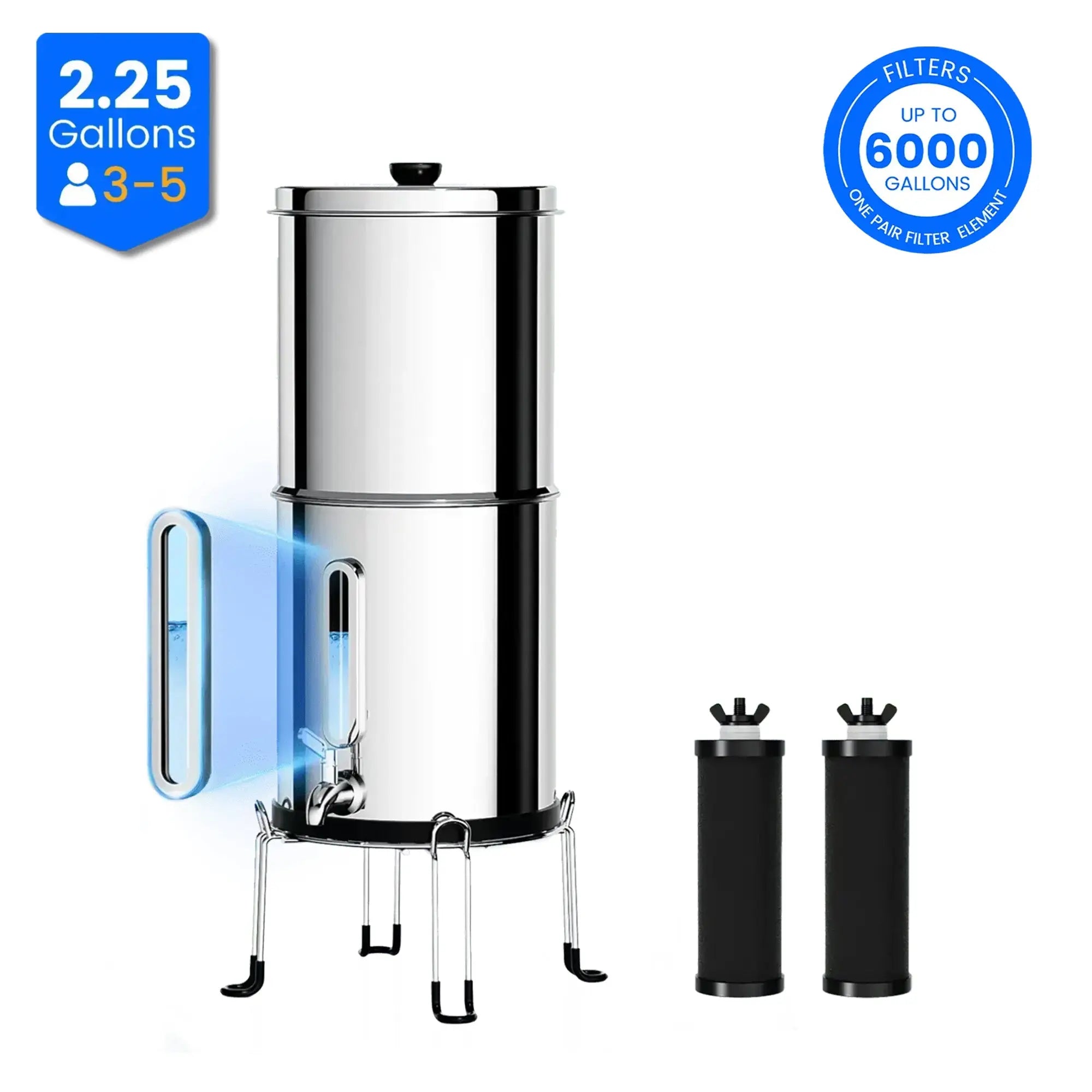
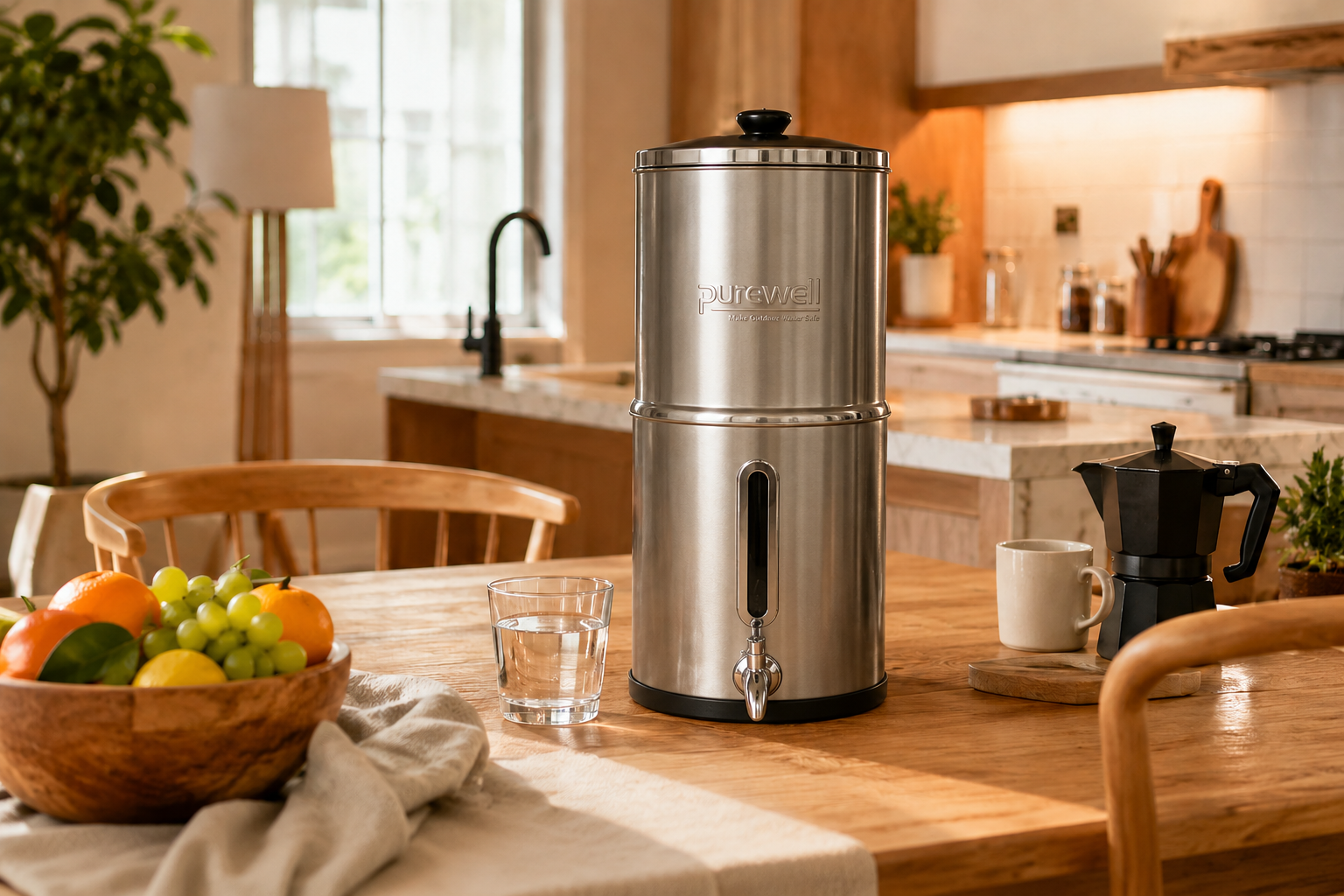
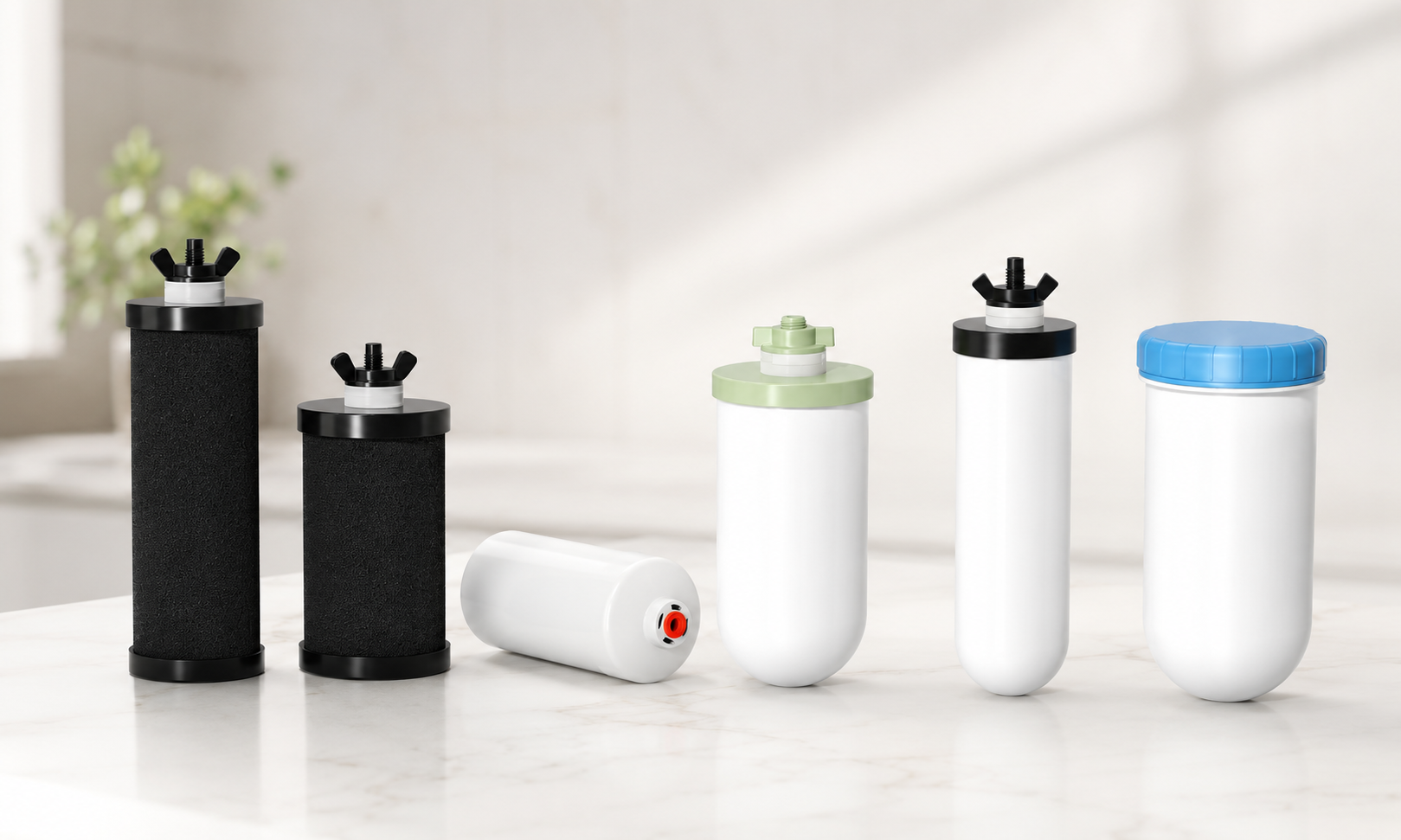
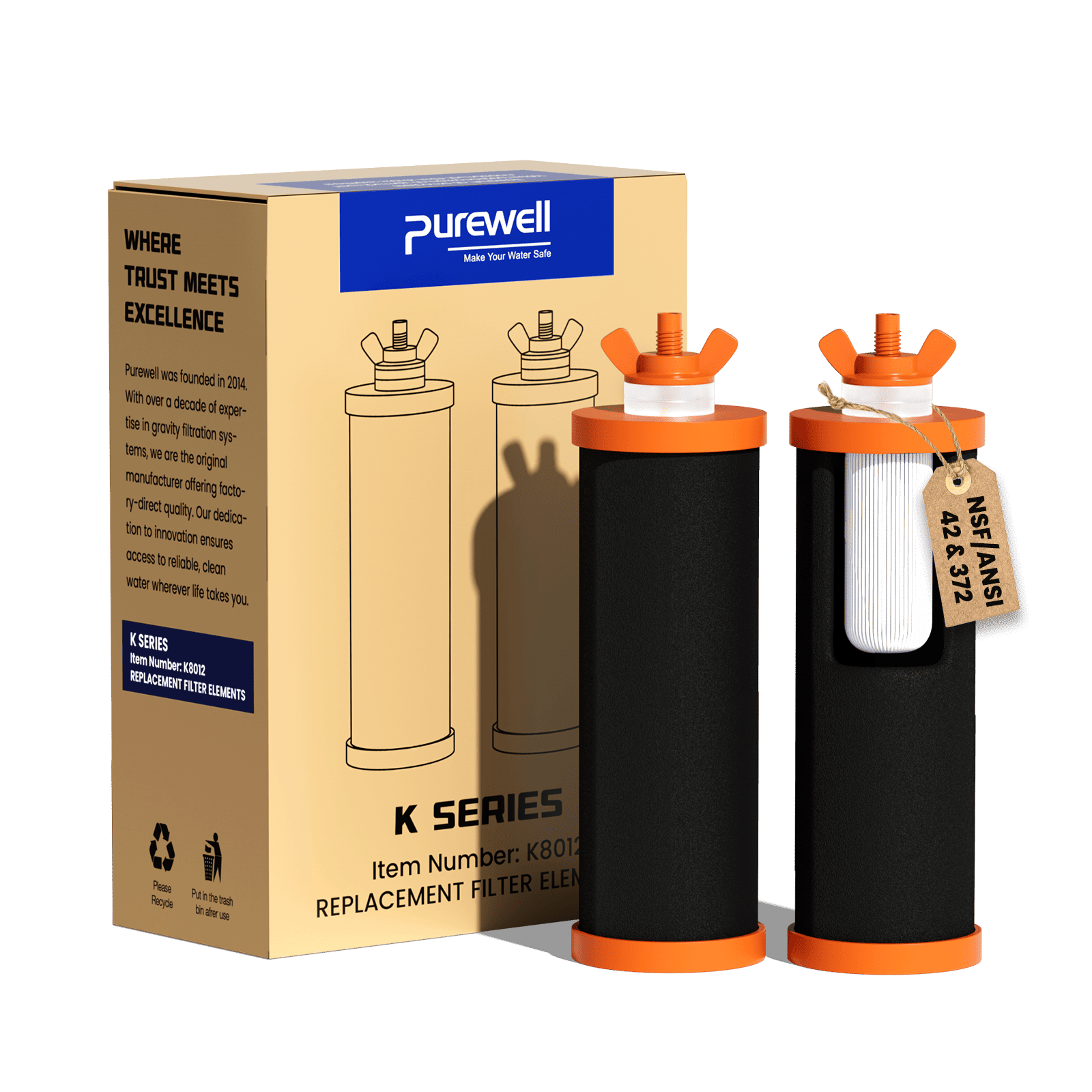
For the K Series 2.25-gallon water-window system, the saved product listing distinguishes the K8012, K8014 and K8015 filter options. Start with the option selected in your cart and match its model number to the evidence supplied.
The Purewell reports and certificates page is a starting point for retrieving documents. Its existence does not mean every Purewell cartridge has every certification described in this article.
This guide explains verification; it does not certify any Purewell product or make a model-specific PFAS, fluoride or heavy-metal reduction claim. If the document does not clearly identify your cartridge, contact Purewell with the exact model and the substance you want to reduce.
Comparing brands? Read Purewell vs Berkey for a configuration-first buying checklist.
Frequently asked questions
Does NSF/ANSI 42 mean a filter removes lead?
No. Do not use a 42 claim as proof of lead reduction. Check the relevant performance listing and its named reduction claims.
Is NSF/ANSI 372 a lead-removal certification?
No. It addresses lead content in components, not removal of lead from incoming water.
Does every NSF/ANSI 53 filter reduce PFAS?
Do not assume that. Look for the applicable PFAS reduction claim on the exact product listing.
Is a test report the same as a certification?
No. Keep those evidence types separate and describe each according to what the document actually establishes.
What should I ask a water-filter seller?
Ask for the exact cartridge model, the complete evidence document or listing, the specific reduction claim and the replacement instructions for that configuration.