

Purewell vs Waterdrop: Which Water Filter System Fits Your Home?

Waterdrop has built its name on high-end reverse osmosis (RO) systems — fast, certified, and electric. Purewell comes from a different angle: gravity filters that run with no power and keep your minerals, plus portable and countertop RO at a lower price. This guide breaks down what each actually does well, so you can buy for your water and your kitchen — not for the marketing.

Purewell vs Waterdrop at a glance
| Purewell | Waterdrop | |
|---|---|---|
| Core technology | Gravity (UF + carbon + silver ions), portable RO, countertop RO | Primarily tankless undersink & countertop RO (electric) |
| Needs electricity? | Gravity: no. Portable RO: battery. RO units: yes | RO systems: yes |
| Keeps minerals? | Gravity: yes (UF keeps calcium/magnesium) | RO: removes minerals (some models re-mineralize) |
| Entry price | From $129 (gravity) / $249 (RO) | From ~$269 (countertop RO) / ~$439 (undersink RO) |
| Certification | Varies by product; gravity models do not list NSF certification | G3P800: NSF/ANSI 42, 53, 58 & 372 (IAPMO) |
| Best for | No-power filtration, mineral retention, lower cost | High-flow certified RO, smart features, instant hot water |
Start with the technology, not the brand
Waterdrop: certified electric RO
Waterdrop's centerpiece is the tankless undersink RO — think the G3P800 (800 gallons per day, ~$849 on sale from a $999 list) and G3P600 (600 GPD, ~$439). These are fast, compact, and certified. The RO membrane strips out dissolved solids, salts, heavy metals, and minerals, and the smart faucet shows real-time TDS. They need electricity, an undersink install, and a drain connection.
Purewell: gravity-first, with RO options
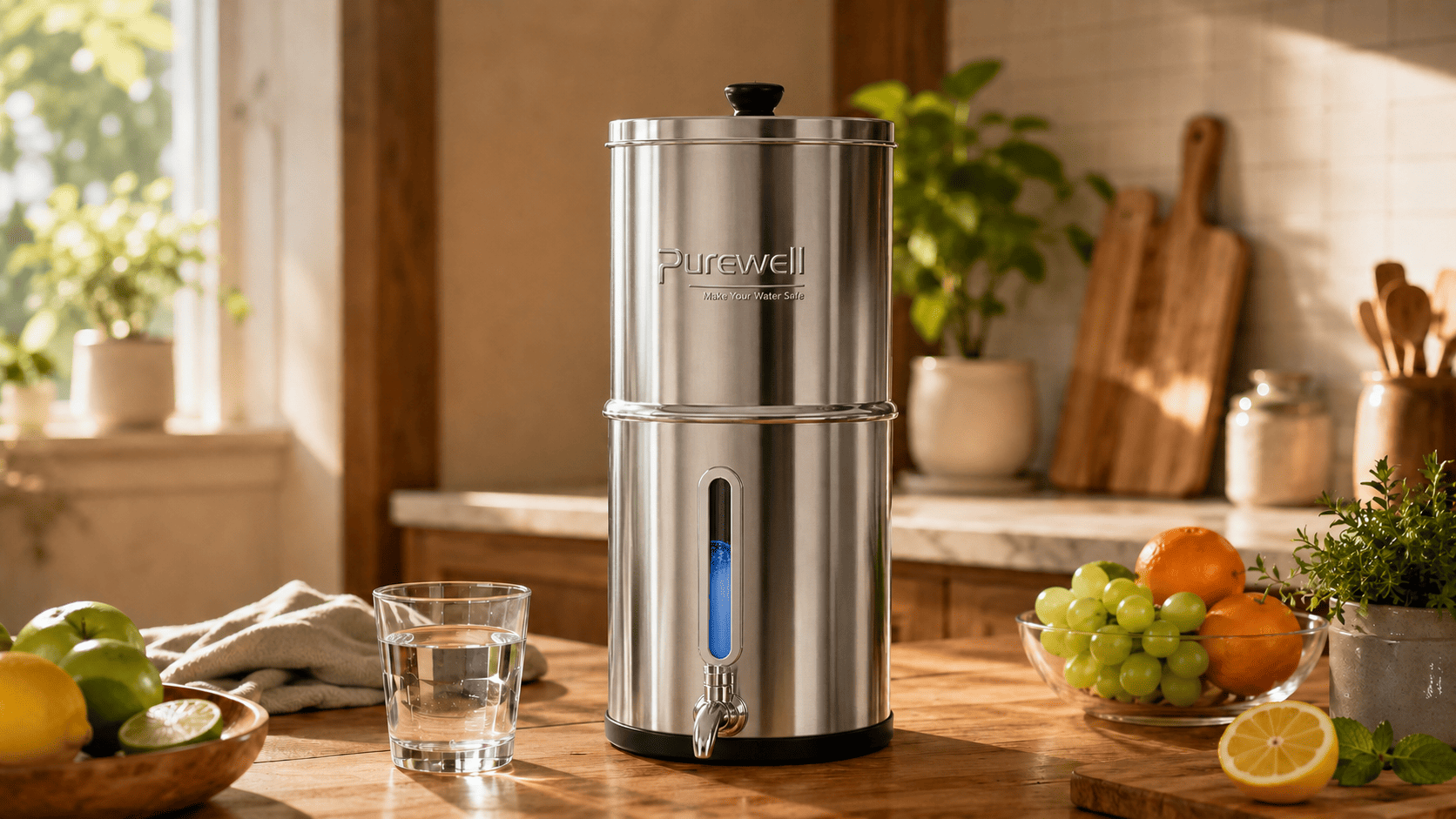
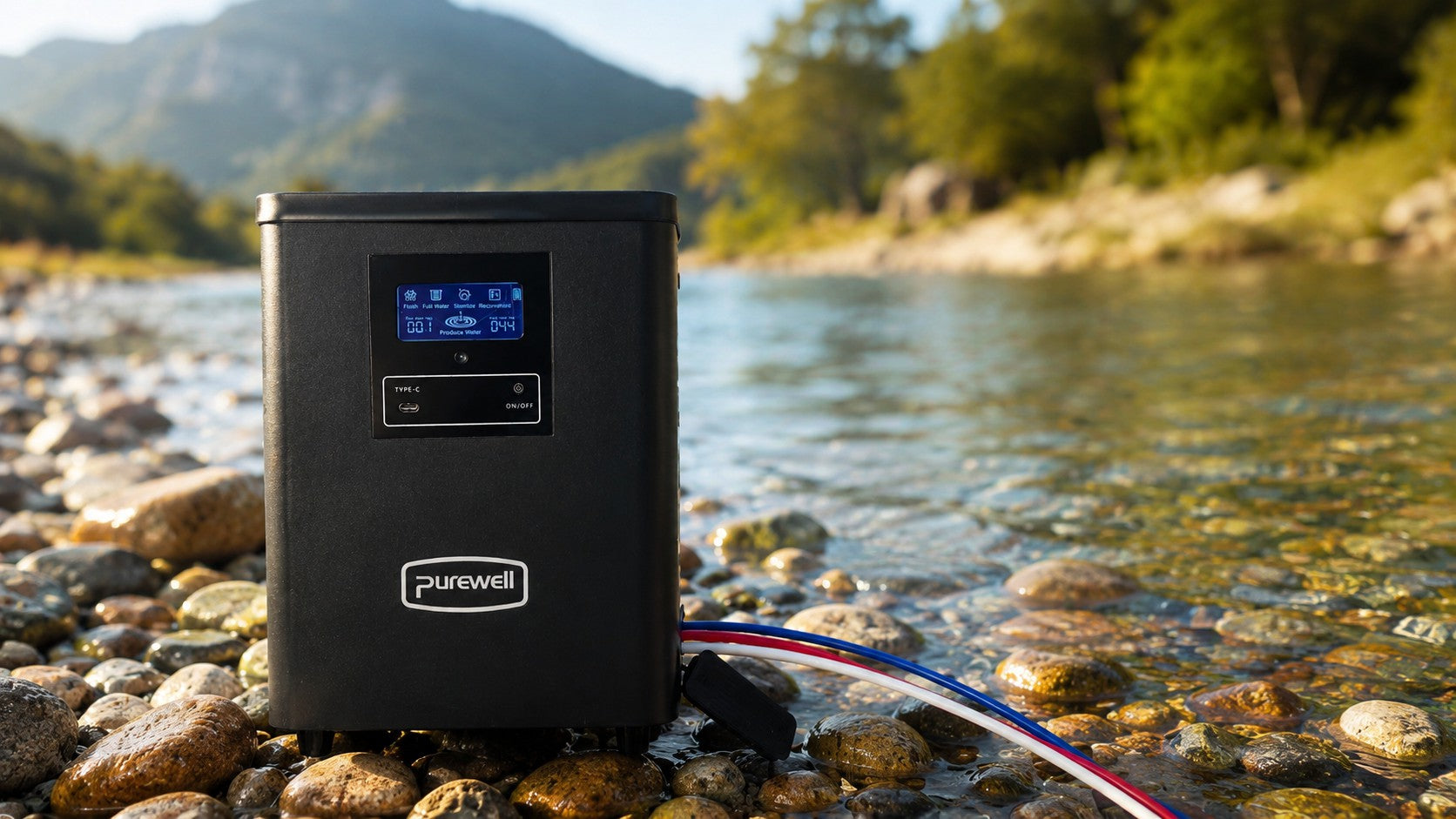
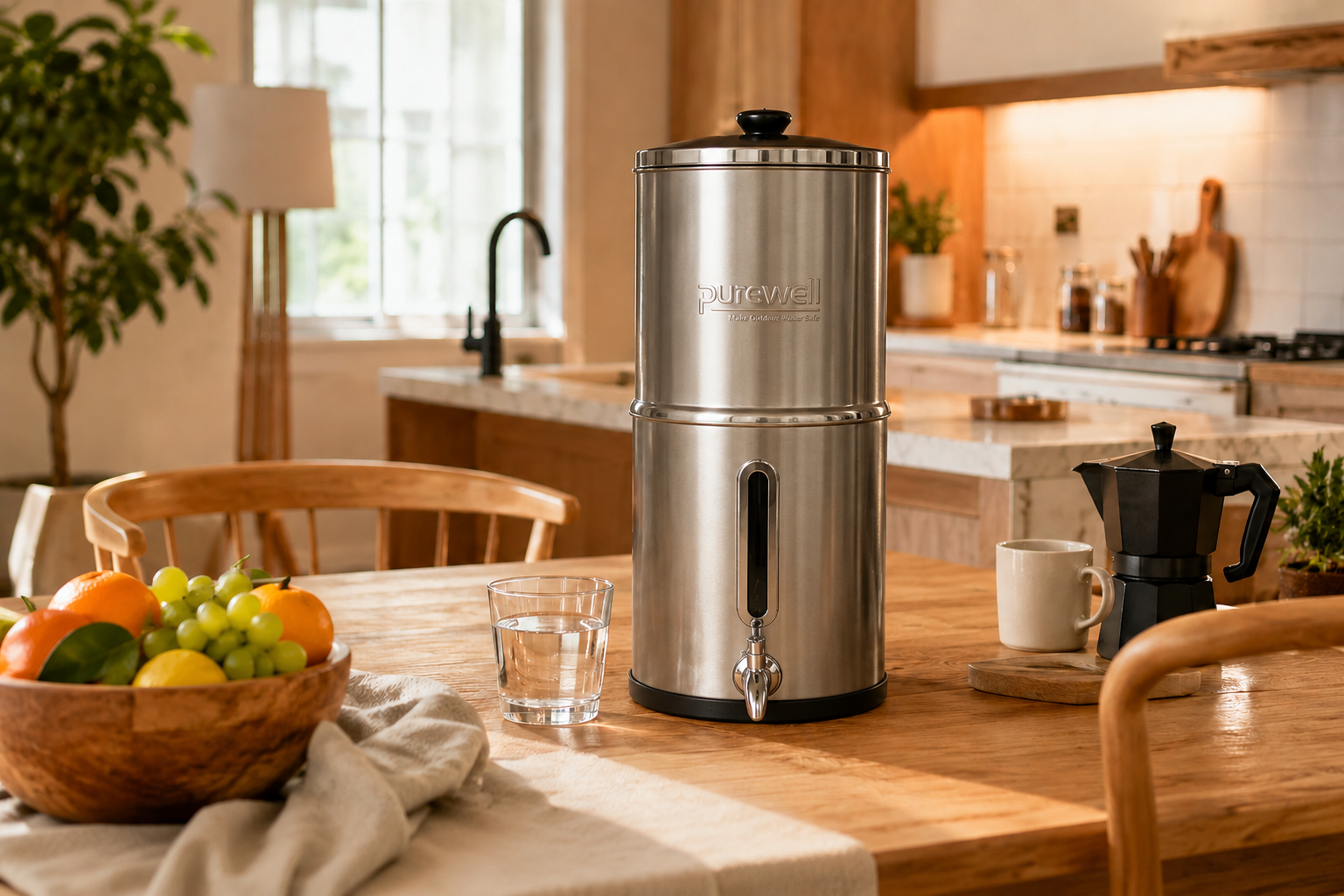
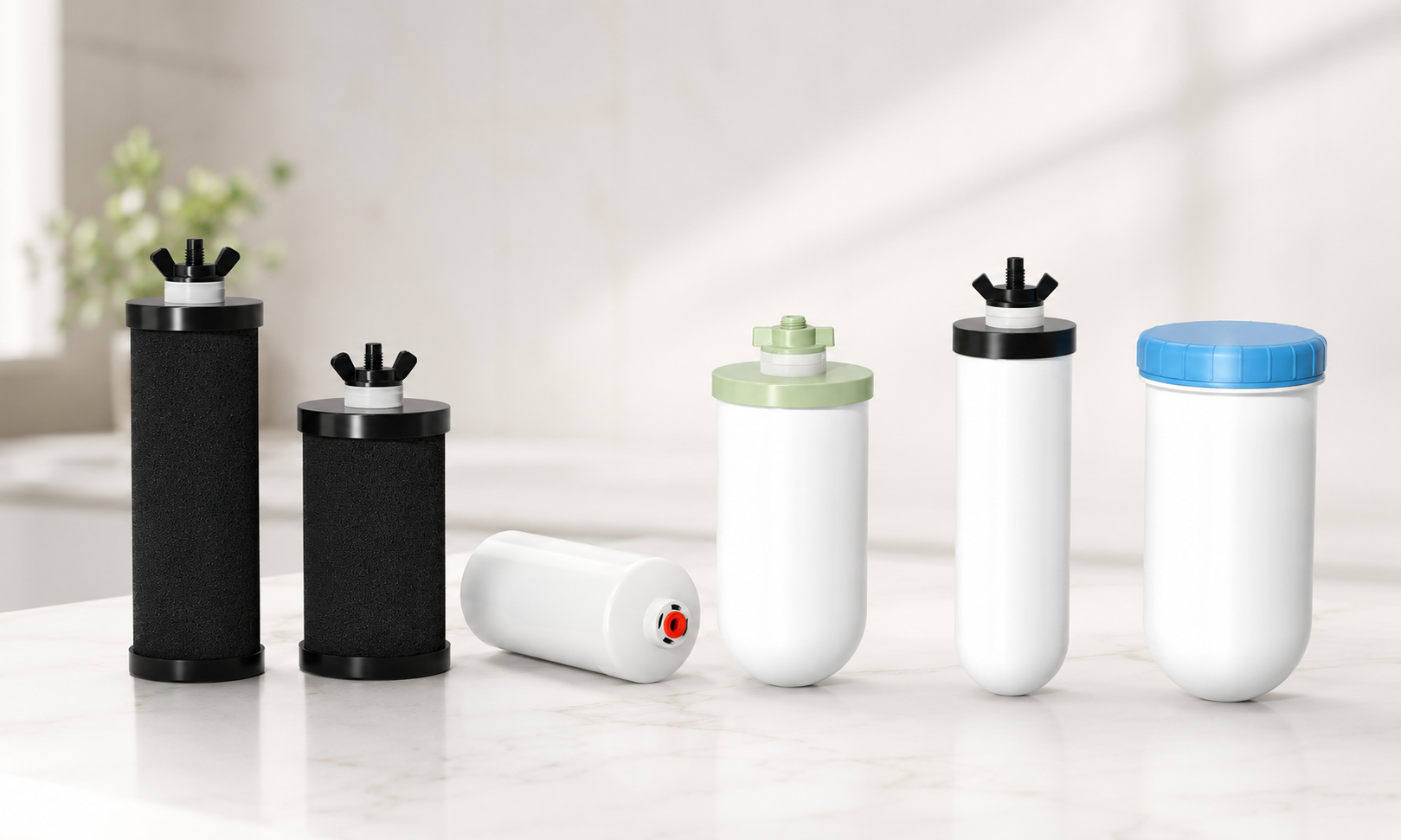
Purewell's most distinctive line is the gravity filter — an upper chamber, a filter element, and a lower chamber, no power and no plumbing. The element combines activated carbon, silver ions, and a 0.01-micron hollow-fiber UF membrane that physically strains out bacteria, cysts, and sediment while leaving calcium and magnesium in the water. Purewell also makes a portable RO purifier (battery-powered, carry-anywhere) and a countertop RO, so you can get RO depth without an undersink install.

Which one filters "better"?
There is no single winner — the two companies optimize for different things.
- For certified contaminant reduction in an electric RO: Waterdrop's G3P800 is hard to beat. Its NSF/ANSI 53 and 58 certifications cover independently tested health-effect and RO-membrane reduction, and its UV stage adds a disinfection layer.
- For no-power, mineral-keeping filtration: a Purewell gravity system is the more fitting tool. It does not need electricity, keeps beneficial minerals, and costs a fraction of a high-end RO.
- For portable or emergency use: Purewell's portable RO purifier and hand-pump filters fill a role Waterdrop's installed, electric units simply do not.
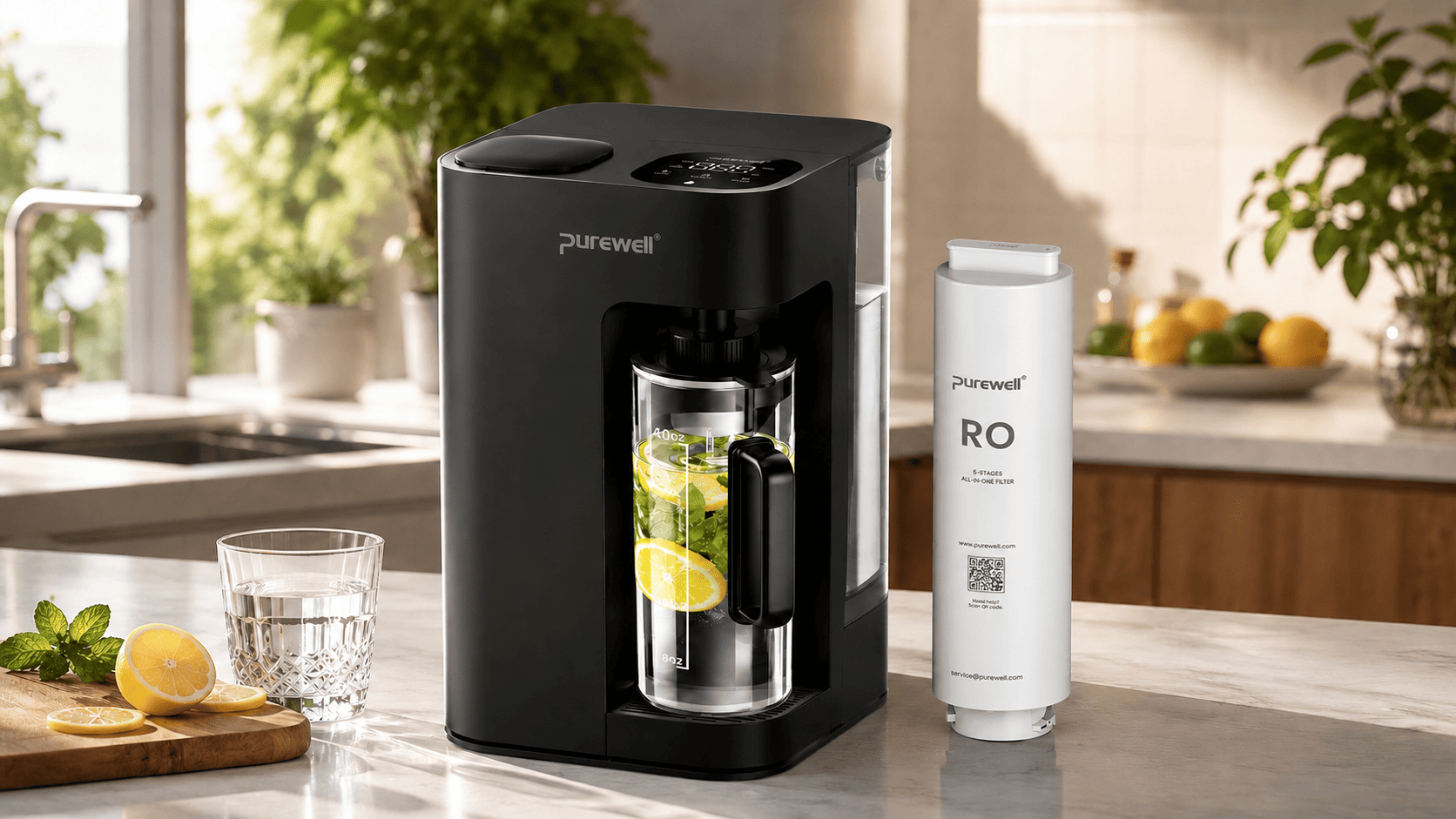
If you want the convenience of RO without permanently installing anything under the sink, Purewell's Countertop RO System C05 ($249.00) is the direct alternative to Waterdrop's countertop RO models (which start around $269–$329).
What changes in everyday use?
Living with gravity vs. electric RO
With a gravity filter you pour water in the top and draw it from the bottom. It is quiet, uses no power, and there is nothing to install. The trade-off is flow: it filters in batches rather than on demand. With an electric RO like Waterdrop's, you get instant, high-flow water from a faucet — but you also get an install, a power draw, a drain line, and filter-change reminders to keep track of.
Maintenance and cost
Waterdrop's RO systems publish annual filter costs in the $145–$160 range for the G-series, with the RO membrane replaced roughly every two years. Purewell's gravity systems are simpler and cheaper to maintain — you swap the cartridge on a rated gallon/schedule, with replacement filters starting around $49.99.
Compare first-year ownership
| Setup | Unit cost | First-year filters | Rough first-year total |
|---|---|---|---|
| Purewell BO Series 2.25 gal gravity | $129.00 | Minimal (cartridge rated ~6,000 gal) | ~$129 |
| Purewell K Series 2.25 gal gravity | $209.99 | Minimal | ~$210 |
| Purewell Countertop RO C05 | $249.00 | Replacement set when due | ~$249+ |
| Waterdrop G3P600 undersink RO | ~$439 | ~$145 | ~$584 |
| Waterdrop G3P800 undersink RO | ~$849 | ~$160 | ~$1,009 |
Costs are the real differentiator. A Purewell gravity system can run for well under $250 in year one, versus roughly $600–$1,000 for a Waterdrop RO — because you are paying for certified RO depth and smart features that gravity does not need.
Which configuration should you shortlist?
Choose Waterdrop-style electric RO if you want certified, high-flow, on-demand RO water, are fine with an undersink install and a drain line, and the higher first-year cost is acceptable.
Choose Purewell if you want a no-power gravity filter that keeps minerals and costs far less, or RO convenience in a countertop or portable form without plumbing.
Browse Purewell gravity & RO systems →
Frequently asked questions
Is Waterdrop better than Purewell?
It depends on what you need. Waterdrop's electric RO systems are strongly certified and fast; Purewell's gravity filters need no power, keep minerals, and cost much less. For portable or no-power use, Purewell fills a role Waterdrop's installed units do not cover.
Does Purewell have reverse osmosis?
Yes. Purewell makes a battery-powered Portable RO Water Purifier System and a Countertop RO System (C05), in addition to its gravity filters.
Do gravity filters remove minerals?
No — that is the point of a UF membrane. A gravity filter physically strains out bacteria, cysts, and sediment while leaving dissolved minerals like calcium and magnesium in the water. Reverse osmosis removes those minerals.
Is a gravity filter enough without RO?
For many households, yes. If your water is already treated municipal water and your main concerns are bacteria, sediment, taste, and keeping minerals, a gravity filter is a practical, lower-cost choice. If you specifically need dissolved-solid reduction, RO is the stronger tool.
What does Purewell's gravity filter actually reduce?
Purewell's gravity elements combine activated carbon, silver ions, and a 0.01-micron hollow-fiber UF membrane to reduce bacteria, cysts, sediment, and improve taste and odor. Check the specific product page for its stated capabilities — and note that gravity models do not list NSF certification.