
Can You Filter Pool Water for Drinking in a Flood Emergency?
Can You Filter Pool Water for Drinking in a Flood Emergency?
The honest answer first: the CDC is clear that swimming pool and spa water is not for drinking, even in an emergency. A gravity water filter can remove bacteria, reduce chlorine, and clear up cloudy water — but it does not turn pool water into certified-safe drinking water. Where a gravity filter genuinely earns its place in a flood or power outage is treating relatively clear, non-chemical-contaminated water — and pairing with boiling when officials say so.

- CDC: pool and spa water is for hygiene and cleaning, not drinking.
- A 0.01-micron gravity filter removes bacteria and reduces chlorine — but does not remove viruses, dissolved pool chemicals, or TDS.
- In a flood, safe drinking water = bottled > boiled > official supply. Filtering is a physical pre-step, not a substitute.
- The right emergency job for a gravity filter: clear cloudy water and reduce chlorine from non-contaminated sources, then boil if directed.
What officials actually say about emergency water
During and after a flood, hurricane, or water-main break, the same guidance repeats across CDC and FEMA materials: use bottled, boiled, or treated water for drinking, cooking, and hygiene until authorities confirm your supply is safe. Boiling for one minute (three minutes above 6,500 feet) is the preferred way to kill germs.
Two rules matter most for this topic:
- Chemical contamination can't be fixed by boiling or disinfecting. If water contains fuel, toxic chemicals, or other chemical hazards, you need a different source — full stop.
- Swimming pool and spa water is explicitly listed as "not for drinking." It can be used for washing, cleaning, and flushing, but not for consumption.
Why pool water is different from tap water
Pool water isn't just "tap water that happens to be in a hole in the ground." It's been chemically treated to keep it sanitary and stable, which is exactly why it's not a drinking source:
- Chlorine and disinfectants — added to control germs, but meant for swimming, not drinking.
- Stabilizers and algaecides — chemicals like cyanuric acid that keep chlorine working, but that you don't want to ingest.
- Whatever people bring in — sweat, sunscreen, and other dissolved organics that react with chlorine into disinfection byproducts.
A gravity filter's activated carbon can reduce free chlorine and improve taste, and its membrane can strain out bacteria and particles. But the dissolved pool chemicals — and any viruses that survive the chlorine — are a different problem. That's why the honest answer to "can I drink the pool water after filtering?" is no.
What a gravity water filter can and can't do
| Capability | Gravity filter (0.01-micron membrane) |
|---|---|
| Remove bacteria | ✅ Yes — 0.01-micron pores are far smaller than bacteria |
| Reduce chlorine / improve taste | ✅ Yes — via activated carbon |
| Clear sediment and cloudiness | ✅ Yes — physical straining |
| Remove viruses | ❌ Not claimed — viruses are smaller than 0.01 microns |
| Remove dissolved pool chemicals | ❌ Not claimed — carbon can't pull out stabilizers/algaecides reliably |
| Lower TDS (dissolved solids) | ❌ Not claimed — gravity filters don't reduce TDS |
| NSF certification | ❌ Not claimed on the product page |
Inside the K Series filter: how it does the job
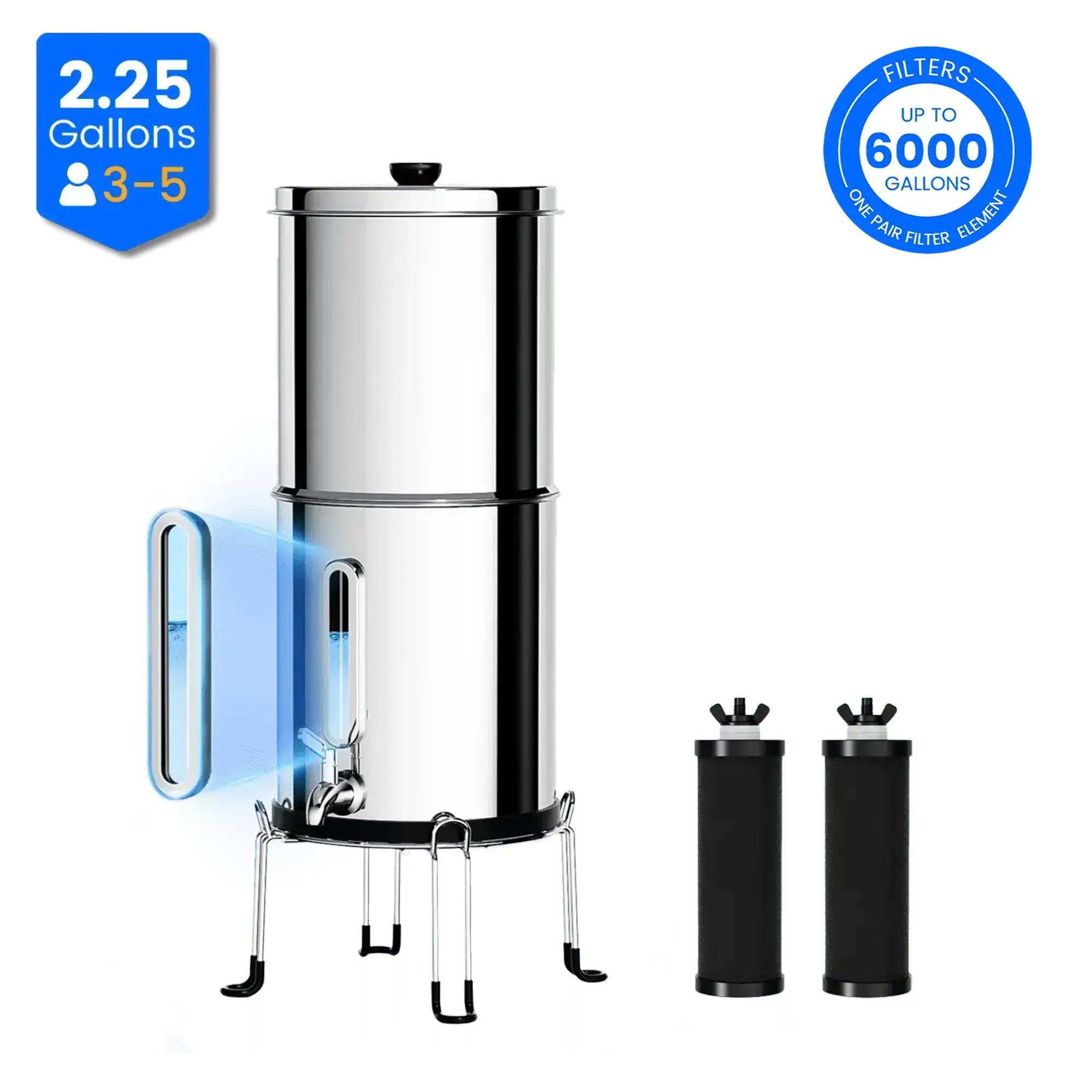
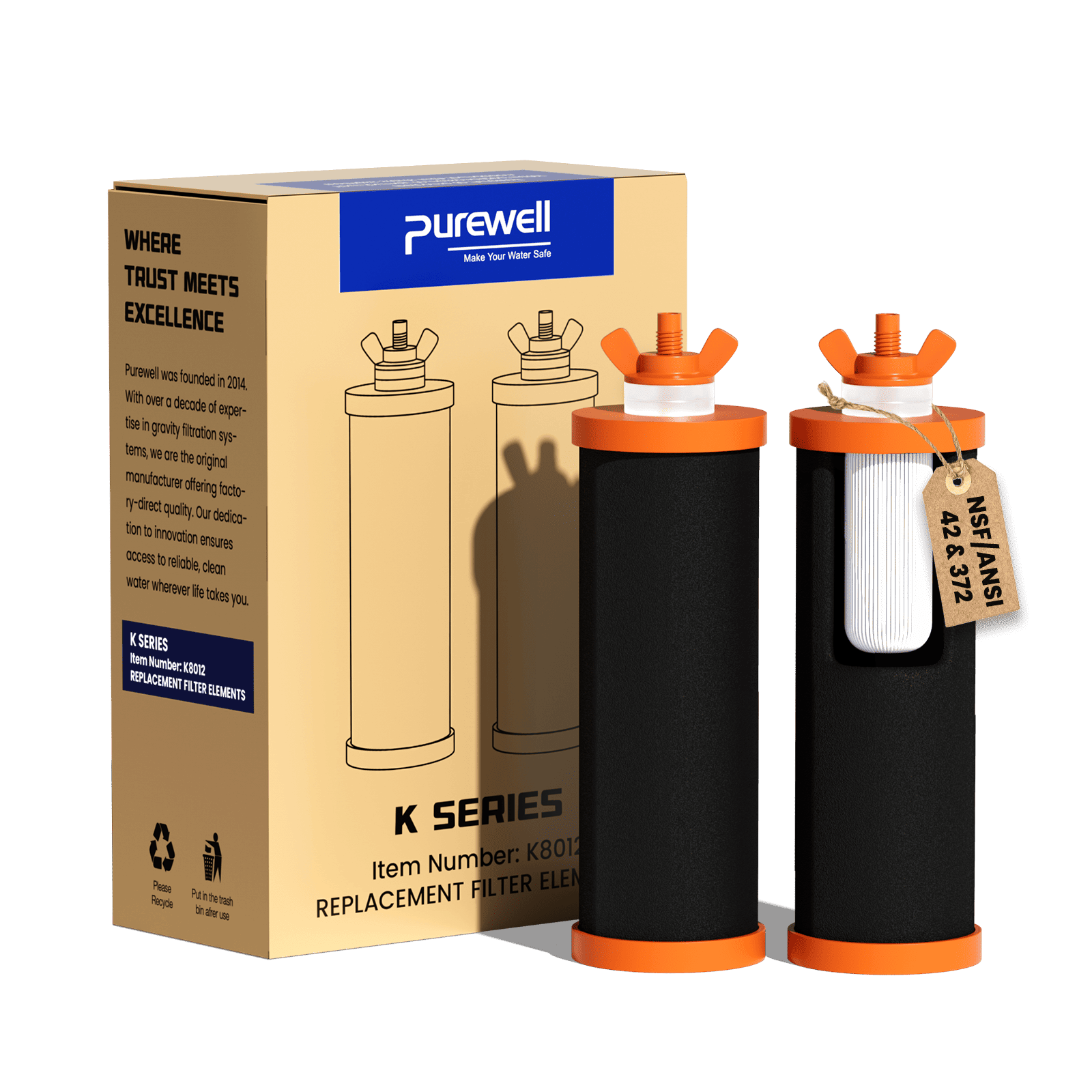
When you're choosing a gravity filter for emergency preparedness, the filter itself is the whole game. The Purewell K Series 2.25-gallon system runs water through a three-layer core filter — the same filter that does the bacteria and chlorine work above:
- Activated carbon — reduces chlorine and improves taste and odor.
- Silver ion — helps keep the filter itself from becoming a breeding ground while it sits between uses.
- Hollow-fiber UF membrane, 0.01 micron — the physical barrier that removes bacteria.
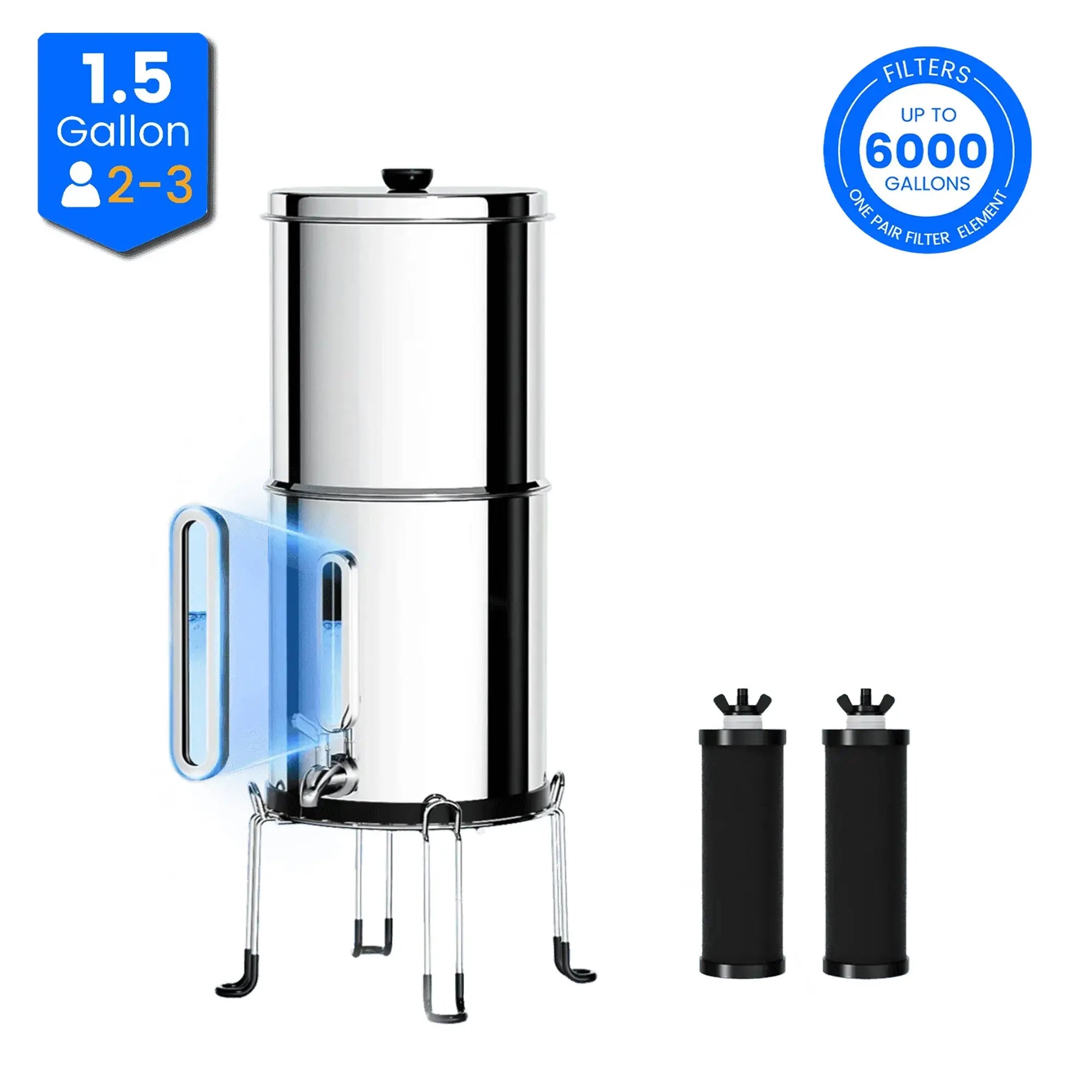
That 0.01-micron pore size is the key number. Most bacteria measure well above 1 micron, so a 0.01-micron membrane stops them while letting water through. The filter cartridge is rated for up to 6,000 gallons per box (two filters) and flows at up to 4 gallons per hour — enough to keep a family hydrated for weeks of intermittent outage use.
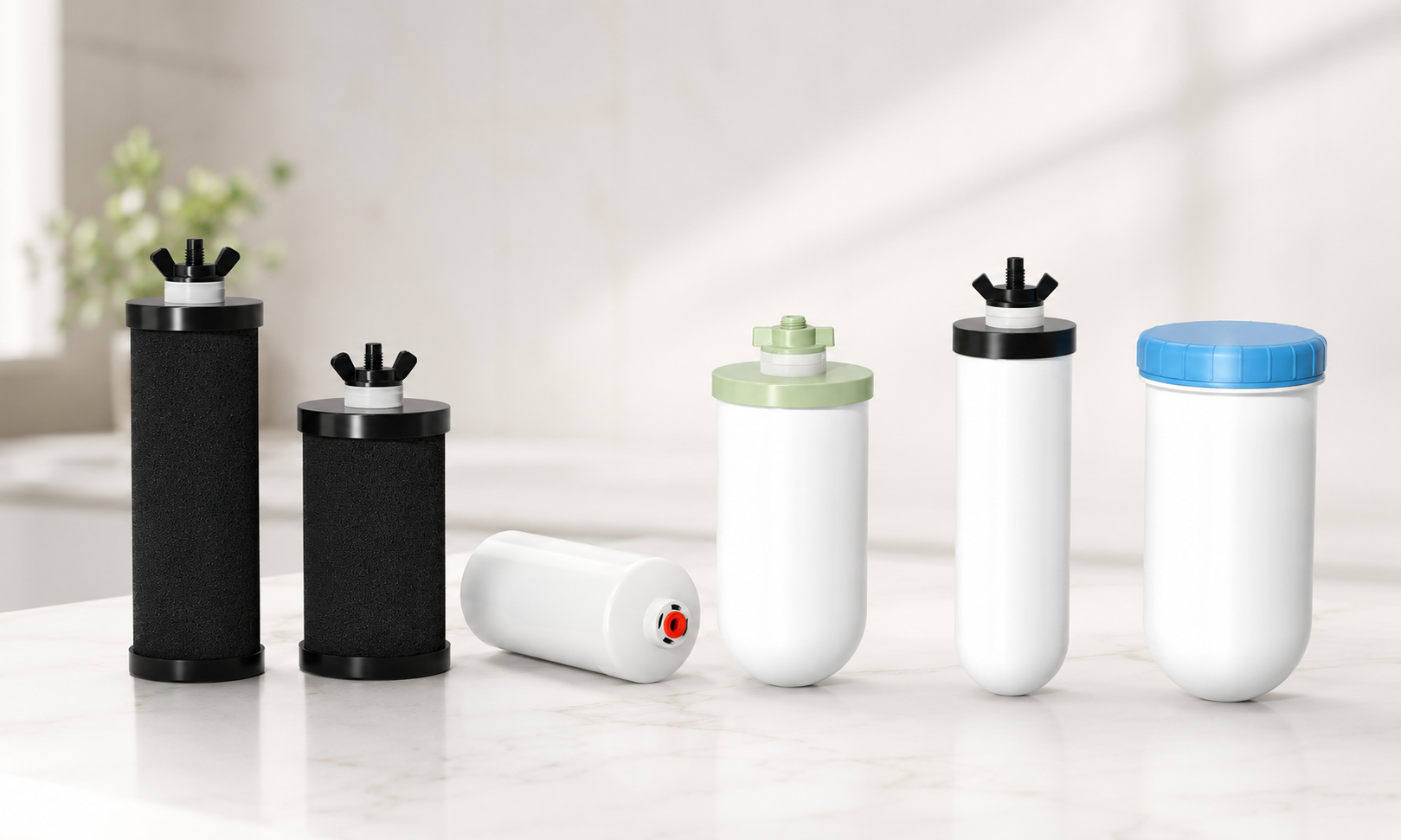
Three filter options let you match the cartridge to your water:
| Filter | Item No. | What it does | Replacement price |
|---|---|---|---|
| 3-Stage Advanced | K8012 | 0.01 μm · Removes bacteria · Reduces chlorine | $69.99 |
| 4-Stage Reduce Fluoride | K8014 | Adds fluoride reduction to the core layers | $79.99 |
| 4-Stage Raise pH | K8015 | Adds alkaline material to raise pH | $79.99 |

The right emergency job for a gravity filter
Where a gravity bucket filter genuinely earns its place in a flood or power outage is treating water that is already a reasonable source — and doing it without electricity. When the power is out, an electric or pump-based filter may be useless; a gravity filter keeps working on a countertop.
- Start with the best source available. Water from your water heater tank, melted ice cubes, or rainwater (if not chemically contaminated) is a far better starting point than pool water.
- Strain out visible debris. If the water is cloudy, pre-filter through a clean cloth or let it settle first — this protects the membrane.
- Run it through the gravity filter to remove bacteria and reduce chlorine/taste.
- Boil it if local officials advise, or if you're not certain the source is microbiologically safe. Filtration + boiling covers more than either alone.
The K Series 2.25-gallon gravity filter at a glance

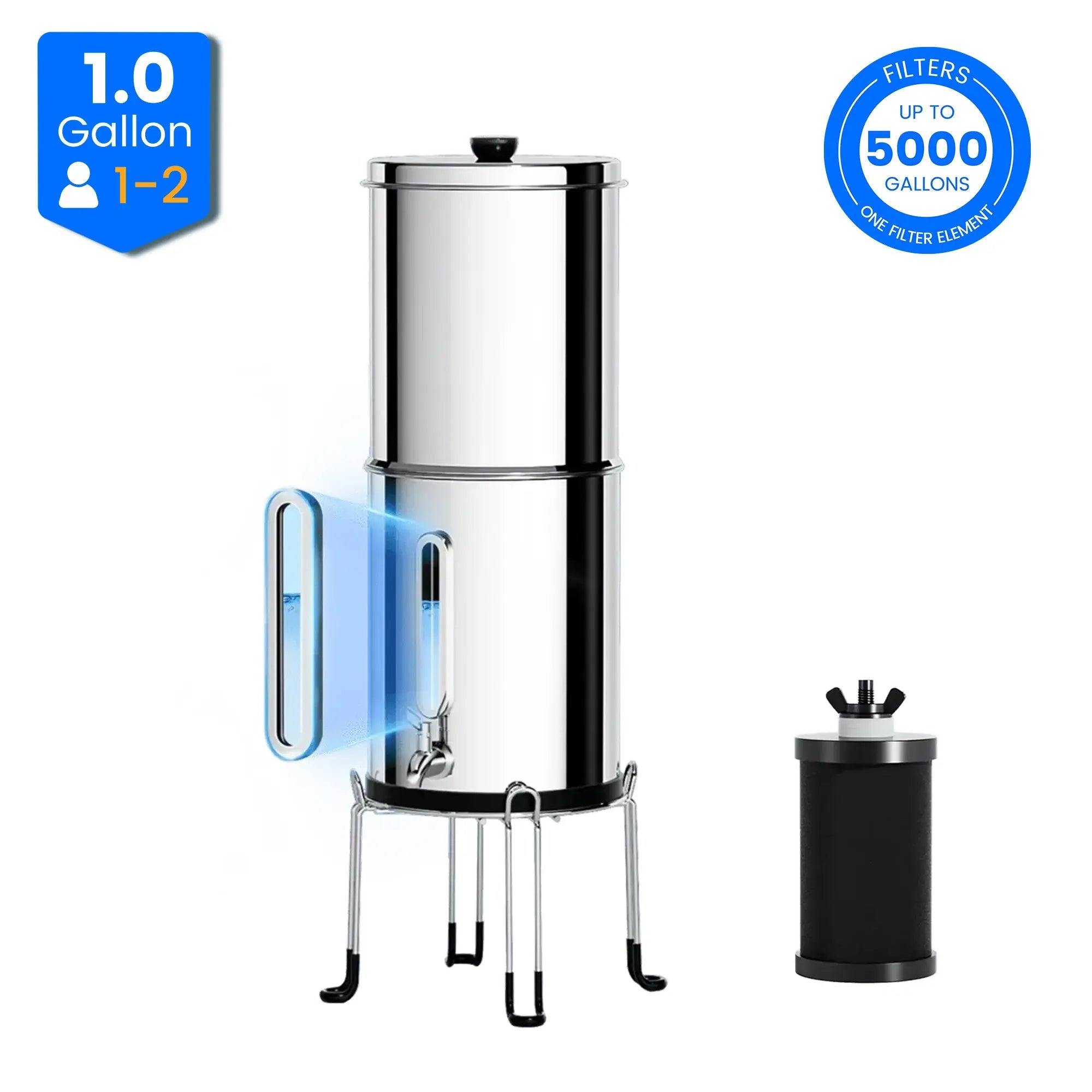
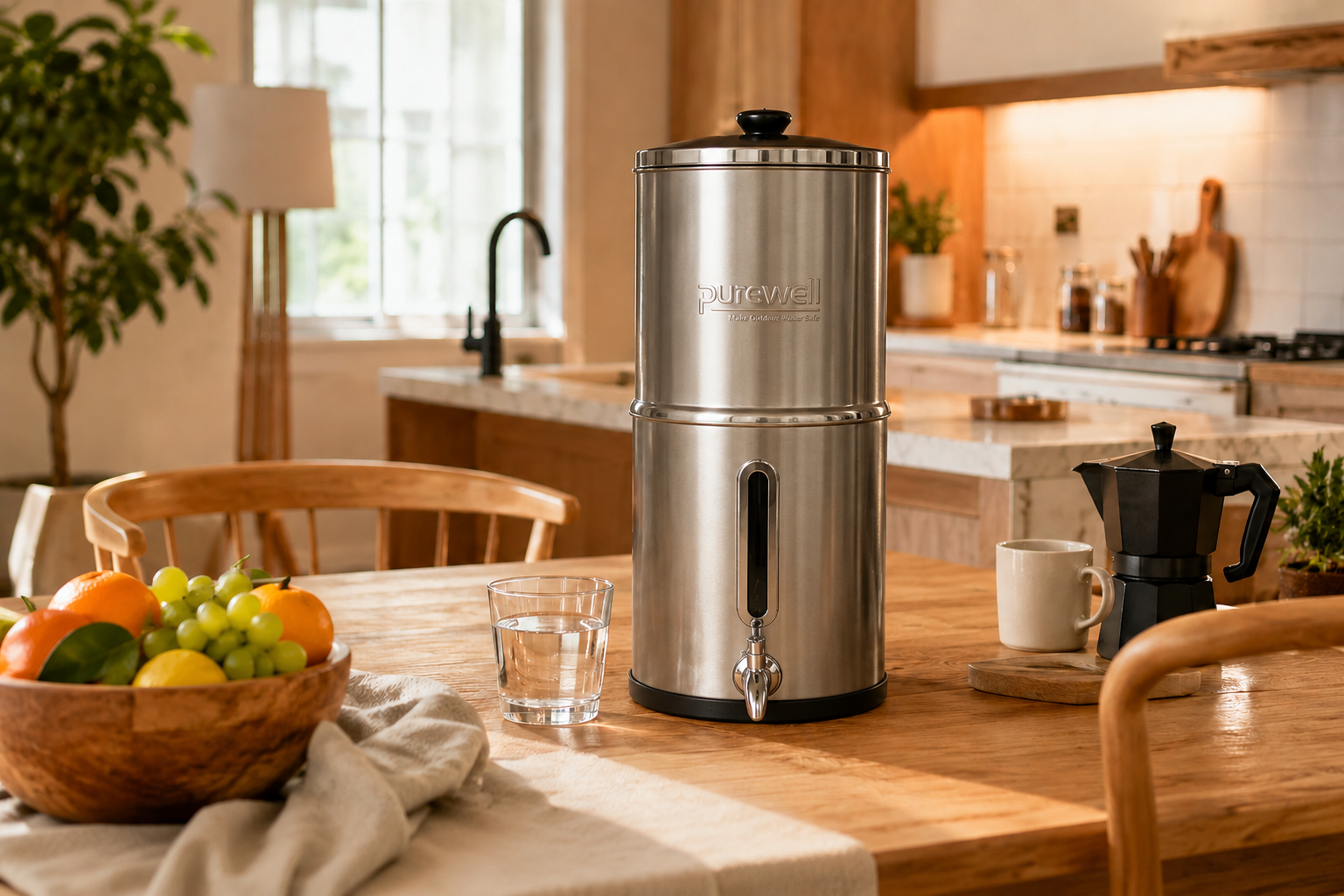
K Series Countertop Gravity Water Filter — 2.25 Gallon
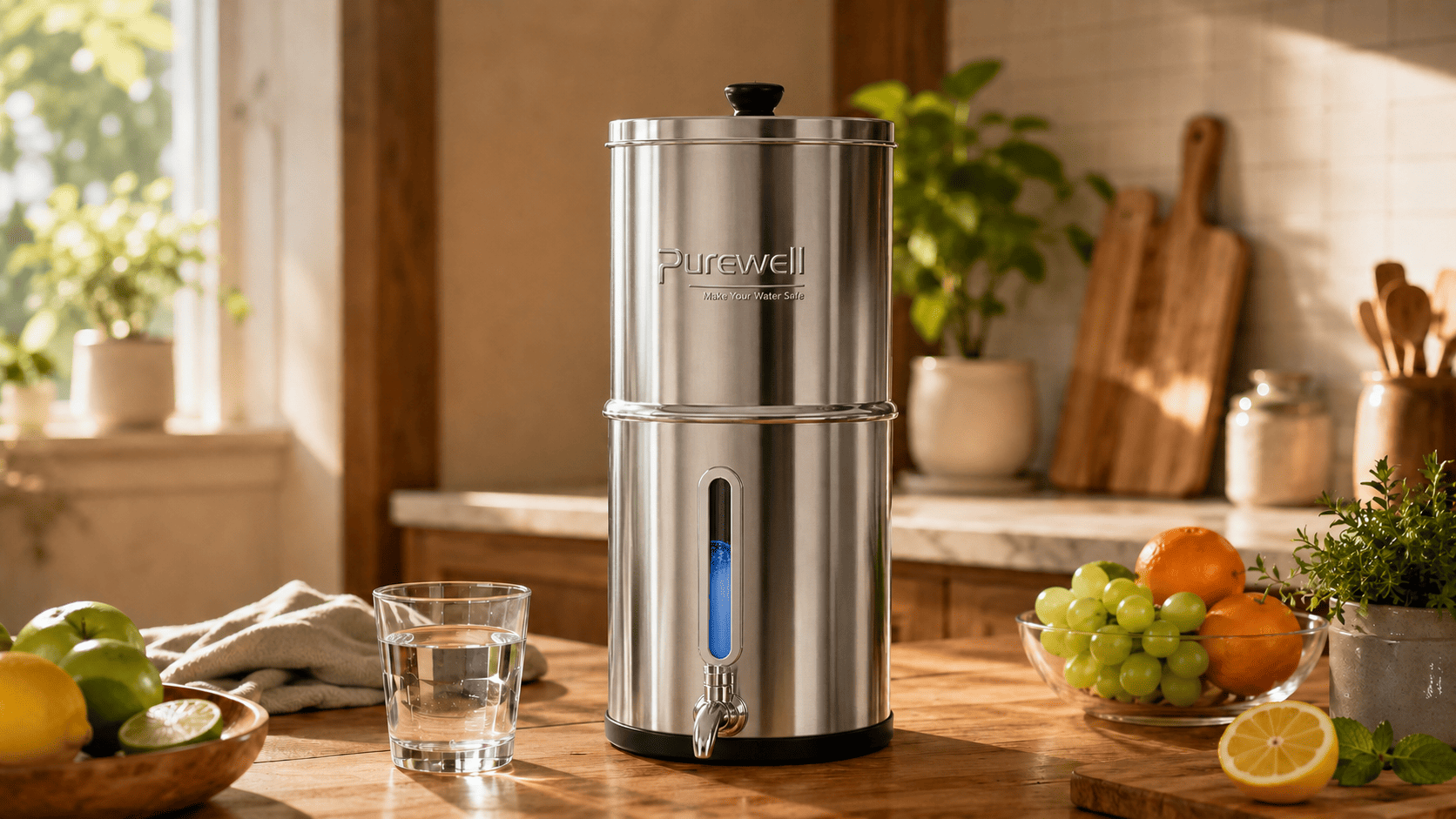
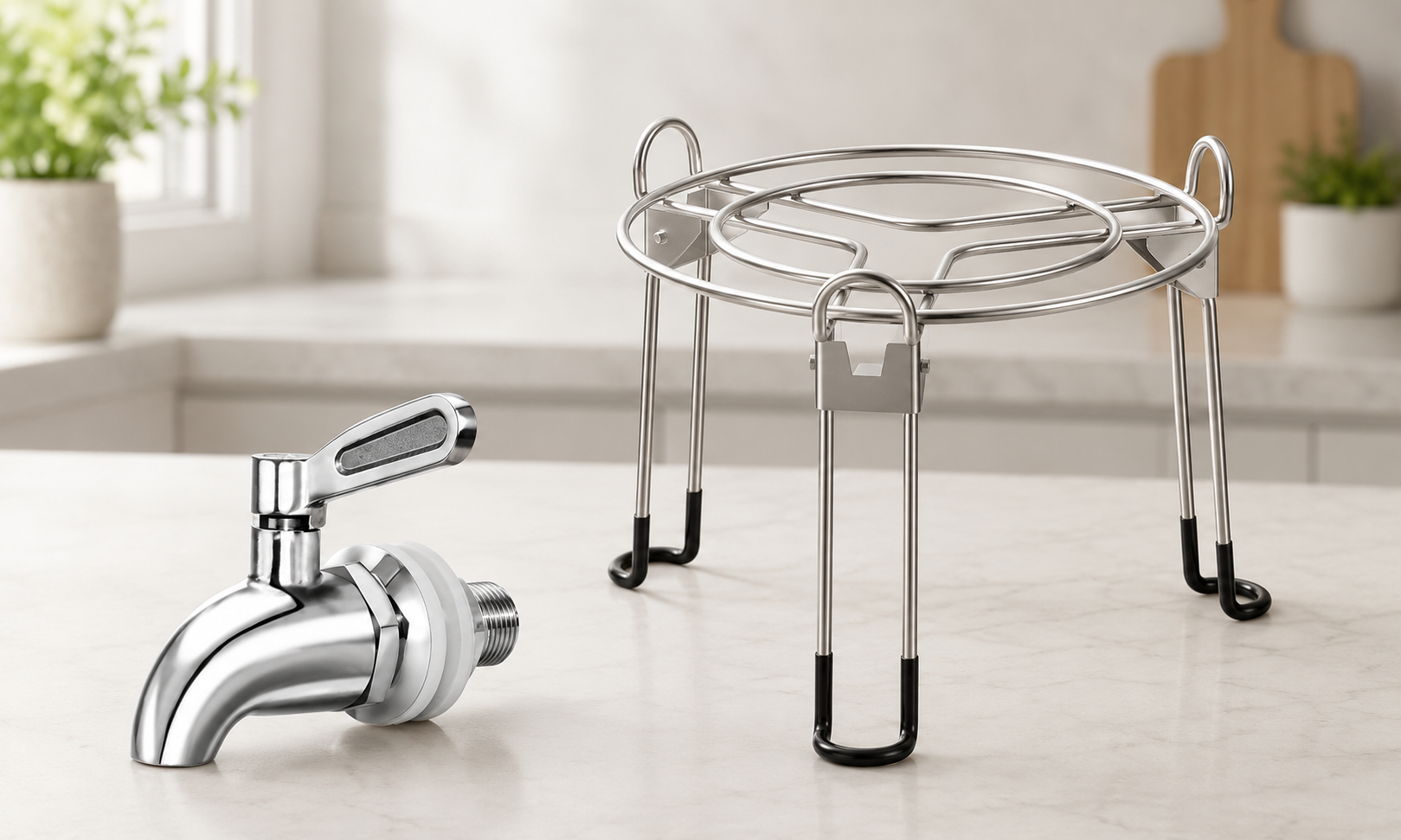
0.01-micron hollow-fiber UF membrane with activated carbon and silver ion — removes bacteria and reduces chlorine. Built-in water-level window, 304 stainless steel body, 2.25-gallon capacity for 3–5 people. Filter life up to 6,000 gallons per box; flow up to 4 gallons per hour. No power, no plumbing, no install. From $209.99 (current — check the product page).
View the K Series 2.25 in the US storeWho this is (and isn't) for
Good fit: households in flood- or storm-prone areas that want a no-power water filter as part of an emergency kit, alongside bottled water and a way to boil.
Not a fit: anyone expecting a filter to make pool, floodwater, or chemically contaminated water safe to drink. If that's the expectation, this product — or any gravity filter — is the wrong tool, and the wrong message.
Frequently asked questions
Can I drink swimming pool water in a flood emergency?
No. The CDC states that swimming pool and spa water can be used for personal hygiene, cleaning, and related uses, but not for drinking.
Can a gravity water filter make pool water safe to drink?
No. A gravity filter removes bacteria and reduces chlorine, but it does not remove dissolved pool chemicals, stabilizers, or viruses, and it is not NSF certified. It cannot make pool water safe to drink.
What can the K Series gravity filter do in an emergency?
It removes bacteria through a 0.01-micron hollow-fiber membrane, reduces chlorine and improves taste through activated carbon, and clears sediment — all without electricity. It works best as a physical pre-filter for relatively clear, non-chemical-contaminated water.
Where should I get drinking water in a flood?
Follow local officials. Use bottled water first; if unavailable, boil water for one minute (three minutes above 6,500 feet). Water from your heater tank or melted ice cubes can also be usable sources. Do not use chemically contaminated water.
Does the K Series filter remove viruses?
The product page does not claim virus removal. Viruses are smaller than the 0.01-micron pore size, so virus removal is not a claimed or guaranteed capability.
How long does the filter last, and what does a replacement cost?
The filter is rated for up to 6,000 gallons per box (two filters). A 3-Stage Advanced replacement (item K8012) is $69.99; the 4-Stage fluoride and pH options (K8014/K8015) are $79.99.
Does the K Series filter need electricity?
No. It's a gravity-fed system — you pour water into the top chamber and it filters down into the lower chamber, so it works during a power outage.
How much water does it hold?
The K Series 2.25 holds 2.25 gallons, sized for a family of 3–5 people's daily drinking and cooking needs.