
How Gravity Water Filters Work Without Electricity
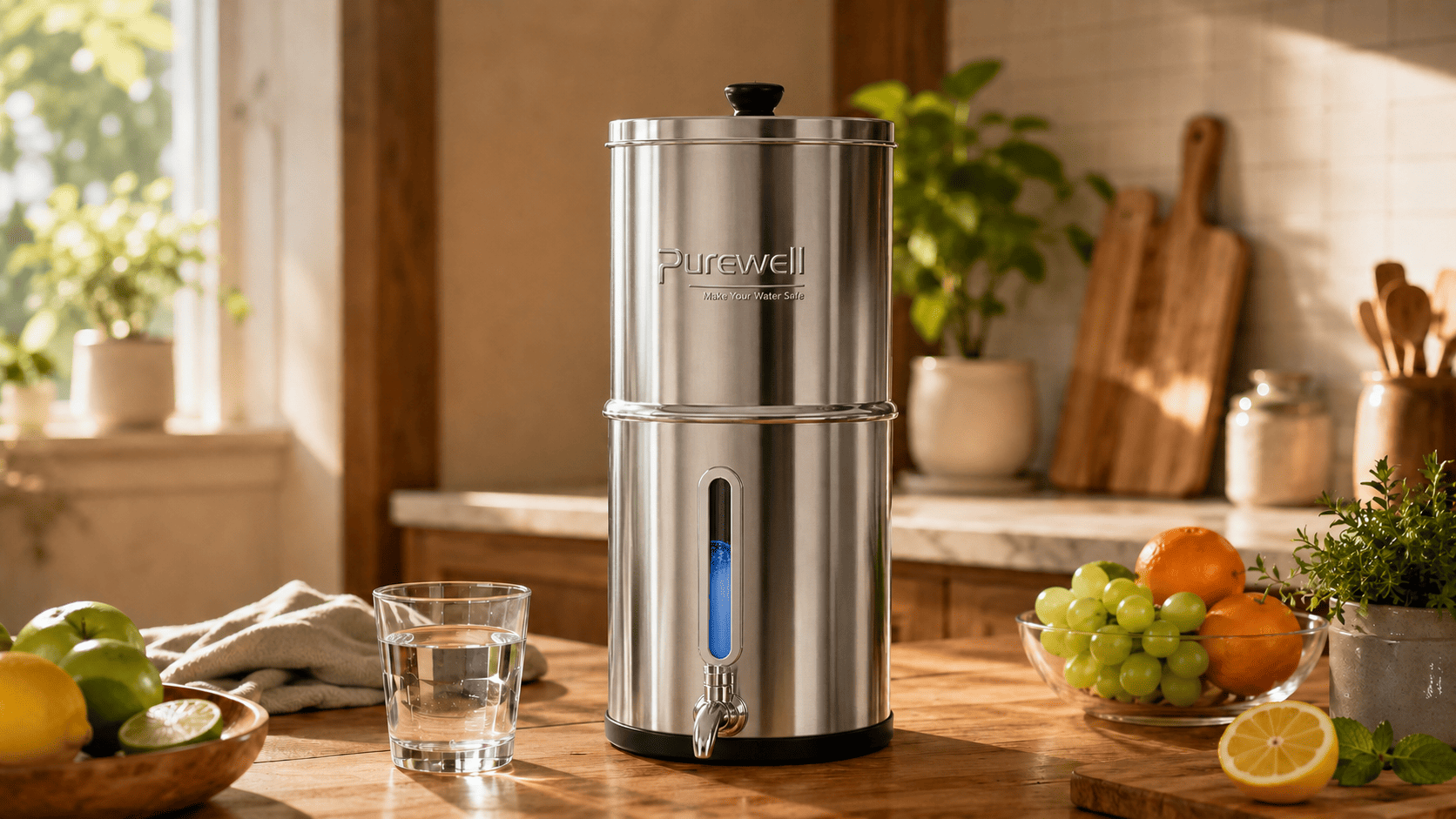
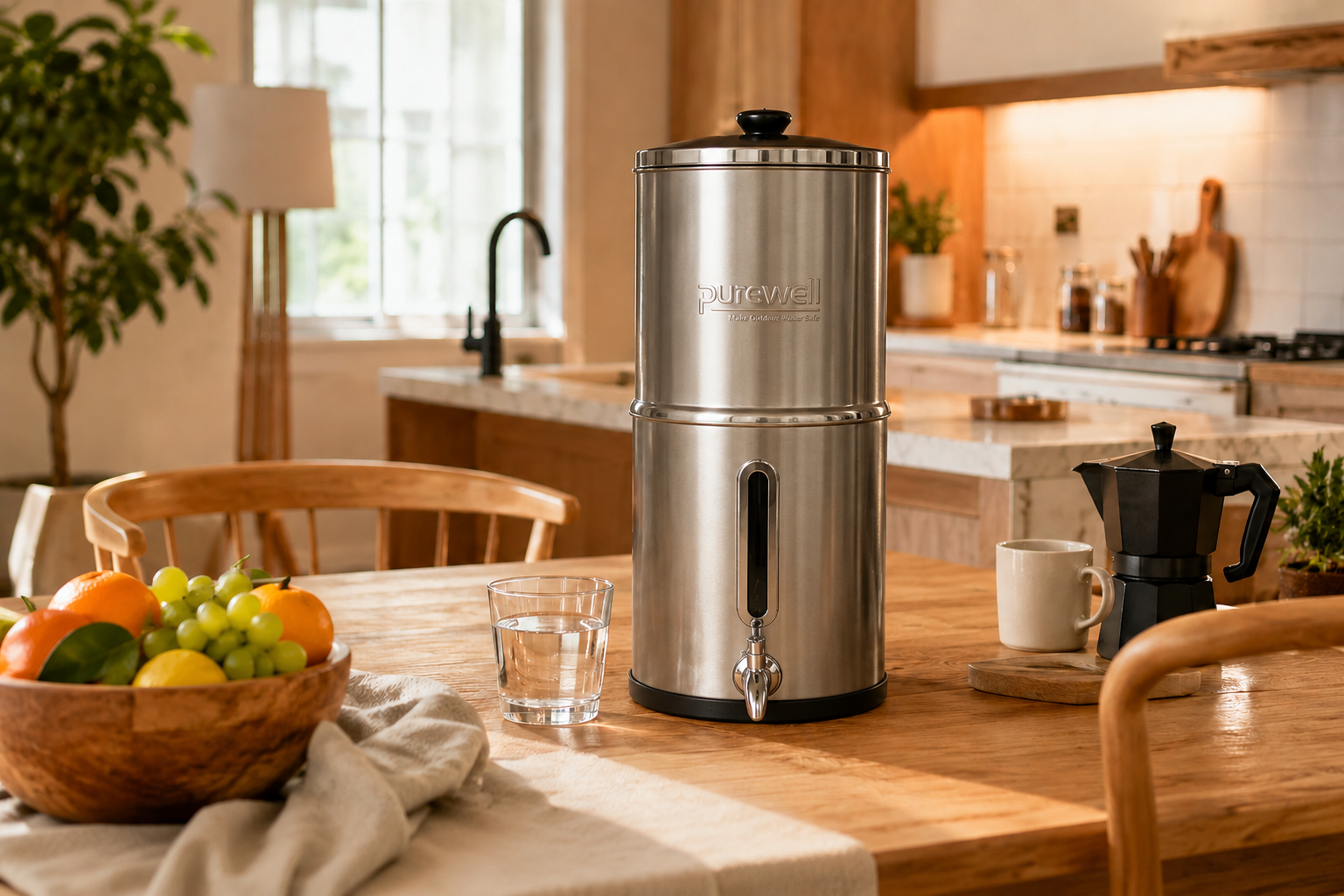
A gravity water filter cleans water using nothing but gravity — no electricity, no pump, no plumbing. That makes it useful both for better everyday tap water and as a backup when the power is off.

Gravity does the work — no electricity, pumps, or batteries.
The basic principle
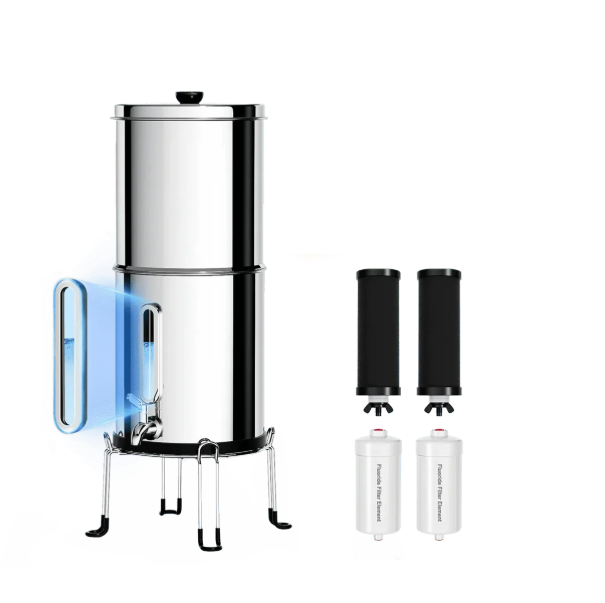
Unlike electric purifiers or pressurised systems, a gravity filter relies on the weight of the water itself. Fill the upper chamber, and hydrostatic pressure drives water slowly through the filter elements into the lower chamber, ready to use. No motor, no battery, no tap pressure required.
Stage 1 — Sediment pre-filter
The first barrier catches the obvious stuff: rust flakes, sand, silt, and suspended debris. Removing these protects the finer stages and makes the water clearer. This is mechanical screening, not chemistry.

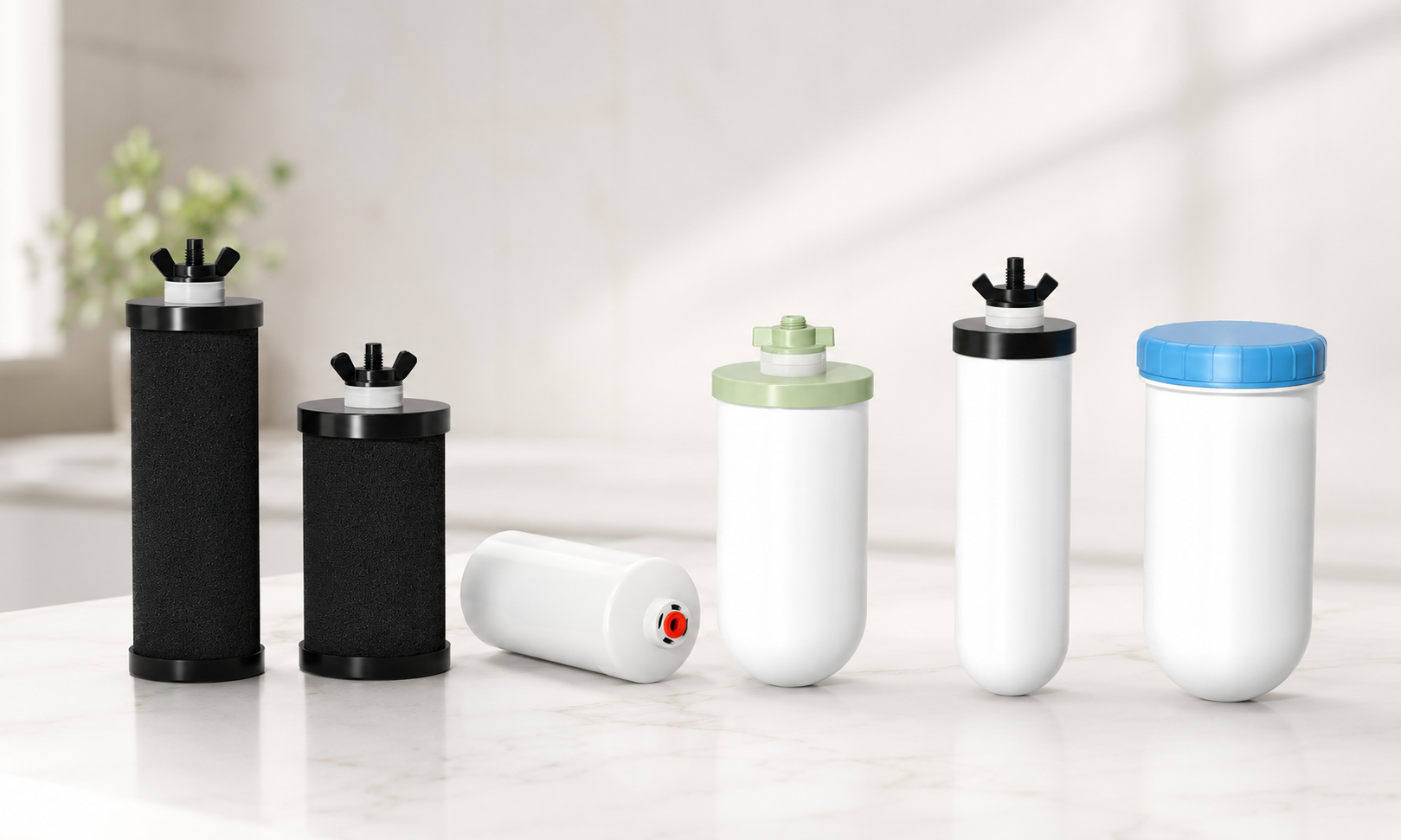
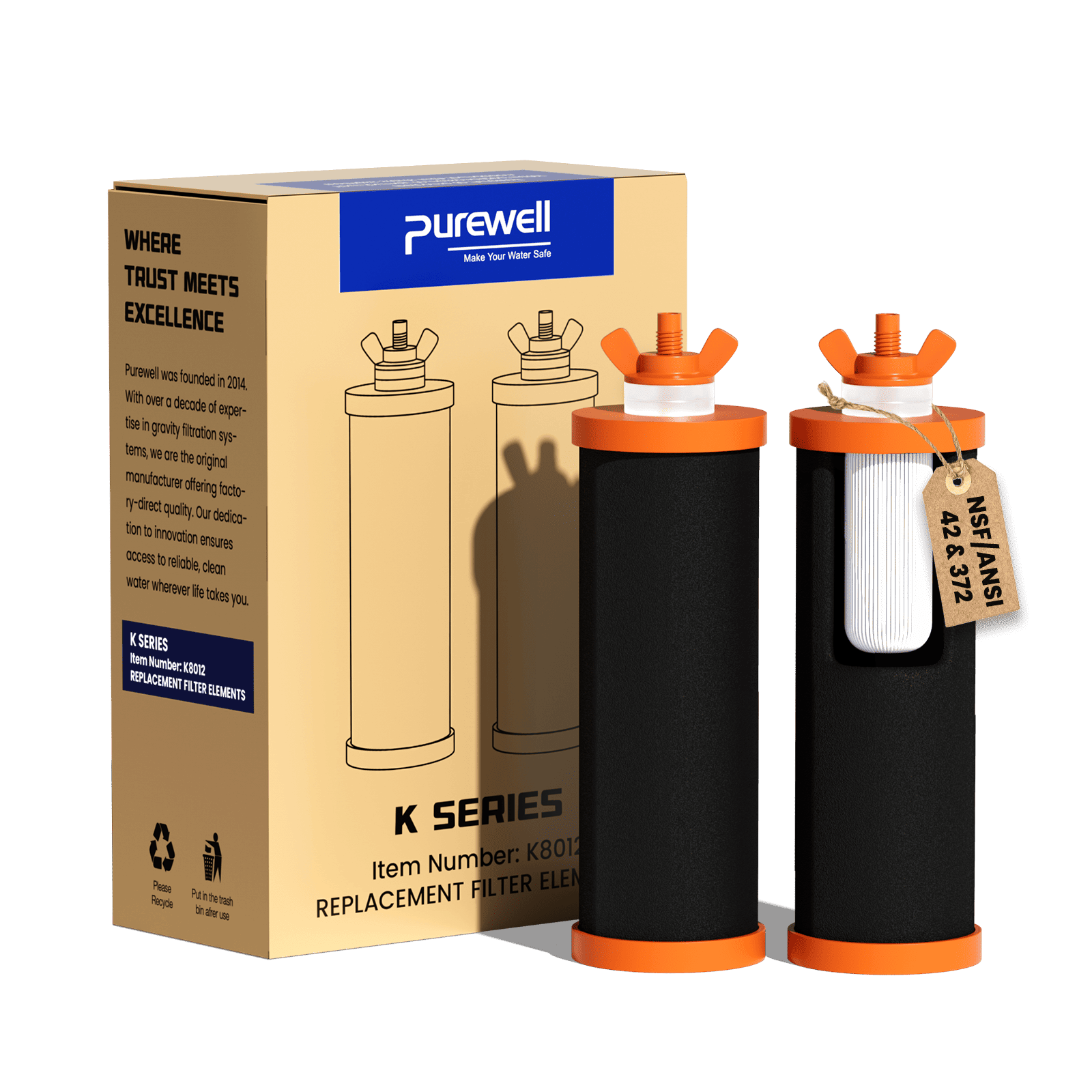
Each stage has a distinct job: sediment, carbon with silver ions, then 0.01-micron UF.
Stage 2 — Activated carbon with silver ions
Next, water meets activated carbon, which is excellent at adsorbing chlorine taste and odour and many organic compounds, improving how the water smells and tastes. Silver ions are added to help inhibit bacterial growth within the filter media between uses — a hygiene measure for the cartridge, not a claim that the output is sterile.
Stage 3 — 0.01-micron ultrafiltration (UF)
The final physical barrier is an ultrafiltration membrane with pores around 0.01 micron. At that size it screens out bacteria and protozoa (such as Giardia and Cryptosporidium) that are far larger than the pores. The result is clearer, better-tasting water with the microbial heavies removed.
What it removes — and what it doesn't
| Concern | Result with gravity UF + carbon |
|---|---|
| Sediment / debris | Removed (pre-filter) |
| Chlorine taste & odour | Reduced (carbon) |
| Bacteria | Removed (0.01-micron UF) |
| Protozoa | Removed (0.01-micron UF) |
| Viruses | Not removed (too small) |
| PFAS | Not removed (needs specialist media) |
| Dissolved salts / seawater | Not removed |
Why it suits UK emergency and everyday use
Because it needs no electricity, a gravity filter keeps working during power cuts and needs no installation. Day to day it improves the taste of tap water without plumbing; in a disruption it lets you treat tap water under a boil notice or make collected rainwater more palatable. Pair it with a small stored reserve and you cover both routines and surprises.
For choosing between filter types, see our best gravity filter UK guide and the ceramic filter explainer.
Recommended emergency backup water filter
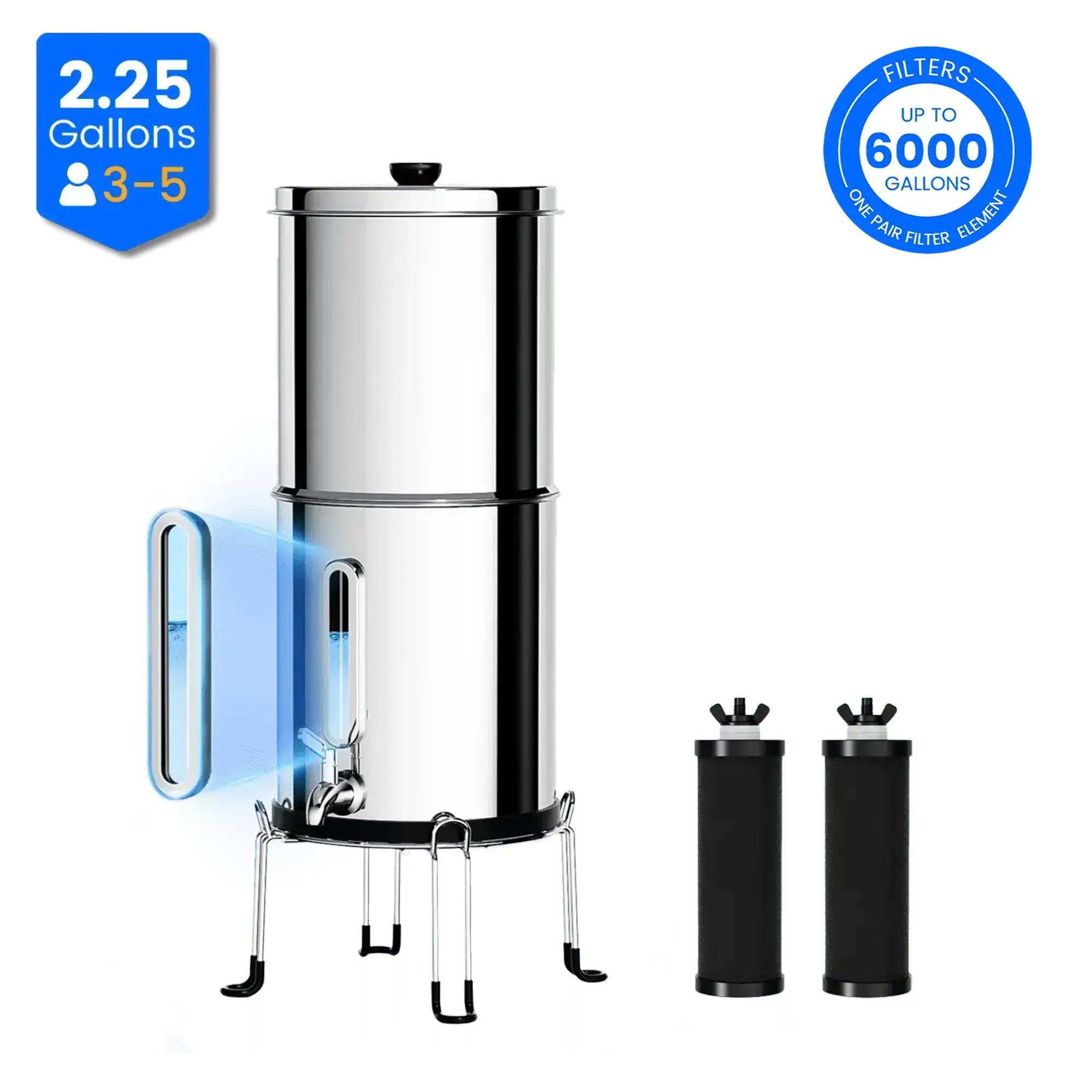
Lighten your emergency storage burden with a non-electric, stainless steel gravity filtration system — available in your regional store:
- UK customers (£ GBP): Explore the Purewell K Series 2.25-Gallon Gravity Filter (UK Store)
- US customers ($ USD): Explore the Purewell K Series 2.25-Gallon Gravity Filter (US Store)
- Europe (€ EUR): Explore the Purewell K Series 2.25-Gallon Gravity Filter (EU Store)
Specification note: activated carbon with silver ions + 0.01-micron ultrafiltration reduces bacteria, protozoa, and chlorine taste without electricity. It does not remove viruses or PFAS, and is not a desalinator. Also consider the BO Series 2.25-gallon for a lower-cost entry.
Frequently Asked Questions
How does a gravity water filter work without electricity?
Gravity alone drives water from an upper chamber through the filter media into a lower chamber. No pump, battery, or power source is needed.
What does the 0.01-micron stage remove?
It screens out bacteria and protozoa, which are larger than its pores. It does not remove viruses, which are smaller.
What do the silver ions do?
They help inhibit bacterial growth inside the filter cartridge between uses — a hygiene measure for the media, not a sterility claim for the output.
Does it remove chlorine?
The activated carbon stage reduces chlorine taste and odour, improving how the water smells and tastes.
Can it remove PFAS or viruses?
No. PFAS needs specialist media; viruses are too small for 0.01-micron UF. For those risks, use boiling or a proven alternative method.
Is it suitable for rainwater?
It improves rainwater, but rainwater can carry roof contaminants; boil first for higher-risk sources and follow official guidance.
Which Purewell systems use this design?
The K Series 2.25-gallon and BO Series 2.25-gallon gravity filters use multi-stage gravity filtration. See product pages for specifications.