
"Berkey Alternative Evidence Checklist: How to Verify What a Gravity Filter Actually Reduces"

Direct answer: When you shop for a "Berkey alternative," the single most useful step is not picking a brand — it is verifying the claim. A defensible gravity-filter claim names the exact filter model, the specific substance it was tested against, the rated capacity, and the test conditions. Without those four details, marketing language such as "removes 99%" cannot be compared or trusted. This checklist shows you how to read the documentation before you buy, with worked examples from Purewell's in-stock K Series and BO Series systems.
Why gravity-filter comparisons differ
Shoppers often see different conclusions across comparison pages. The difference usually comes down to method, not opinion: comparisons may use different cartridges, different test methods, and different test conditions, and they may attach a single percentage to a whole brand rather than to one exact filter. The useful move is to compare like for like — the exact element, the named reduction claim, the test conditions, and the underlying report. (For a brand-vs-brand comparison of existing pages, see our Purewell vs Berkey and Gravity Water Filter Systems Compared pages.)
The 4 things every filter claim must state
Before trusting any "reduces X" statement on a gravity filter, confirm it names all four:
- Exact model — Which cartridge or system? "K Series" is not enough — note the variant (e.g., standard carbon, fluoride, ceramic).
- Specific substance — "Contaminants" is vague. Look for a named substance: chlorine, a named heavy metal, fluoride, PFAS, bacteria.
- Rated capacity — How many gallons or liters before the claim no longer applies? A result at liter 1 may differ at liter 1,000.
- Test conditions — Initial concentration, challenge method, temperature, and source-water type.
If a claim omits any of these four, treat it as **unverified for your purpose** until you find the underlying certificate or test report. A percentage with no context is not evidence.
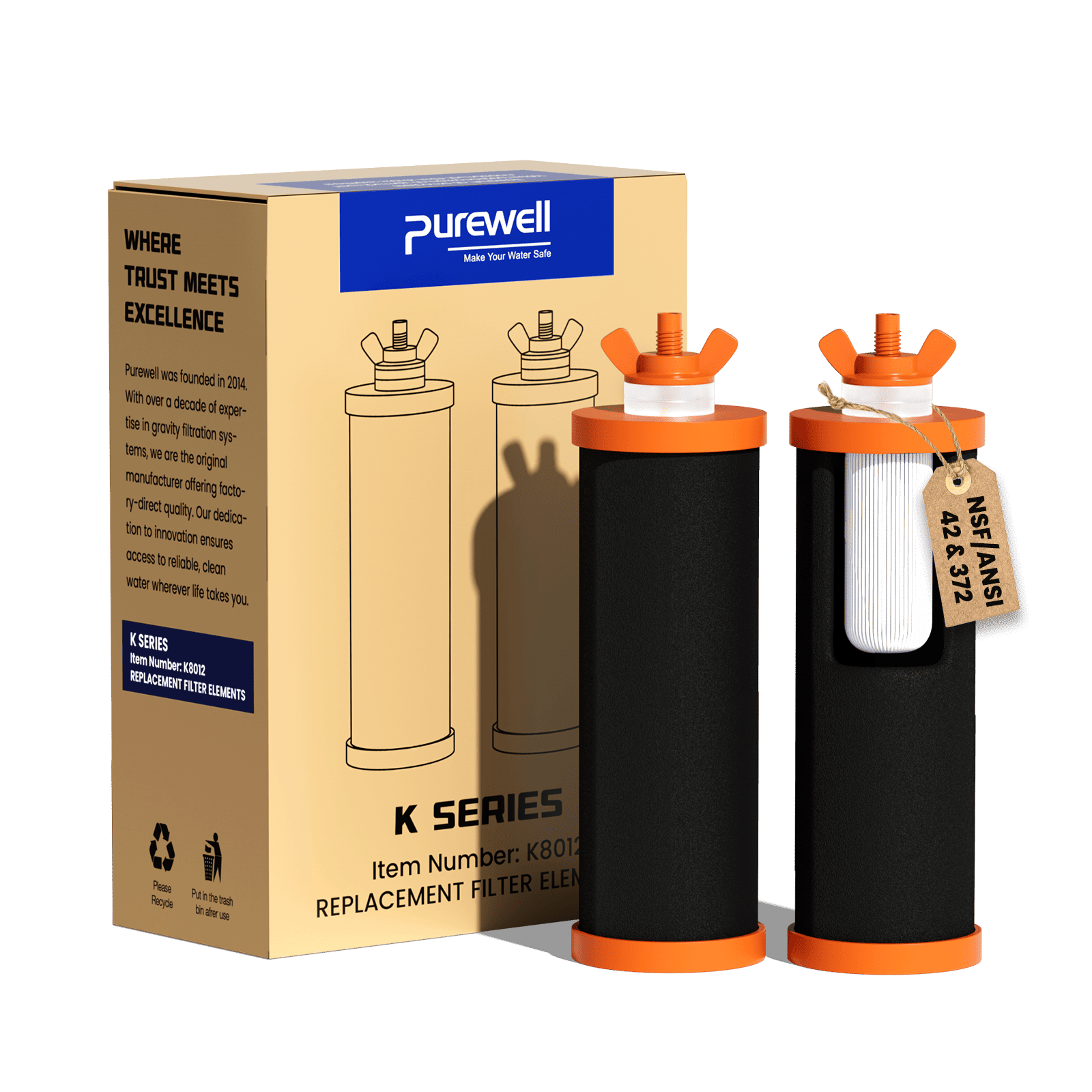
Worked example — Purewell K Series 2.25 (independently tested to NSF/ANSI 42 and 372)
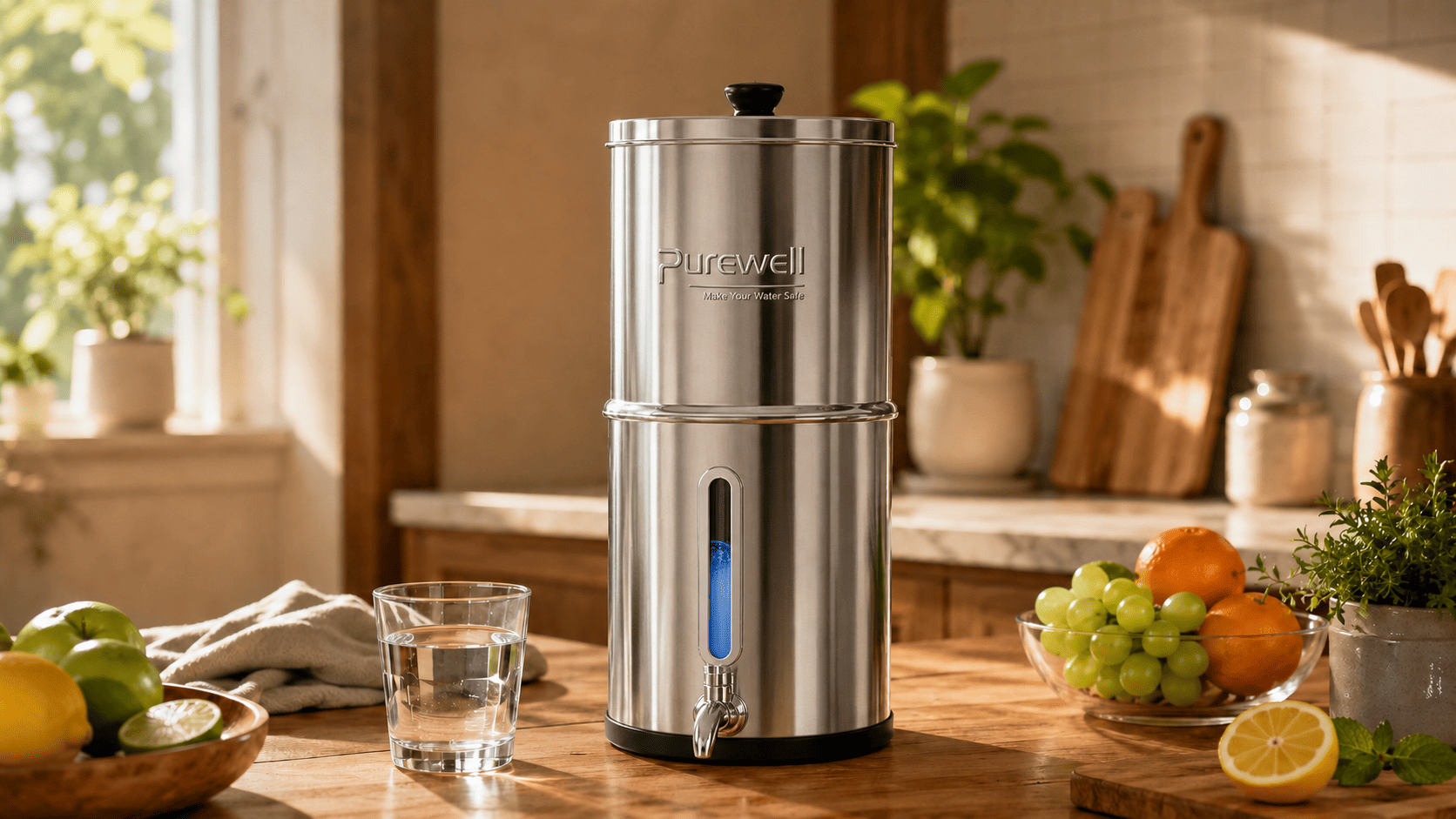
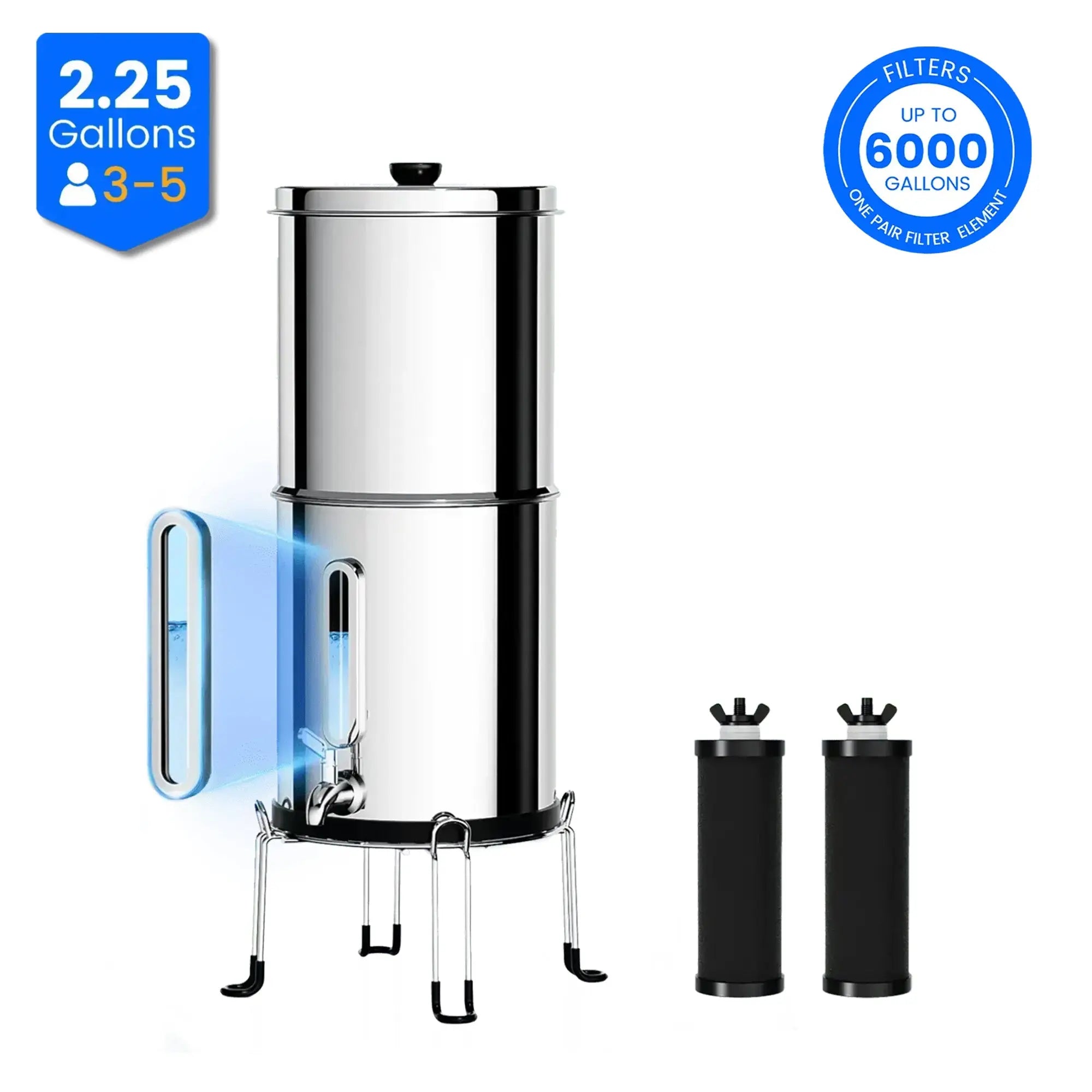
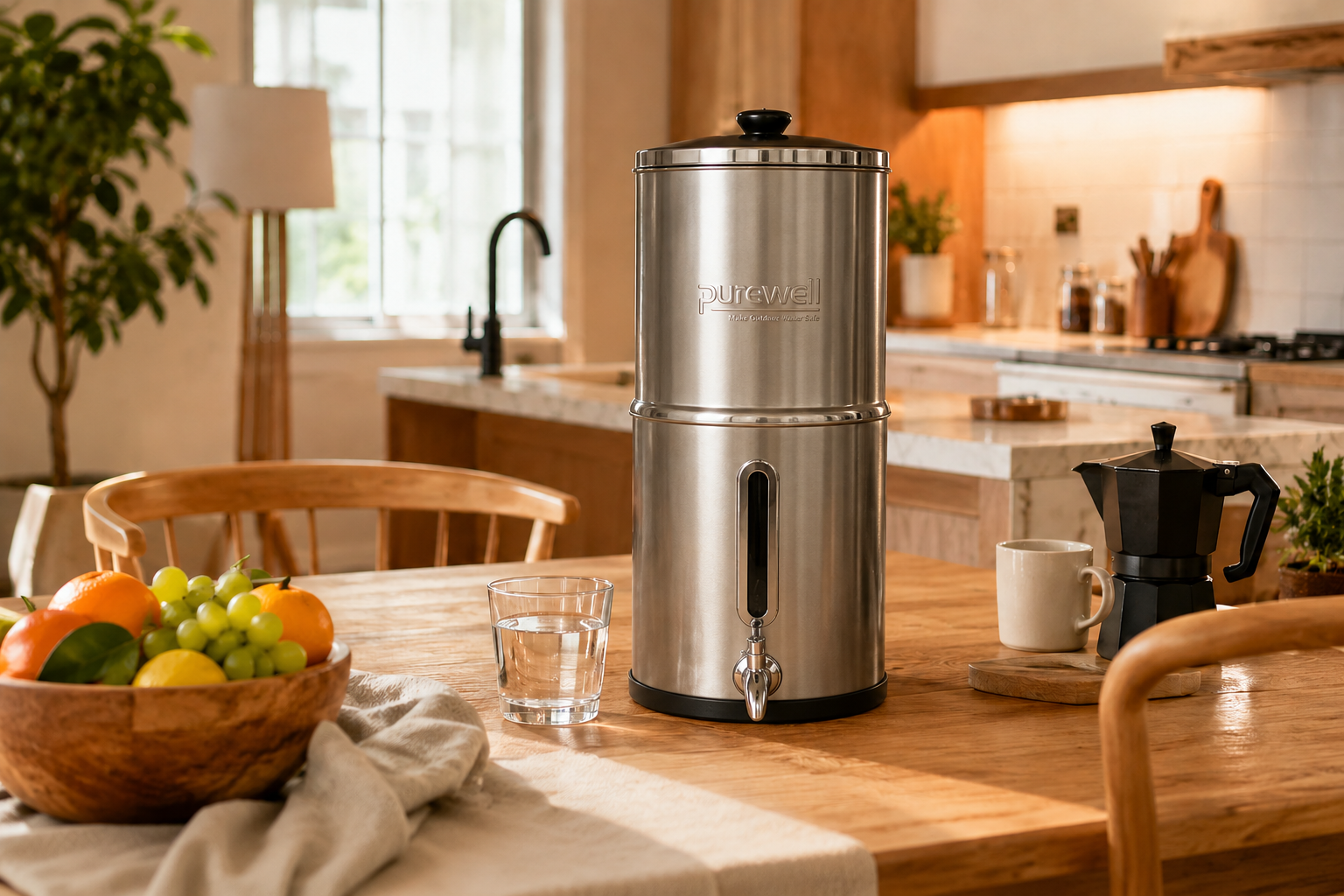
The Purewell K Series 2.25-gallon system is a countertop gravity filter in 304 stainless steel. What we can state from its documentation:
| Documented fact | Source | What it does / does not mean |
|---|---|---|
| 304 stainless steel body, 2.25-gallon capacity | Product page | Material and size only. |
| Independently tested to NSF/ANSI 42 & 372 | Product page + NSF/ANSI 372 scope | 42 = aesthetic effects (chlorine, taste, odor). 372 = lead content in wetted materials, not a claim that it removes lead from source water. |
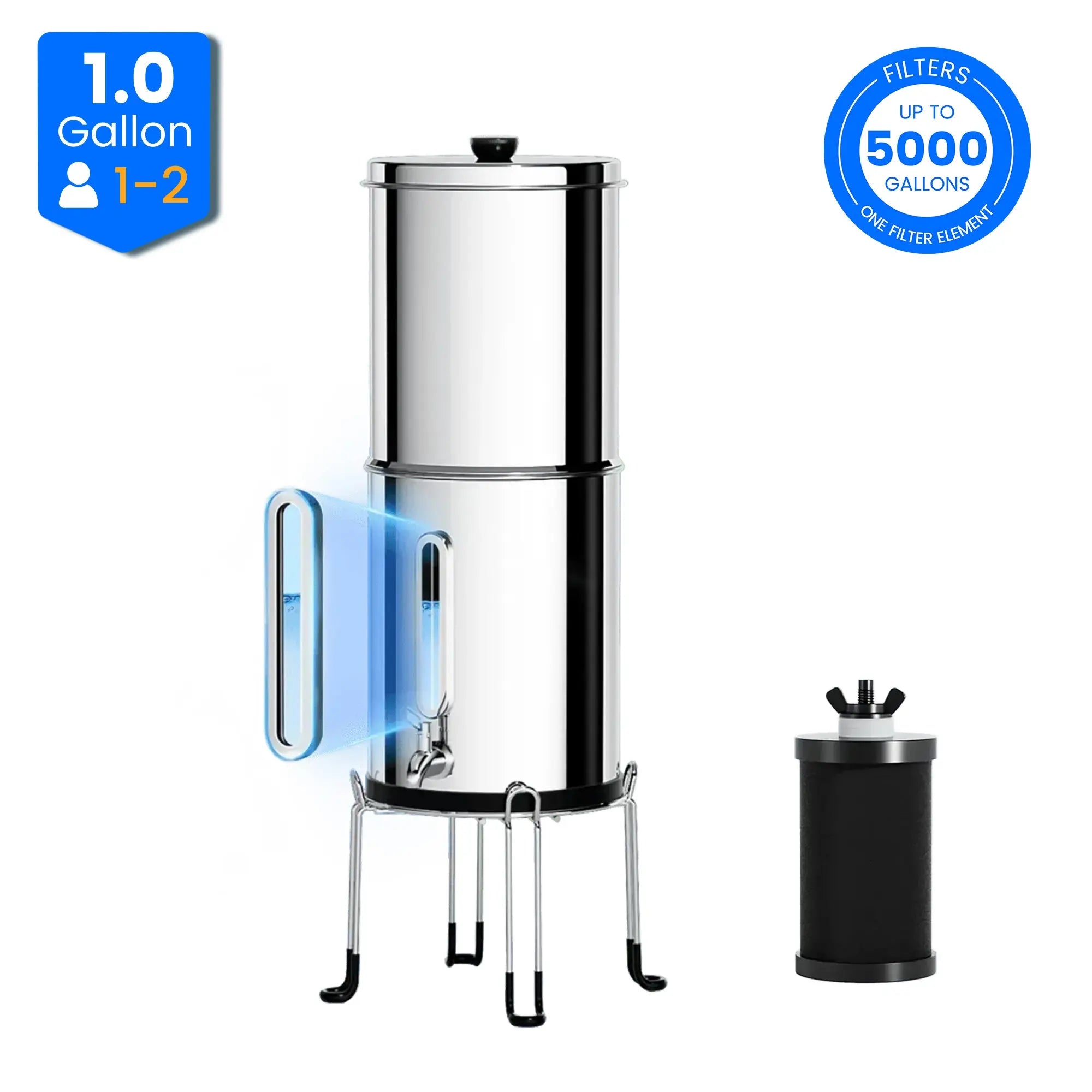
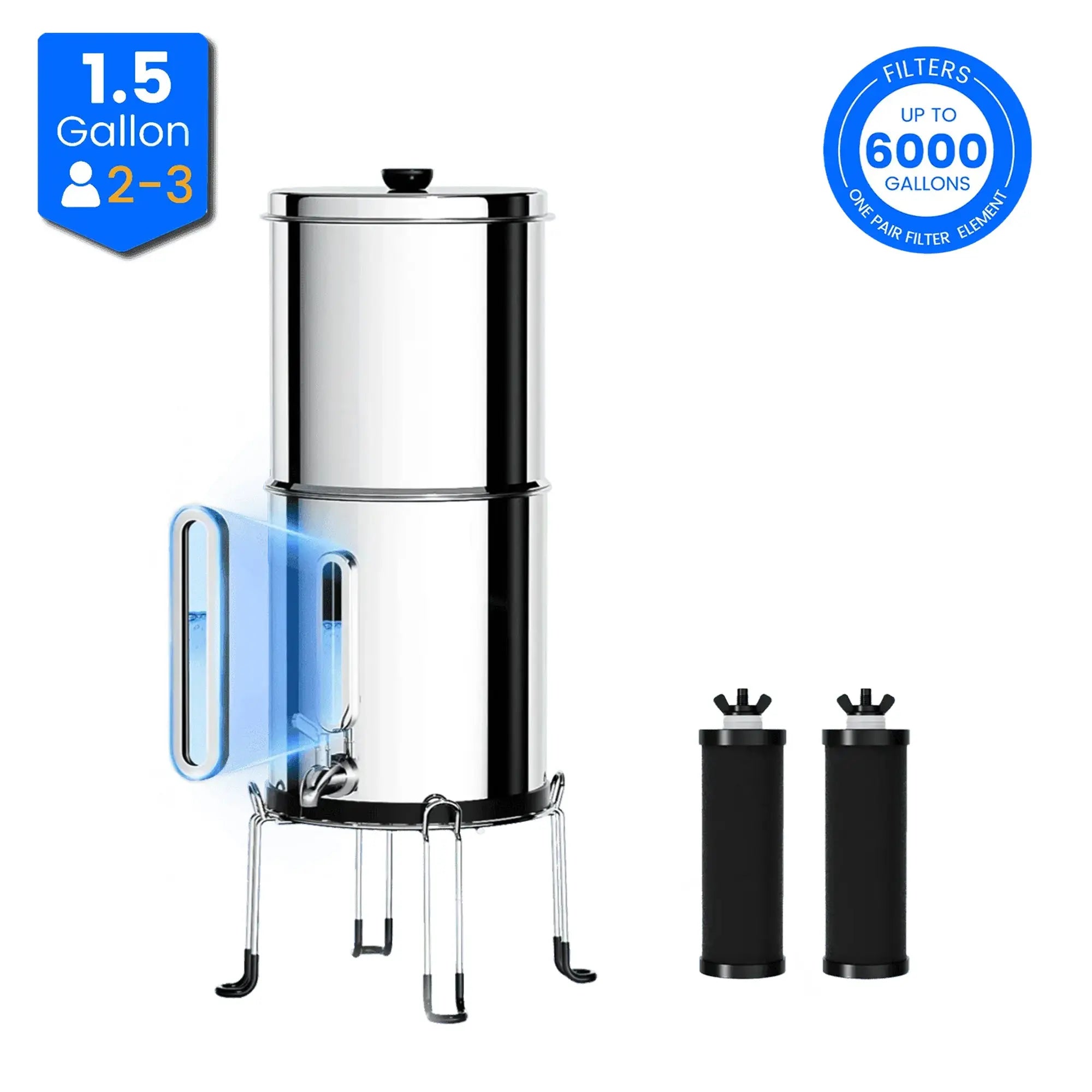
| Lifespan: 6,000 gal/pair carbon; 1,000 gal/pair fluoride | Product page | Rated capacity for the named filter pair. |
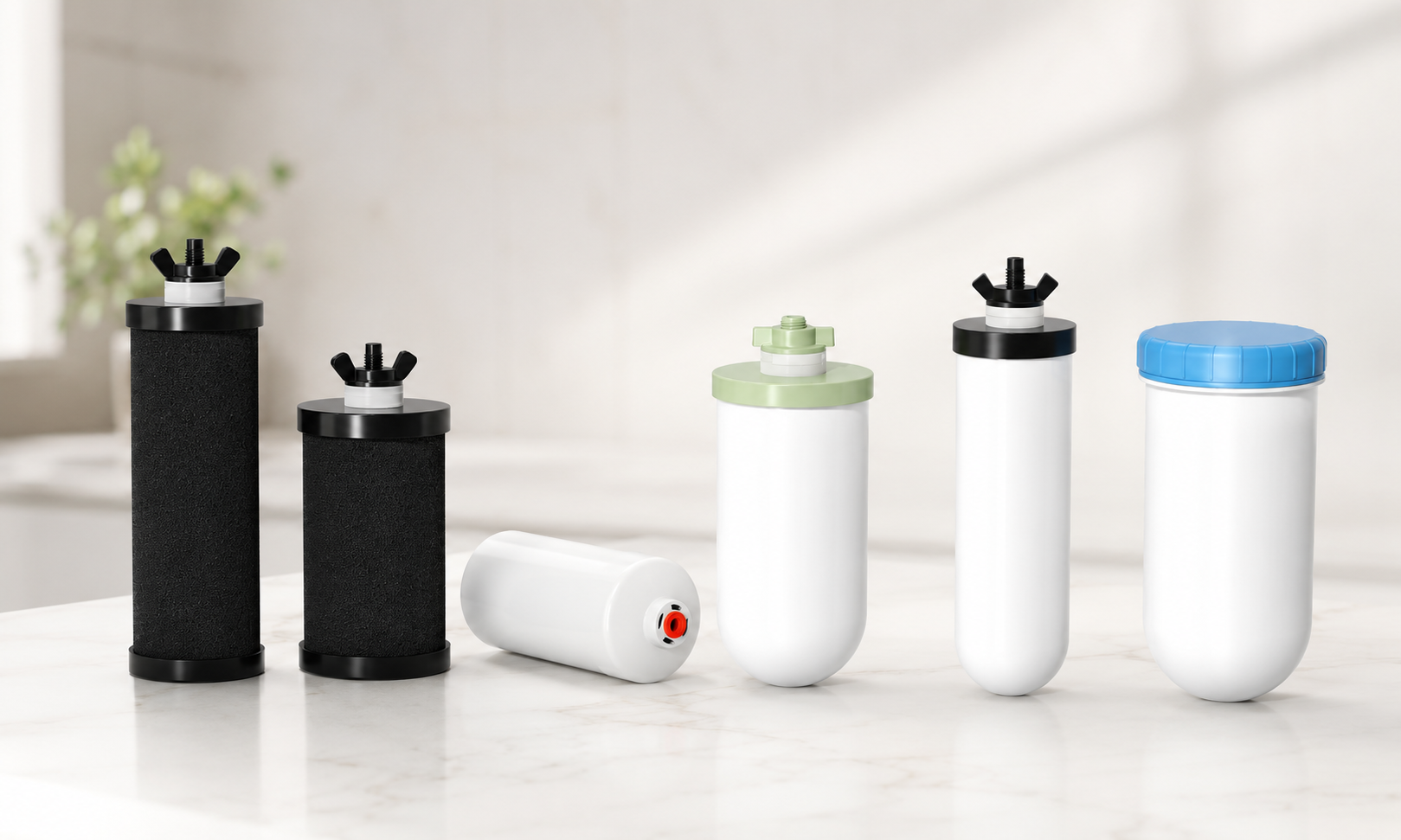
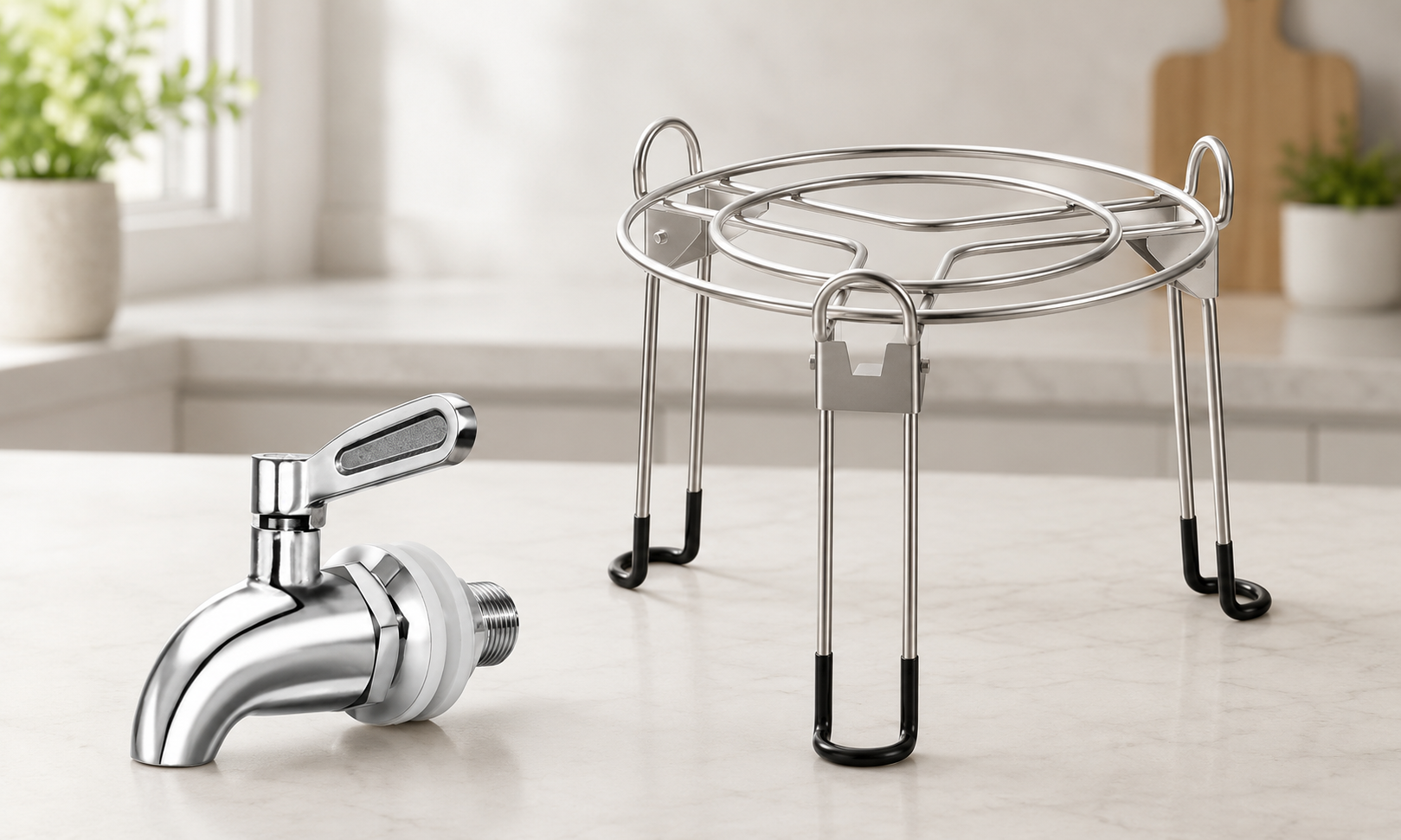
| Filter variants: With Window, Fluoride, With Stand, Replacement (K8011) | Product page | Pick the cartridge that matches your goal; do not transfer one variant's claim to another. |
| Not designed to lower TDS | Product + comparison pages | A TDS reading is not proof of safety; this system is not a TDS-reduction device. |
This is the discipline the checklist enforces: we state only what the certificate or product document supports, and we label everything else "verify."
Worked example — Purewell BO Series 2.25 (0.01 μm)
The BO Series 2.25-gallon system uses a 0.01-micron core filter, ships in 6-stage (K8001) or 9-stage fluoride-reduction (K8006) configurations, and its documentation states it is sized for roughly 3–5 people. Its documentation also carries the source-water guardrail we recommend you follow:
**Source-water guardrail (BO Series documentation):** Use clear source water. Outdoor or untreated water may shorten filter life depending on water quality. A countertop gravity filter is designed for treated municipal, city, or tested well water — it is **not** a device that makes untreated outdoor surface water safe to drink.
We apply the same four-point test to BO: the 0.01 μm rating and the stage count are documented product specifications; any specific reduction percentage should be confirmed against the matching test report before you rely on it.
Pre-purchase evidence checklist
Before you check out on any gravity filter, run this five-step check:
- Name the substance you want reduced. Chlorine? Fluoride? A specific metal? PFAS? Match the claim to your actual water concern.
- Find the exact cartridge. Open the product page and note the filter model/variant, not just the tank.
- Locate the certificate or test report. For Purewell, start at the Water Filter Test Reports & Certificates page. Confirm the document matches the current product.
- Read the scope. Is it NSF/ANSI 42, 53, 58, or 372? Which exact claim? A 42 certificate does not prove lead, PFAS, or fluoride reduction. See the NSF standards overview and the NSF/ANSI 372 scope.
- Check capacity and conditions. Note the rated gallons and any source-water limits, then decide if they fit your home.
External references worth knowing: NSF publishes a [standards overview](https://www.nsf.org/consumer-resources/articles/standards-water-treatment-systems) and a [372 technical explanation](https://www.nsf.org/ca/en/knowledge-library/nsf-ansi-can-372-technical-requirements); EPA recommends matching PFAS-reduction products to NSF/ANSI 53 or 58 and confirms the specific PFAS of concern — see [EPA PFAS filter guidance](https://www.epa.gov/water-research/identifying-drinking-water-filters-certified-reduce-pfas). These explain *how* to verify — they do not certify any single product.
Frequently asked questions
Is a "Berkey alternative" automatically as good as Berkey? Not necessarily, and the question is less useful than a like-for-like check. Compare the exact filter element, the named reduction claim, the test conditions, and the underlying report for each brand. Verify the exact claim for the exact filter you would receive rather than assuming one tank is better than another.
What does "NSF certified" mean on a gravity filter? It depends which standard. "Independently tested to" a standard is not the same as "certified to" it. NSF/ANSI 42 covers aesthetic effects (chlorine, taste, odor). NSF/ANSI 53 covers specified health-effect contaminants. NSF/ANSI 372 evaluates lead content in wetted materials — it is not proof the filter removes lead already present in your water. Always read the specific claim and its document.
Can I use a countertop gravity filter with stream, rain, or river water? Follow the exact model guidance. The BO Series documentation states to use clear source water and that outdoor or untreated water may shorten filter life. A countertop gravity filter is designed for treated municipal, city, or tested well water; it is not a device that makes untreated outdoor surface water safe to drink.
Where do I find the test report for a Purewell filter? Start at the Water Filter Test Reports & Certificates page, then match the document to the exact cartridge and variant you plan to buy.
Does the K Series lower TDS? No. The K Series product documentation states these filters are not designed to reduce total dissolved solids. A TDS reading is not, by itself, proof of water safety.