
Safe Drinking Water After a Flood: What to Do When the Water Plant Shuts Down
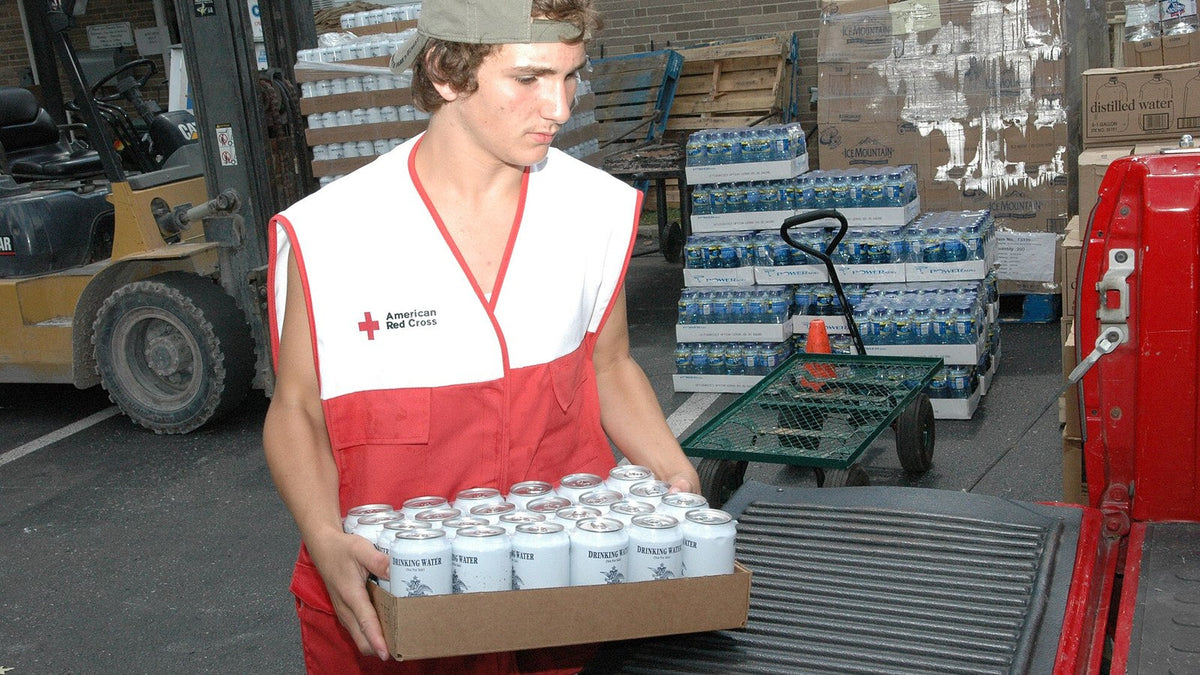
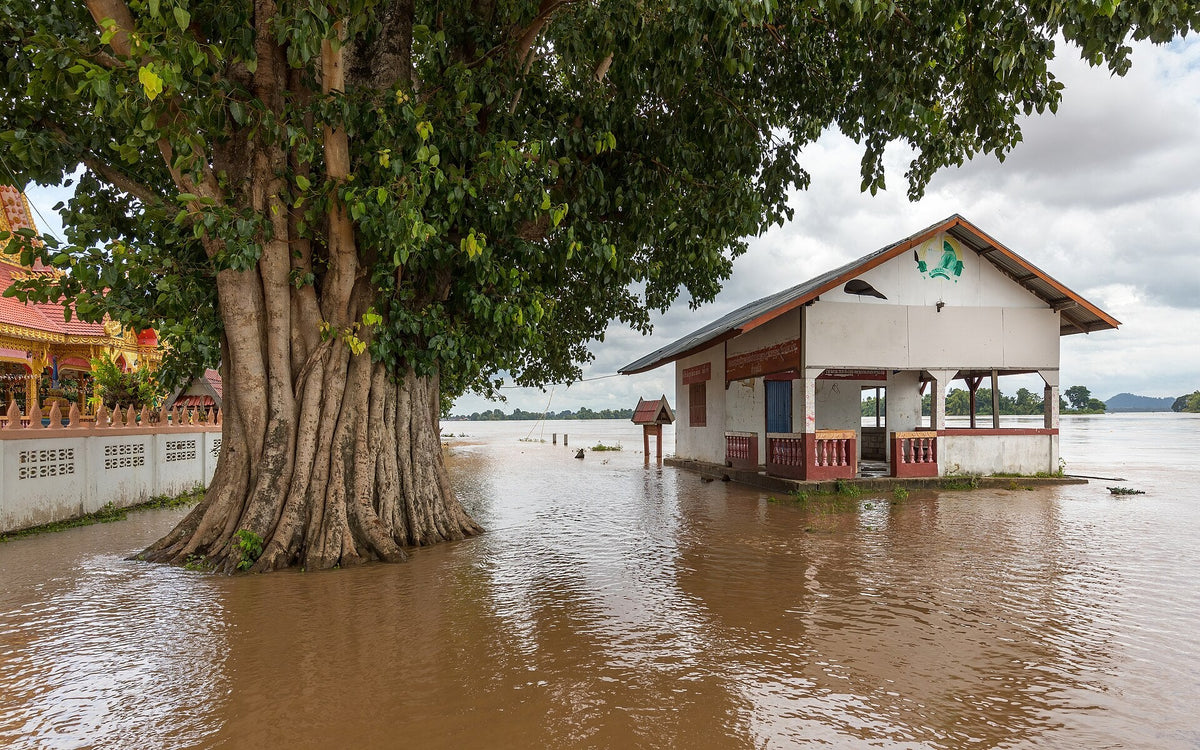
Floodwaters rise fast — and the real emergency often starts after the rain stops. When a water treatment plant shuts down, a well is flooded, or a boil-water advisory is issued, your tap can go from safe to questionable overnight. Recent flash flooding in the Tennessee and Georgia mountains did exactly that: the treatment plant closed and residents were told to boil. Here is how to get safe drinking water when a flood takes your tap offline.

Why a flood is a drinking-water emergency
Flooding is rarely just a "water everywhere" problem. It attacks your drinking water in four ways, and they can all hit at once:
- Treatment plants shut down. Floodwater overwhelms or knocks out municipal treatment, and the plant goes offline — exactly what happened in the recent Tennessee/Georgia flash floods.
- Boil-water advisories follow. When treatment is interrupted, officials issue a boil-water notice until the water is confirmed safe.
- Wells get contaminated. Floodwater carries sewage, chemicals, and debris into private wells. Shallow wells — under 50 feet — are the most at risk.
- Pressure drops. When pumps lose power, water pressure falls and contaminated groundwater can leak into the lines through cracks.
Until your water is confirmed safe, the CDC's guidance is clear: drink bottled water, or treat water by boiling or filtration — and never use water you suspect is contaminated by fuel or chemicals, because boiling and filtering do not remove chemical contamination.
What's safe — and what isn't — after a flood
Your safe options, in order of reliability:
| Source | Safe? | Notes |
|---|---|---|
| Sealed bottled water | Yes | The gold standard during any advisory |
| Boiled tap water | Yes, if advised | Rolling boil for 1 minute (3 min above 6,500 ft) |
| Filtered clear water | Yes, with a rated filter | A battery RO or pump filter treats clear, non-chemical water |
| Flood or standing water | No | Never treat floodwater — it carries sewage and chemicals |
Two portable tools that make water safe without a working tap
When the power is out and the tap is unreliable, two portable systems get you drinkable water without plumbing:
| Method | Power | Best for | Trade-off |
|---|---|---|---|
| Portable RO purifier | Built-in battery | Deep filtration, a household, extended outages | Higher upfront cost; needs recharging |
| Hand pump / straw filter | Manual | Bags, cars, quick individual use | Slow flow; single-person at a time |
Option 1: A battery-powered RO purifier — filtration with the power out
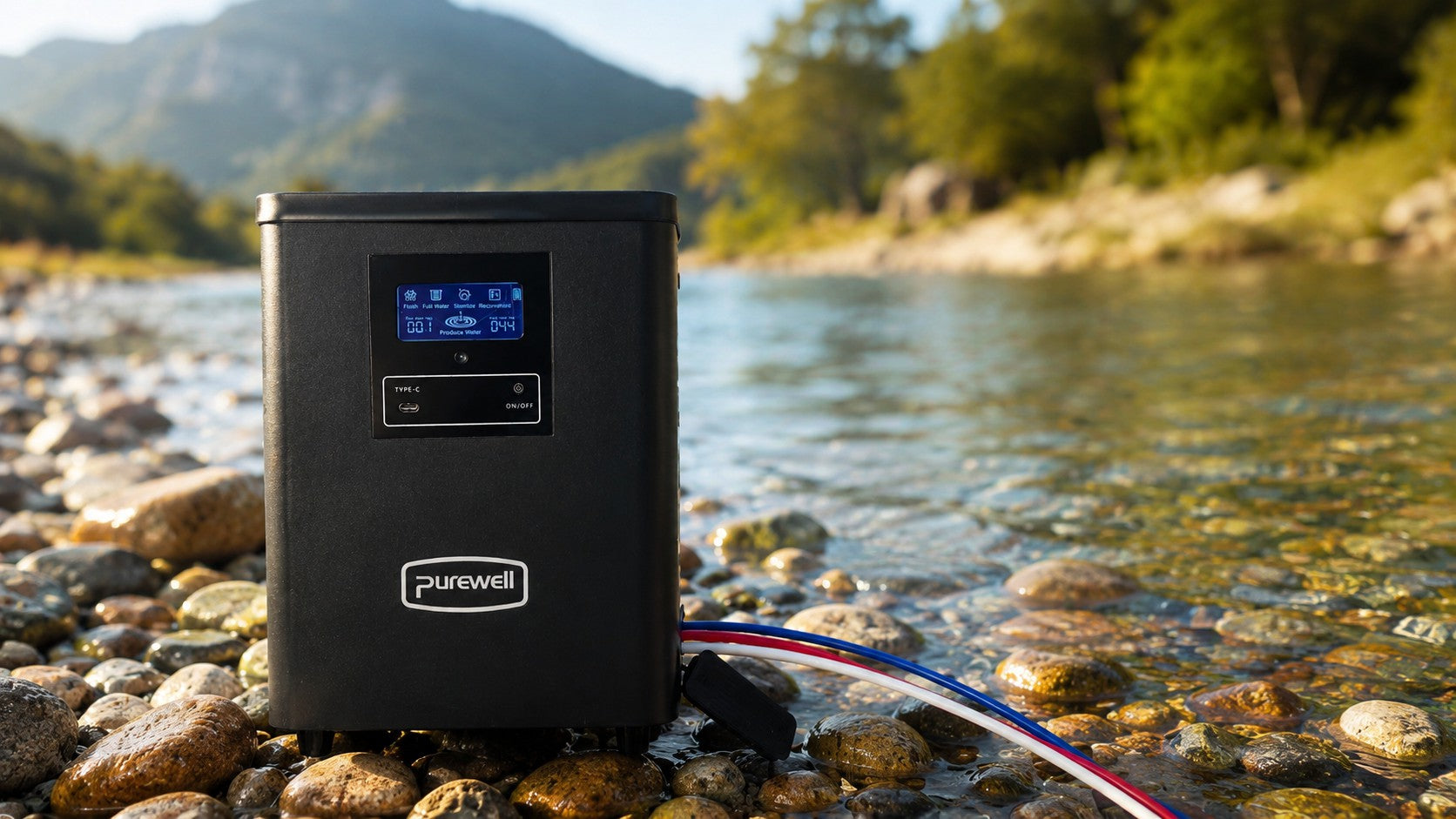
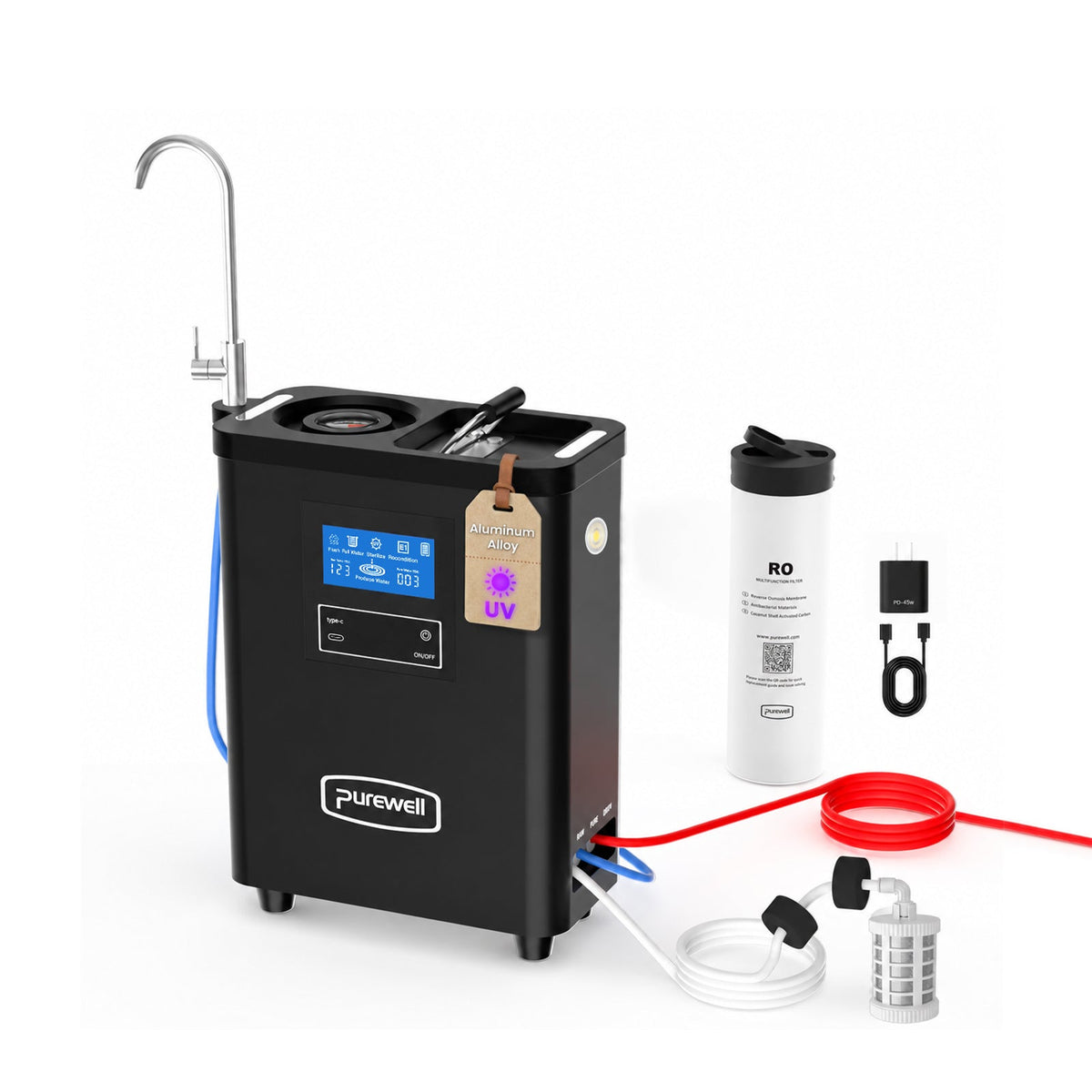
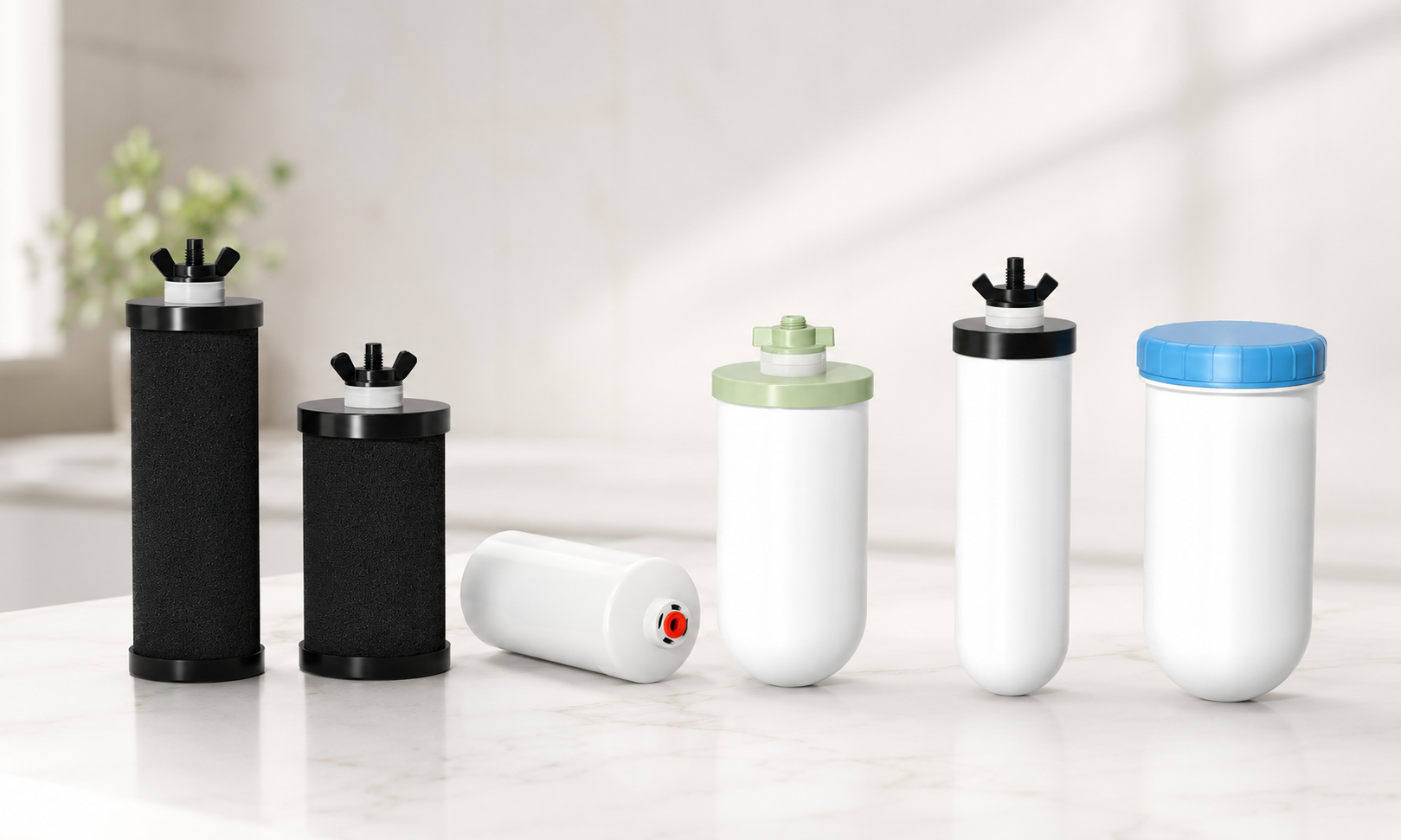
The most complete portable option is a battery-powered reverse osmosis (RO) purifier. Purewell's portable RO unit runs on a 5,200 mAh battery and uses a 10-stage process — including a 0.0001-micron RO membrane and UV treatment — to reduce dissolved solids, salts, bacteria, and a long list of contaminants. Because it carries its own battery, it keeps working while the grid is down.

Beyond filtering, the Portable RO Water Purifier System ($299.00) can charge a phone from its Type-C port — a genuinely useful bonus when the power is out and every charge counts.
Option 2: A hand pump or straw — the lightweight backup
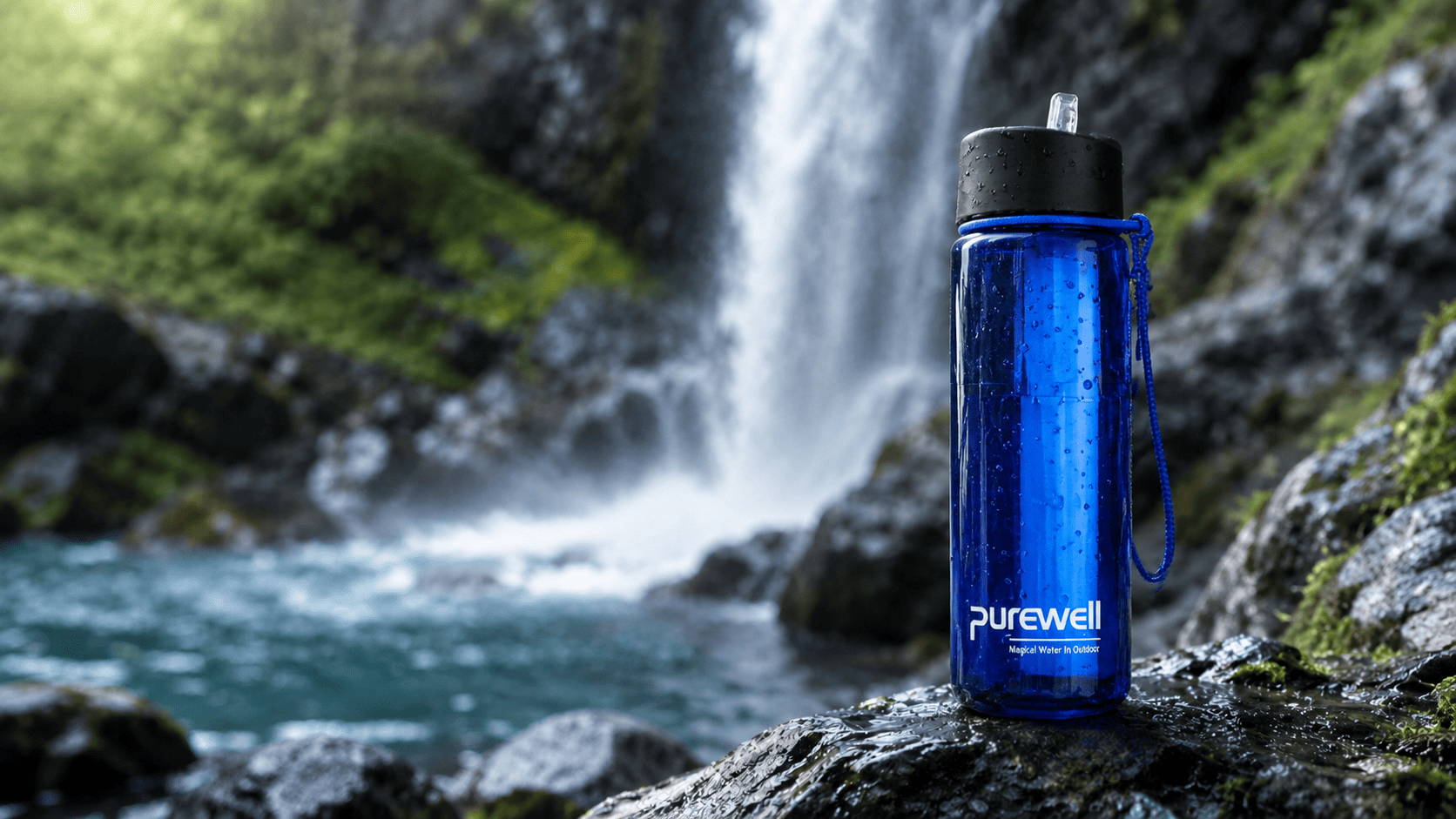
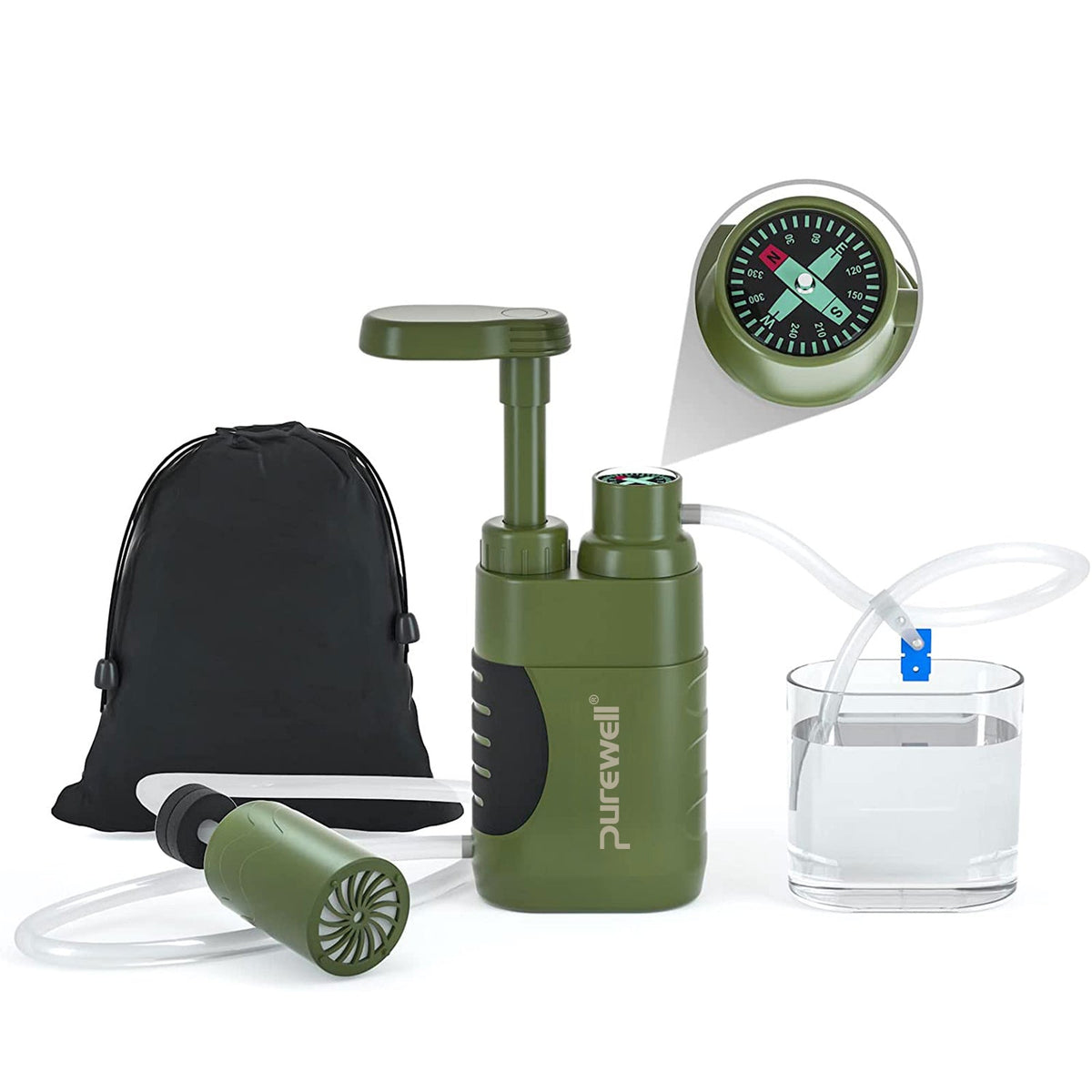
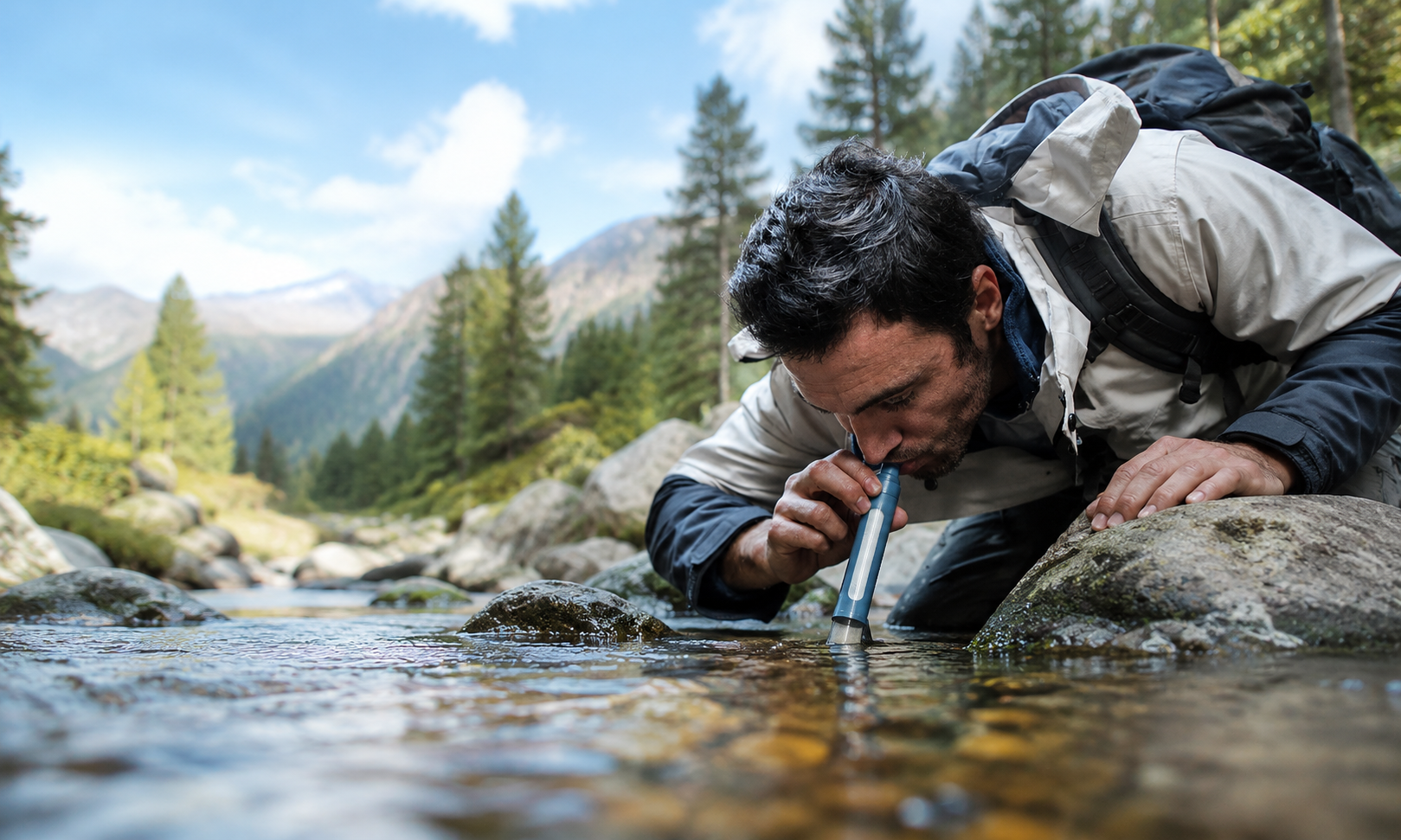
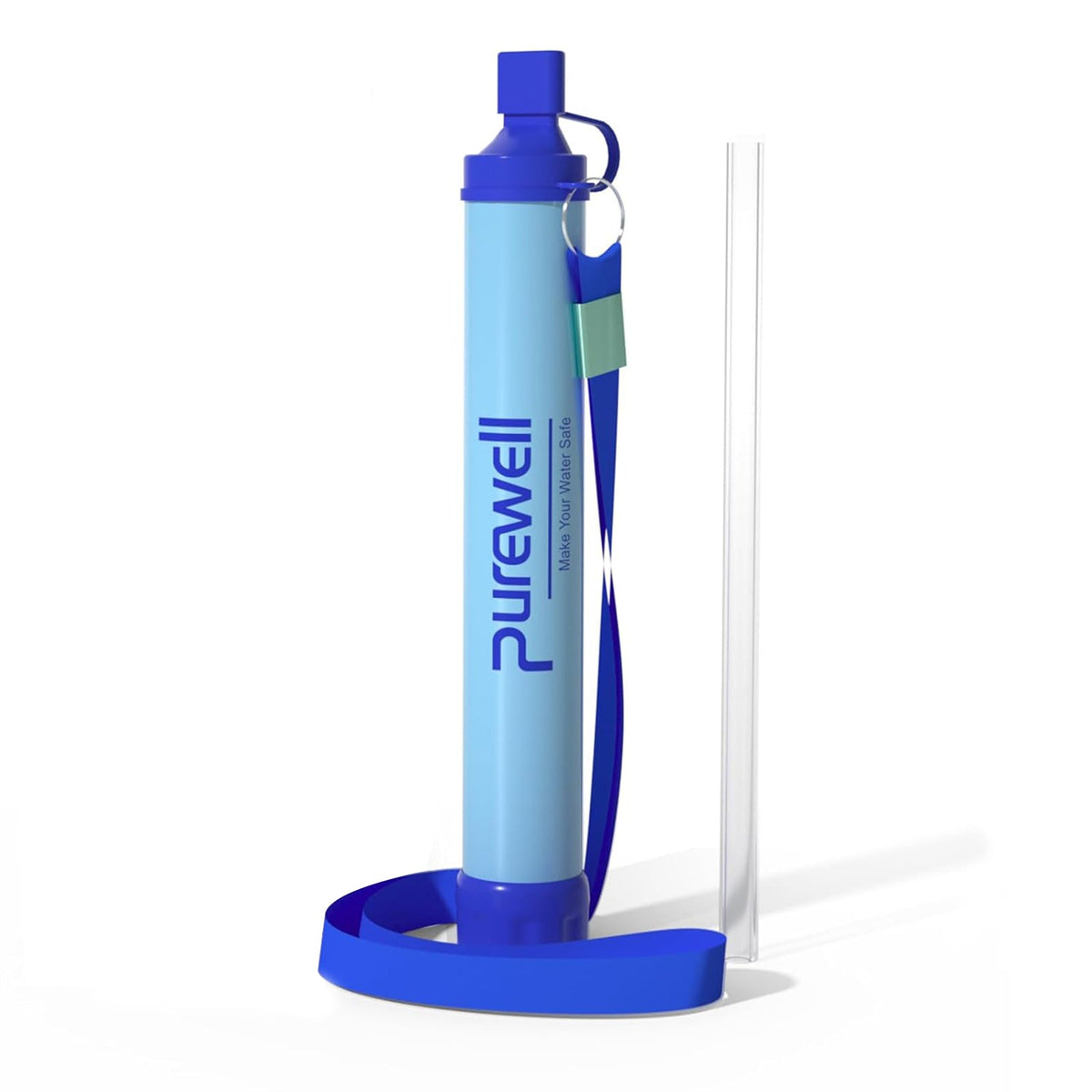
For a go-bag, car kit, or a "just in case" that lives in a drawer, a hand-pump filter or filter straw is hard to beat. Purewell's Portable Hand-Pump RO Water Filter ($55.99) turns a few squeezes into filtered water from a clear, non-chemical source, while the Personal Portable Water Filter Straw filters on the go.

These are not a replacement for a household system — flow is slow — but as a compact second layer they are excellent value.
Your after-flood drinking-water checklist
- Follow official advisories first. If a boil-water notice is active, boil or use bottled water until it is lifted.
- Stock bottled water as your zero-effort buffer — at least one gallon per person per day.
- Add a battery or manual filter to stretch stored water and treat clear collected water.
- Never treat floodwater or chemically contaminated water — no filter makes it safe.
- Test flooded wells before you use them again, and follow local guidance on disinfection.
Frequently asked questions
Can I drink tap water during a boil-water advisory?
No — not without treating it. During a boil-water advisory, bring tap water to a rolling boil for 1 minute (3 minutes above 6,500 feet), or use bottled water. A battery-powered RO purifier or a rated pump filter can also treat clear, non-chemical tap water as an alternative to boiling.
Can a filter make floodwater safe to drink?
No. Floodwater carries sewage, fuel, and chemicals, and no filter or boiling step removes chemical contamination. Use filters only on clear, non-chemically-contaminated freshwater. For floodwater, use bottled water or a confirmed-safe source.
Does a portable RO purifier work when the power is out?
Yes, on its built-in battery. Purewell's portable RO purifier has a 5,200 mAh battery that filters without a wall outlet. Over a multi-day outage the battery needs recharging, so pair it with bottled water or a manual filter for long events.
How do I know if my well is safe after a flood?
If your area flooded, do not drink the well water until it has been tested. Shallow wells (under 50 feet) are most likely to be contaminated. Contact your local health department for testing and disinfection guidance.
What's the difference between filtering and boiling?
Boiling kills bacteria, parasites, and viruses but does nothing for chemical contamination. A fine filter physically removes bacteria and parasites; a purifier (like UV or RO) goes further on viruses and dissolved solids. Neither handles chemical contamination — for that, you need a different water source.