



PFAS in New Hampshire Well Water: 2026 Homeowner Guide

More than a decade after PFAS contamination was first found in Merrimack, New Hampshire officials say there is still "a lot of work to do" — and for the thousands of households that draw water from private wells, the responsibility for safe drinking water still falls largely on the homeowner.
At a public presentation in Merrimack in November 2026, the New Hampshire Department of Environmental Services (DES) walked residents through ten years of cleanup work on the "forever chemicals" that contaminated the region's groundwater — and made clear the job is far from finished. If you live in southern New Hampshire and rely on a private well, here is what the news means for your water, and what you can actually do about PFAS at the tap.
What happened in New Hampshire: the short version
The contamination traces back to the former Saint-Gobain Performance Plastics plant in Merrimack, where PFAS was used in industrial fabric-coating processes beginning in the 1980s. Officials say PFAS was released into the environment through airborne emissions, settling into groundwater across a wide area. The plant stopped manufacturing in 2024, but the contamination remains.
In 2018, the state and Saint-Gobain entered a consent decree that made the company permanently responsible for providing alternative drinking water to people within a roughly 64-square-mile zone — an area containing about 19,000 properties, according to DES.
PFAS — per- and polyfluoroalkyl substances — are commonly called "forever chemicals" because they are extremely slow to break down and can linger in both the environment and the human body. The Centers for Disease Control and Prevention (CDC) links PFAS exposure to a range of health concerns, including certain cancers, reproductive issues, high cholesterol, and thyroid and liver disease.
Why private well owners are the most exposed group
Here is the key distinction the presentation highlighted: public water systems can be treated centrally, but private wells cannot. Merrimack installed a treatment system to filter PFAS out of its public water supply. But many homes in Merrimack and across New Hampshire get their drinking water from private wells — and those properties either need their own filtration system or a new connection to the municipal water system.
That difference matters because there is no utility doing the testing or treatment for you. If you own a private well, you are your own water department: you decide whether to test, and you decide whether to treat.
The number that frames the problem: remediation has focused on homes whose water exceeded 70 parts per trillion (ppt) of PFAS. As of July 2026, more than 860 properties within the consent-decree boundary had received either home treatment systems or municipal waterline extensions, according to DES. New municipal connections have gone in across Merrimack, Bedford, and Litchfield.
What the state is doing (and what it can't do for you)
DES officials describe the progress as "great strides" but the work as ongoing. Over the past decade, the state reports it has:
- Treated public water supplies to remove PFAS for thousands of homes in the region.
- Connected roughly 1,000 additional homes to public water systems that previously weren't connected.
- Installed about 1,000 point-of-entry treatment units — whole-home systems that filter water as it enters the house.
In the interim, homes that exceed the threshold receive bottled water while the state works on long-term fixes — either hooking private wells up to public water, or installing point-of-entry (POET) treatment systems. Plans are also in motion to connect about 350 properties in Londonderry, the last town to reach a remediation plan with Saint-Gobain, to a water line over the next three to four years.
Monitoring continues, too: the state is conducting widespread groundwater and drinking-water testing within the zone, and is also testing soil at the now-demolished factory site.
If you're outside the consent-decree zone, the state's program won't automatically cover your well. DES's remediation and reimbursement programs are tied to specific contamination areas. If you live elsewhere in New Hampshire and want to know about your own well water, the first step is testing it yourself through a certified lab or the state's guidance at des.nh.gov.
What to do if you're on a private well near the contamination
If you live in or near Merrimack, Litchfield, Bedford, Londonderry, or the surrounding area, take these steps in order:
- Find out if your property is in the consent-decree zone. This determines whether Saint-Gobain is responsible for providing you an alternative water source. Contact NH DES for your property's status.
- Test your well water for PFAS through a certified laboratory. Private wells are not automatically tested — you have to request it.
- If levels come back above the state's thresholds, ask DES what relief applies to you, whether that's bottled water, a point-of-entry system, or a municipal hookup.
- If you want protection now regardless of your status, install point-of-use or point-of-entry treatment in your home — the same technology the state is using, scaled for a single household.
How home water filters actually handle PFAS
Not every filter removes PFAS. Two technologies have the strongest evidence base for reducing PFAS in drinking water:
Reverse osmosis (RO) membranes
Reverse osmosis pushes water through a semi-permeable membrane with pores small enough — typically around 0.0001 micron — to reject dissolved contaminants, including PFAS, arsenic, fluoride, and heavy metals. In the U.S., reverse osmosis systems are certified under NSF/ANSI 58, and the standard includes specific reduction claims for PFOA and PFOS, the two most-studied PFAS compounds.
Activated carbon
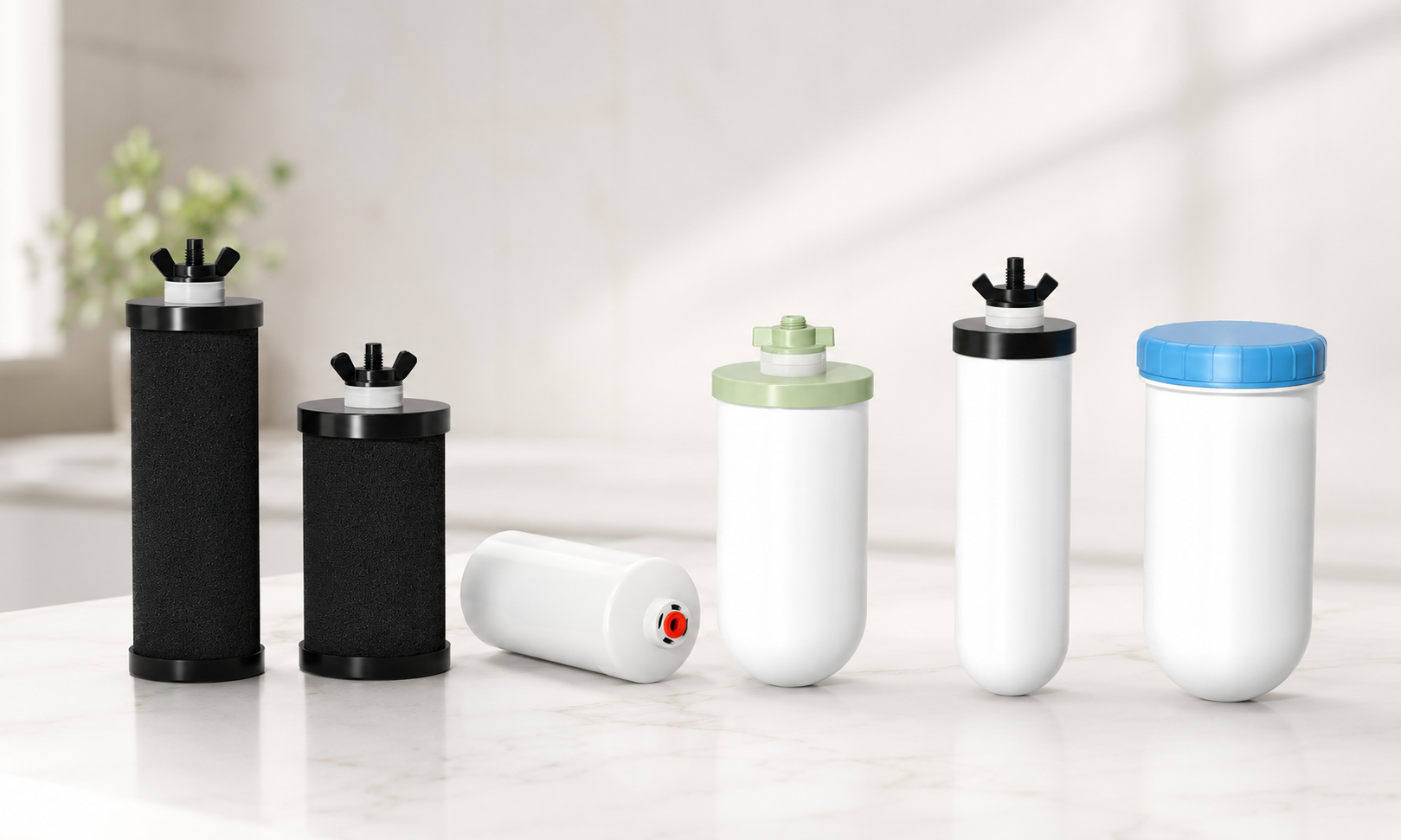
Granular activated carbon (GAC) and solid carbon block filters adsorb PFAS onto the carbon surface. Carbon systems aimed at PFAS are certified under NSF/ANSI 53 for PFOA/PFOS reduction. Carbon is effective but typically needs more frequent replacement and works best for specific PFAS compounds, not all of them equally.
| Technology | How it works | Relevant standard | Best for |
|---|---|---|---|
| Reverse osmosis | Membrane rejects dissolved contaminants (~0.0001 µm) | NSF/ANSI 58 | Broad reduction: PFAS, arsenic, fluoride, TDS, heavy metals |
| Activated carbon | Adsorbs PFAS onto carbon surface | NSF/ANSI 53 | PFAS + chlorine, taste, and odor; budget-friendly point-of-use |
Wording matters. "Designed to reduce" is not the same as "certified to reduce." Before you buy, look for the actual certification listing and test report that names PFOA and PFOS specifically — not a generic "removes 99% of contaminants" claim on a product page.
A point-of-use option for a single tap: the Purewell U01
For homeowners who want PFAS protection at the kitchen sink without a whole-home overhaul, an under-sink reverse osmosis system is the closest thing to what the state installs — scaled down to one tap.
The Purewell U01 Under-Sink RO System is a compact, tankless unit that runs on household water pressure with no electricity required, using a 7-stage filtration train — sediment pre-filters, carbon, and a reverse-osmosis membrane. Purewell's product page also displays a third-party SGS test report for the system that measured PFAS reduction directly.

Purewell U01 at a glance
- 7-stage filtration — sediment pre-filters, carbon, and a reverse-osmosis membrane
- No electricity — runs on water pressure, useful for homes that want a simple install
- Compact, tankless design — fits under the sink without a bulky storage tank
- Real-time TDS display, pressure gauge, and filter-change indicator
- Replacement filters: PP pre-filter, and a combined PP + RO filter (sold separately)
What the third-party test shows for PFAS
Purewell's product page displays an SGS test report (report no. NBF25-0032189-01, dated March 2026) referencing NSF/ANSI 42 and NSF 53 test methods. For the two PFAS compounds with the strictest U.S. limits — PFOA and PFOS — the report lists:
| Contaminant | Feed water | Treated water | Reduction |
|---|---|---|---|
| PFOA | 0.000350 mg/L (350 ppt) | <0.000004 mg/L (<4 ppt) | >98.36% |
| PFOS | 0.000586 mg/L (586 ppt) | <0.000004 mg/L (<4 ppt) | >99.39% |
In plain terms: the feed water contained PFAS far above New Hampshire's action levels, and the treated water tested below the laboratory's reporting limit for both PFOA and PFOS. The same report lists reductions for arsenic, lead, cadmium, hexavalent chromium, and more.
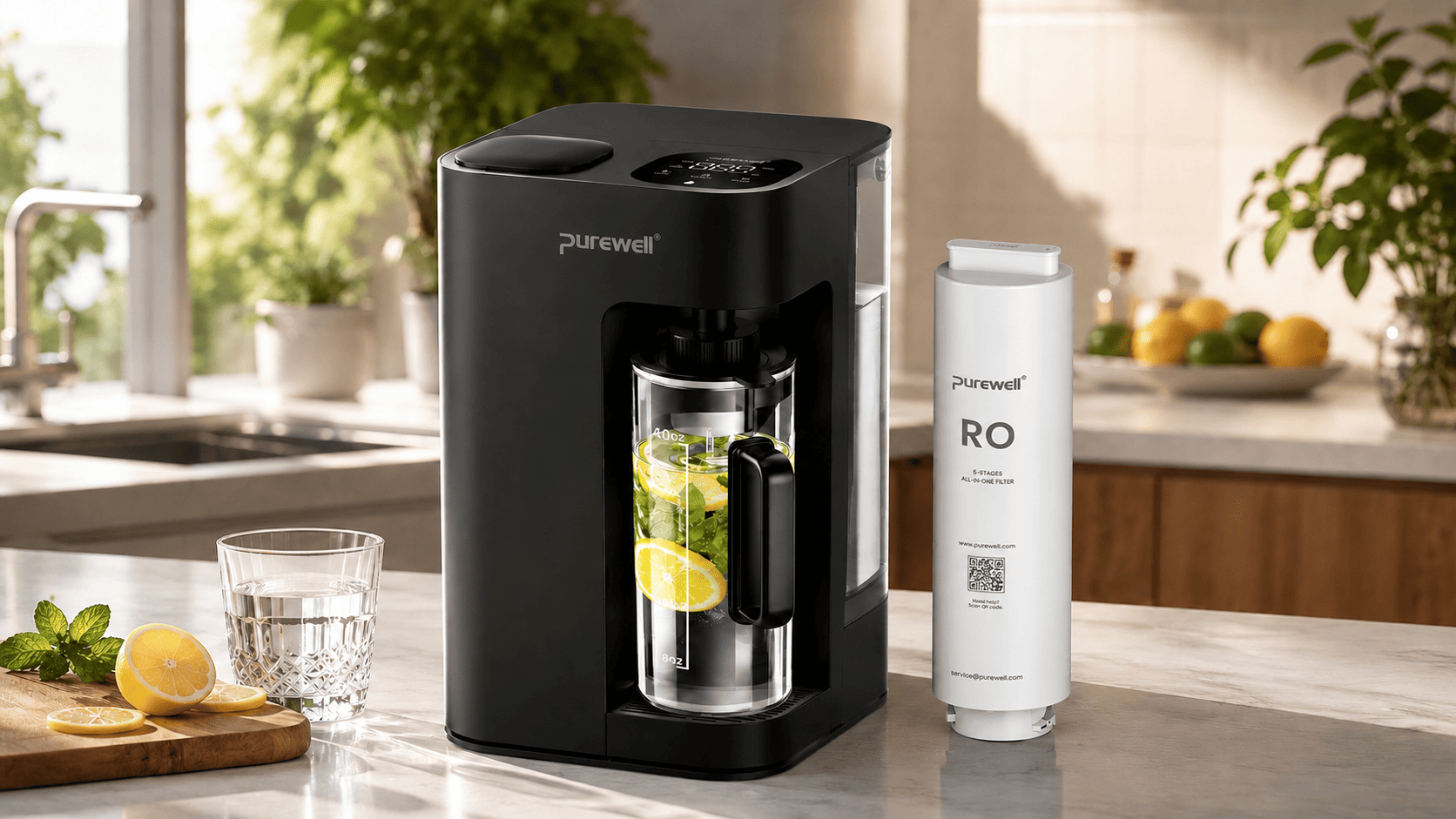
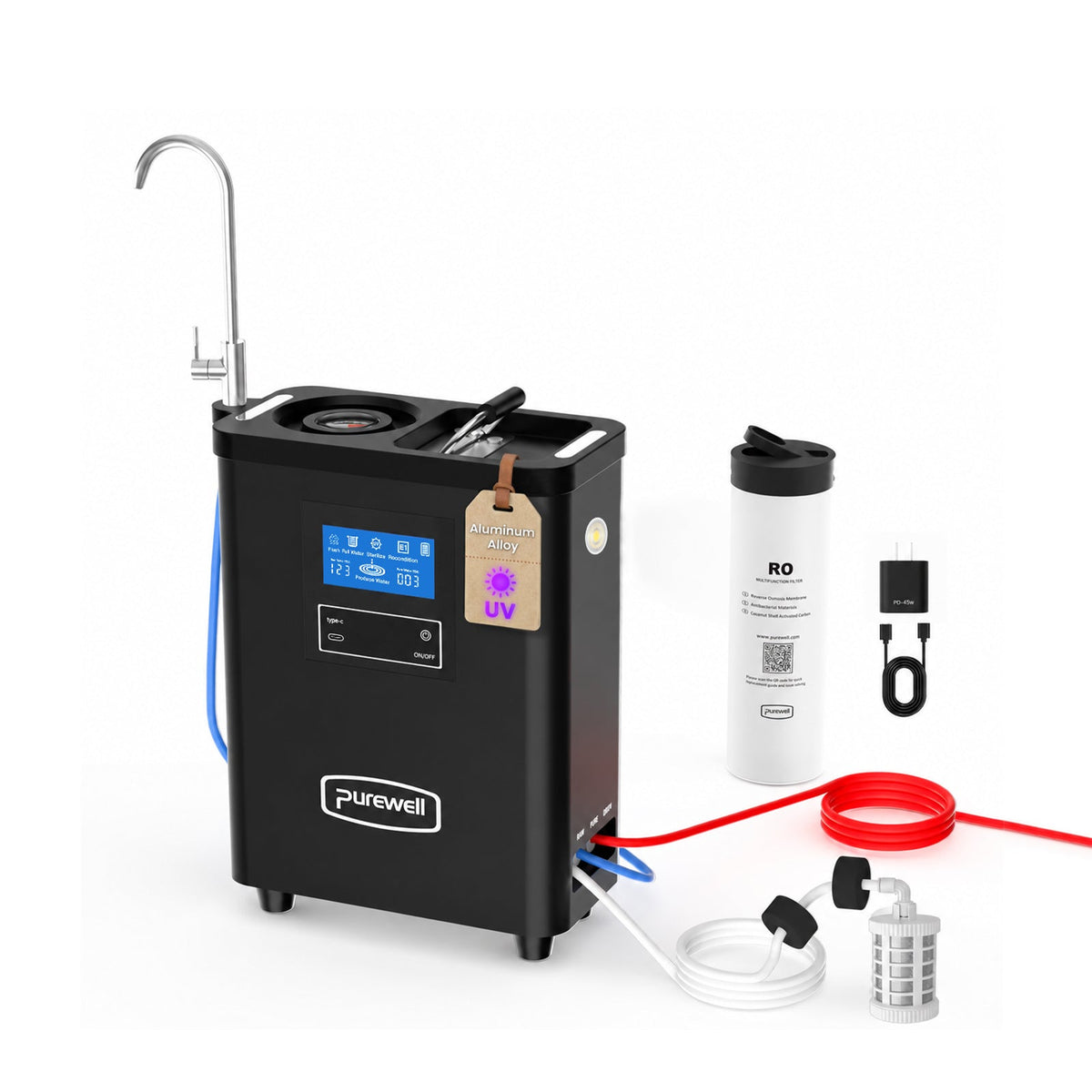
If you prefer a countertop unit that needs no under-sink plumbing, the Purewell C01 Countertop RO System uses a 0.0001-micron RO membrane in a removable-tank design — useful for renters or anyone who can't modify cabinetry.
Read the fine print before you buy. The figures above come from an SGS test report shown on Purewell's product page — a third-party laboratory result, but a marketing screenshot rather than the full report. Note that the page's headline claim of ">99.99% PFAS" is broader than the table's measured results (PFOA >98.36%, PFOS >99.39%). Ask for the complete report and confirm the certification listing for PFOA/PFOS before you commit. This article is informational and is not a substitute for testing your water or for professional advice.
Frequently asked questions
Is there a "safe" level of PFAS in drinking water?
The U.S. Environmental Protection Agency (EPA) has set legally enforceable maximum contaminant levels (MCLs) for several PFAS in public drinking water, with PFOA and PFOS set very low — in the low parts-per-trillion range — reflecting the growing scientific consensus that there is no safe threshold for ingestion. New Hampshire has been moving to align its own standards with those federal levels. For private wells, however, there is no automatic enforcement — you test and decide.
Do I need to test my private well for PFAS?
If you live in or near a known PFAS contamination area — such as southern New Hampshire near the former Saint-Gobain site — testing is strongly recommended. Private wells are not required to be tested by any utility, so the responsibility is yours. Use a certified laboratory and follow NH DES guidance for what to test and how to interpret results.
Does reverse osmosis remove PFAS from water?
Reverse osmosis is one of the most effective home treatments for PFAS. RO systems certified to NSF/ANSI 58 can carry specific PFOA/PFOS reduction claims. The key is to confirm the specific system's certification listing and test report, rather than assuming every RO unit performs identically.
What's the difference between point-of-entry and point-of-use treatment?
A point-of-entry (POET) system treats all water as it enters your home — this is what the state installs for affected properties. A point-of-use (POU) system treats water at a single tap, such as an under-sink or countertop RO unit. POE protects every faucet; POU protects the tap you drink and cook from, at a lower cost.
How much does a PFAS water filter cost?
It varies widely. A point-of-use under-sink RO system can start around a few hundred dollars for the unit, plus periodic replacement filters. Whole-home point-of-entry systems cost more to buy and install. Compare both the upfront cost and the ongoing replacement-filter cost, and always factor in testing your water first.
The bottom line
Eleven years after PFAS was first detected in Merrimack, New Hampshire is still cleaning up — and the households on private wells remain the ones who most need to act for themselves. If you live in the affected region, start with testing and find out whether you qualify for state-provided treatment or a municipal connection. If you want protection at your own tap today, an under-sink reverse osmosis system like the Purewell U01 is a practical point-of-use option — just verify the certification for PFOA/PFOS before you buy.
Protect the tap you drink from
See the Purewell U01 under-sink RO system — 7-stage filtration, no electricity, compact tankless design — and check the current price.
View the Purewell U01