

How to Read PFOS and PFOA Water Filter Test Reports
A lab result answers a narrow question about the sample and conditions tested. Before applying it to a product you may buy, confirm the cartridge, method, test point, and report permissions.

Quick answer: “PFOS/PFOA tested” does not mean every version of a filter is certified for PFAS reduction. Match the report to the exact filter element, then check the tested water, method, volume, service-life point, and limitations. EPA recommends looking for an applicable NSF/ANSI 53 or 58 certification and verifying the exact product in the certifier’s directory.
On this page
A result belongs to a tested sample
PFOS and PFOA are two specific members of the broader PFAS group. A test report may describe how one sample performed against selected conditions. It does not automatically cover every PFAS compound, every cartridge, every system configuration, or a filter’s full service life.
A useful report names the tested element, challenge water, method, treated volume, and test point. A result at the beginning of use cannot be rewritten as a full-life rating unless the report supports that interpretation. A result for a cartridge does not automatically become a claim about every complete system sold under the same brand.
PFAS certification is a separate check
EPA advises buyers to check for NSF/ANSI 53 or NSF/ANSI 58 certification specifically for PFAS reduction, then verify the product and compounds in a certification directory. EPA also cautions that current certification standards may not demonstrate reductions down to every regulatory level. A material description or filter pore-size claim is not a substitute for this check.
Six details to find in the report
1. Sample identity
Is the sample a finished system, a filter element, or a material? That scope matters.
2. Exact model
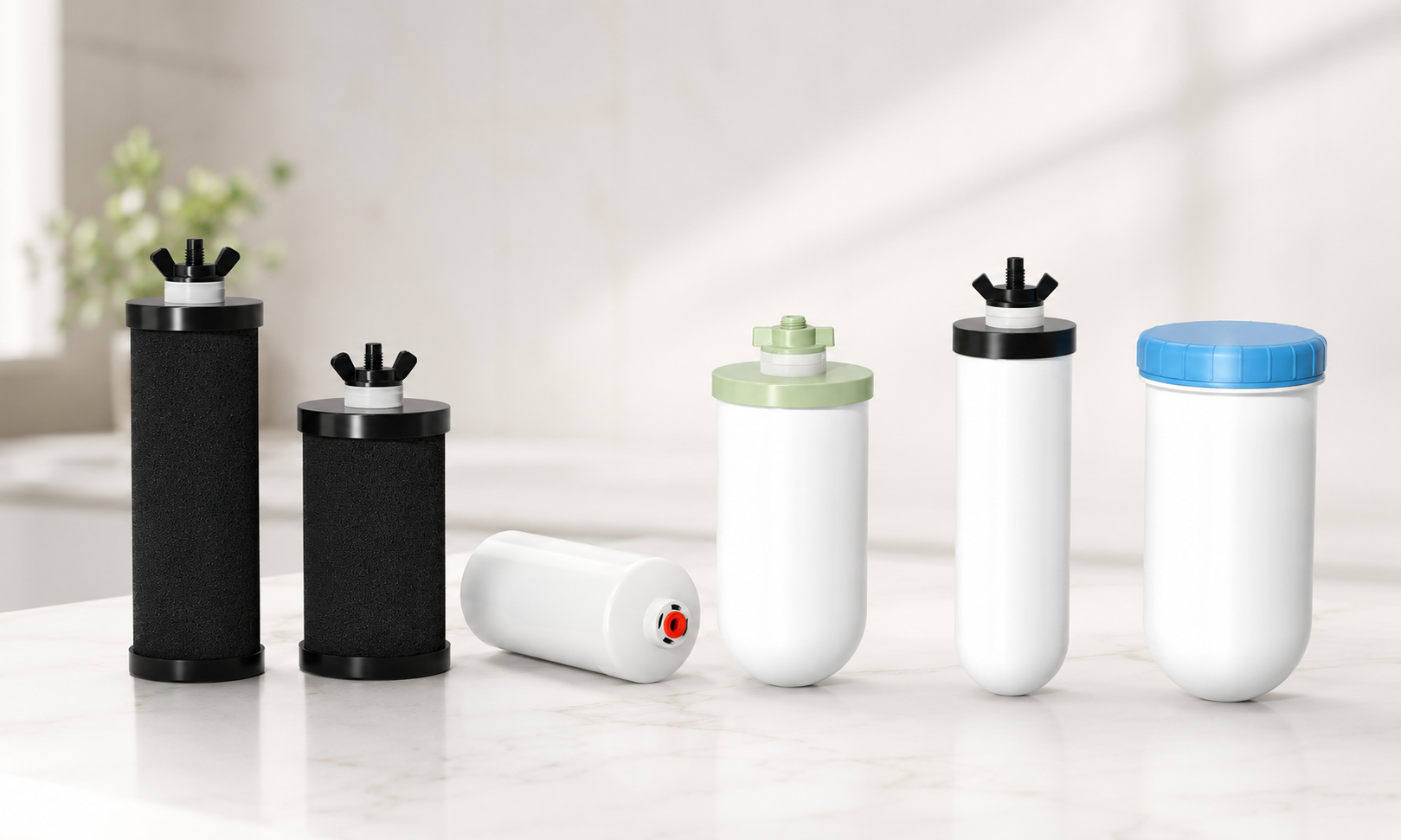
Match its part number to the replacement filter currently sold with the configuration.
3. Target compounds
Check if PFOS and PFOA are listed separately or reported as a combined value.
4. Test method
Look for the laboratory method and reporting limits, not only a headline result.
5. Volume and test point
Find treated volume and whether the sample is at start, mid-life, or end-of-life.
6. Footnotes and permissions
Read sample count, notes, reproduction limits, and restrictions on commercial use.
What the supplied SGS documents currently show
The supplied files include SGS reports describing PFOS/PFOA tests on filter samples. The two copies sharing report number NBF25-0005923-01 differ in date and reporting presentation. One describes a combined result and includes a use restriction; the other presents PFOS and PFOA separately. Another ceramic-filter report names its sample generically rather than stating a current Purewell retail SKU.
This supports a document-reconciliation task, not a product percentage claim. Purewell states that the K8775A and K8776A systems use the same filter elements despite a slight housing-size difference. This correspondence does not resolve the conflicting SGS report versions, identify which cartridge that PFOS/PFOA sample represents, or establish permission to use the report in public promotion. The K8013 ceramic filter is a separate configuration and is not covered by this correspondence.
See the Purewell test reports and certificates page, then confirm the document’s exact model and scope.
When two copies of a report do not agree
Do not choose the version with the larger percentage or the more marketable wording. Compare the report number, revision, issue date, laboratory stamp, sample description, method, test data, and notes. Ask the laboratory or certificate holder which version is final and whether the other copy was superseded.
For the supplied NBF25-0005923-01 files, the date and presentation of PFOS/PFOA results differ, and one copy includes a limitation on promotional use. The clean resolution is written confirmation from the issuer or authorized certificate holder: which file is current, whether the values are final, what part number was tested, and what may be quoted in public advertising.
Preserve the full file. A cropped chart or edited excerpt can remove the sample scope and footnotes that set the claim boundary. If any page is missing, request the original report rather than reconstructing the missing context.
Compare reports only when the conditions match
A comparison between brands is meaningful only when it compares like with like: the same target compound, comparable influent concentration, a compatible method and reporting limit, similar treated volume, and a clear definition of the tested configuration. A test on one new cartridge cannot be ranked against a different product at a different service-life point and described as a head-to-head result.
For a Berkey comparison, identify the exact element and the current Purewell cartridge, then compare the underlying evidence rather than broad brand statements. If one side does not publish a matching report or test condition, say “not comparable from the documents reviewed.” Do not fill the gap with a winner claim.
PFAS reduction also depends on the specific compounds and operating conditions. Adsorption capacity can be affected by water chemistry and competing substances. That is why the test conditions and service-life point belong next to any result, not in a footnote readers never see.
What one report does not prove
- It does not prove the full system is certified unless the official listing identifies that model and claim.
- It does not prove reduction of every PFAS compound.
- It does not prove full-life capacity if the report covers only an initial test point.
- It does not show untreated river, lake, or other surface water is safe to drink.
- It does not support “better than Berkey” without comparable testing of exact products under matched conditions.
For a known PFAS concern, follow your utility or state health department’s guidance and choose treatment supported for the specific contaminant. A filter report should inform that choice; it is not a substitute for source-water testing or public-health advice.
Five buyer questions
- Which PFAS compounds were measured?
- Which filter part number was tested?
- What method, challenge concentration, and volume were used?
- Was the result measured at start or over the rated capacity?
- Can I find the matching certification or complete report for the exact product?
If key details are missing, treat the claim as unverified and request the complete report and model mapping.
Frequently asked questions
Does a PFOS/PFOA test report mean the filter is NSF-certified?
No. A lab report and a third-party certification listing are different evidence types.
Does testing PFOS prove removal of all PFAS?
No. PFAS is a broad group; test results apply to named compounds and stated conditions.
Can an initial result be used as a lifetime rating?
Not unless the report and rated-capacity documentation support that claim.
Why does the cartridge part number matter?
A product family can offer different filter options; a report for one is not automatically about another.
Does the linked K Series page prove PFAS reduction?
No. The page identifies a product configuration; a claim needs exact, matching evidence.
What if two copies of one report show different values?
Pause publication, retain both, and ask the issuer to identify the final controlling version and permitted wording.
Can I compare two brands using separate laboratory reports?
Only if the target compound and test conditions are sufficiently comparable. Otherwise report the differences and avoid ranking.
Should I rely on a product image that says “99%”?
No. Find the named compound, exact cartridge, method, test point, and complete evidence behind the figure.
Sources and related reading
Check the exact filter option
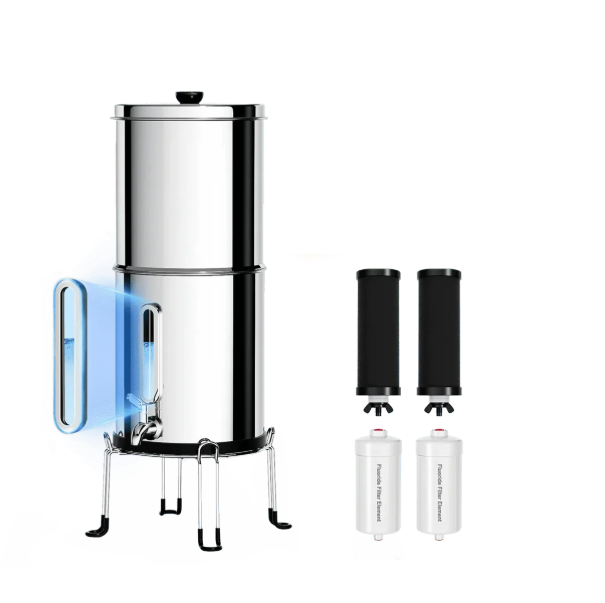
Review the live selector and matching documents. This page does not claim the pictured configuration is PFAS-certified.
View K8776A K Series system optionsReview report documentsShop the K8776A system in your market
Choose your regional storefront to see local currency and availability. Select the filter configuration that matches your needs on the product page.
