

"What Can Gravity Water Filters Reduce? An Evidence Guide to the Claims"

Direct answer: What a gravity water filter reduces depends on the exact cartridge, the target contaminant, the test method, and the conditions — not on the brand or the tank. A responsible claim names all four. This guide shows how to decode the categories printed on filter boxes (heavy metals, chlorine, taste/odor, rust/sediment, particles) and how to build a contaminant-by-contaminant evidence matrix before you buy.
Decode the categories on the box
Marketing images often list broad groups. Treat each as a prompt to ask for evidence, not as a finished answer:
| Category on the box | What to confirm | Purewell status (verified) |
|---|---|---|
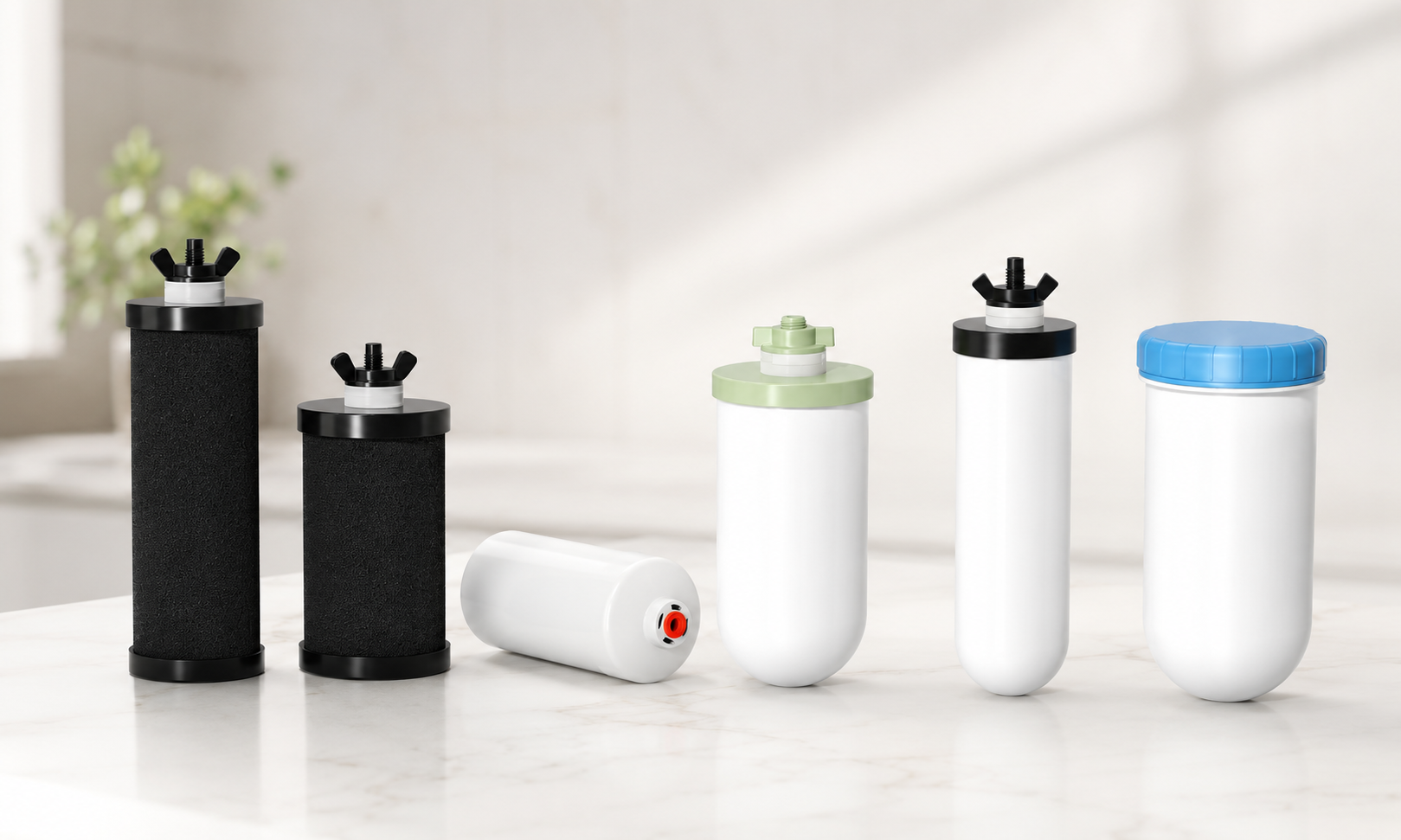
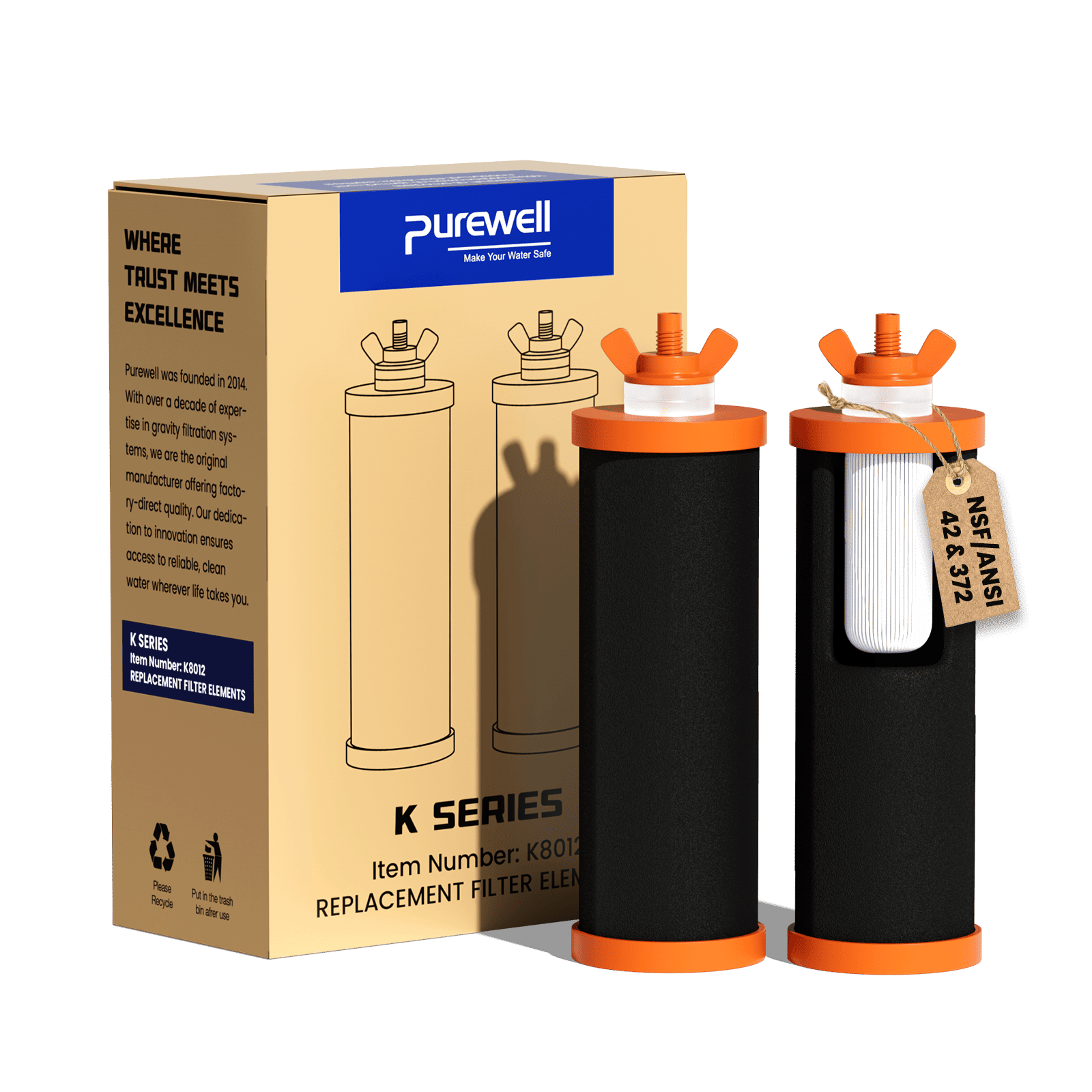
| Chlorine, taste & odor | NSF/ANSI 42 coverage for the exact cartridge | K Series & BO Series document NSF/ANSI 42 (aesthetic effects) — supported |
| Heavy metals | Named metal, initial concentration, result, report | BO documentation states "reduces heavy metals"; no model-specific test report seen in this review → verify, no % stated |
| Fluoride | Dedicated fluoride cartridge + its report | K Series fluoride variant & BO 9-stage (K8006) are documented fluoride configurations → verify report for % |
| Rust, sediment, particles, sand | Pore size / particulate rating for the cartridge | BO 0.01 μm core documented; confirm particulate rating in the report |
**Red line:** A generic "Removes 99% of common water contaminants" figure appears only on an unlisted, out-of-stock 11L SKU — not on the K Series systems covered here. With no matching test report for the exact SKU, that "99%" is **not written into this guide**. Verify the underlying report before trusting any round number.
Evidence matrix — build it per contaminant
For each substance you care about, fill one row. Leave "Comparable?" blank when the two products were not tested the same way. Note the distinction: "independently tested to" a standard is not the same as "certified to" it — a standard reference alone does not prove a certified contaminant-reduction claim.
| Contaminant | Purewell exact filter / SKU | Test or cert source | Conditions | Berkey exact element / source | Comparable? |
|---|---|---|---|---|---|
| Chlorine / taste / odor | K Series carbon; BO K8001/K8006 | NSF/ANSI 42 | Aesthetic reduction | Not verified in this review — compare the exact Berkey element's published report if available | Only like-for-like |
| Lead content (materials) | K/BO wetted parts | NSF/ANSI 372 | Lead content in materials, not removal from water | Not verified in this review | Standard-specific |
| Fluoride | K Series fluoride variant; BO 9-stage K8006 | Product doc + report (verify) | Named fluoride-reduction config | Not verified in this review | Verify both |
| PFAS | K Series ceramic filter | Title states reduces PFAS; report not verified in this review | Named ceramic cartridge | Not verified in this review | Verify both |
| Bacteria | BO 0.01 μm core | Page claim; report not verified in this review | Micron rating, not a pathogen-removal guarantee | Not verified in this review | Verify both |
We do not declare a "winner" where tests are not directly comparable. For the certification background, see our Water Filter Certifications guide and the NSF/ANSI 372 scope page.
What a "99%" figure must specify
A percentage on a filter box is useful only when it answers five questions:
- Which substance? "Contaminants" is not a substance.
- Starting concentration? Reduction from 1 ppm is a different test than from 100 ppm.
- What method? Which challenge protocol, lab, and standard?
- Under what conditions? Temperature, flow, source-water type.
- Which filter configuration? The number applies to one exact cartridge, not the whole brand.
A percentage alone is insufficient to assess a reduction claim. EPA recommends matching PFAS-reduction products to NSF/ANSI 53 or 58 and confirming the specific PFAS of concern — see [EPA PFAS filter guidance](https://www.epa.gov/water-research/identifying-drinking-water-filters-certified-reduce-pfas). NSF's own [standards overview](https://www.nsf.org/consumer-resources/articles/standards-water-treatment-systems) distinguishes "tested to" a standard from "certified to" it.
Separate physical features from performance claims
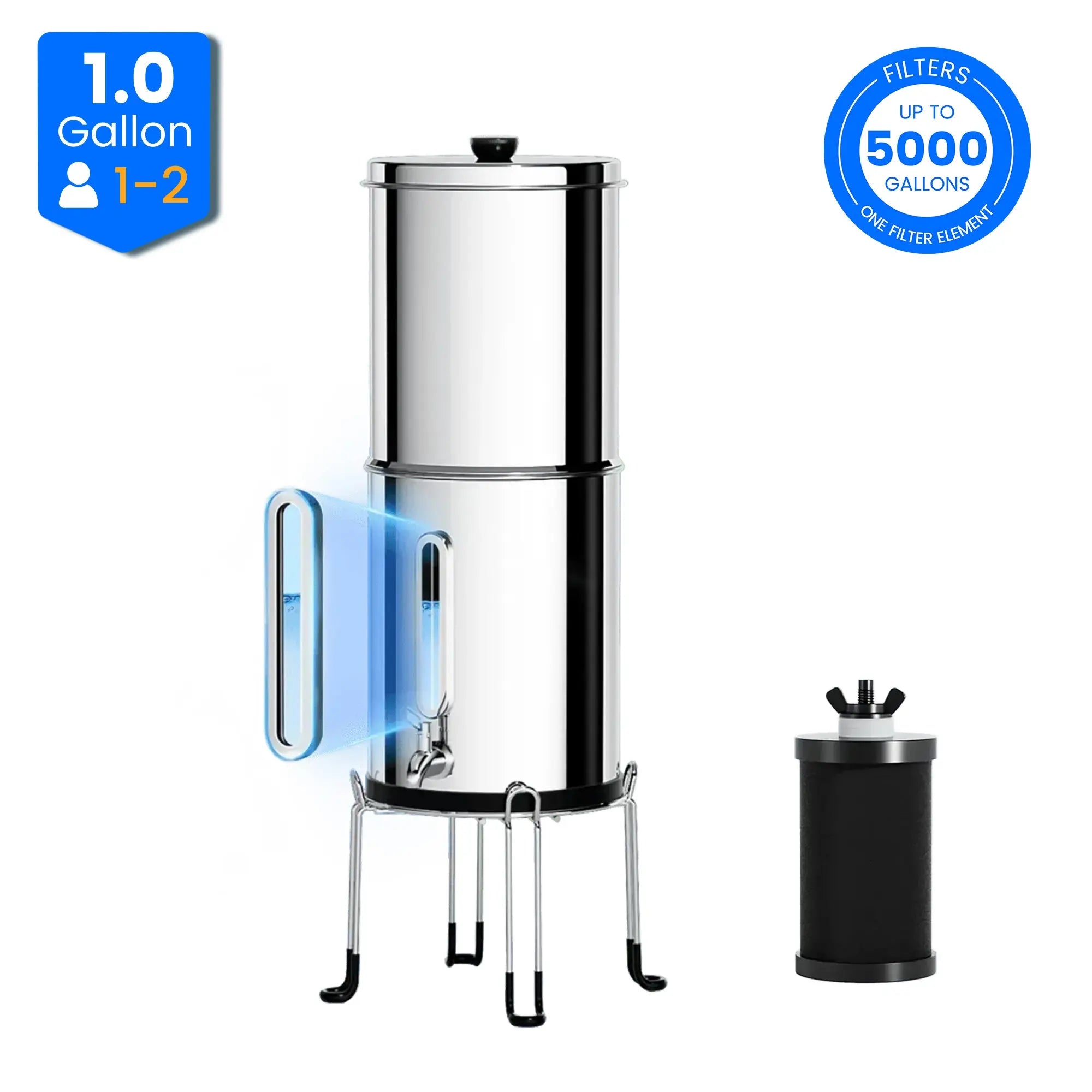
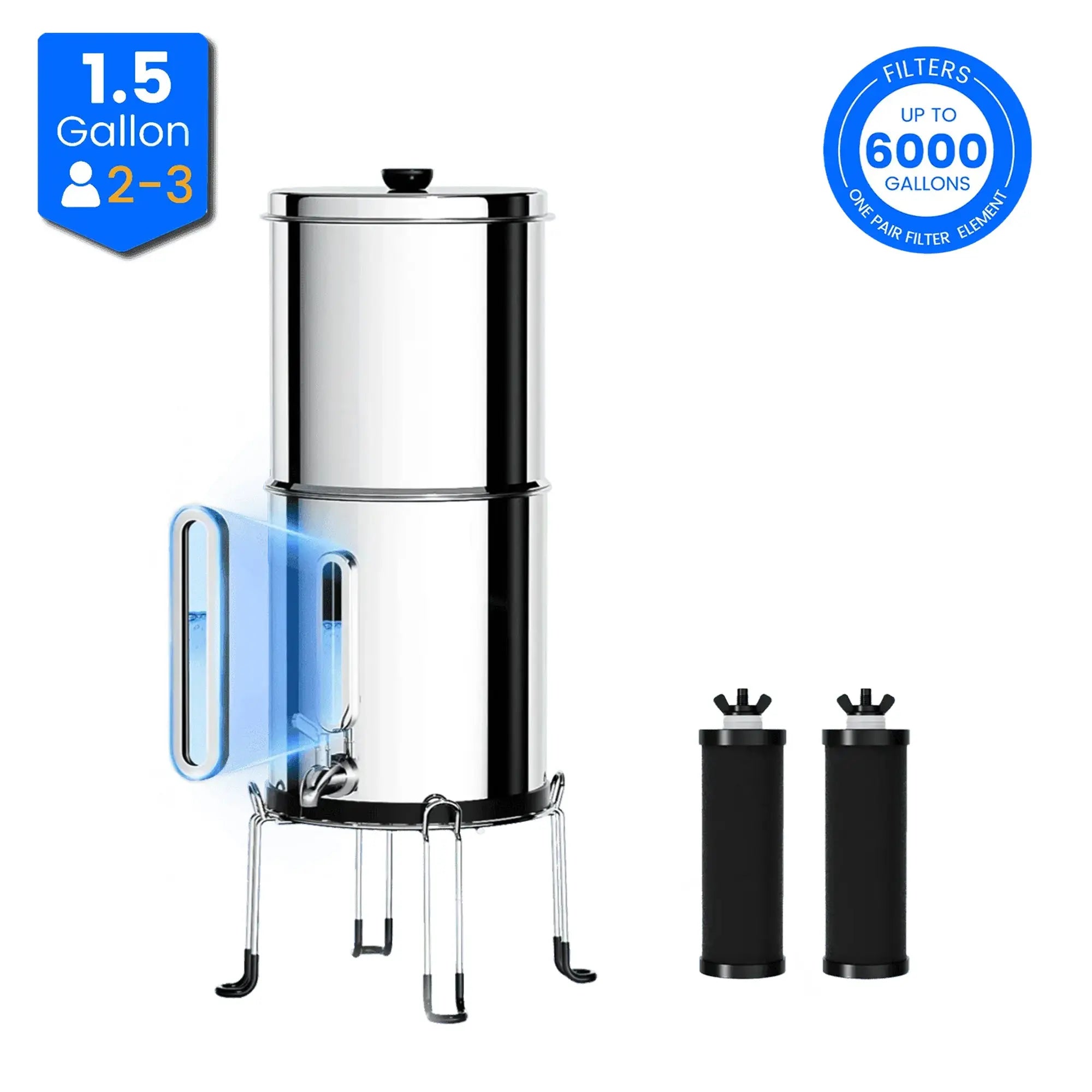
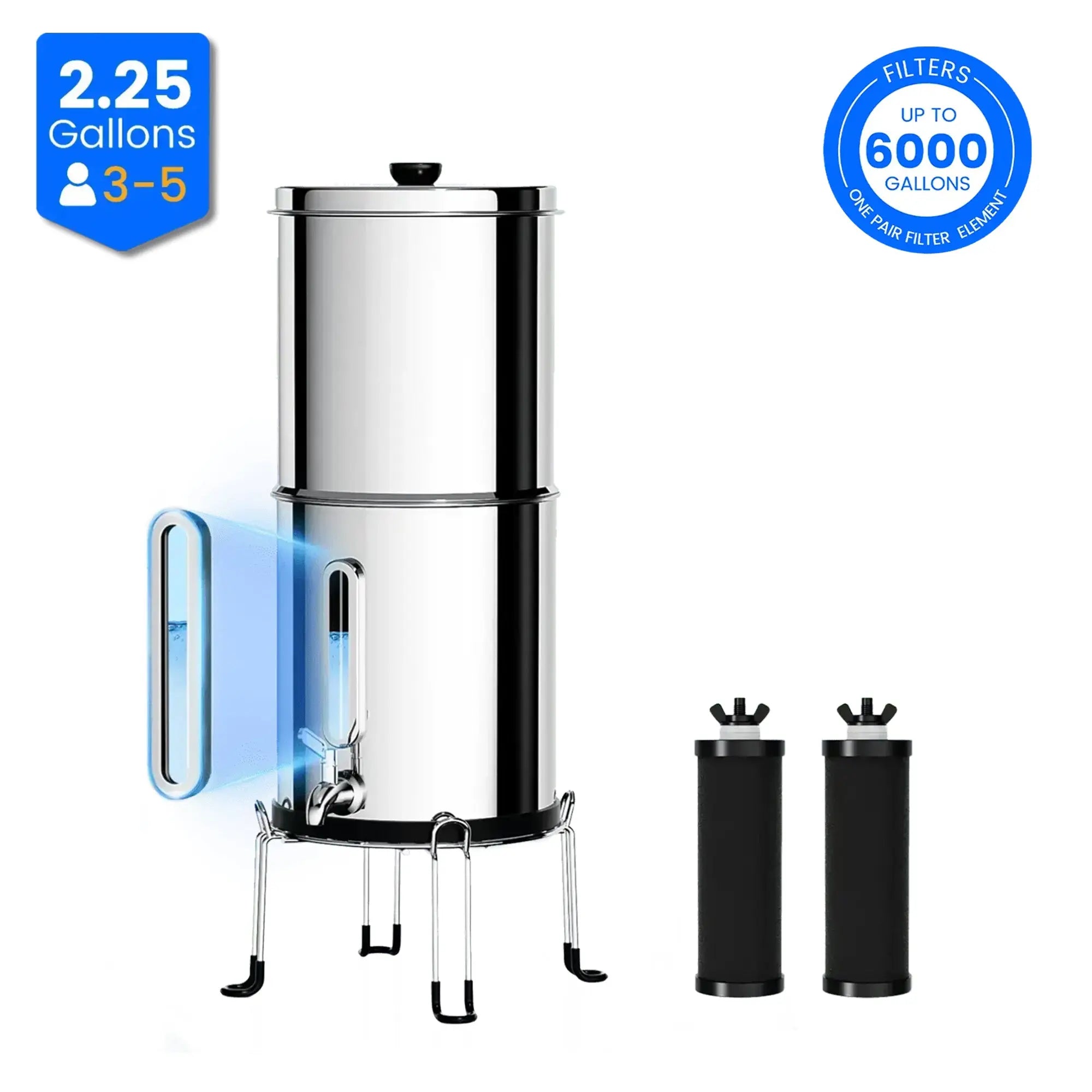
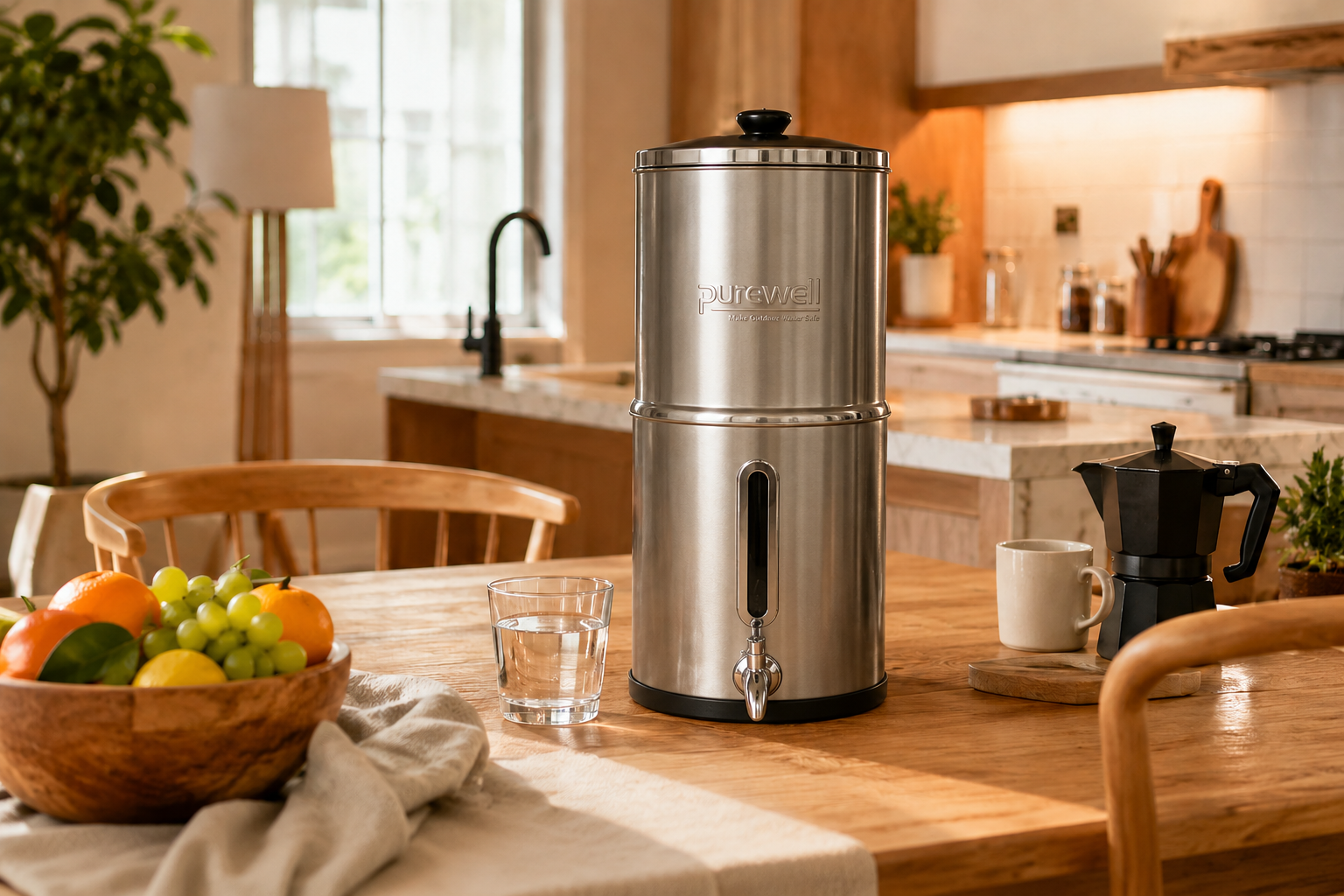
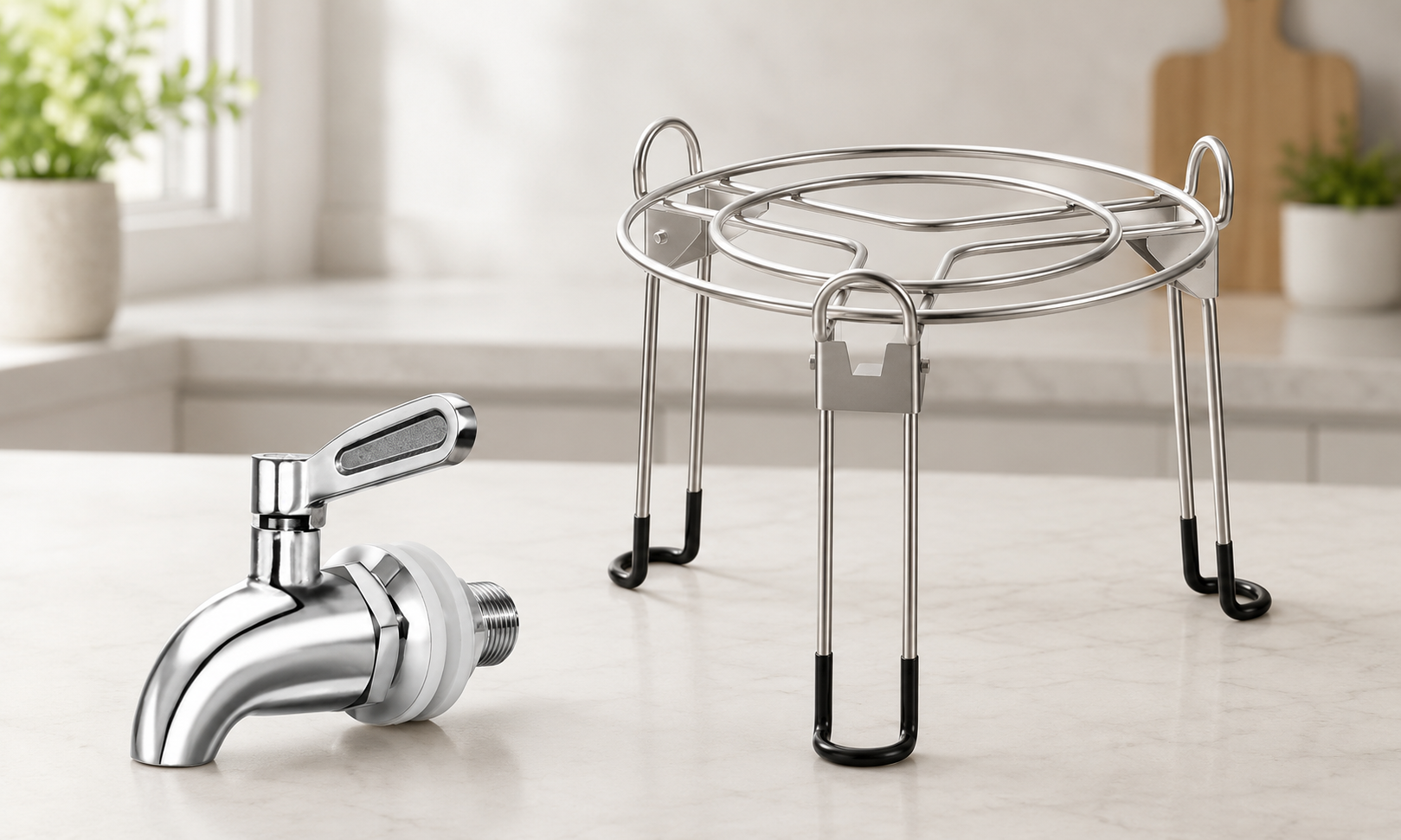
Tank size, 304 stainless steel, and a water-level window are product features — they describe the hardware, not what it removes. Keep them separate from performance claims (what a specific cartridge reduces). A steel tank does not, by itself, prove any contaminant reduction. Anchor every performance sentence to a cartridge, a document, and a condition. Micron size, similarly, is a particle-rating specification, not a stand-alone pathogen-removal guarantee.
Frequently asked questions
Does a gravity filter remove heavy metals? It depends on the exact cartridge and its test report. We document BO's "reduces heavy metals" statement and note that a model-specific report should be checked before relying on a percentage. We do not state a reduction figure without that report.
What does a "99%" figure on a filter box mean? On its own, it is insufficient to assess a reduction claim. It must specify the substance, starting concentration, test method, conditions, and the exact filter configuration. Otherwise treat it as unverified.
Is NSF/ANSI 42 proof a filter removes lead? No. NSF/ANSI 42 covers aesthetic effects like chlorine, taste, and odor. Lead removal (if claimed) falls under NSF/ANSI 53, and NSF/ANSI 372 only addresses lead content in wetted materials — not removal from source water.
Where do I find the test report for my filter? Use the Water Filter Test Reports & Certificates page and match the document to the exact cartridge and variant you bought.
Does the K Series lower TDS? No. The K Series is not designed to reduce total dissolved solids. If TDS reduction is your goal, confirm a configuration that documents it on the exact product page.