
72-Hour Water Storage Checklist for UK Homes
Following the UK Be Ready advice, a 72-hour water reserve is one of the highest-value items you can prep. This checklist turns the guidance into a concrete, rotatable plan.

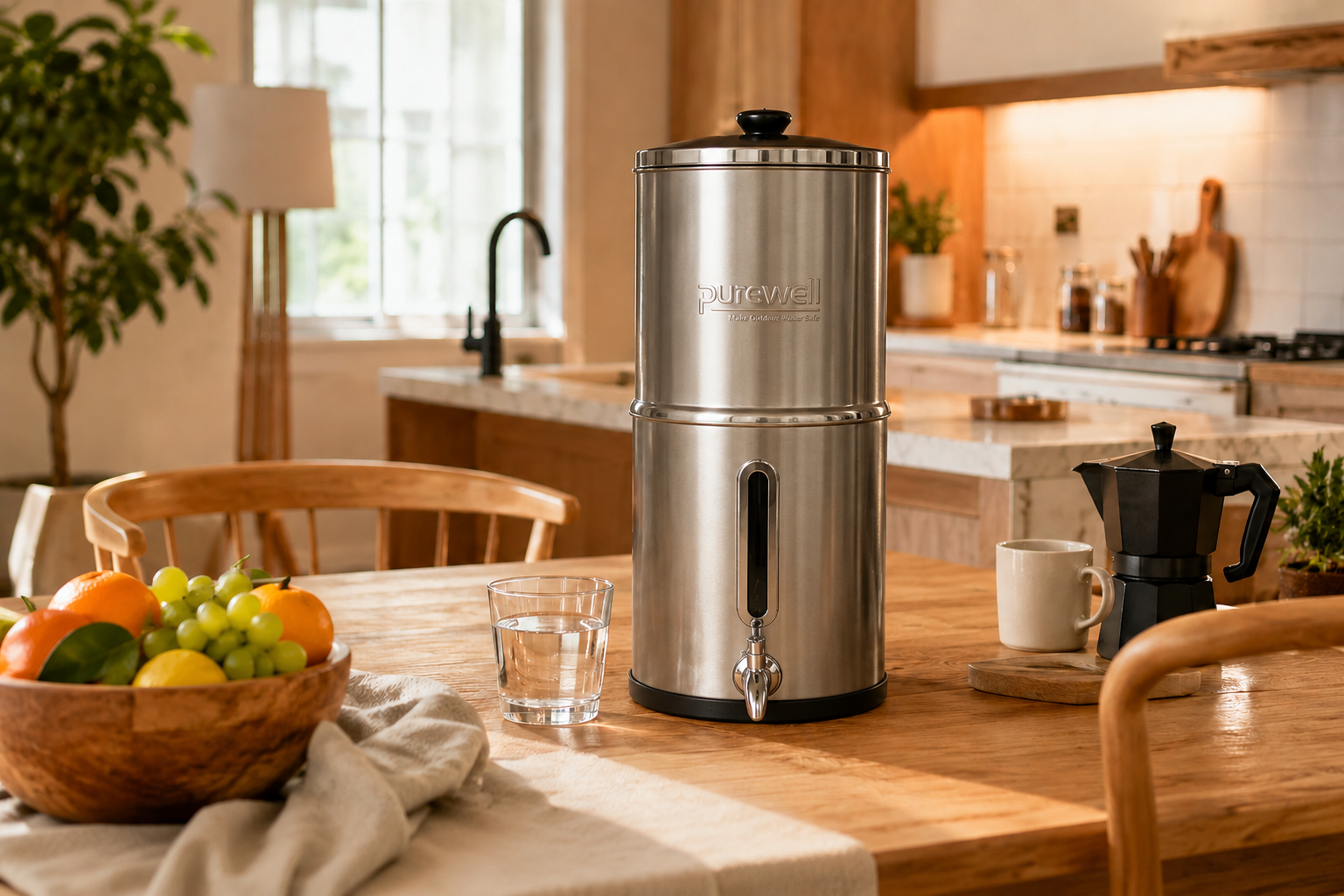
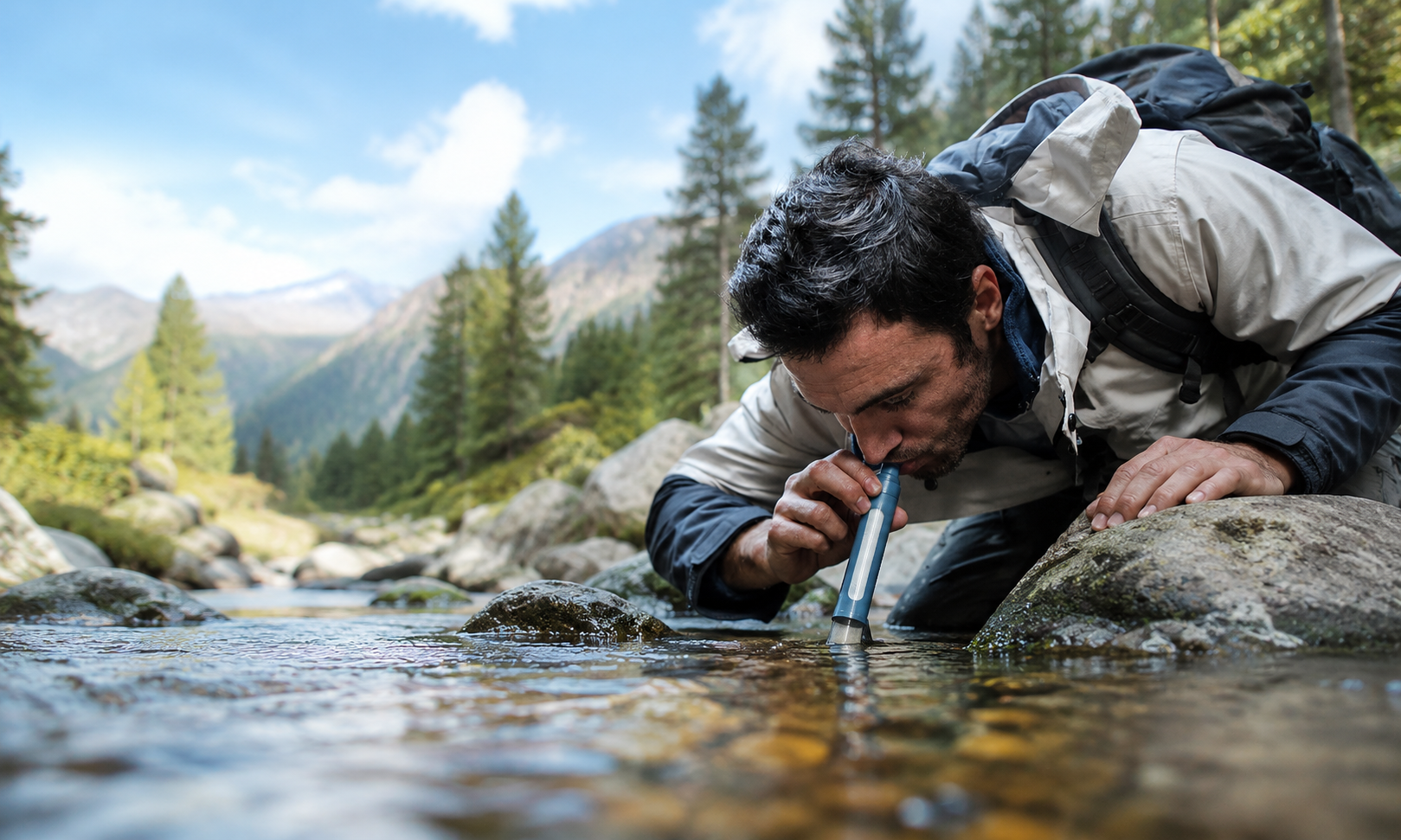
A gravity filter treats tap or collected rainwater on demand, so you can keep a smaller fixed water stockpile.
The 72-hour rule, simply
Be Ready asks households to hold enough to be self-sufficient for roughly three days if services dip. Water is first on the list because you can't pause it. Three litres per person per day is the working figure for drinking plus minimal hygiene.
Your checklist
☐ Calculate: people × 3 L × 3 days (4 people → 36 L).
☐ Container: sealed shop bottles or food-grade jerry cans marked safe for drinking water.
☐ Location: cool, dark, away from cleaning chemicals and fuel.
☐ Label: write the fill/rotate date on each container.
☐ Rotate: use and replace before best-before; don't let it sit for years.
☐ Backup treatment: a gravity filter or boiling method for top-ups.
☐ Extras: a clean ladle/cup, and water for pets if you have them.
Choosing containers
For most homes, sealed PET bottles from the shop are the lowest-effort start — already safe, portable, and dated. For a larger reserve, food-grade containers (often blue, marked for drinking water) hold more in less space. Whatever you use, keep it opaque or shaded (light encourages algae) and never repurpose a container that held chemicals, fuel, or milk.
Rotation and expiry
Water itself doesn't “go off” the way food does, but the container and seal do. Follow best-before dates on bought bottles, and for refilled containers, rotate on a schedule you'll actually keep — every 6–12 months is a common rule. Signs to discard: cloudiness, slime, a stale or chemical smell, or a damaged seal. Rotation is easiest if your emergency water is just the back of your normal drinking-water stock.

Store containers cool and dark, and rotate before best-before dates.
Lighten the load with a gravity filter
Stockpiling 36+ litres permanently isn't appealing, and forget-to-rotate is the most common failure. A gravity water filter that needs no electricity lets you treat tap water or collected rainwater on demand, so your fixed store can be smaller while your effective supply is larger. It's a complement to the 72-hour reserve, not a reason to skip it.
See our best gravity filter UK guide for how these systems compare, and the PFAS explainer for an honest list of what they remove.
Storing it alongside the rest of Be Ready
Water pairs with the other Be Ready items — a torch and radio, some cash, long-life food, and a paper contacts list. Keep the water where you'd actually reach it in the dark, not buried at the back of a shed.
Recommended emergency backup water filter
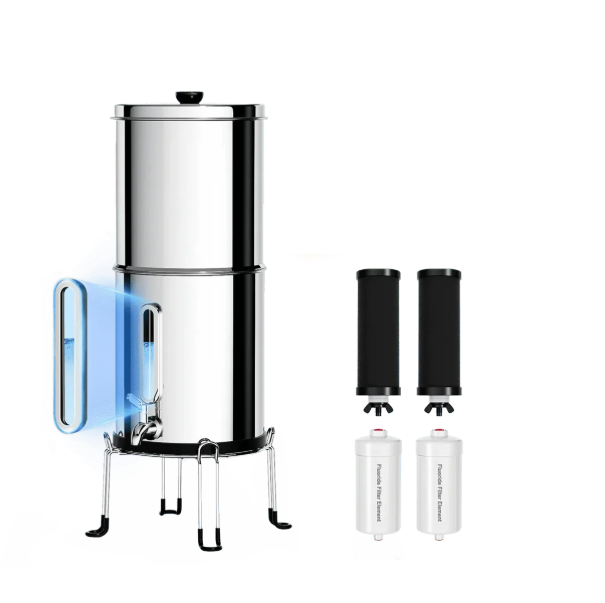
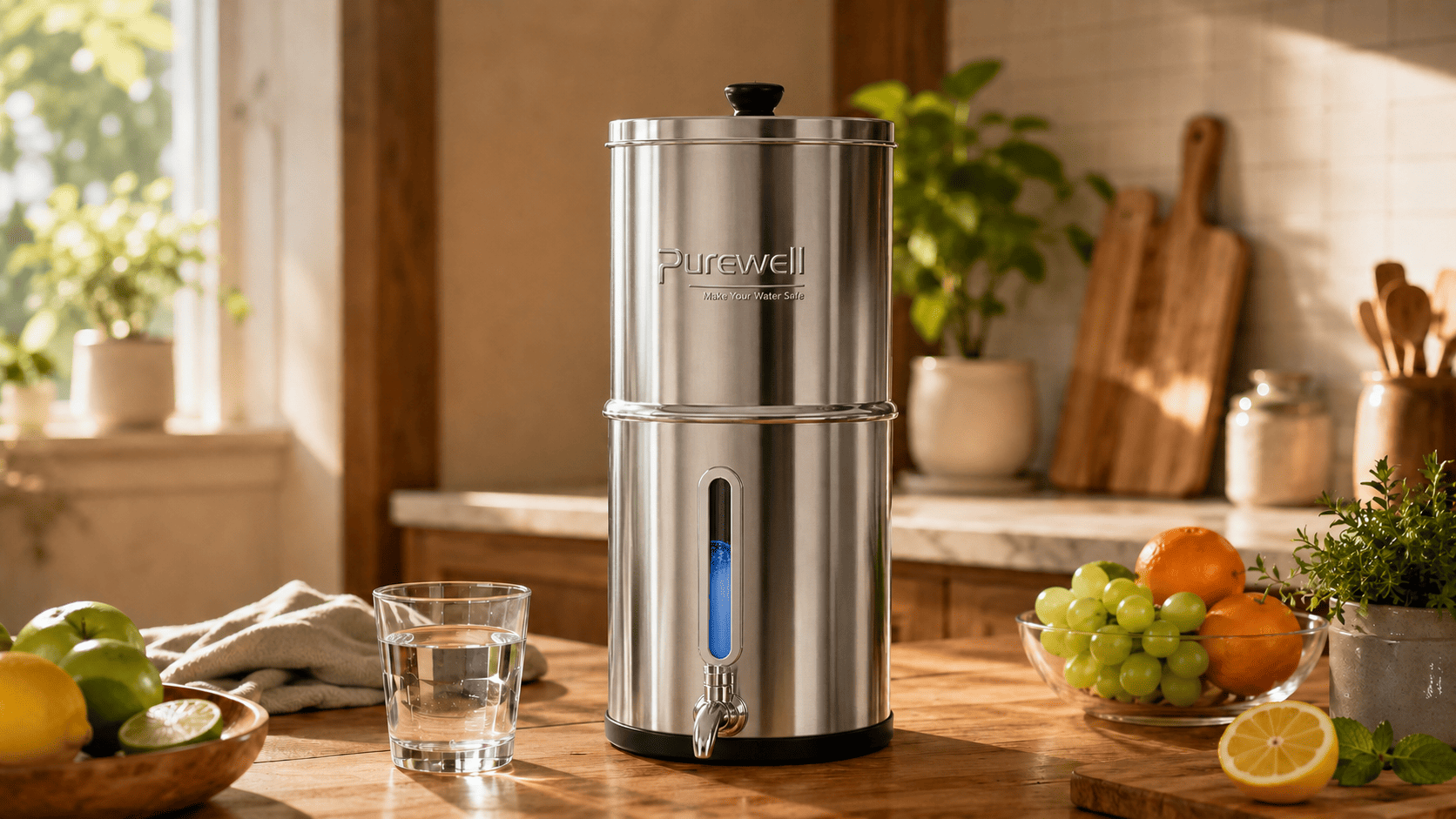
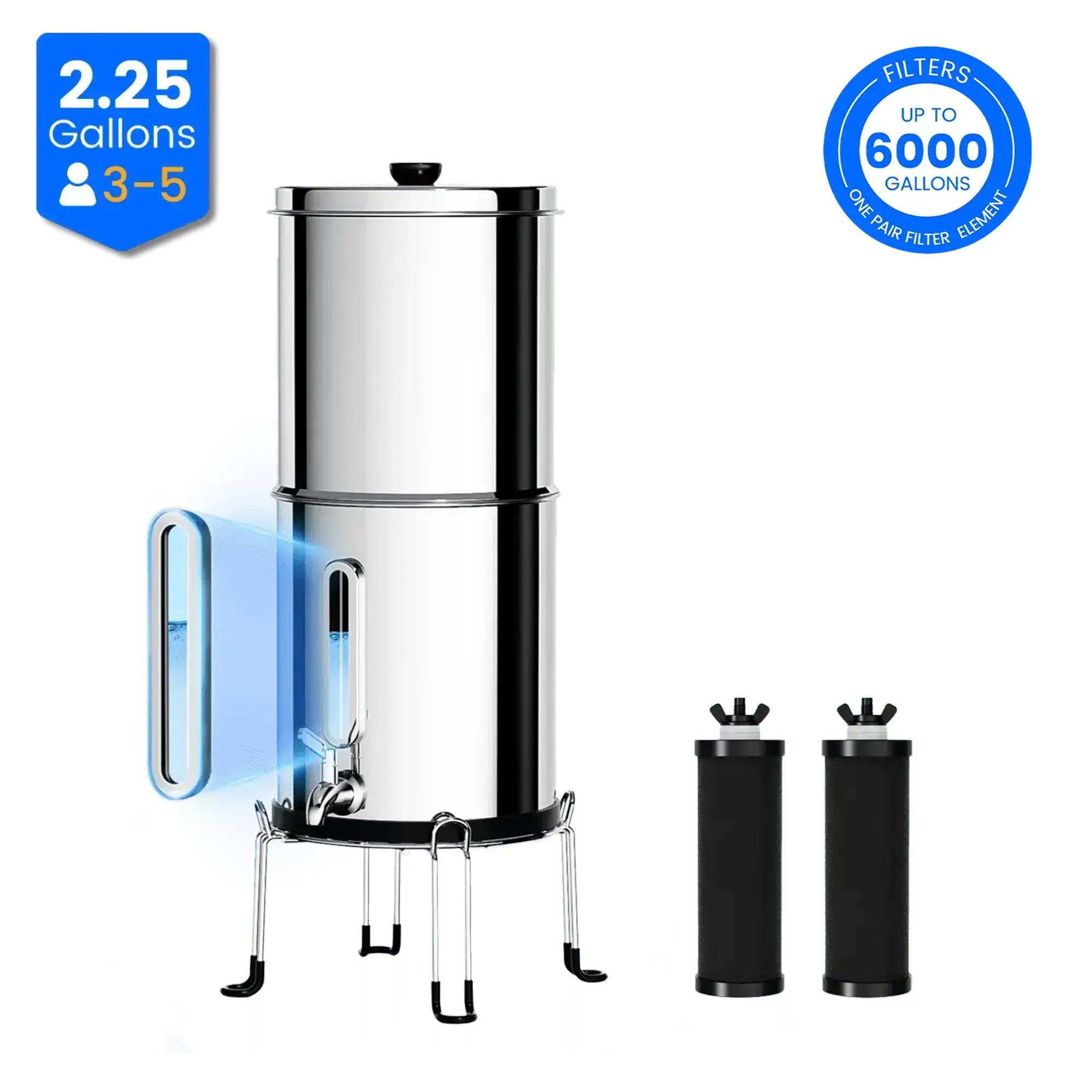
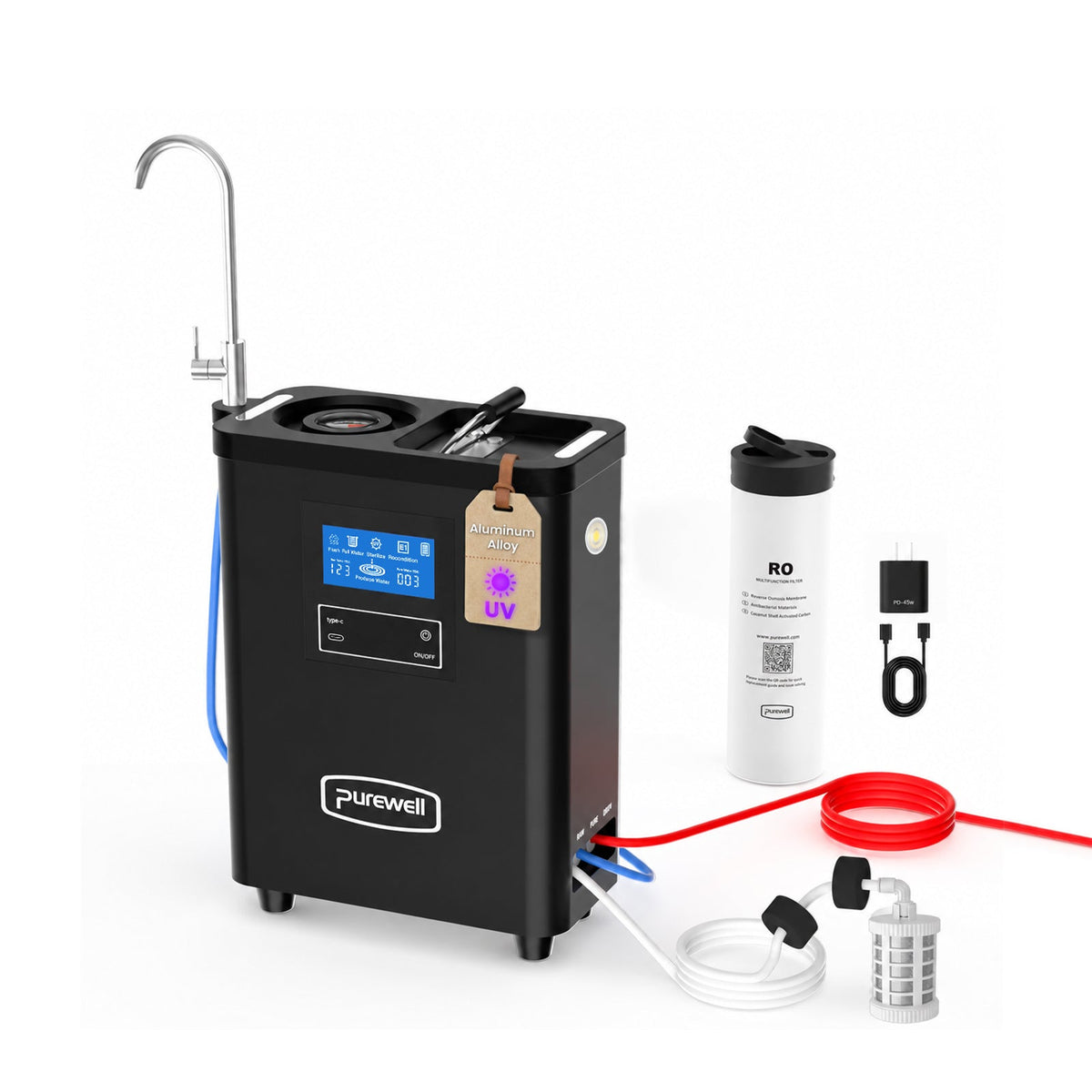
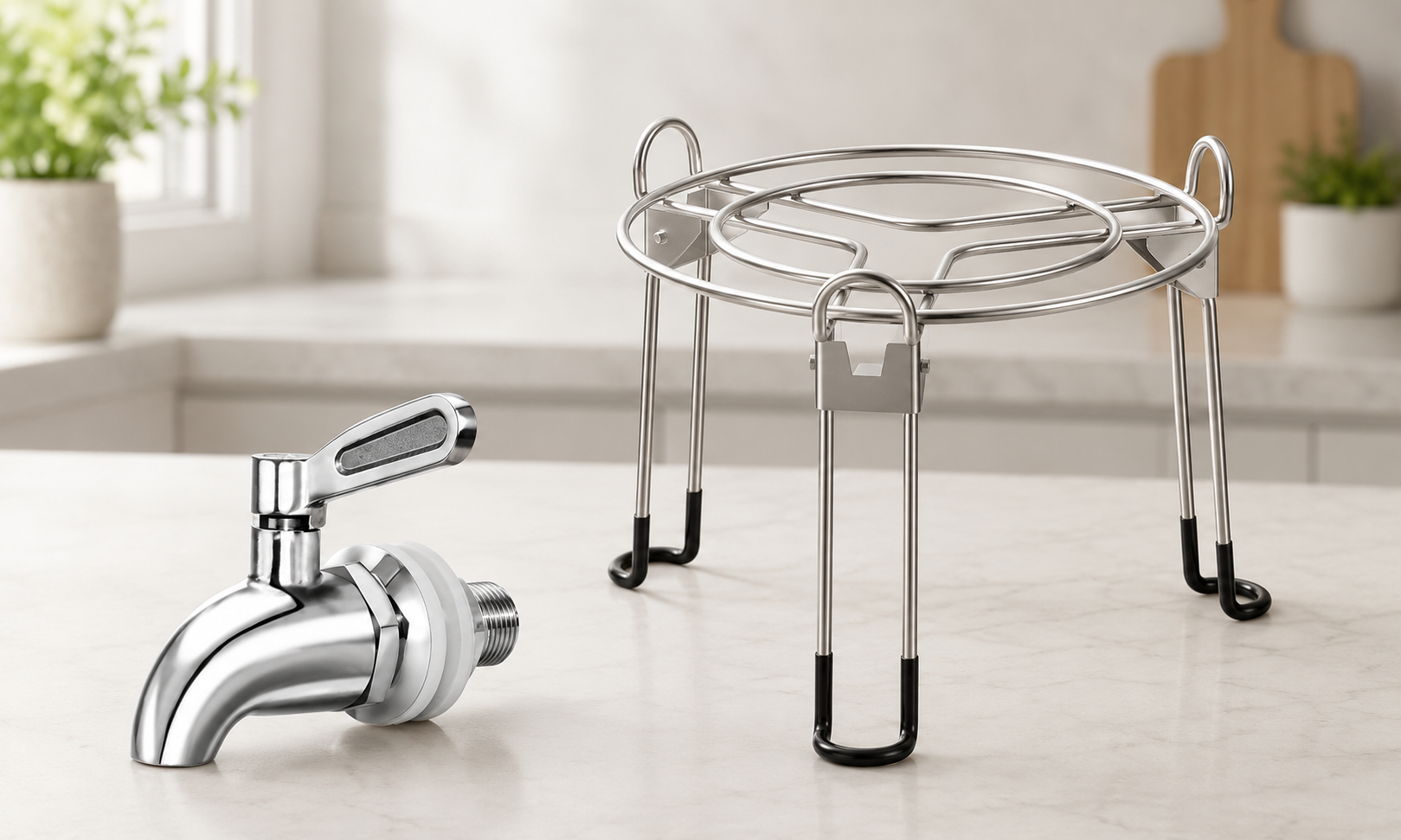
Lighten your emergency storage burden with a non-electric, stainless steel gravity filtration system — available in your regional store:
- UK customers (£ GBP): Explore the Purewell K Series 2.25-Gallon Gravity Filter (UK Store)
- US customers ($ USD): Explore the Purewell K Series 2.25-Gallon Gravity Filter (US Store)
- Europe (€ EUR): Explore the Purewell K Series 2.25-Gallon Gravity Filter (EU Store)
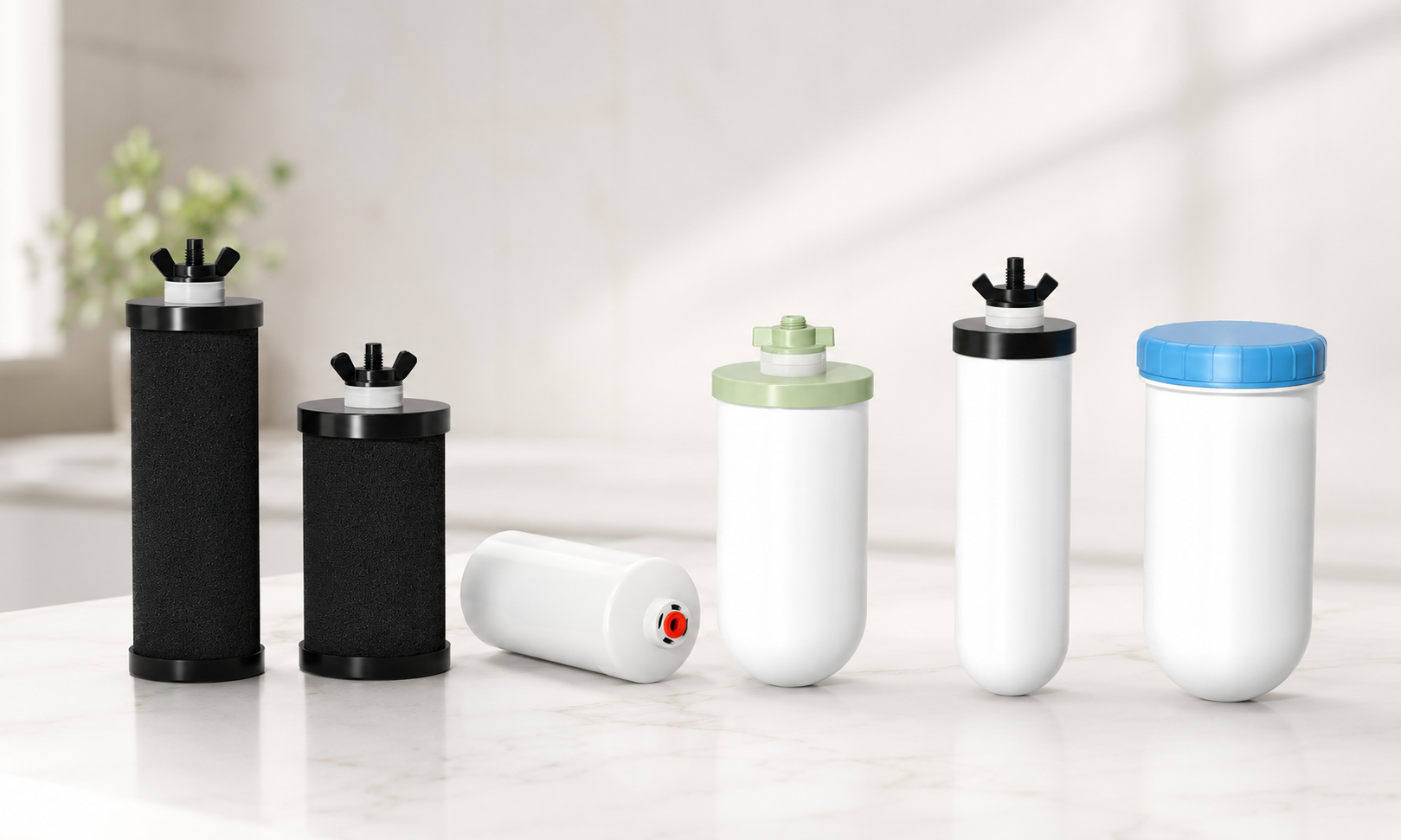
Specification note: activated carbon with silver ions + 0.01-micron ultrafiltration reduces bacteria, protozoa, and chlorine taste without electricity. It does not remove viruses or PFAS, and is not a desalinator. Also consider the BO Series 2.25-gallon for a lower-cost entry.
Frequently Asked Questions
How much water is a 72-hour supply for a family of four?
About 36 litres (4 people × 3 L × 3 days). Add more for pets, hot weather, or anyone unwell.
What containers are safe for emergency water?
Sealed shop-bought bottles, or food-grade containers clearly marked safe for drinking water. Avoid anything previously used for chemicals, fuel, or milk.
How often should I rotate stored water?
Follow best-before dates on bought bottles; for refills, rotate every 6–12 months and discard if cloudy, slimy, or smelly.
Can a gravity filter replace my 72-hour store?
No. Keep the reserve for immediate use; the filter is a treatment backup for top-ups if a disruption outlasts your store.
Do gravity filters need power?
The gravity models discussed here need no electricity, pumps, or batteries — a good fit for outages.
Where should I keep emergency water?
Cool, dark, and away from chemicals or fuel — and somewhere you can reach it easily in a power cut.
Where is the official guidance?
At gov.uk/beready. This checklist is a practical companion, not a substitute for official advice.