


Microplastics in Drinking Water: What New Research Means for Your Filter
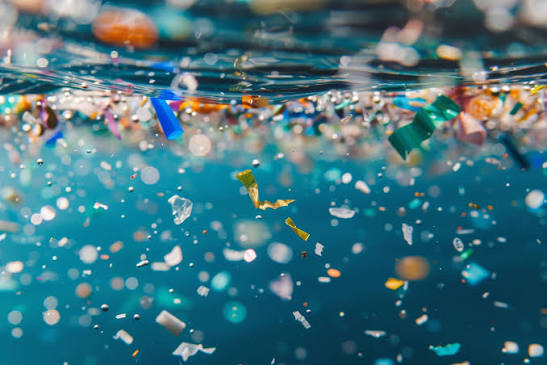
A 2026 laboratory study found that certain microplastics can generate reactive oxygen species when they meet water. It did not establish that a particular level of microplastics in drinking water causes disease in people. Some water filters are designed to reduce microplastic particles, but performance must be checked for the exact product, particle sizes, and test conditions.
Microplastics have been found in both tap and bottled water. That raises two separate questions: what can these particles do, and can a household filter reduce them? A new study helps answer the first question, while the second still requires product-specific evidence.
What did the new study find?
In a study published in Nature on October 14, 2026, researchers tested several common plastic materials in water. They observed the formation of reactive oxygen species, including hydroxyl radicals, at some microplastic-water interfaces. The effect was associated with the water-repelling character of the particle surface. The researchers also reported effects on biomolecules and cells under experimental conditions.
This is a finding about how microplastics may behave, not a measurement of the health risk from drinking a glass of tap water. The study does not tell us that all microplastics behave identically, how much exposure causes harm in humans, or whether a specific household water supply is unsafe.
Are microplastics in drinking water harmful?
The honest answer is that the human-health picture is still incomplete. Microplastics vary in size, shape, composition, and surface chemistry; exposure also varies from place to place. The World Health Organization’s assessment identified important gaps in exposure and health-effect data. The 2026 Nature paper adds a possible biological mechanism, but it does not close those gaps.
You do not need to assume the worst to take a practical step. If reducing particles in your drinking water is a priority, choose filtration based on documented capabilities rather than a broad promise that a filter “removes microplastics.”
Can a water filter reduce microplastics?
Yes, some filters can reduce microplastic particles, but not every filter has the same evidence or performance. Filtration depends on particle size, the filter’s design, its condition, and how it is used. A stated pore size can help you understand a membrane’s design; by itself, it is not a verified percentage-removal result for every type of microplastic.
Reverse osmosis (RO) and some other membrane-based systems are designed to separate very small particles from water. Other filters may target different concerns, such as taste and odor. NSF advises consumers to check contaminant claims for the specific model and says that filters certified to NSF/ANSI 401 for microplastic reduction can help reduce these particles. Check what a particular certification actually covers.
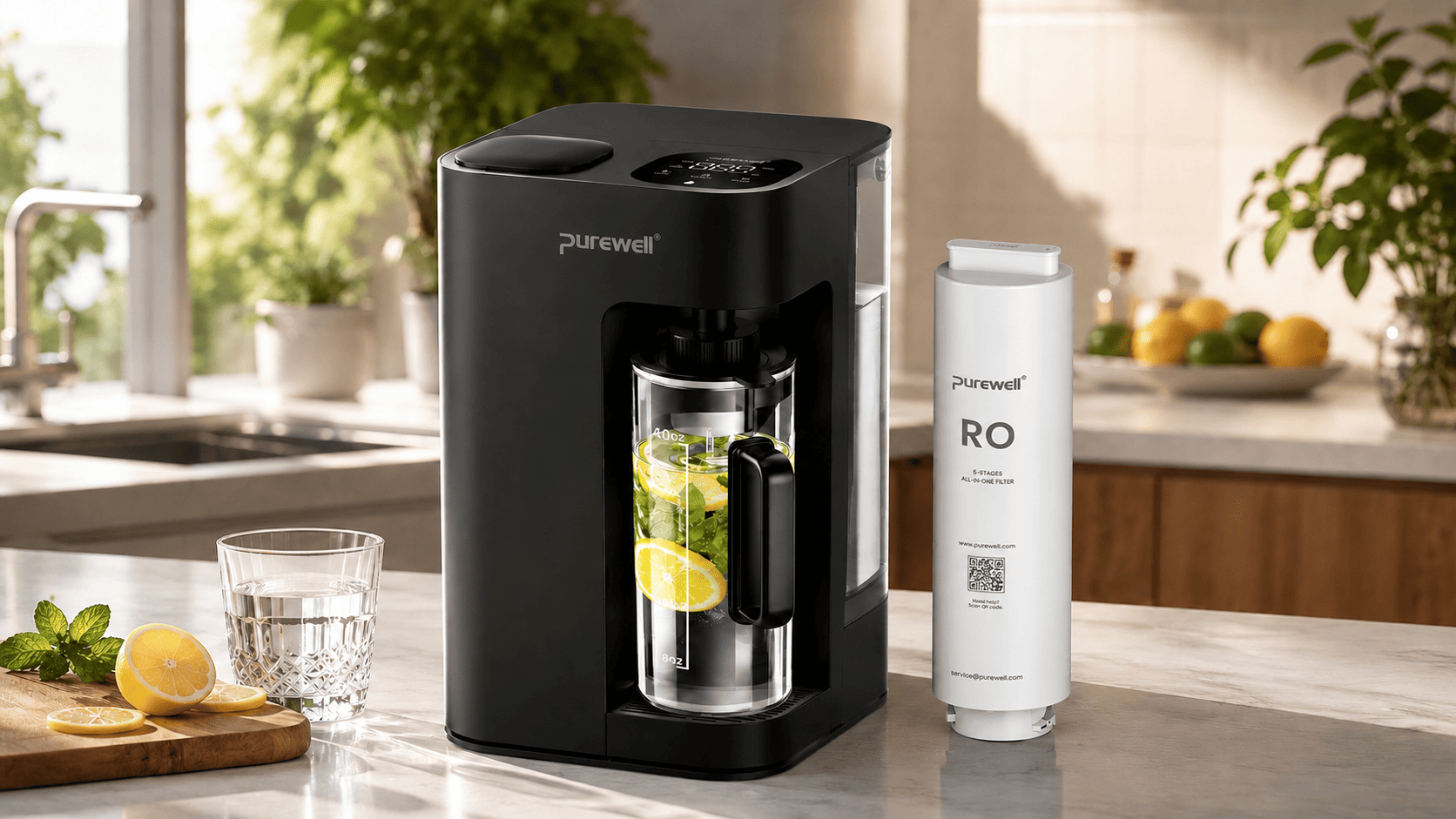
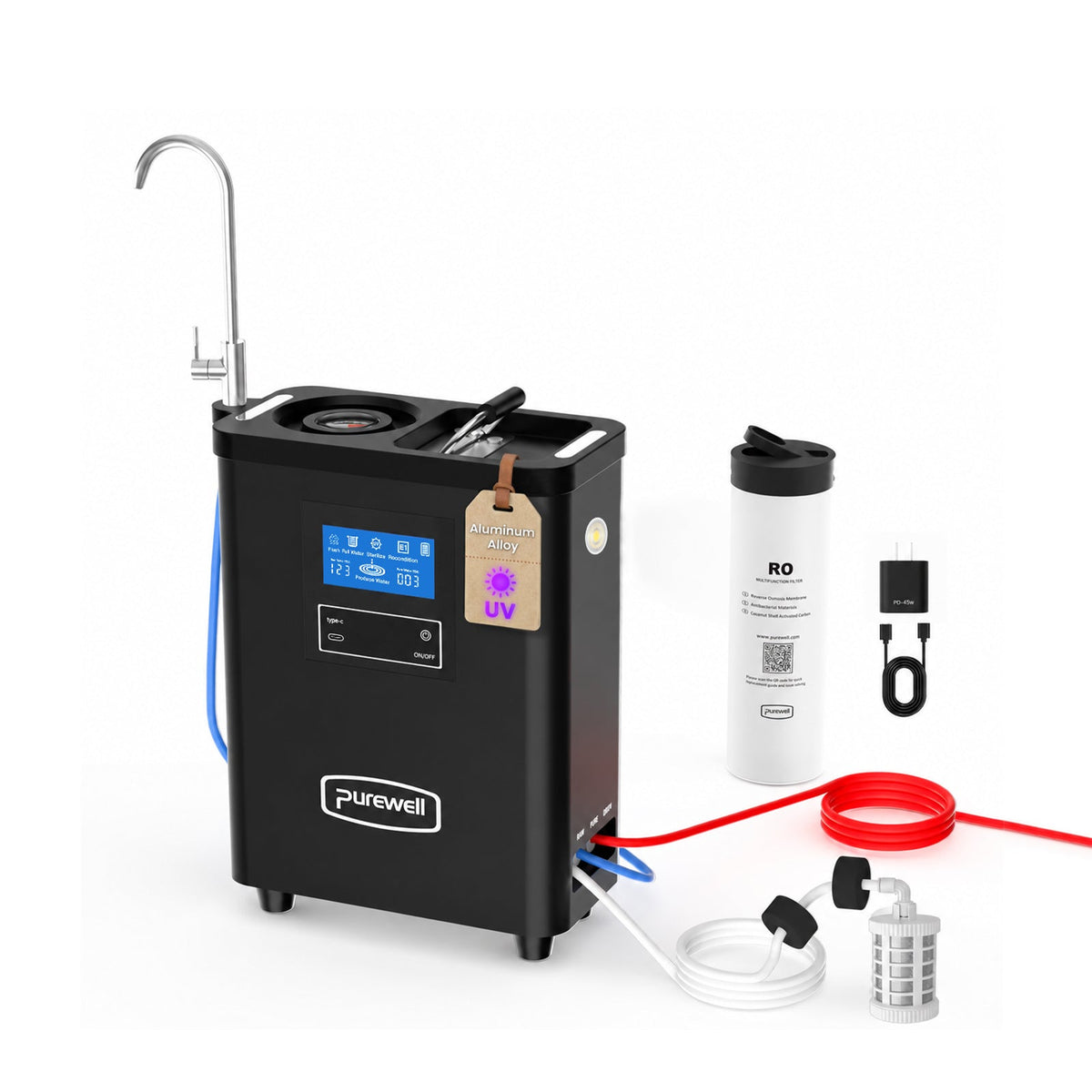
For example, the Purewell C05 Countertop RO System uses a multi-stage RO cartridge and is described on its product page as designed to help reduce microplastics. The page lists an RO filtration precision of 0.0001 micron. Those are product specifications and manufacturer claims; they should not be read as a measured removal percentage or as proof of a particular third-party microplastics certification.
How should you choose a filter for this concern?
- Check your water source. Start with your local water-quality report and any relevant advisories. A filter should match the water you actually use.
- Check the exact model and claim. Look for product-specific testing or certification that explicitly names microplastics, including the particle sizes and conditions tested.
- Compare the full system. The membrane or cartridge is only one part of performance. Correct installation, maintenance, and timely replacement matter too.
- Follow the source-water instructions. A countertop system intended for municipal tap water should not be assumed suitable for untreated or emergency water.
If your water authority has issued an advisory, follow that guidance. A household filter is not a substitute for the response required by a boil-water notice or a chemical-contamination warning.
The takeaway
The new research shows why microplastics deserve continued study: some particles can be chemically active at the boundary with water. It does not prove a specific health outcome from ordinary drinking-water exposure. For now, the most useful decision is a measured one: know your water source, read the evidence for the exact filter, and keep the system maintained. If a countertop RO system fits your needs, review the Purewell C05 specifications alongside any available product-specific test information before buying.
Frequently asked questions
Do microplastics become toxic when they touch water?
The 2026 Nature study found that certain microplastics generated reactive oxygen species in laboratory water experiments. That does not establish that every particle becomes toxic or quantify human risk from drinking water.
Does reverse osmosis remove all microplastics?
Do not assume complete removal. RO membranes are designed for very fine filtration, but a claim about a finished product should be supported by testing for that model and stated particle sizes.
What should I look for in a microplastics filter claim?
Look for the exact model number, the named contaminant, particle-size range, test method, and independent certification or test results where available. Also check replacement schedules and approved source-water conditions.
Sources: Original Nature study · WHO assessment · NSF filter guidance · Purewell C05 specifications
