
About Purewell: Our Mission — Pure Water. Better Life.
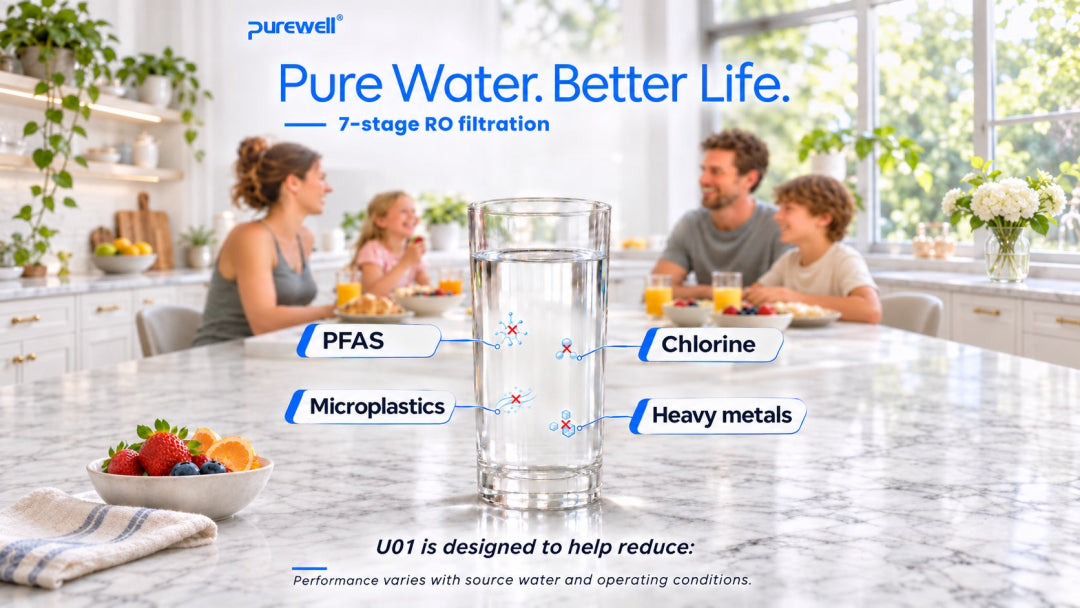
Every water filter brand will tell you it makes water cleaner. We'd rather tell you why we do it. Purewell started with one simple conviction: the water your family drinks should have nothing bad in it — and everything good.
Why Purewell exists
Most of us grew up assuming tap water is "good enough." Then the news kept finding reasons to doubt it — PFAS "forever chemicals" in private wells, microplastics in bottled water, lead in aging pipes, chlorine that leaves water tasting like a swimming pool. The more you look, the more you realize that "clean-looking" water and actually clean water are not the same thing.
That gap is why Purewell exists. We didn't set out to sell appliances. We set out to answer a much more personal question: how do you make sure the water your family drinks every single day is genuinely clean?
Our mission is simple: remove everything bad from your water, and give you the best possible result.
Pure Water. Better Life.That's not marketing polish — it's the filter we run every product decision through. Does it remove something harmful? Does it leave the water better than it found it? If the answer to either is no, it doesn't ship.
Born for water purification
A lot of big names treat water filters as one small line item in a much larger catalog. Purewell is the opposite — water filtration is the business. Every material choice, every filter stage, and every product we ship exists for a single reason: to make water better than we found it.
That focus is why we didn't bolt a filter onto an existing brand, and why we didn't spread ourselves thin across dozens of unrelated product categories. A stainless-steel body instead of plastic, a three-part carbon + silver + UF core, replacement cartridges built to stay available — these are the decisions of a company that only does one thing, and tries to do it well.
It's also a contrast worth naming. Berkey carries the weight of an ongoing regulatory dispute over how its silver-containing element is classified — a fight about registration and labels, not about whether the water comes out clean. Purewell's approach is simpler: build water filters, say plainly what they reduce, and keep the parts you'll need in stock.
What "the bad stuff" actually means
"Remove everything bad" sounds abstract, so let's make it concrete. These are the contaminants we design our systems to reduce — the same ones that keep showing up in water-quality headlines:
| Contaminant | Why it matters |
|---|---|
| PFAS ("forever chemicals") | Linked to certain cancers, reproductive issues, and other health concerns; slow to break down in the body and environment |
| Chlorine | Added as a disinfectant, but leaves an unpleasant taste and odor and can form byproducts |
| Microplastics | Found in both tap and bottled water; the long-term health effects are still being studied |
| Heavy metals | Lead, arsenic, cadmium, and others that can leach from pipes or occur naturally in groundwater |
| Bacteria & sediment | Microbial and particulate contamination, especially in well water or during boil-water events |
Notice what's not on the list: the minerals your body actually wants. Our gravity and RO systems are built to take out the bad while leaving the good — that's what "the best result" means to us.
How we remove it
The mission only matters if the engineering backs it up. Purewell uses two complementary filtration approaches across its lineup:
7-stage reverse osmosis (RO)
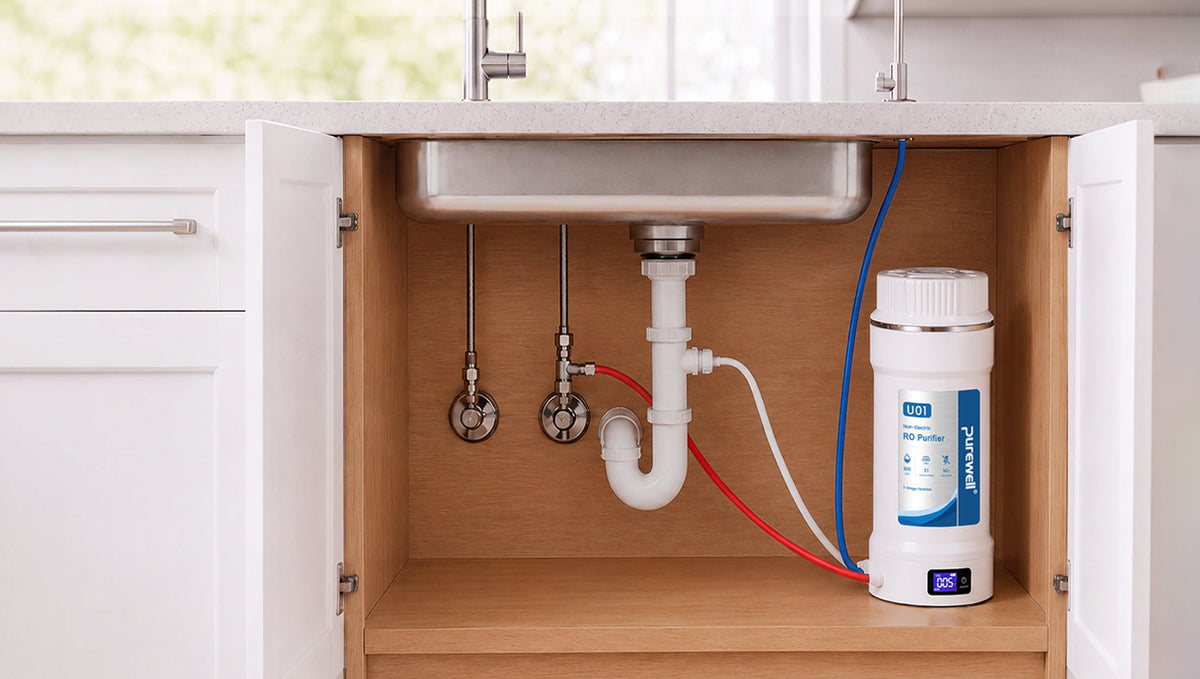
For the most thorough reduction, our under-sink and countertop RO systems push water through a membrane with pores around 0.0001 micron — fine enough to reject dissolved contaminants like PFAS, heavy metals, and arsenic, with multiple pre- and post-filter stages to protect the membrane and polish the taste.
Gravity filtration with carbon + silver + UF membrane
For countertop use without electricity, our gravity filters combine activated carbon (for chlorine, taste, and odor), silver ions (to inhibit bacterial growth), and a 0.01 micron hollow-fiber UF membrane (a physical barrier against bacteria) — all without reducing the minerals that make water healthy.
Why "designed to reduce" matters. We use careful wording on purpose. "Designed to help reduce [contaminant]" means the system's engineering targets that contaminant; "certified to reduce" means an independent lab has verified it against a specific standard like NSF/ANSI 42, 53, or 58. We tell you which is which because an honest brand is the only kind worth trusting with your family's water.
What "the best result" looks like
Clean water is the means, not the end. The result we're actually after shows up in everyday moments:
- Water your kids will actually drink — no chlorine taste, so they reach for a glass instead of something sugary.
- Coffee, tea, and cooking that taste right — because the water doesn't fight the flavor.
- Peace of mind during an emergency — a gravity filter that works with no power when the lights go out.
- One less thing to worry about — knowing the water is handled, every day, without thinking about it.
That's the "Better Life" half of our slogan. The water is the promise; the life it supports is the point.
The systems behind the mission
Our mission shows up in a few different product lines, each built for a different home:
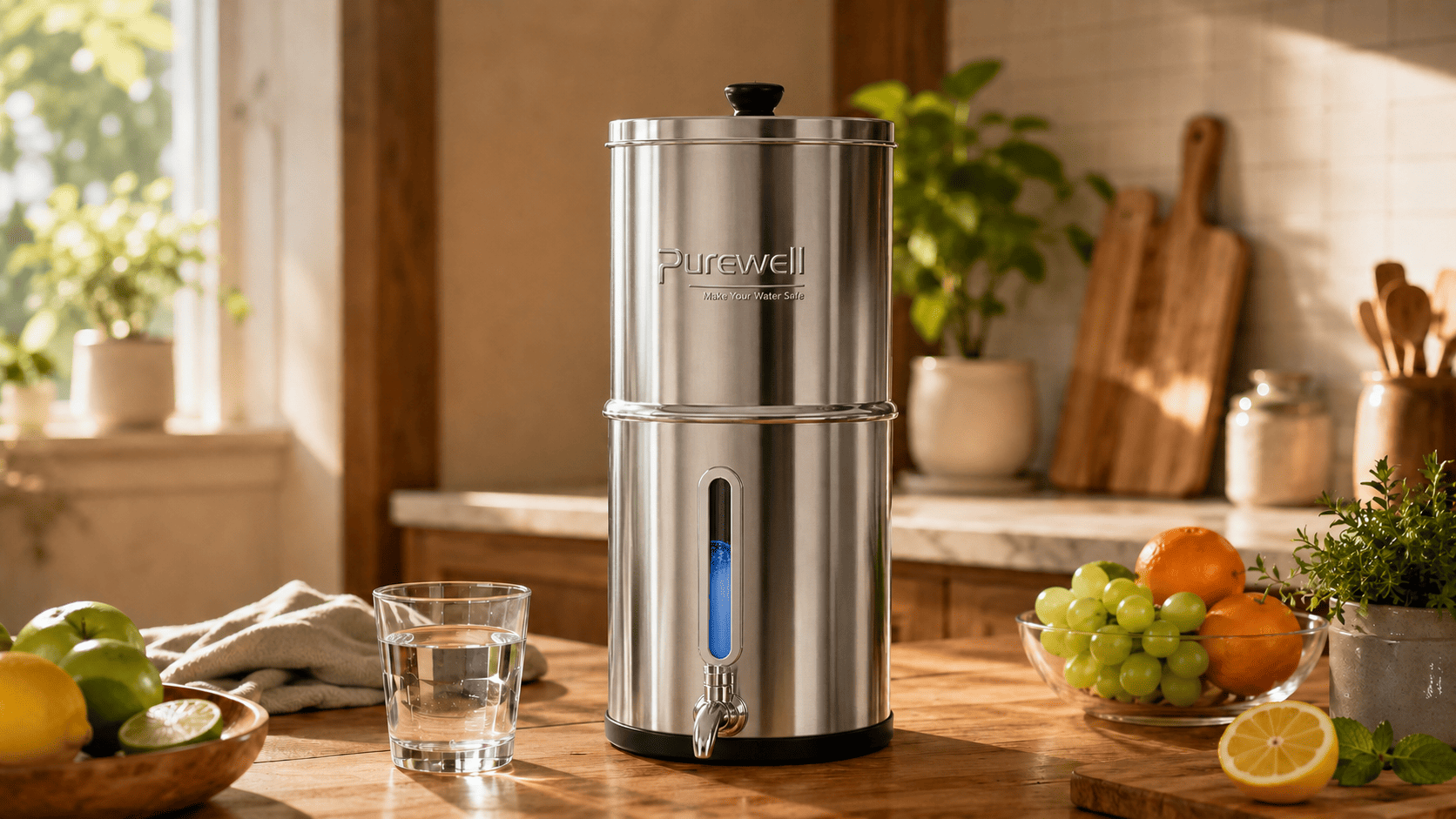
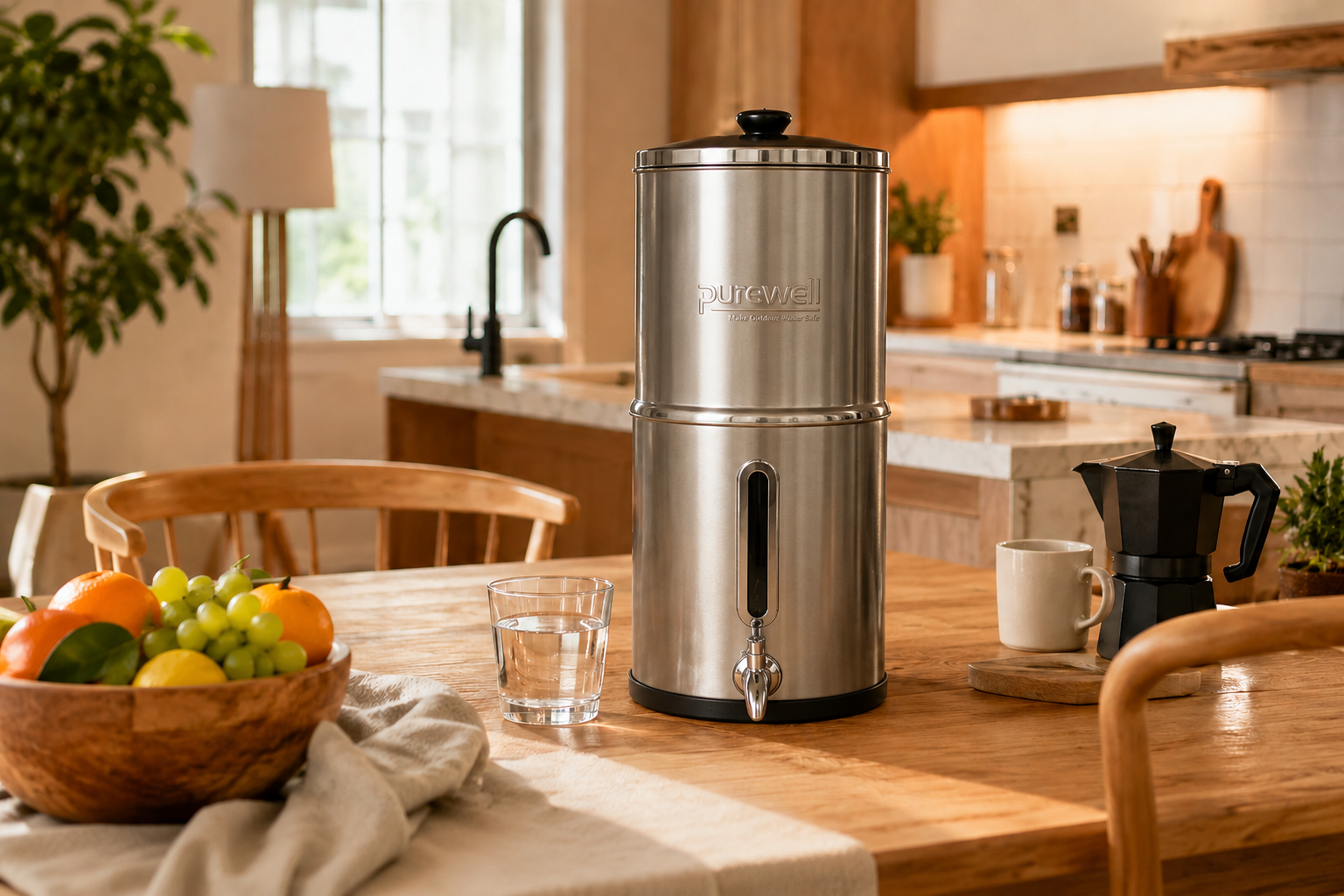
- Gravity filters (K Series, BO Series) — countertop, no electricity, stainless steel. The everyday workhorse for families who want clean water without plumbing.
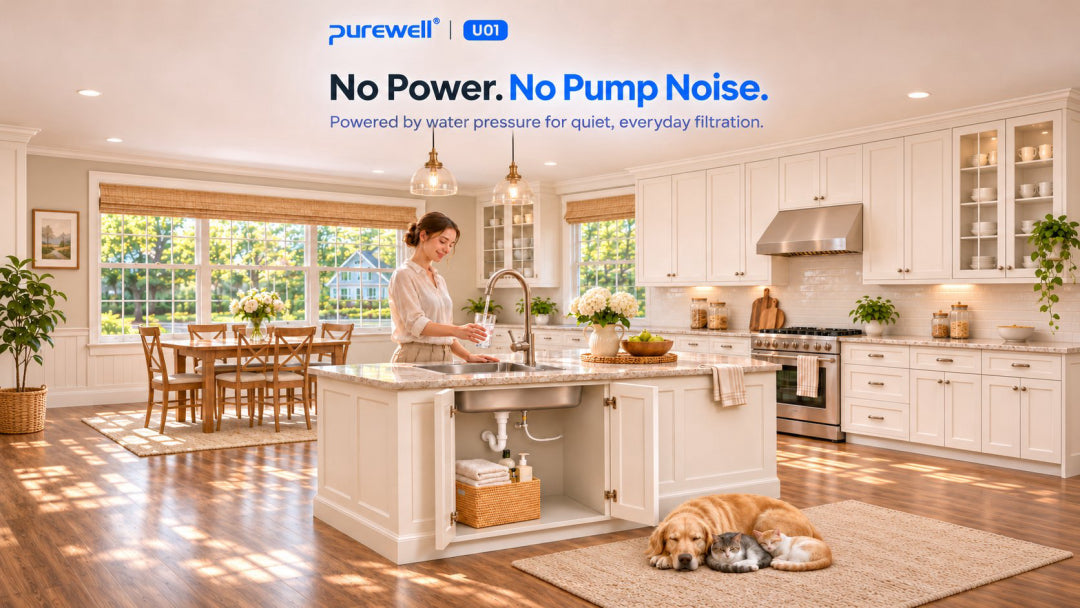
- Under-sink RO (U01) — 7-stage reverse osmosis installed out of sight, for the most thorough contaminant reduction at the kitchen tap.
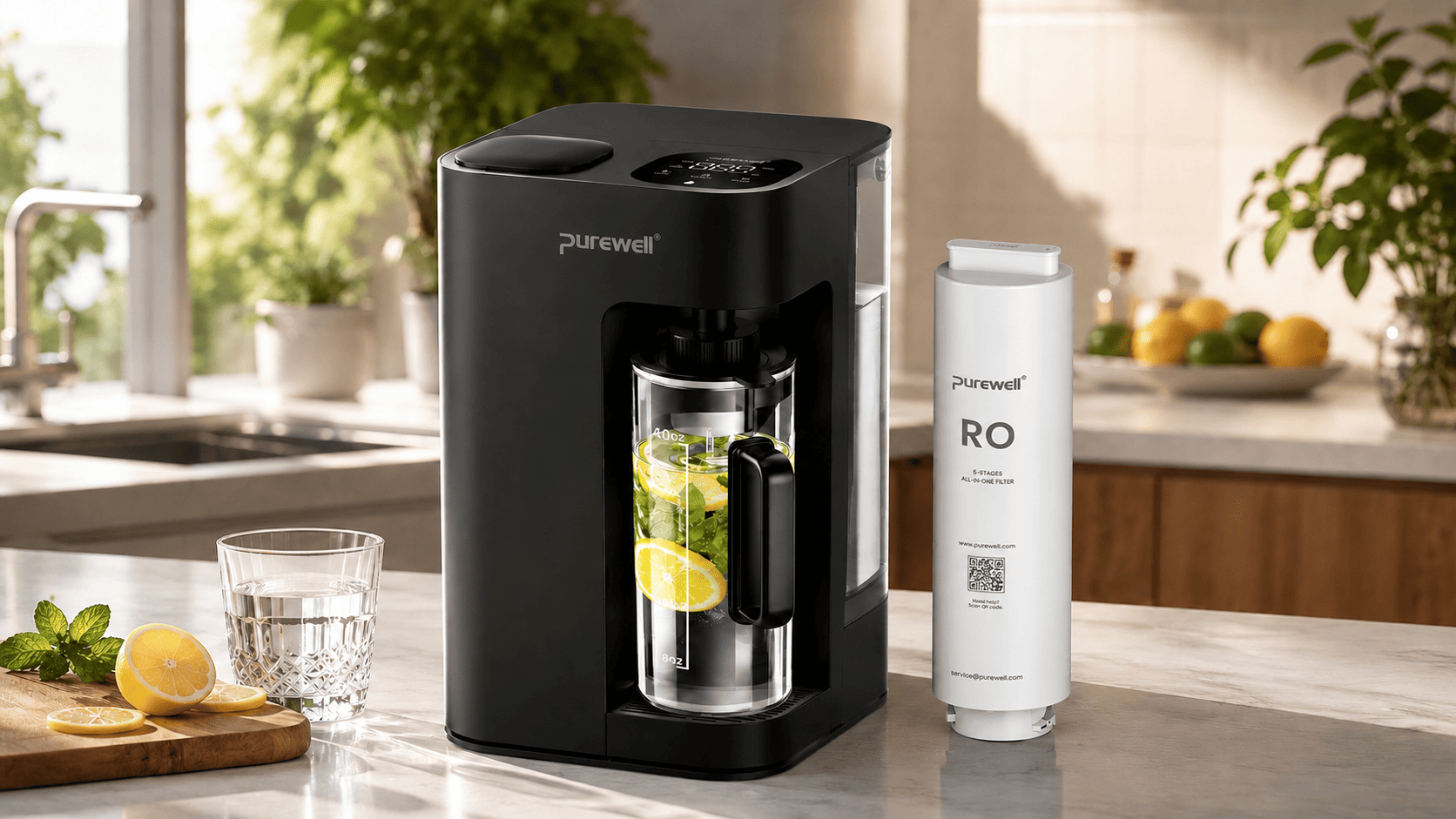
- Countertop RO (C01, C05) — RO performance in a plug-and-go countertop unit, for renters and anyone who can't modify cabinetry.
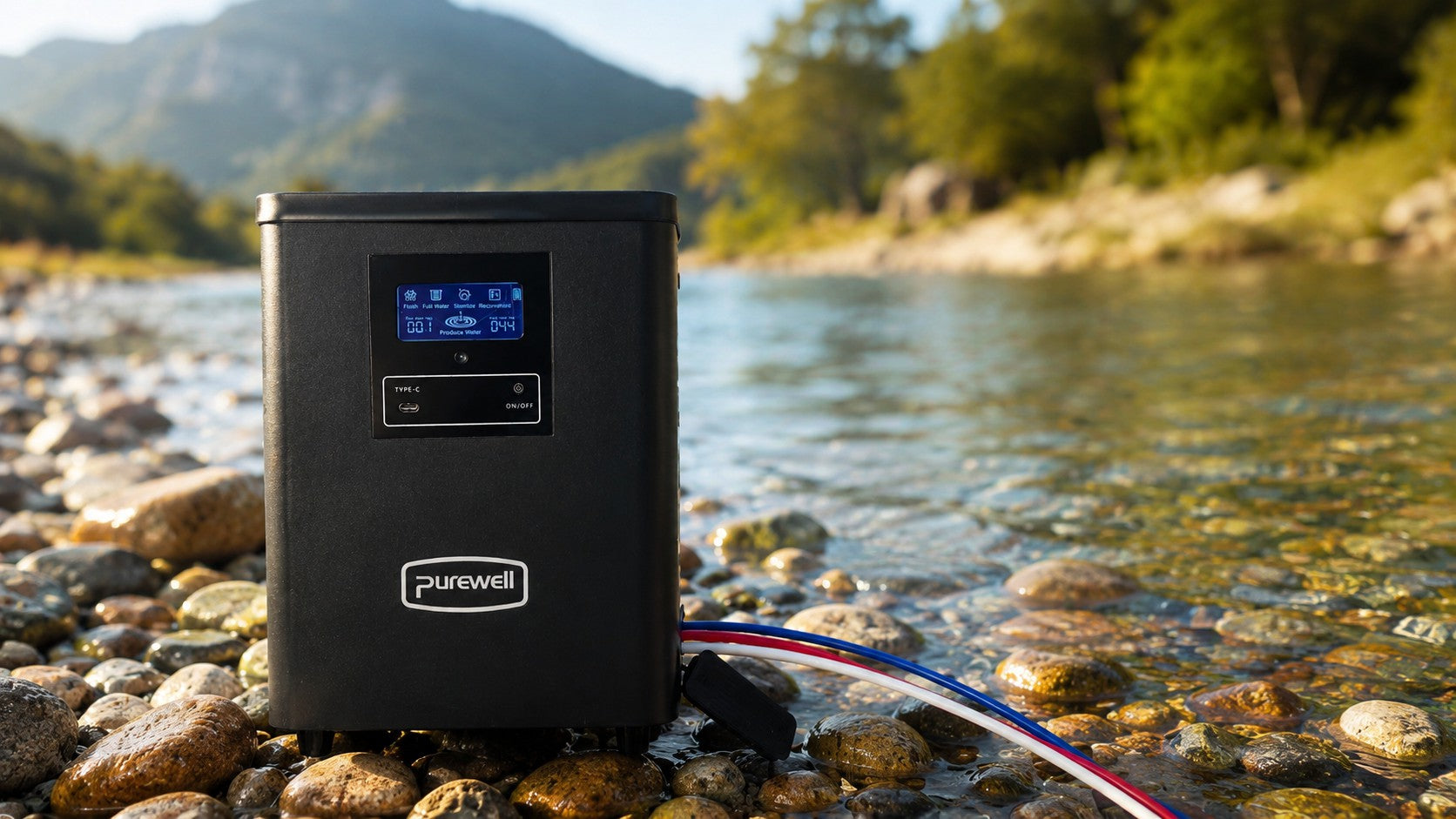
- Portable RO — the same filtration philosophy taken outdoors for camping and emergencies.
Whatever the format, the standard is the same: remove the bad, keep the good, and make the water something you don't have to think twice about.
Our carbon filters fit the Berkey system you already own
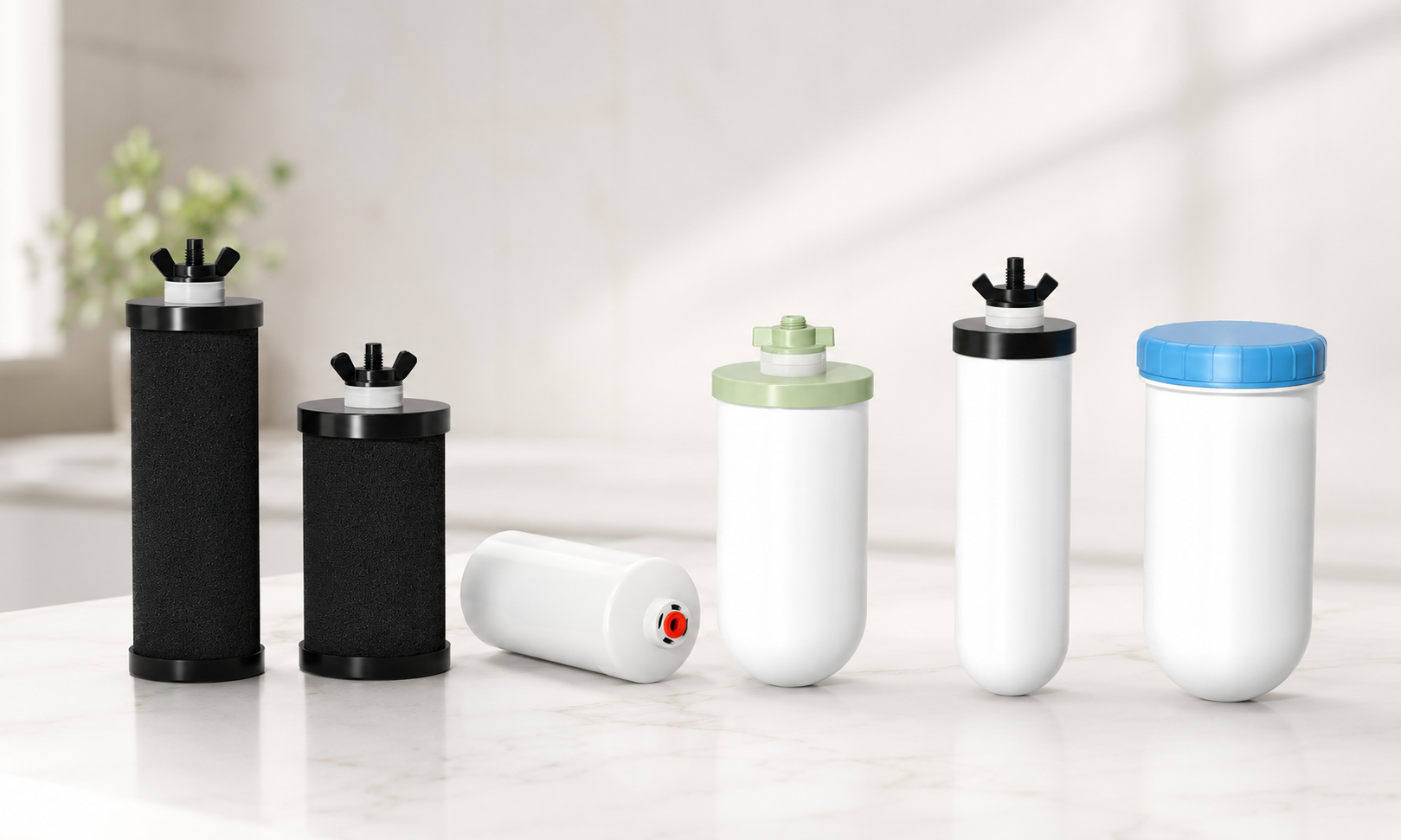
If you already run a Berkey gravity system, here's something worth knowing before you pay a premium for a replacement element — or gamble on a marketplace seller. Purewell's K Series replacement carbon filters are engineered as a drop-in option for Berkey BB9-2 style systems, including the Travel, Big, Royal, Imperial, Light, and Crown Berkey models.
What that means in practice: the carbon filter you buy from Purewell can slot into the Berkey housing you already own. When the original Black Berkey elements are sold out — which they have been for more than two years — a compatible Purewell cartridge keeps your existing system running, instead of forcing you to replace the whole unit.
Compatible with Berkey BB9-2 style systems: Travel, Big, Royal, Imperial, Light, and Crown Berkey Series. Always confirm your system's filter size before ordering; filter life and flow rate vary with your source water and usage.
Two sizes to match your housing:
- K Series Replacement Water Filter — approx. 2.64 × 8.66 in, up to 6,000 gallons per box.
- K Series Upgraded Replacement Water Filter — approx. 3.27 × 6.69 in, up to 10,000 gallons per box.
A promise we can actually stand behind
We hold ourselves to the same standard we ask of our customers: verify before you trust. That means we tell you what a system is engineered to reduce, what it's certified to reduce, and what remains a claim until a lab report says otherwise. It also means our replacement filters stay in stock — because a mission that can't be maintained for years isn't a mission, it's a one-time sale.
Frequently asked questions
What is Purewell's mission?
Our mission is to remove everything bad from your water and give you the best possible result — clean, healthy water for your family. We summarize it as "Pure Water. Better Life."
What contaminants does Purewell reduce?
Depending on the system, Purewell's filters are designed to help reduce PFAS, chlorine, microplastics, heavy metals, bacteria, and sediment. Reverse-osmosis systems go further, reducing dissolved solids (TDS), arsenic, fluoride, and more.
Does Purewell water filtration remove healthy minerals?
Gravity filters (carbon + UF membrane) do not reduce TDS, so beneficial minerals stay in the water. Reverse-osmosis systems do reduce TDS and minerals — which is the point of RO — so the choice depends on your water and your goals.
Is "designed to reduce" the same as "certified"?
No. "Designed to reduce" describes what the engineering targets; "certified" means an independent lab verified a specific reduction claim against a standard such as NSF/ANSI 42, 53, or 58. We distinguish the two deliberately.
Do Purewell filters work without electricity?
The gravity line works entirely without power, using gravity to pull water through the filter. The under-sink U01 RO also runs on household water pressure with no electricity required.
Start with clean water
If our mission resonates — remove the bad, keep the good, give your family the best — then the next step is simple: find the system that fits your home, and let the water do the rest.
Pure Water. Better Life.
Explore Purewell's gravity filters and reverse-osmosis systems, and find the one built for your family's water.
Explore Purewell Systems