



Countertop Reverse Osmosis Water Filters UK: What They Remove, Cost & Which to Choose
Countertop reverse osmosis water filters in the UK at a glance
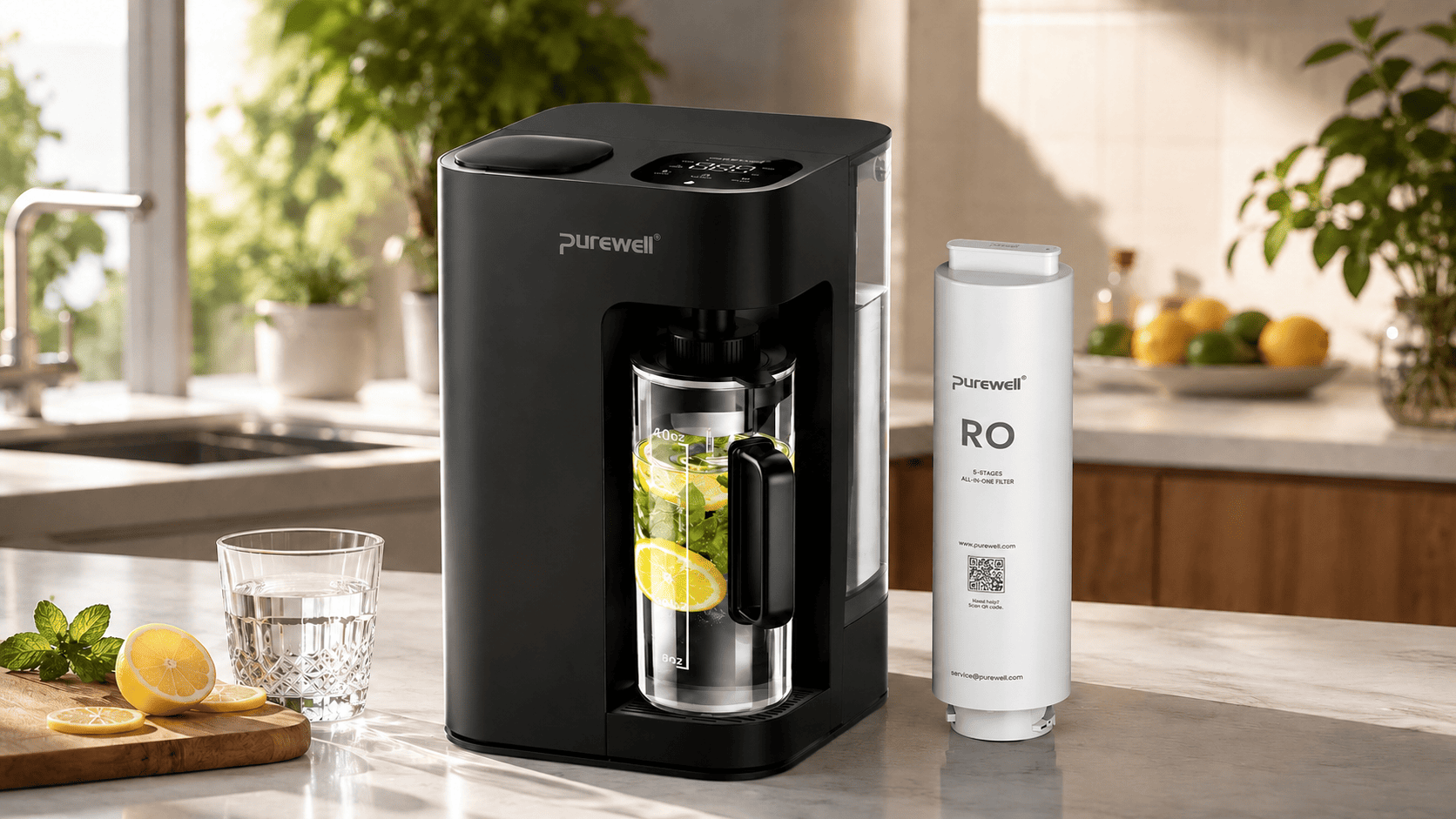
A countertop reverse osmosis (RO) water filter is the most thorough point-of-use option you can run without touching the plumbing. It pushes water through a semi-permeable membrane that strips dissolved solids most other filters leave behind, then polishes it with carbon. Because the unit sits on the worktop and fills from a tank you top up by hand, it needs no installer and no landlord permission — which is exactly why it suits UK renters who still want near-bottled-water purity. This guide explains how it works, what it removes, what it costs to run, and how it stacks up against gravity and under-sink systems.
| Question | Short answer |
|---|---|
| Needs plumbing? | No — you fill the tank by hand; only a power socket required |
| Best at removing | Dissolved solids, nitrates, fluoride, arsenic, lead, sodium |
| PFAS? | Possible, but only where the unit is tested to NSF/ANSI 53 for PFOA/PFOS — check the claim |
| Running cost | Unit + annual membranes/filters + a little electricity + water to drain |
| Best for | Hard water, high TDS, or anyone wanting maximum dissolved-solids reduction |
How a countertop RO system actually works
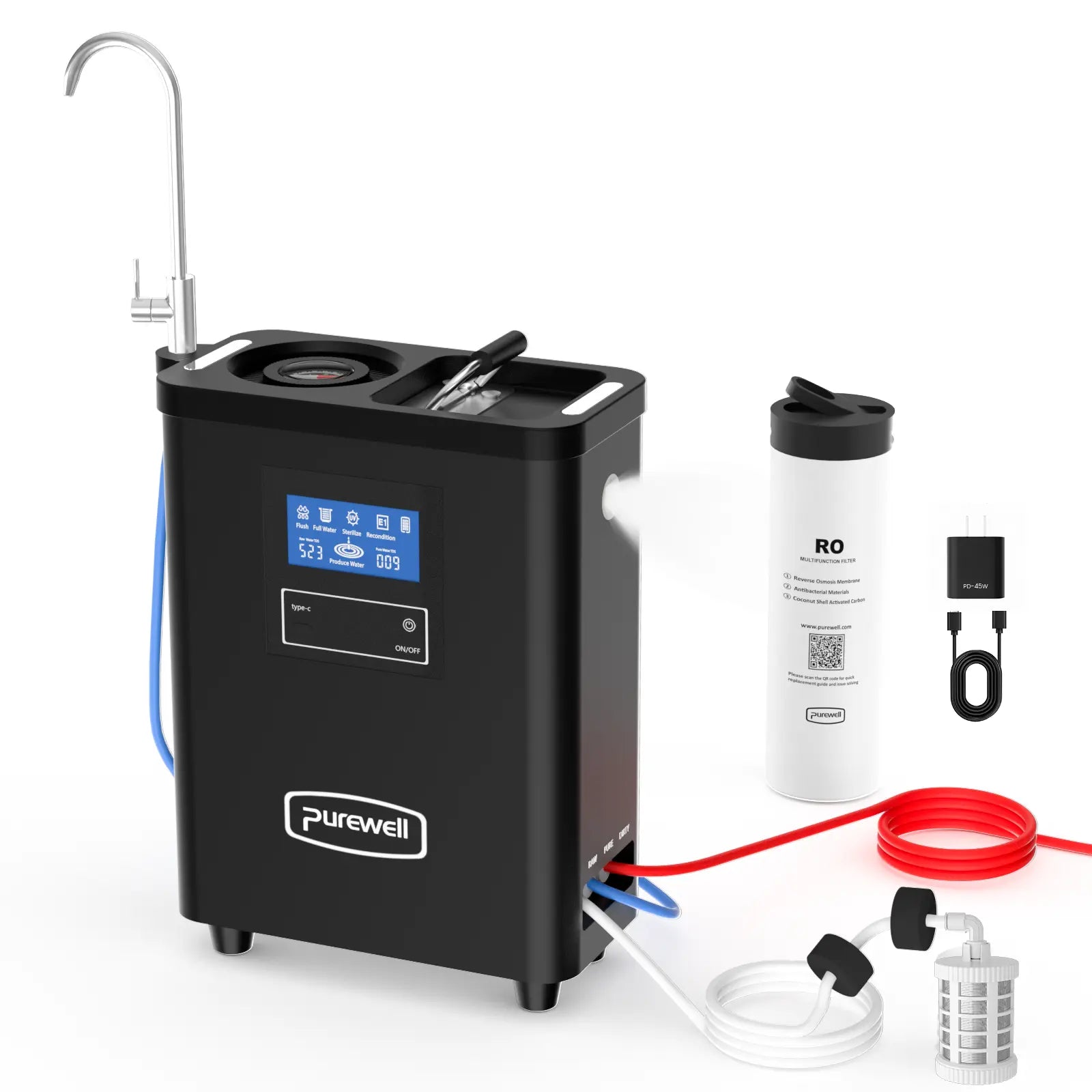
Unlike gravity systems that rely on weight, an RO unit uses an electric pump to force water through a membrane with pores small enough to block dissolved ions. A typical countertop RO runs in stages:
- Sediment pre-filter. Catches rust, sand and silt so they never reach the membrane.
- Carbon pre-filter. Removes chlorine, which would otherwise damage the membrane, and improves taste.
- RO membrane. The core stage — rejects dissolved solids, letting only a purified stream through while sending concentrate to drain.
- Post-carbon / polishing filter. Cleans up any taste the membrane pass leaves behind.
- Optional remineralisation. Some units add a small, measured dose of minerals back so the water is not flat — worth checking if you dislike the "soft" RO taste.
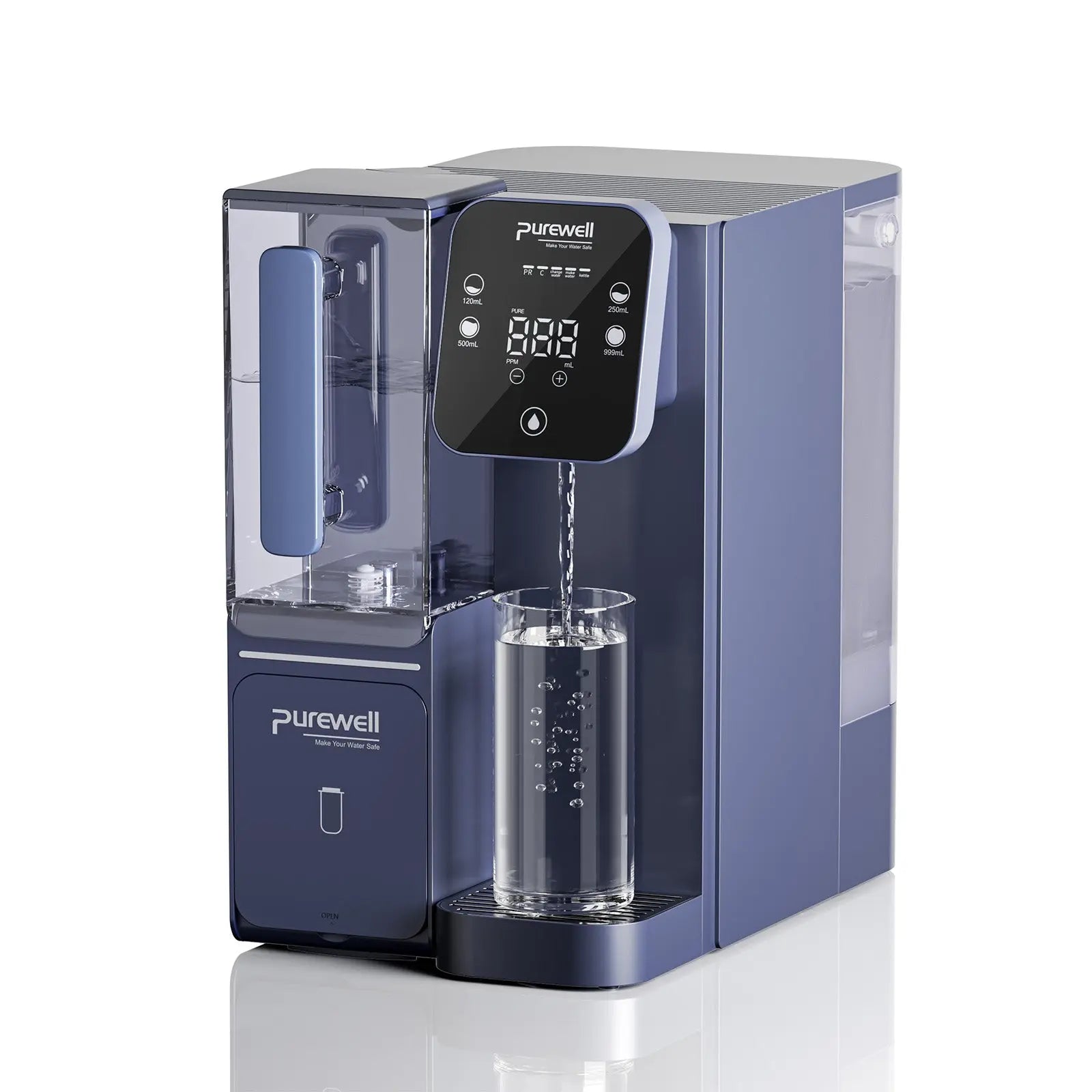
You draw the finished water from a small faucet or tap on the unit itself. There is a fill tank you top up and a reservoir of ready-to-drink water, so you are not tied to the mains tap for every glass.
What countertop RO removes — and what to verify
Reverse osmosis is broad-spectrum on dissolved content, but "RO removes it" is not the same as "this unit is certified to remove it." Always match the claim to the standard:
- Total dissolved solids (TDS), sodium, nitrates, fluoride, arsenic, lead. RO membranes handle these well. Look for testing to NSF/ANSI 58, the RO standard, for the performance you can rely on.
- PFAS (PFOA/PFOS). An RO membrane can reduce PFAS, but only trust it where the specific unit is tested to NSF/ANSI 53 for PFOA/PFOS — not where the listing just says "RO" in general. Our does a water filter remove PFAS guide explains how to read the claim, and PFAS in London tap water covers the UK context.
- Chlorine and taste/odour. Handled by the carbon stages, not the membrane.
- Cysts and sediment. The pre-filters and membrane catch these.
If a product page names a reduction percentage but no standard, treat it as marketing until you see the test or certification listing. The paperwork matters more than the headline number.
Countertop RO vs gravity: which technology?
| Factor | Countertop RO | Gravity |
|---|---|---|
| Power | Required (pump) | None |
| Plumbing | None (hand-filled) | None |
| Dissolved solids | Substantially reduced | Largely remain (minerals kept) |
| Wastewater | Some to drain | None |
| Taste of water | Very clean, can taste flat | Improved, minerals retained |
| Running cost | Higher (power, membranes, drain) | Lower (periodic elements) |
| Best for | Hard water, high TDS, max reduction | Taste, chlorine, low maintenance |
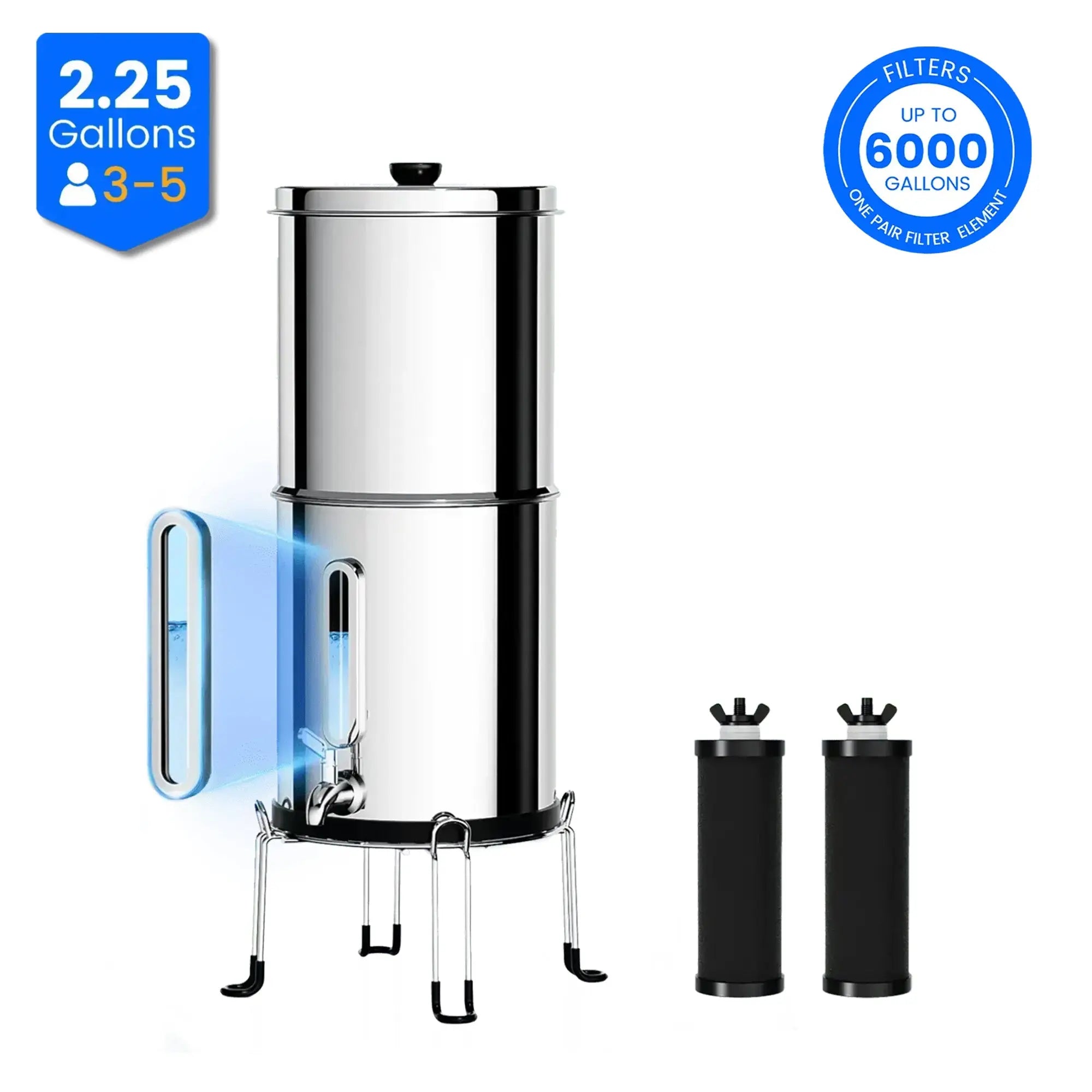
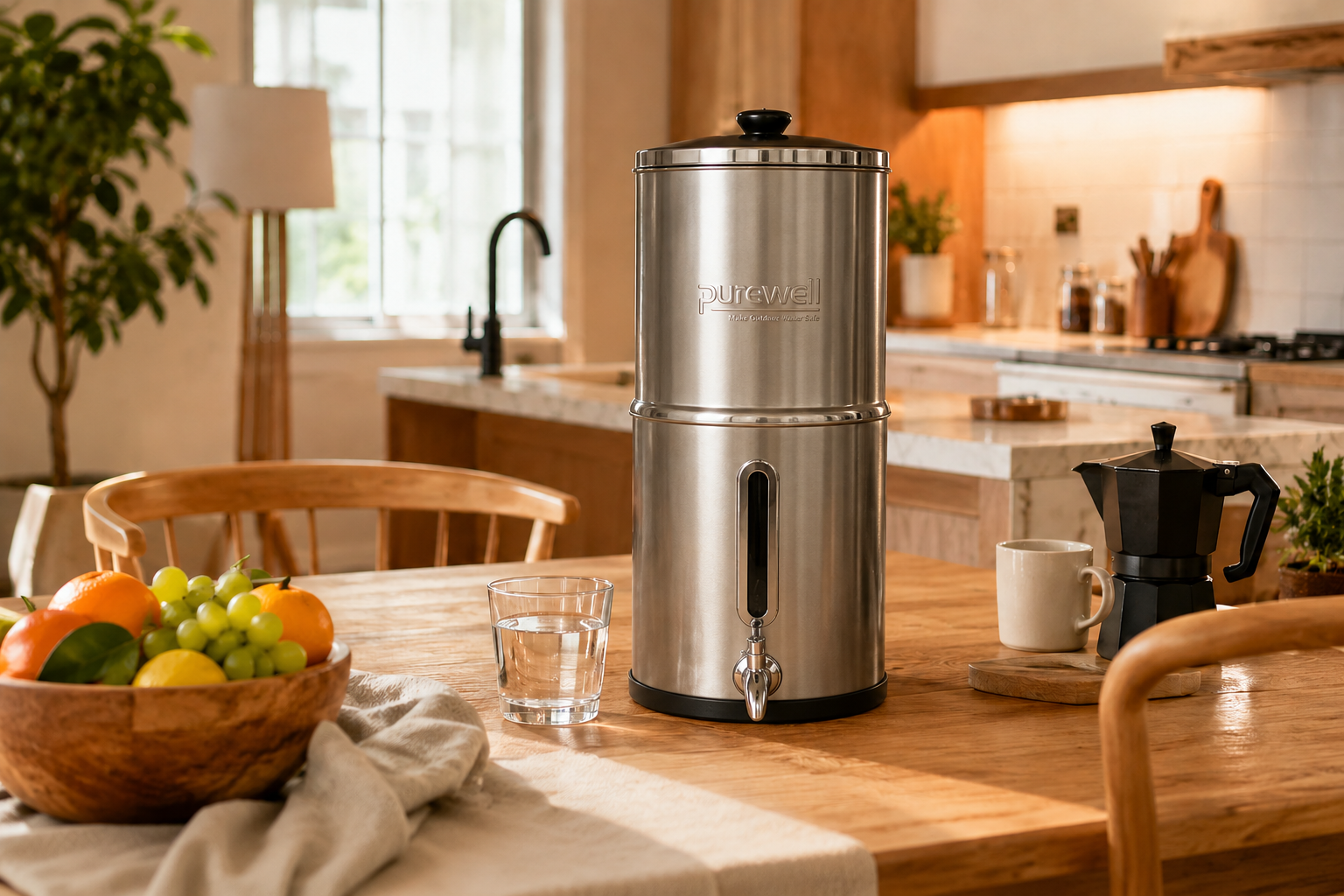
If your complaint is limescale or "the water tastes heavy," RO is the more relevant technology. If it is chlorine, taste or a bit of sediment and you want zero running cost beyond elements, gravity wins — see our best gravity water filter guide for capacity and cartridge choice.
Countertop RO vs under-sink RO
Both run the same RO membrane, so the filtration outcome is similar; the difference is installation and where the unit lives.
| Factor | Countertop RO | Under-sink RO |
|---|---|---|
| Installation | None — place on worktop, plug in | Cabinet plumbing + dedicated faucet |
| Landlord permission | Not needed | Usually required |
| Worktop space | Uses some | None (hidden in cabinet) |
| Throughput | Smaller tank, refill by hand | Larger pressurised tank, steady |
| Best for | Renters, movers, trial runs | Owners wanting a permanent fit |
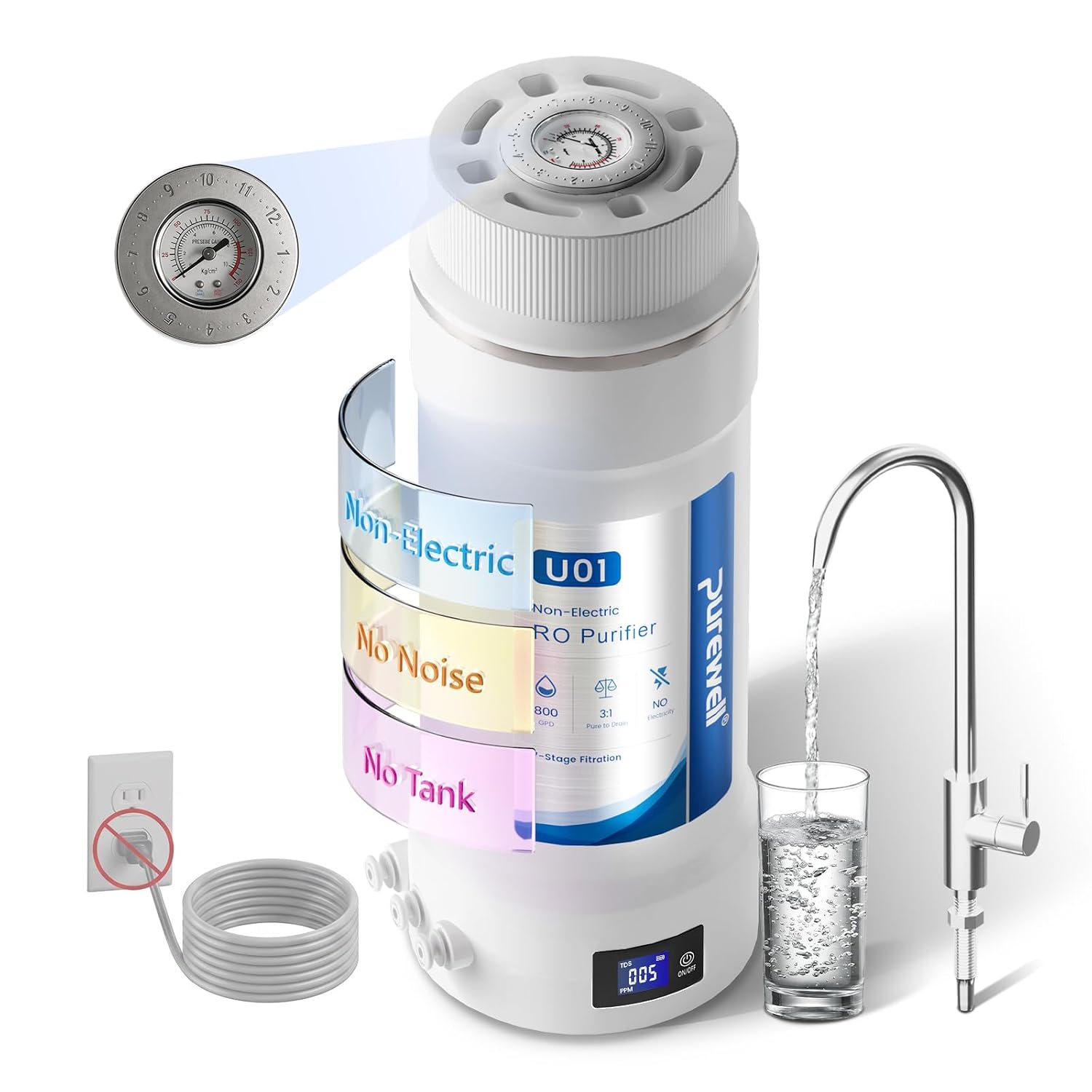
For a rented UK flat, under-sink RO usually means a plumber and permission; countertop RO avoids both. If you own the property and want the cleanest permanent setup, under-sink is the long-term route — but countertop is the lower-friction way to start.
What does a countertop RO cost to run?
The unit is only part of the bill. Budget the first year as unit + annual membrane/filter replacements + electricity + water to drain. Figures below are illustrative ranges — confirm current UK pricing on the product page.
| Cost element | Illustrative first-year range (UK) |
|---|---|
| Unit (one-off) | £120 – £280 |
| Replacement membranes & filters (annual) | £40 – £90 |
| Electricity (low, pumped) | £5 – £15 |
| Water to drain (waste stream) | Minor — part of your supply tariff |
First-year cost calculator
Illustrative only. Replace the defaults with the figures from the product page you are considering.
Which countertop RO should you choose?
Match the unit to the actual problem, not the biggest claim:
- High TDS or limescale is your complaint? Prioritise membrane rating and a remineralisation stage so the water is not flat.
- PFAS is the worry? Only shortlist units tested to NSF/ANSI 53 for PFOA/PFOS — see our Thames Water PFAS guide for the UK angle.
- Small flat, no free socket nearby? Check the pump's reach to a socket, or reconsider gravity — our ceramic filter guide explains the no-power route.
- Big household, constant demand? Size up the reservoir, or you will be refilling the tank all day.
UK buying considerations
- Certifications. For RO, look for NSF/ANSI 58 (the reverse osmosis standard) and, for specific contaminants, NSF/ANSI 53. For any UK plumbing contact point, check WRAS approval. A claim with no standard named is just a claim.
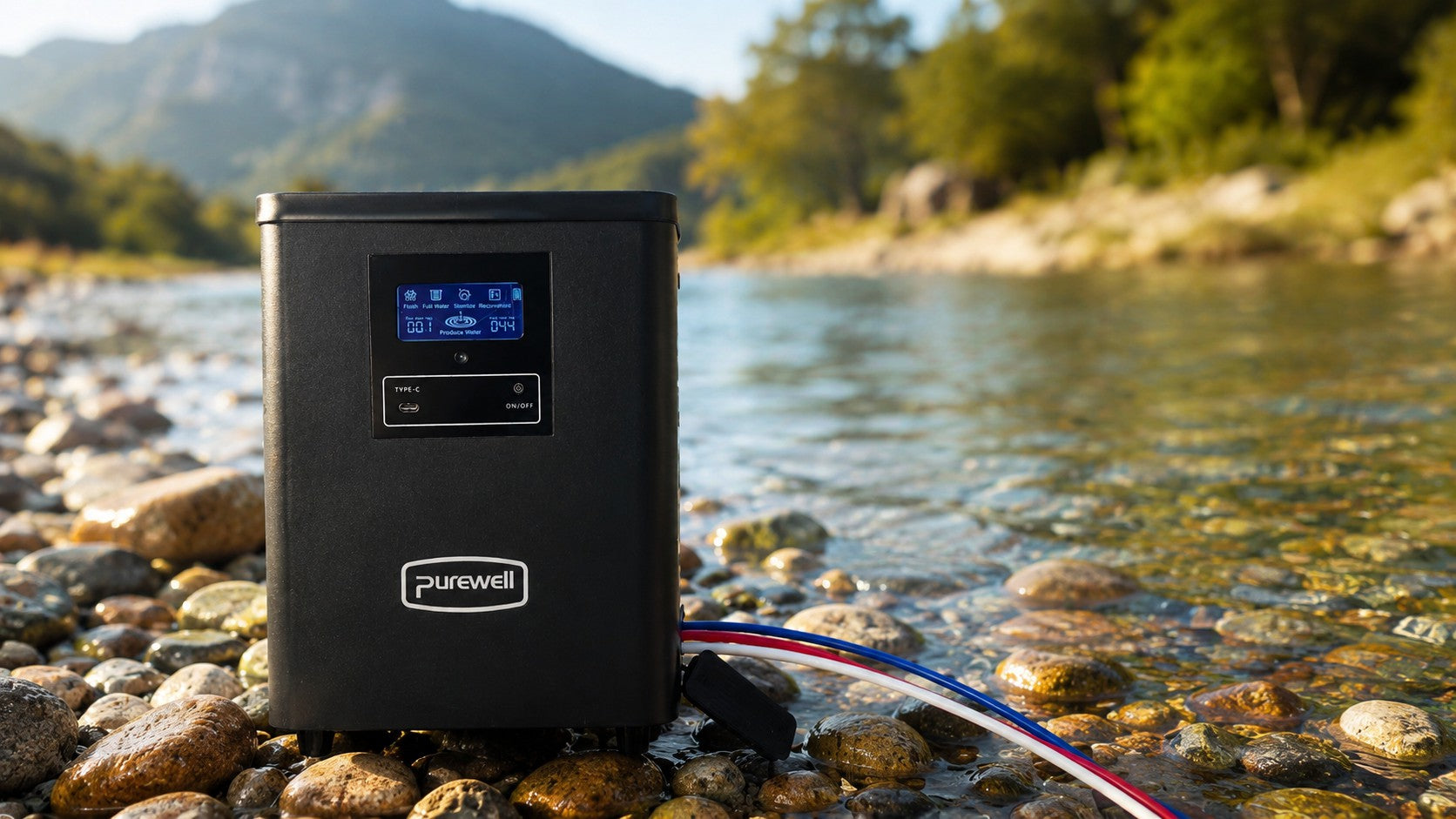
- No plumbing, but a socket. Countertop RO needs power for the pump. Place it where a socket is reachable, and keep the fill tank topped up.
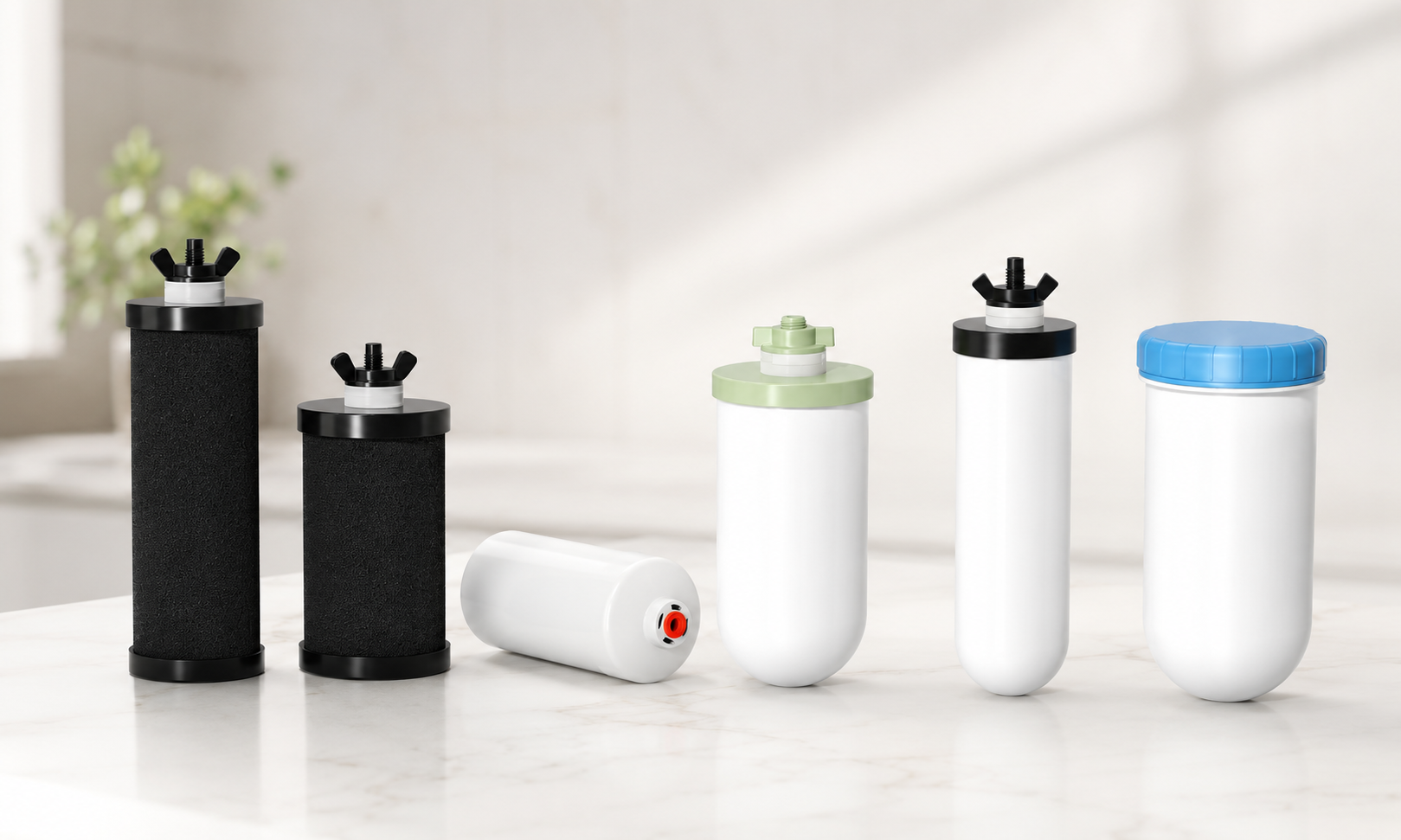
- Replacement availability. Confirm membranes and filters are stocked in the UK before you buy, so you are not stranded later. The replacement filters collection is the place to check.
- Water to drain. RO sends some water to waste. If that bothers you, a gravity system produces none — trade purity for zero wastewater.
- Moving home. Countertop units are not plumbed in, so they move with you — a clear advantage over under-sink systems for renters.
Frequently asked questions
Is a countertop RO system worth it in the UK?
If you want the lowest dissolved-solids level possible without installing under-sink plumbing, yes. It needs no landlord permission and no plumber — just a socket and a refill routine. Weigh that against the running cost and the wastewater.
Do countertop RO filters need plumbing?
No. You fill the tank by hand and draw water from a faucet on the unit. The only utility it needs is a power socket for the pump. Only under-sink RO needs cabinet plumbing.
Will a countertop RO remove PFAS?
It can, but only trust it where the specific unit is tested to NSF/ANSI 53 for PFOA/PFOS. A general "RO" label is not enough — check the named reduction claim and the standard behind it.
Does reverse osmosis remove minerals from water?
Yes — RO removes dissolved minerals along with other solids, which is why some units add a remineralisation stage afterwards. If you like the mineral content of your tap water, a gravity system keeps more of it.
How much water does countertop RO waste?
RO sends a portion of the feed water to drain as concentrate. The exact ratio varies by unit; it is a small, ongoing cost folded into your supply tariff rather than a large one.
Countertop RO or under-sink RO for a rental?
Countertop, almost always. Under-sink RO needs cabinet plumbing and usually landlord permission; countertop RO just sits on the worktop and plugs in. Owners wanting a permanent, invisible fit may prefer under-sink.
How often do RO membranes and filters need replacing?
Pre/post carbon stages and the membrane each have their own rated life in litres or months. Note each interval separately — they are not all due at the same time.
Can I take a countertop RO with me when I move?
Yes. It is not plumbed in, so it packs up and moves with you. That portability is one of its main advantages over a fixed under-sink system.
Related guides
Building a shortlist? These UK guides cover the same cluster from different angles: