

Countertop Water Filters UK: Gravity vs RO — Which Is Right for You?
Countertop water filters in the UK at a glance
A countertop water filter sits on your worktop and treats water at the point of use, but the label hides two very different technologies. Gravity systems use no power and no plumbing, and they keep most of your water's natural mineral content. Countertop reverse osmosis (RO) cuts dissolved solids dramatically but needs power and sends some water to drain. This guide compares both — plus the faucet-connected option — so you can match the filter to your water, your kitchen and your tenancy, rather than to the biggest marketing claim.
| Type | Power | Plumbing | Reduces dissolved solids? | Best for |
|---|---|---|---|---|
| Gravity | None | None | Minimal — minerals remain | Renters, low-maintenance homes, better-tasting water |
| Countertop RO | Required | None (fill by hand) | Substantial | Maximum dissolved-solids reduction |
| Faucet-connected | None | Tap diverter | Varies by cartridge | Unlimited on-demand filtered water |
The main types of countertop filter
Gravity countertop systems
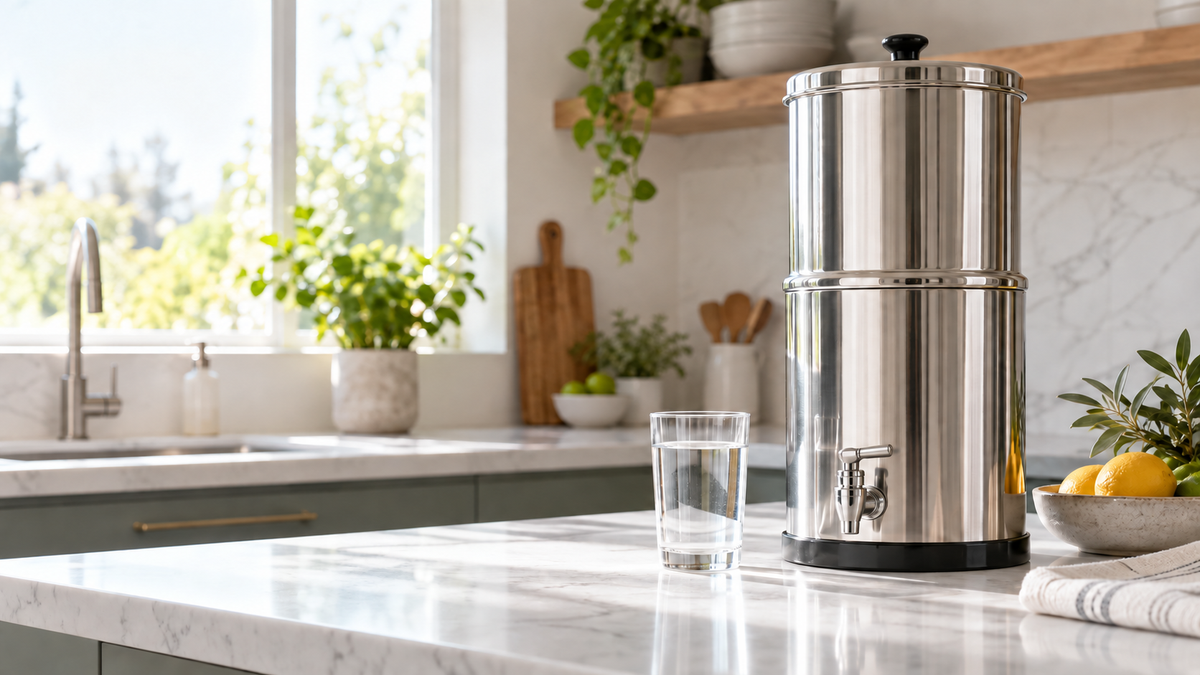
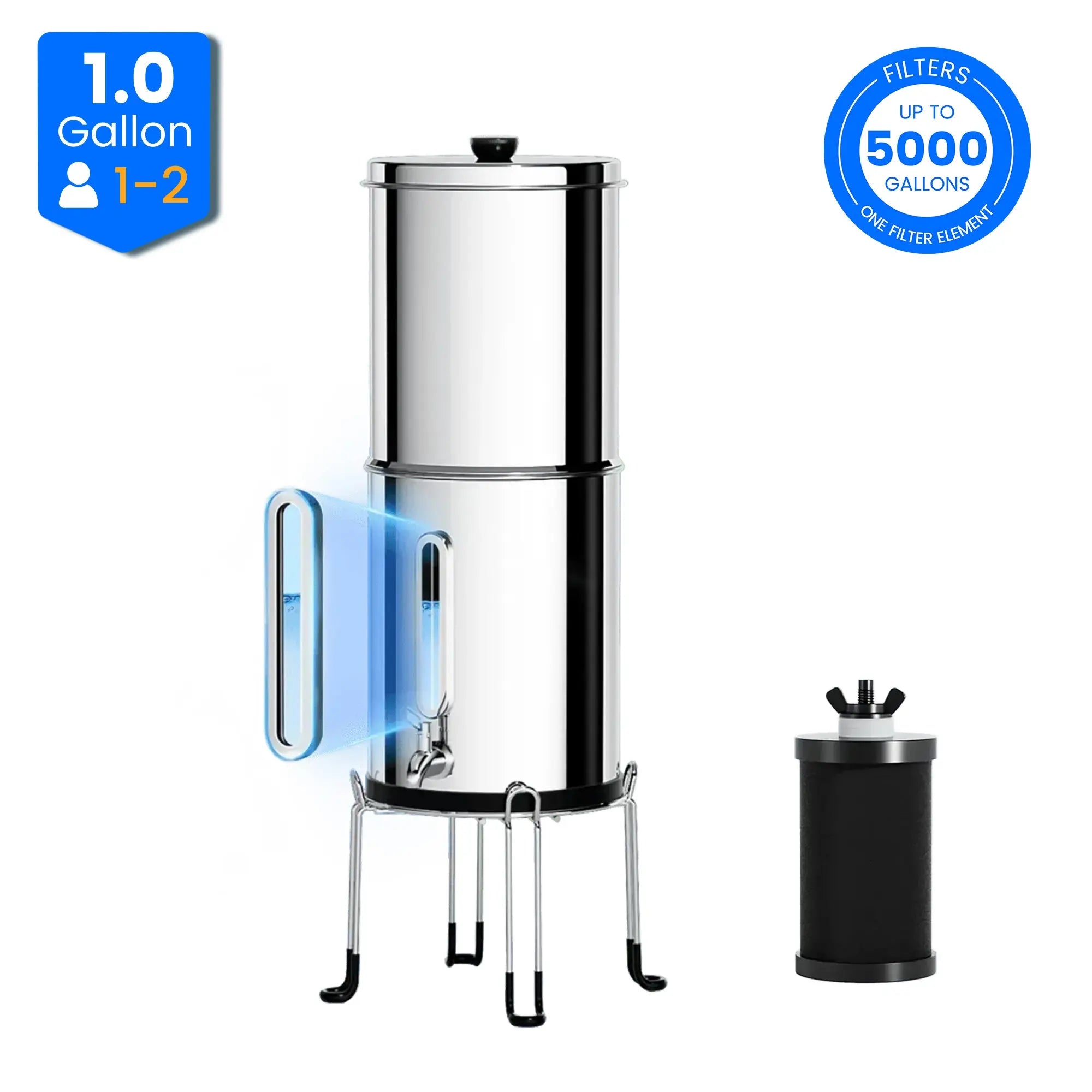
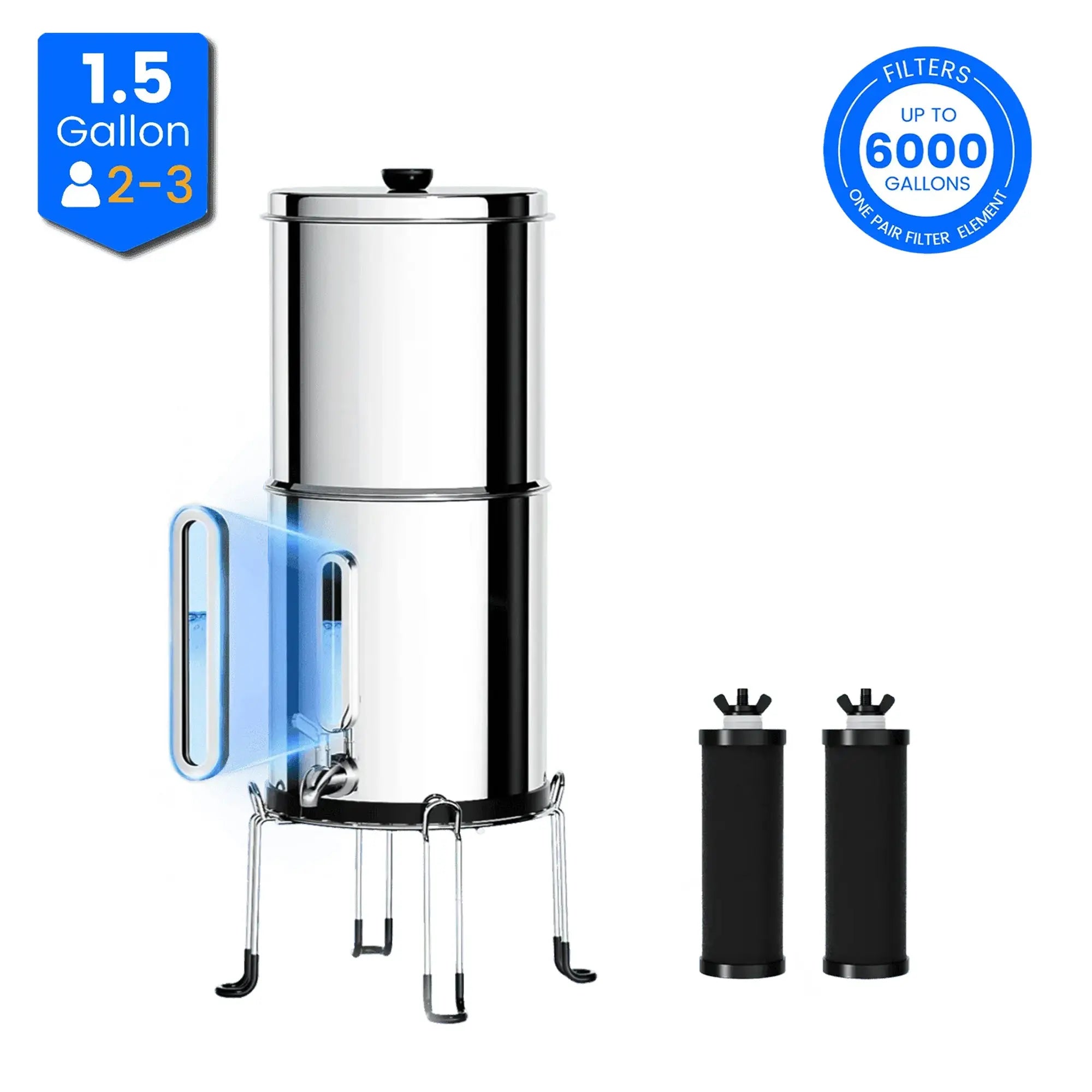
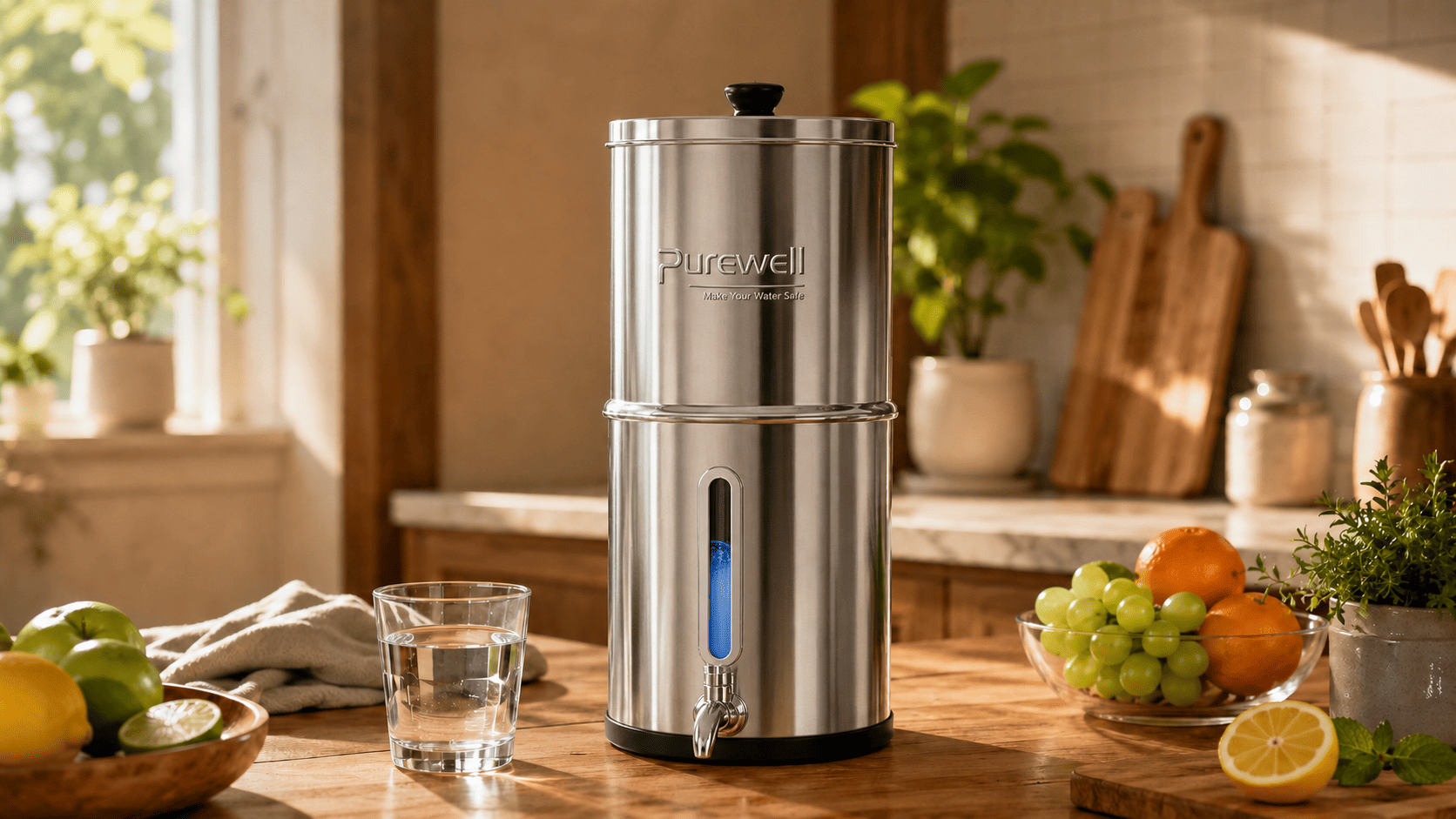
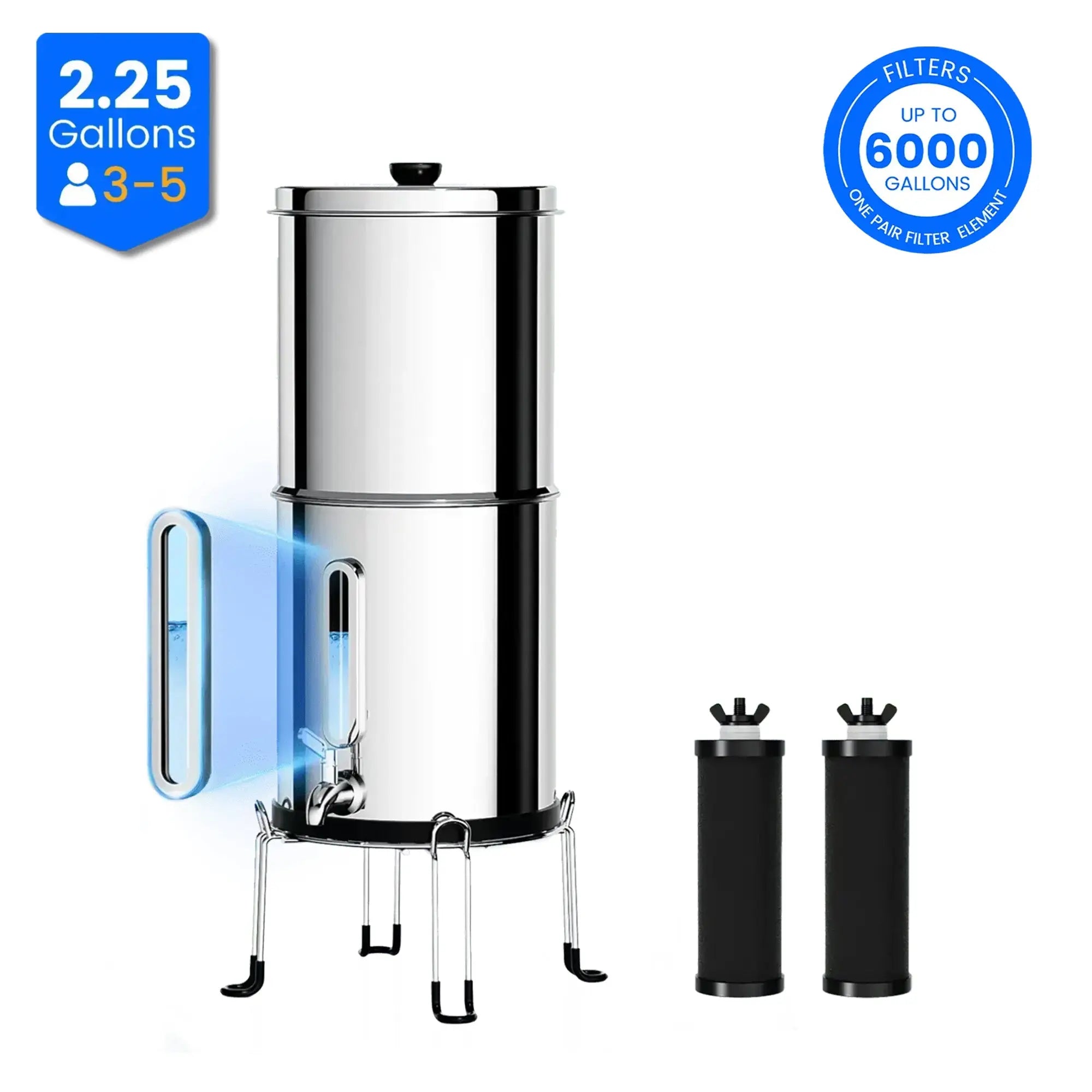
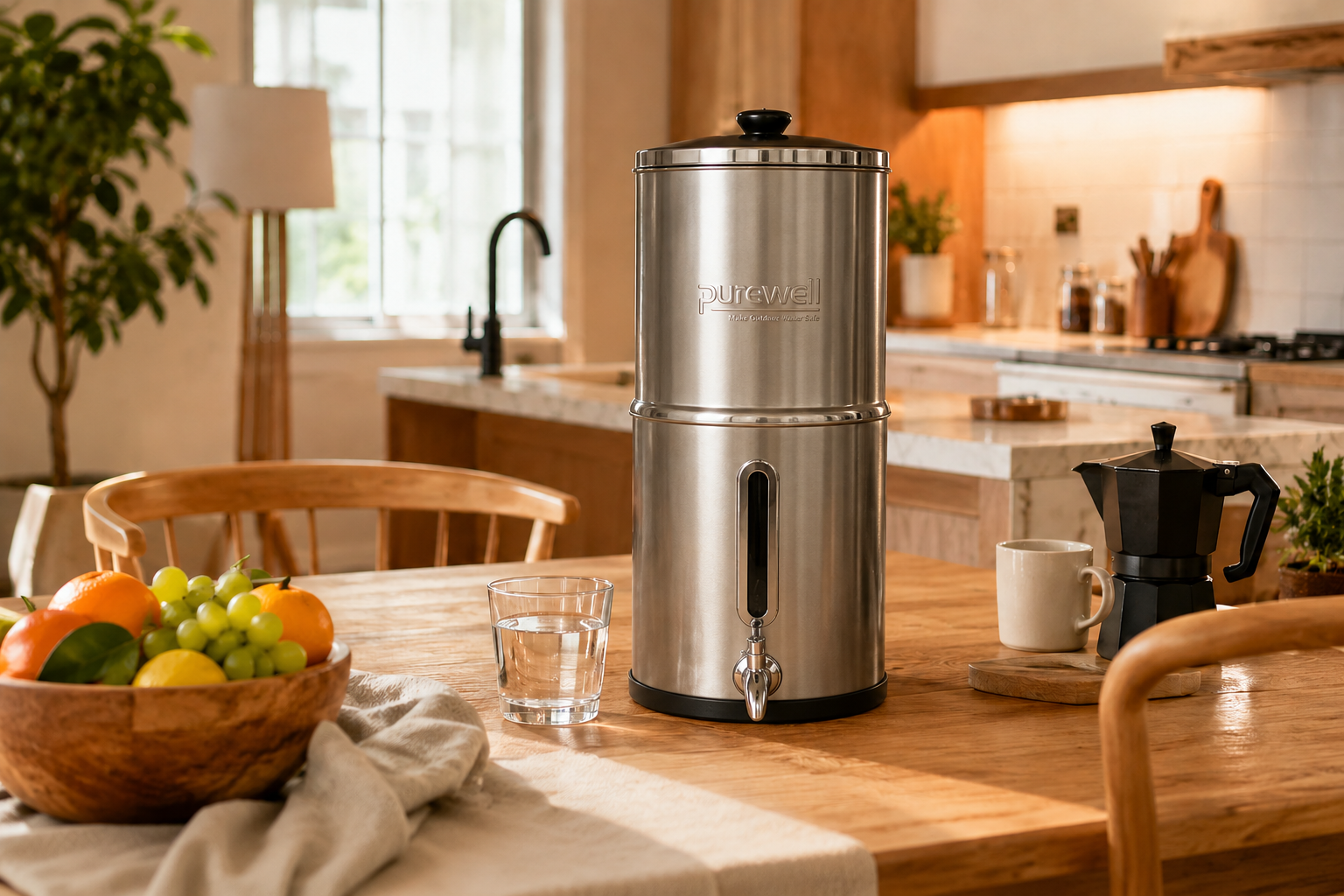
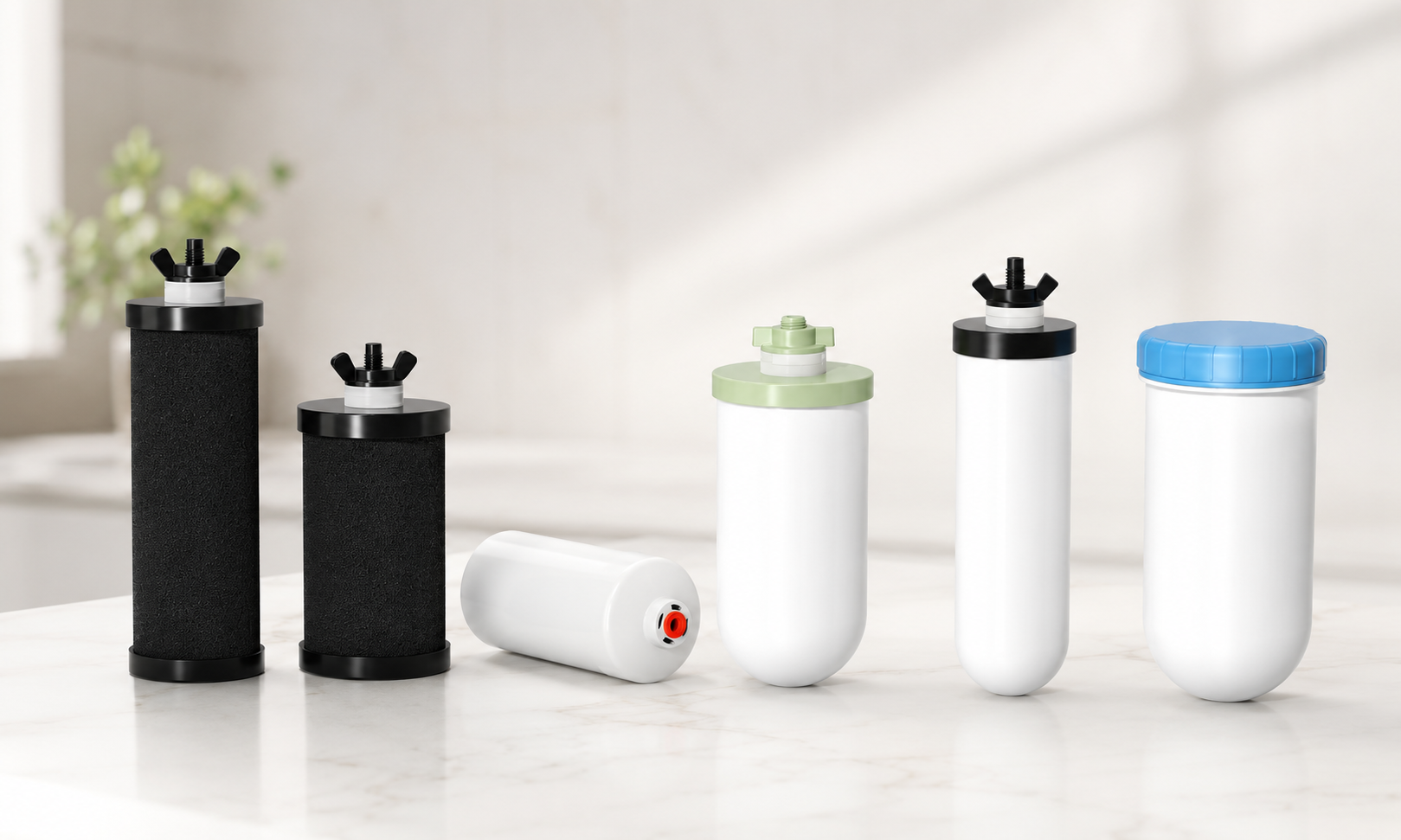
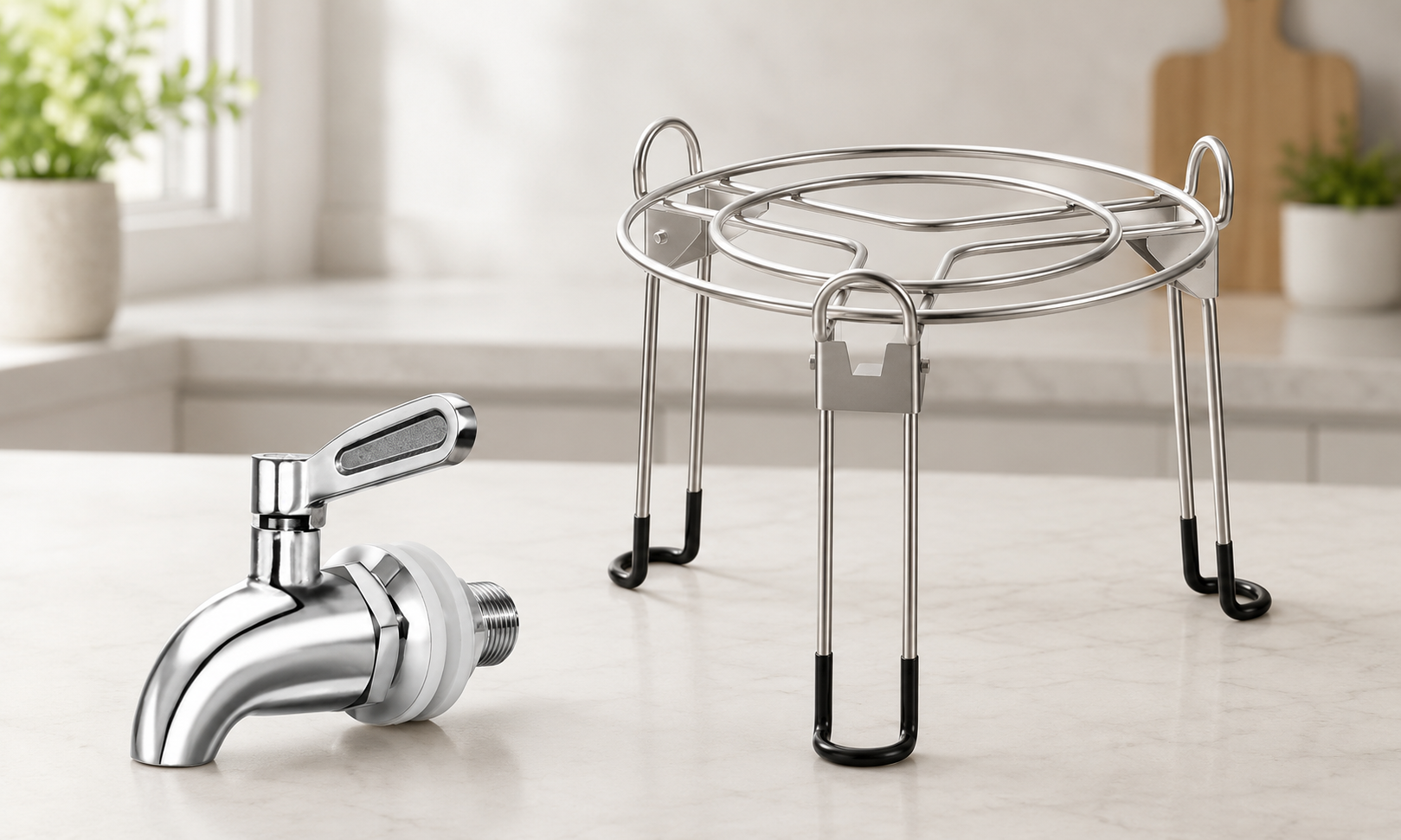
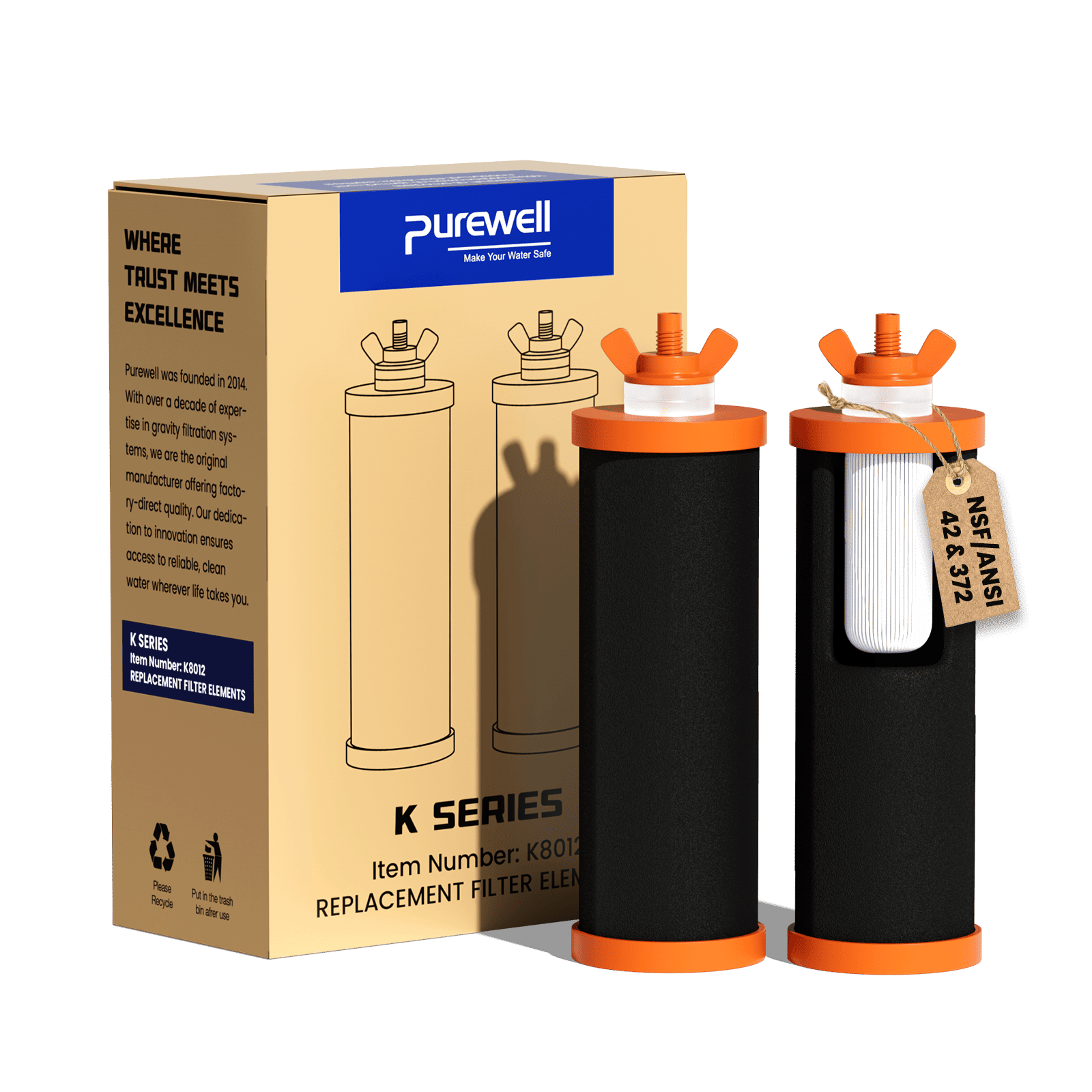
Two stacked chambers: you pour water into the top, and it passes down through the filter elements under its own weight. They are usually stainless steel, pairing activated carbon with a ceramic or hollow-fibre element. No electricity, no plumbing, no wastewater — which is why they suit almost any UK home, including rented flats.
Countertop reverse osmosis
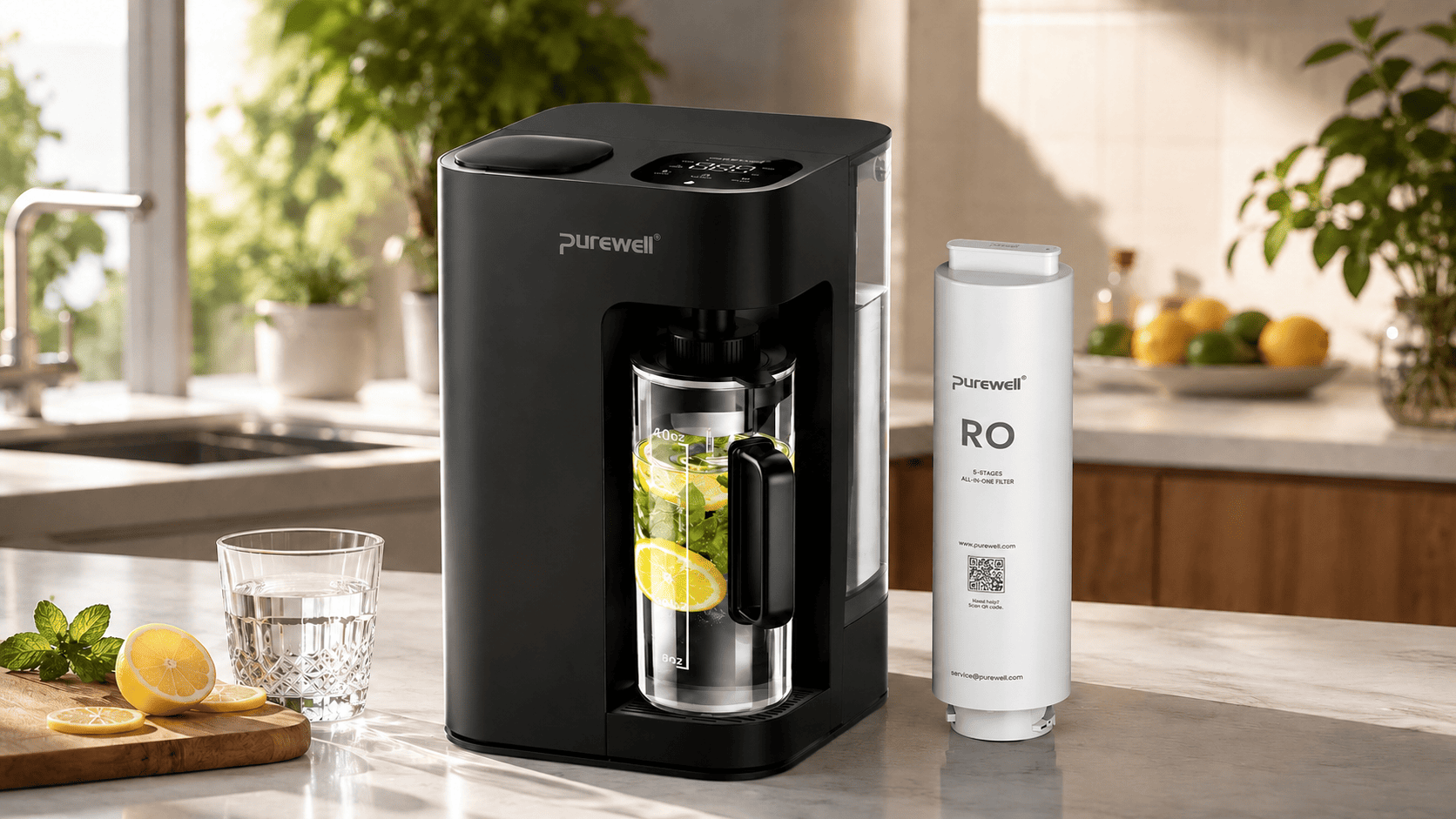
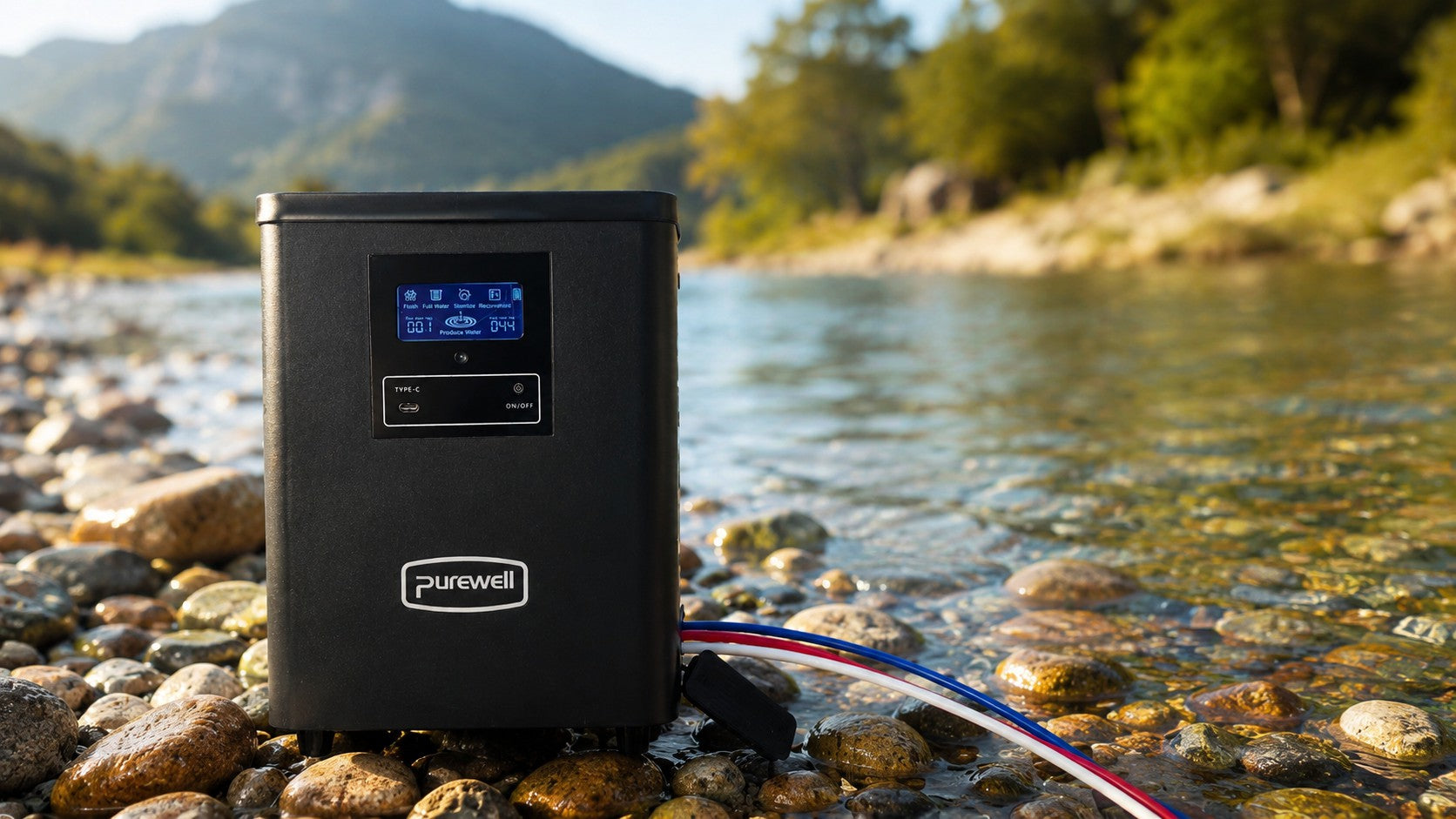
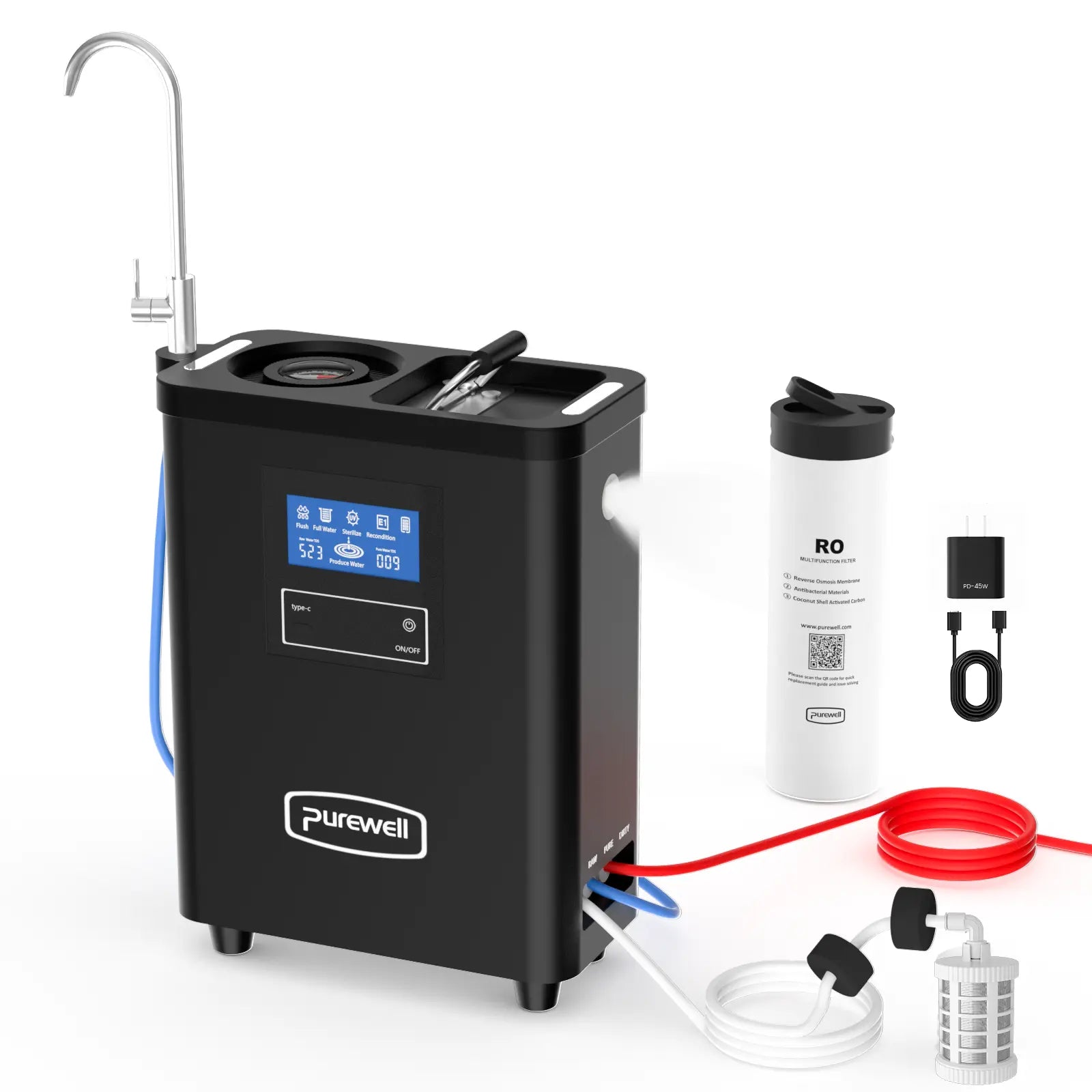
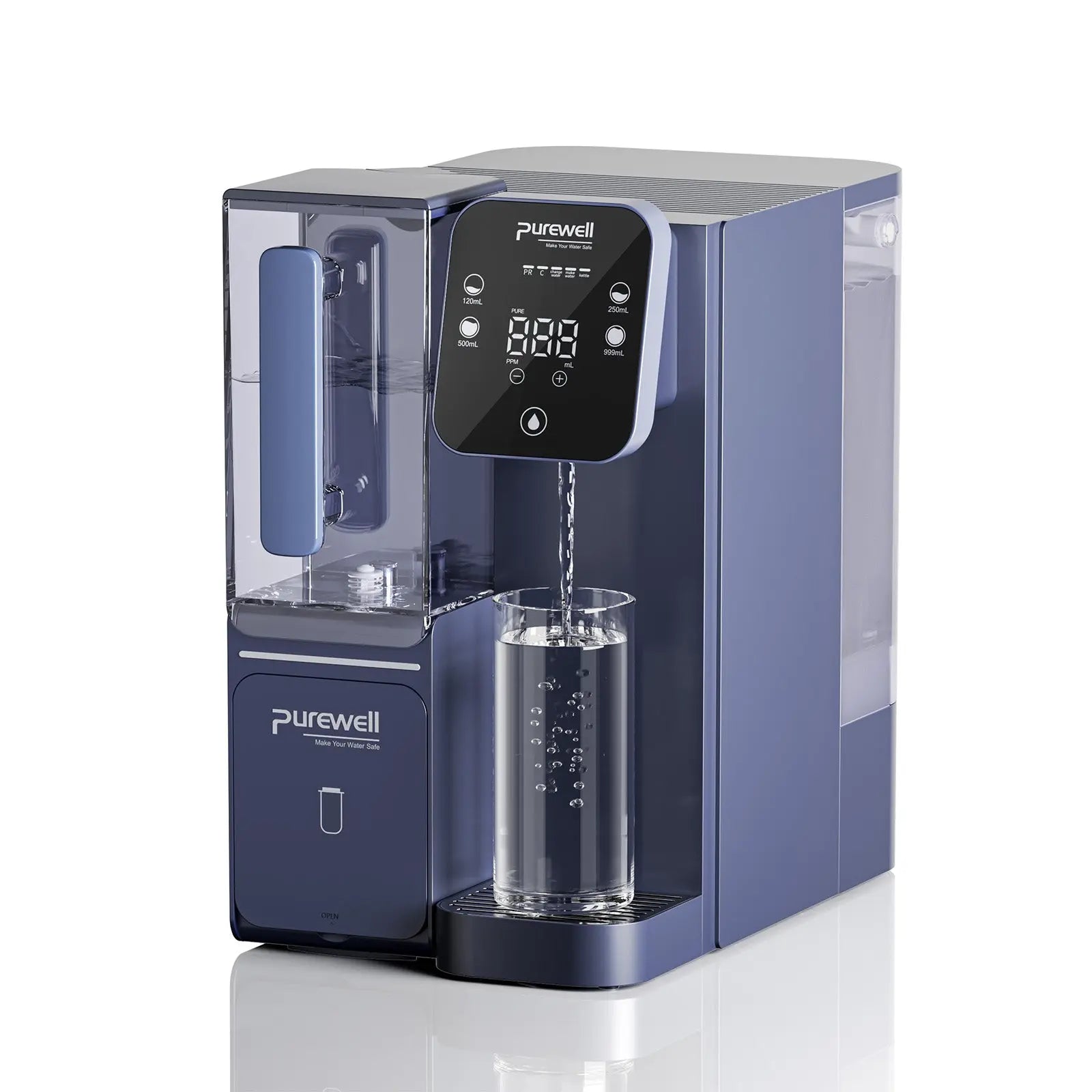
A compact RO unit on the worktop pushes water through a semi-permeable membrane with an electric pump. It has a fill tank and a filtered-water reservoir, cuts total dissolved solids substantially, produces some wastewater, and needs a nearby socket. It is the more involved option, but the more thorough one for dissolved content.
Faucet-connected filters
These clip to your existing tap via a diverter valve, so water is filtered on demand as it flows. Capacity is effectively unlimited while the tap runs, but the cartridge is small and change intervals are shorter. Check your tap thread before you buy — compatibility varies.
How gravity and countertop RO compare
| Factor | Gravity countertop | Countertop RO |
|---|---|---|
| Electricity | None | Required |
| Plumbing | None | None (fill manually) |
| Filtration mechanism | Mechanical straining + carbon adsorption | RO membrane + carbon stages |
| TDS reduction | Minimal — minerals largely remain | Substantial |
| Wastewater | None | Some water sent to drain |
| Speed | Slower — gravity-fed by design | Faster, pumped |
| Maintenance | Replace elements on rated schedule | Membrane + pre/post filters |
| Running cost | Lower — no power, no wastewater | Higher — power, membranes, wastewater |
| Suitable user | Renters, low-maintenance homes | Homes prioritising max dissolved-solids reduction |
Countertop RO vs under-sink RO
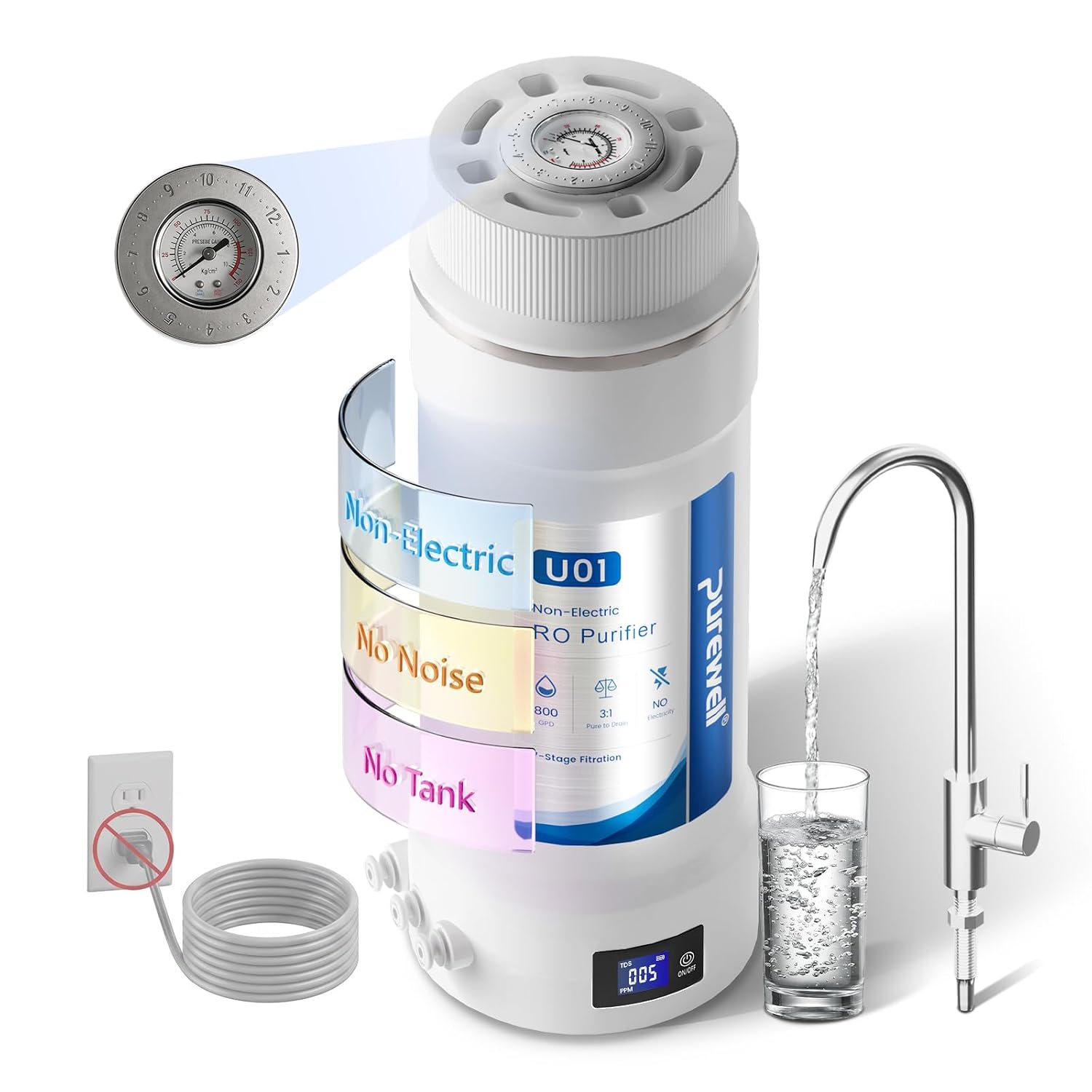
Both push water through a semi-permeable RO membrane, so the filtration outcome is broadly similar. The real difference is plumbing and where the unit lives. Under-sink RO sits in the cabinet, connects to the cold-water line and a dedicated faucet, and is invisible on the worktop. Countertop RO sits on the surface, fills from a tank you top up by hand, and needs a socket but no cabinet space.
For rented UK flats, under-sink RO usually means landlord permission and a plumber; countertop RO avoids both. Under-sink units often carry larger membranes and a pressurised tank, so steadier throughput once installed. Countertop units trade some capacity for portability and tool-free setup. If you own the property and want maximum reduction, under-sink is the more permanent route; if you rent or move often, countertop RO is the lower-friction entry. Browse our countertop reverse osmosis systems for current UK options.
Which should you choose?
Start from the actual problem, then match the technology:
- Taste, chlorine or a bit of sediment? A gravity system with a carbon-and-ceramic element is the simplest, cheapest-running answer. Our best gravity water filter guide covers capacity and cartridge choice.
- Dissolved solids, or limescale as your real complaint? Standard gravity carbon is not a softener. An RO-based system is the more relevant technology to investigate.
- Specific contaminants such as PFAS? Look for the named reduction claim and the standard it was tested against — see our guides on PFAS in London tap water and whether a filter removes PFAS.
- Big household, constant demand? Size up the chamber or choose a pumped unit, or you will be refilling all day.
UK buying considerations
- Certifications and approvals. Any reduction claim should name the standard it was tested against — for example NSF/ANSI testing, or the relevant WRAS approval for UK plumbing contact. A claim with no standard named is just a claim, not evidence. Our water filter certifications guide shows how to read the paperwork.
- Water pressure and tap type. Gravity systems are pressure-independent, so they suit almost any home. Faucet-connected filters depend on your existing tap thread — confirm compatibility first.
- Renting vs owning. Favour gravity or countertop RO — neither needs landlord permission, and both move with you when you relocate.
- Replacement availability. Confirm the elements are stocked in the UK before you commit, so you are not left without parts later.
- Budget the running cost. For RO, include electricity and the water sent to drain; for gravity, the main recurring cost is periodic element replacement.
Frequently asked questions
Are countertop water filters worth it?
Yes, if you want filtered water without plumbing work. Compare running cost per litre and confirm you can buy replacement elements in the UK before you commit.
Do countertop filters need plumbing?
Gravity and countertop RO units do not — you fill them by hand. Only faucet-connected filters attach to the tap, and even those usually use a simple diverter rather than permanent plumbing.
Which countertop filter is best for hard water?
Be careful: standard gravity carbon elements are not water softeners and will not remove hardness. If limescale is your main complaint, an RO-based system is the more relevant technology to investigate.
Gravity or RO for a small flat?
Gravity, in most cases. It needs no power socket, no drainage and very little counter space, and it is easy to take with you when you move.
Do countertop RO systems waste water?
Yes. Reverse osmosis sends some water to drain as part of the process, whereas a gravity system produces no wastewater at all.
How often do countertop filters need replacing?
Follow the rated life for each element — in litres or months, whichever comes first. RO units have several stages with different intervals, so note each one separately.
Can I take a countertop filter when I move?
Yes. Countertop units are not plumbed in, so they move with you — one of their main advantages over under-sink systems.
Related guides
Building a shortlist? These UK guides cover the same cluster from different angles: