
How Often Should You Replace a Water Filter?
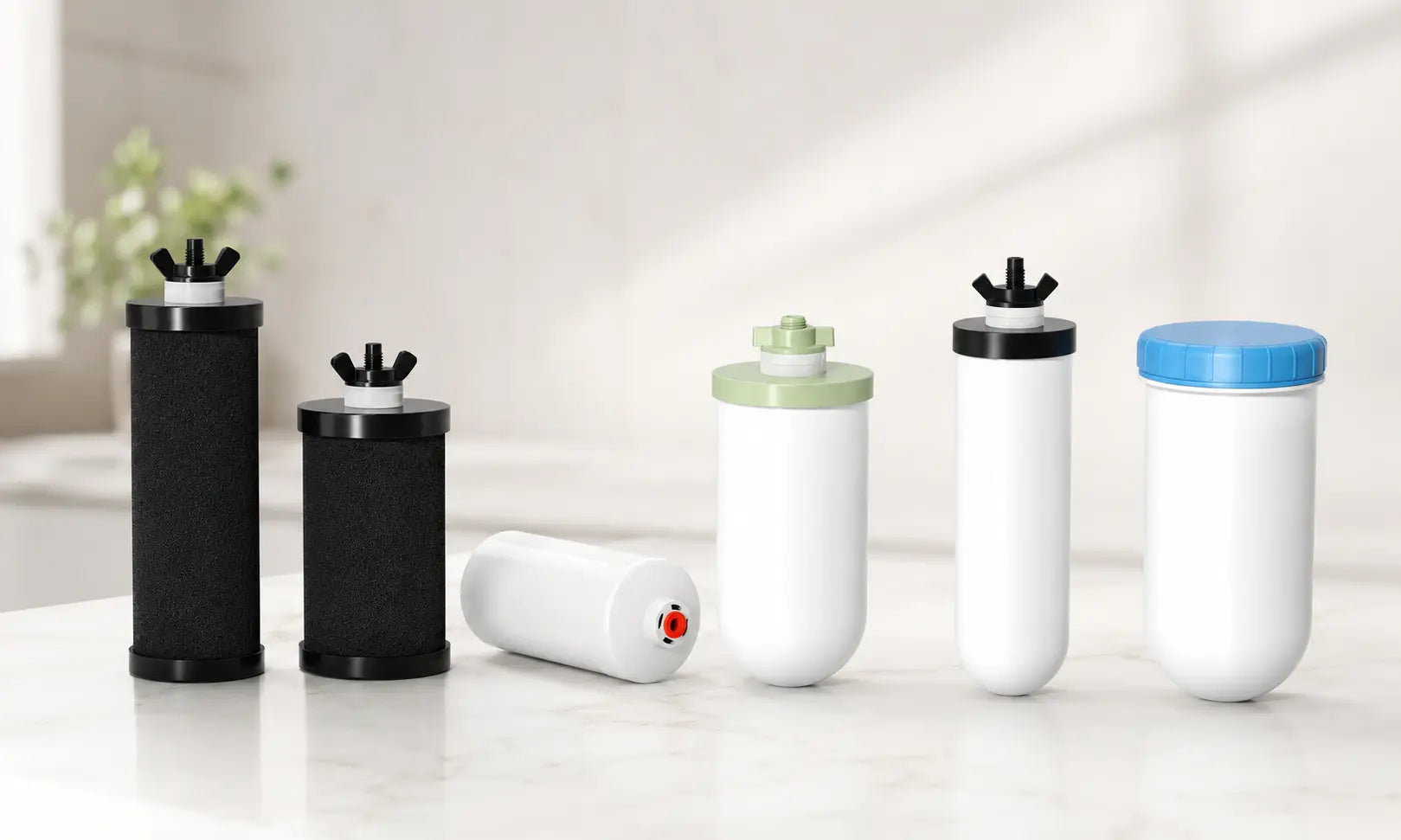
How often should you replace a water filter?
The most accurate answer is not simply “every six months.” Water filters vary widely in their design, media, capacity, water source, and maintenance requirements. One filter may be rated for several thousand gallons, while a specialty cartridge may need replacement after only a few hundred gallons.
A reliable replacement decision should consider three things:
-
The filter’s rated gallon capacity
-
The manufacturer’s recommended service period
-
The actual condition and performance of the filter
Replace the filter when the first applicable limit is reached.
NSF explains that a filter service cycle may be expressed as a specific number of gallons or an estimated number of months. The CDC also recommends changing household filters according to the manufacturer’s instructions to help keep the system working properly.
This guide explains how long different types of water filters may last, which signs indicate that replacement is due, how source water affects service life, and how to select the correct Purewell replacement filter.
Table of Contents
-
Why water filters need to be replaced
-
Why there is no universal replacement schedule
-
Gallon capacity vs. calendar life
-
Purewell filter-life comparison
-
How household water use affects filter life
-
Signs your filter may need replacing
-
Cleaning vs. replacing a filter
-
What can shorten filter life?
-
Maintenance tips for different filter types
-
How to replace a water filter correctly
-
Common replacement mistakes
-
Summary
-
Frequently asked questions
Why Do Water Filters Need to Be Replaced?
A water filter is not a permanent component.
Depending on its design, a filter may work through physical filtration, adsorption, ion exchange, reverse osmosis, or a combination of technologies. Particles can collect on the filter surface, while activated carbon and specialty media gradually use their available treatment capacity.
As the filter is used:
-
Sediment may block its surface or pores.
-
Gravity flow or dispensing speed may decline.
-
Activated carbon adsorption sites can become occupied.
-
Specialty media can reach its rated treatment capacity.
-
Damaged membranes or seals may allow water to bypass the intended pathway.
-
Poor maintenance can allow microorganisms to grow within parts of the system.
The CDC states that household filters require ongoing maintenance and regular replacement. Public water guidance also warns that filters not maintained according to their instructions may stop performing as designed and may harbor bacteria.
Replacing a cartridge on schedule does not mean that every filtered water source is automatically suitable for drinking. The filter must also be designed and documented for the source water and the specific substances the household wants to address.
Why There Is No Universal Water Filter Replacement Schedule
“Replace every six months” may sound convenient, but it can be inaccurate.
Filter life depends on:
-
Filter material and construction
-
Amount of filtration media
-
Rated gallon capacity
-
Number of filters installed
-
Daily water use
-
Sediment and turbidity
-
Source-water chemistry
-
Cleaning and maintenance
-
Storage conditions
-
Product-specific time limits
For example, a gravity-filter pair rated for 10,000 gallons should not be managed in the same way as a specialty alkaline filter rated for 200 gallons. An RO system with an electronic replacement indicator also requires a different tracking method from a non-electronic gravity system.
NSF recommends following the service cycle established for the exact cartridge rather than applying a general timetable to every product.
Use the First Applicable Replacement Limit
Replace a filter when any applicable condition occurs first:
-
The rated gallon capacity is reached.
-
The manufacturer’s calendar period is reached.
-
A system replacement indicator is triggered.
-
Normal flow cannot be restored.
-
The filter is cracked or physically damaged.
-
An unwanted taste or odor returns.
-
The product instructions specify another replacement condition.
Do not continue using a filter indefinitely simply because water still passes through it.
Gallon Capacity vs. Calendar Service Life
Water-filter replacement recommendations are usually presented in one of three ways.
Rated Gallon Capacity
A gallon rating describes the maximum volume a filter may process under the manufacturer’s stated conditions.
For example, “up to 6,000 gallons per box” means the matched filter set has a published maximum capacity of 6,000 gallons under applicable conditions. It does not guarantee that every household will reach that volume.
Calendar-Based Service Life
Some filters are assigned an estimated number of months. This is common with RO cartridges, remineralization filters, refrigerator cartridges, and electronic countertop systems.
A calendar period may account for moisture exposure, intermittent use, hygiene, and other factors not reflected by gallon volume alone.
Condition-Based Replacement
A filter may require earlier replacement because of damage, clogging, incorrect storage, or another condition identified in its instructions.
A cracked ceramic filter, for example, should not continue to be used simply because its rated gallon limit has not been reached.
Purewell Water Filter Replacement Schedule
The following table summarizes currently published capacities for several Purewell filter categories. These are rated maximum capacities, not guaranteed replacement dates.
| Purewell Filter Type | Package Configuration | Published Filter Life |
|---|---|---|
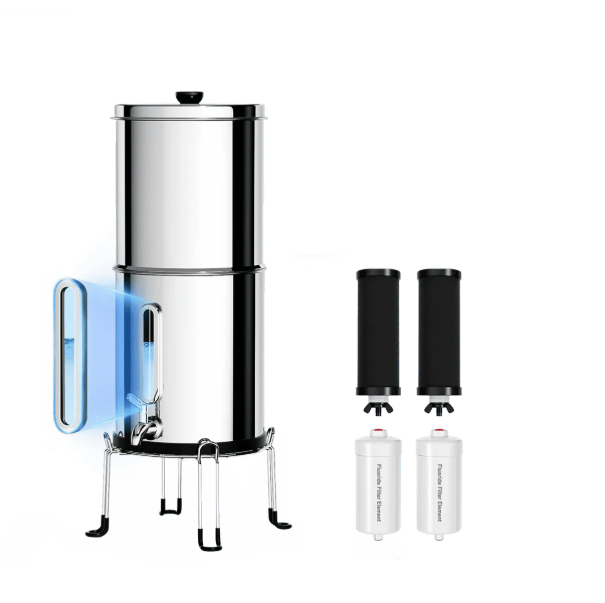
| K Series Carbon Filters | 2 core filters per box | Up to 6,000 gallons per box |
| K Series Classic Carbon Filters | 2 core filters per box | Up to 6,000 gallons per box |
| K Series Pro Carbon Filters | 2 core filters per box | Up to 10,000 gallons per box |
| K Series Ceramic Filters | 2 core filters per box | Up to 10,000–15,000 gallons per box |
| K Series Fluoride-Reduction Add-On Filters | Supplemental pair | Up to 1,000 gallons per box |
| K Series Alkaline Add-On Filters | Supplemental pair | Up to 200 gallons per box |
| BO Series Compound Filters | 2 core filters per box | Up to 6,000 gallons per box |
| SF Series TDS-Reduction Filter | Rated per filter | Up to 100 gallons per filter |
| SF Series Alkaline Filter | Rated per filter | Up to 1,000 gallons per filter |
| SF Series Fluoride-Reduction Filter | Rated per filter | Up to 1,000 gallons per filter |
| Portable Outdoor Filter Bottle Cartridge | 1 cartridge | Up to 396 gallons |
| C05 Remineralization Filter | Separate pitcher filter | Approximately 3–6 months |
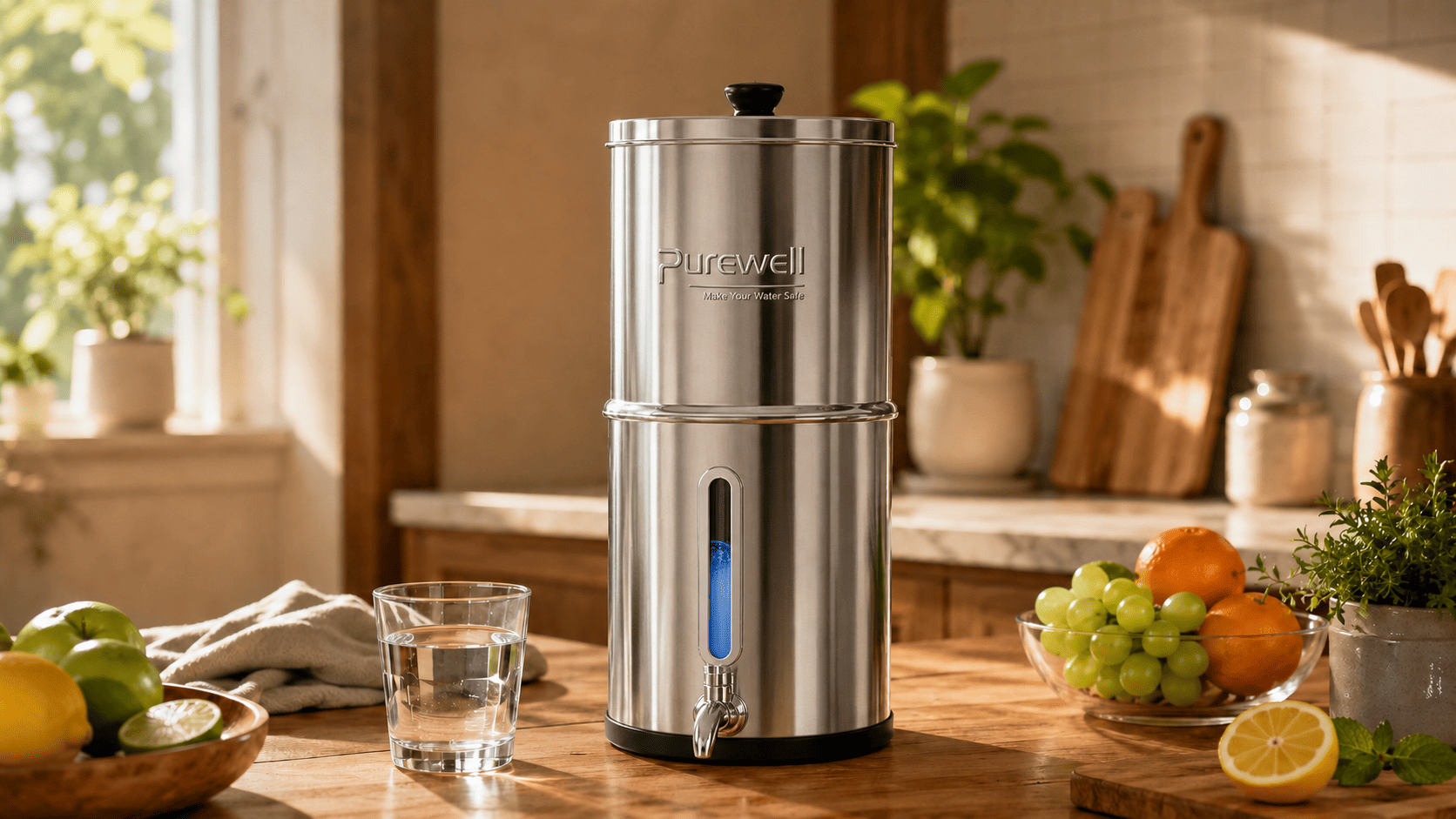
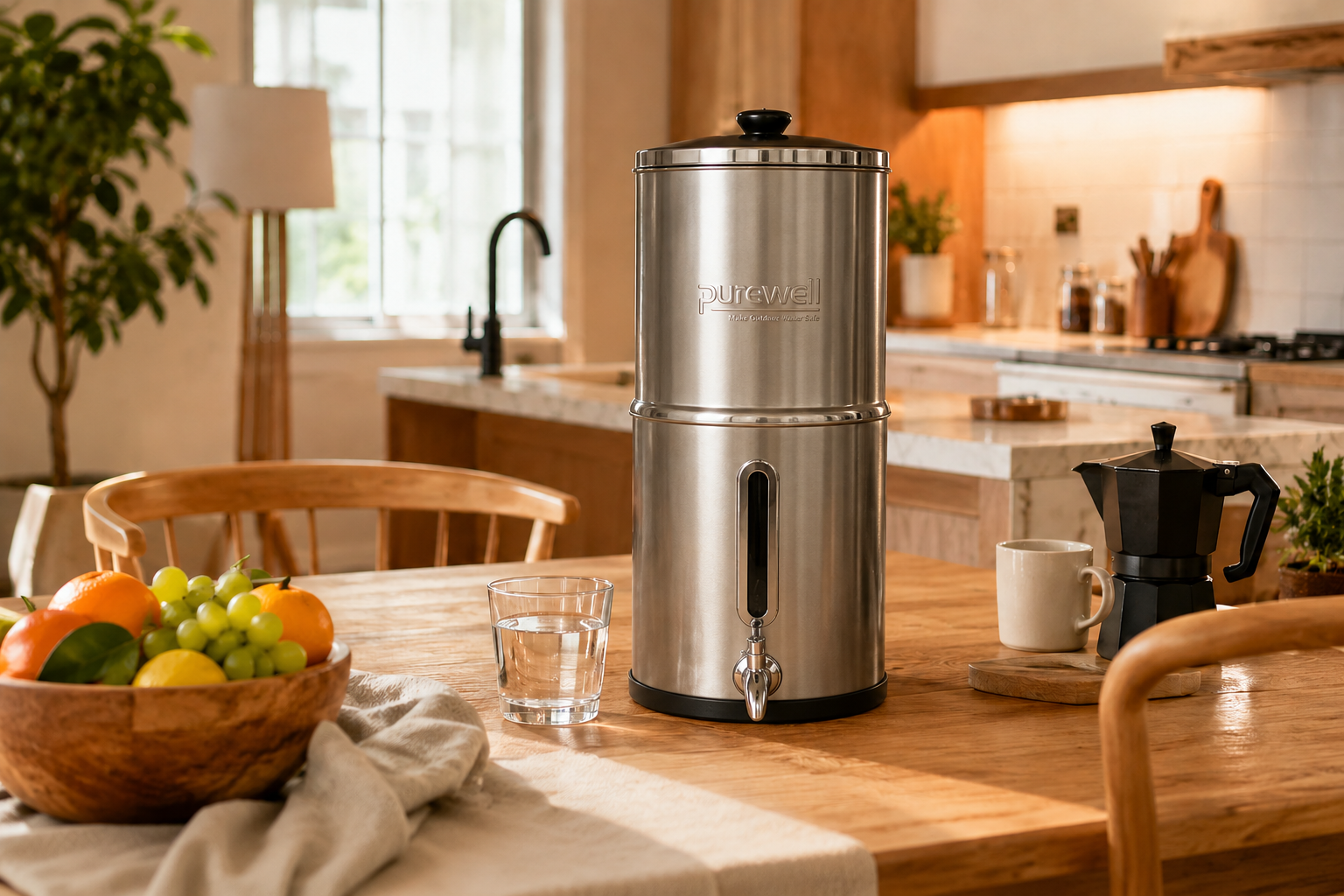
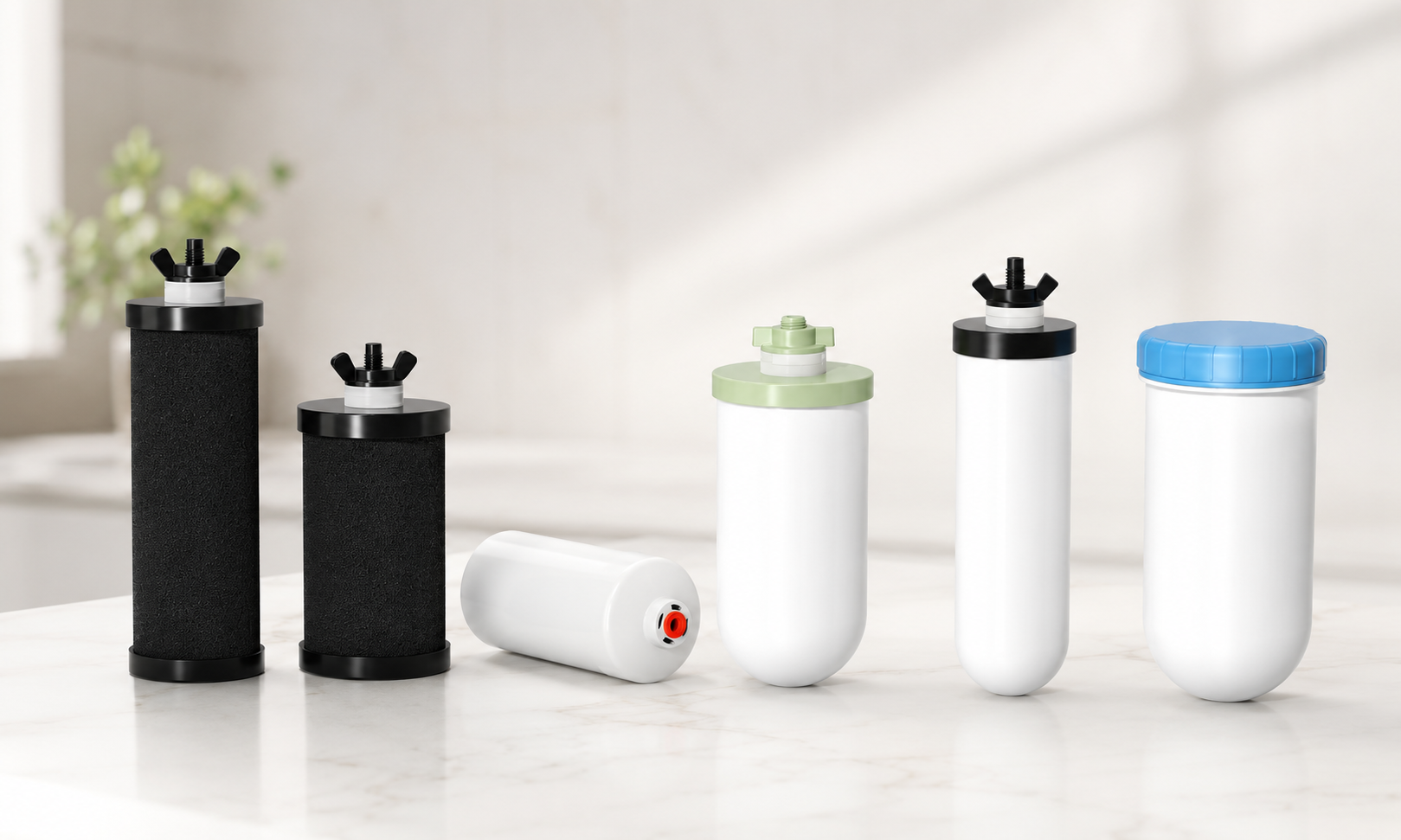
Purewell currently lists up to 6,000 gallons per box for its standard and Classic K Series carbon filters, while the K Series Pro version is rated for up to 10,000 gallons per two-filter box. (Purewell)
The washable K Series ceramic options have different capacities: up to 10,000 gallons for the 3-stage version and up to 15,000 gallons for the selected 4-stage PFAS-reduction configuration. (Purewell)
K Series add-on filters require their own replacement schedule. The fluoride-reduction option is rated for up to 1,000 gallons per box, while the alkaline add-on is rated for up to 200 gallons. These are supplemental cartridges and must be used with compatible core filters. (Purewell)
Purewell lists up to 6,000 gallons per two-filter box for BO Series compound filters. SF Series capacities vary more substantially: up to 100 gallons for the TDS-reduction option and up to 1,000 gallons for the alkaline and fluoride-reduction versions. (Purewell)
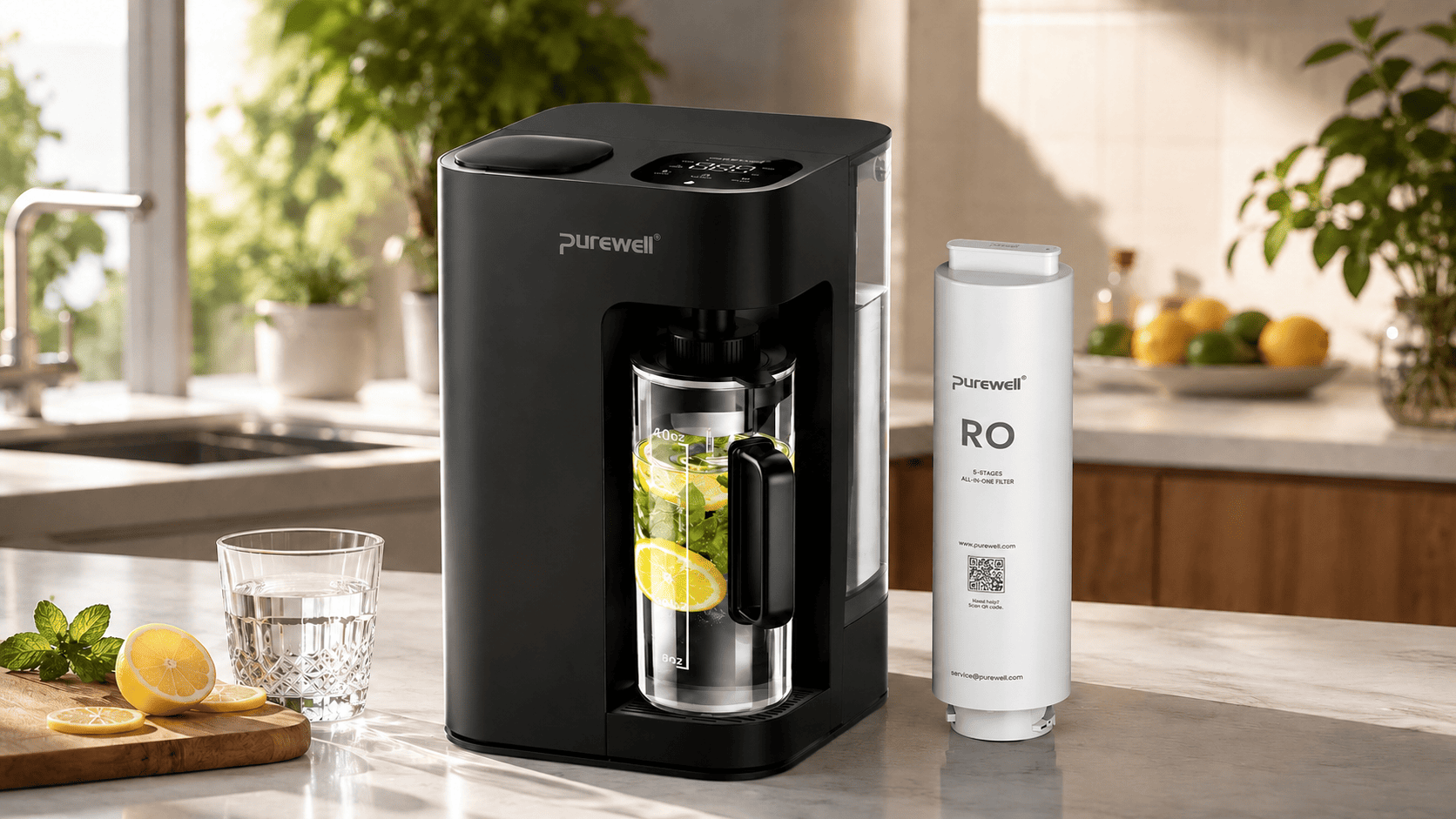
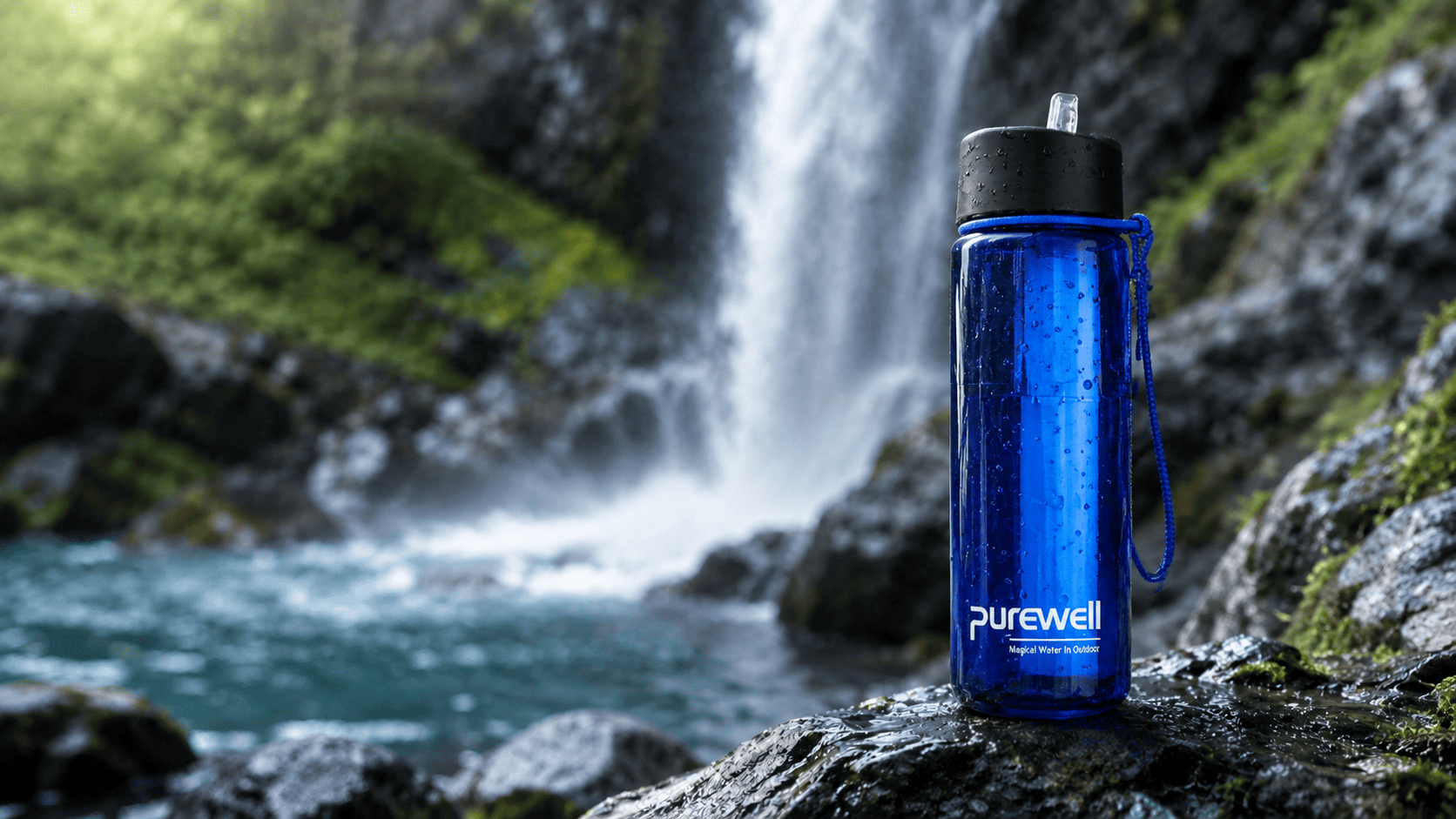
For portable use, the Purewell outdoor filter-bottle cartridge is rated for up to 1,500 liters, or approximately 396 gallons. The current C05 countertop RO page recommends replacing its separate remineralization filter after approximately three to six months and using the machine’s monitoring functions and model instructions for cartridge replacement. (Purewell)
Read “Per Filter” and “Per Box” Carefully
Before calculating service life, confirm whether the capacity applies to:
-
One filter
-
A matched pair
-
One complete box
-
One system configuration
A system that requires two matched core filters should generally have both filters replaced together. Do not divide a “per box” capacity between filters unless the product instructions explicitly direct you to do so.
How Household Water Use Affects Filter Life
A gallon rating can be converted into a rough planning estimate:
Estimated service days = rated gallon capacity ÷ average gallons filtered per day
This is only an estimate. It does not override a shorter calendar limit, an electronic replacement indicator, visible damage, source-water restrictions, or model-specific instructions.
Example
Suppose a matched filter set is rated for up to 6,000 gallons.
At two gallons per day, reaching the full rated volume would take much longer than at six gallons per day. However, the household should still follow any calendar guidance and inspect the filter throughout use.
Measure Actual Use Instead of Guessing
Household size alone is not enough.
Filtered water may be used for:
-
Drinking
-
Coffee and tea
-
Cooking
-
Ice
-
Reusable bottles
-
Pets
-
Guests
-
RV travel
A two-person household that filters water for cooking and several daily bottles may use more than a four-person household that filters only drinking water.
For a more useful estimate, record how many times the system is filled during a normal week.
Signs Your Water Filter May Need Replacing
A change in performance can be a useful warning, but not every symptom automatically means the filter is exhausted.
1. The Rated Capacity Has Been Reached
This is the clearest planned replacement point.
Track the installation date and estimated use so the filter is not operated indefinitely beyond its published capacity.
2. The Replacement Indicator Activates
Electronic RO and countertop systems may calculate or estimate remaining filter life.
Purewell’s C05 system includes a filter-life indicator that displays remaining service life and warns the user as replacement approaches. (Purewell)
An indicator is useful, but it does not replace inspection or correct maintenance.
3. Water Flow Becomes Noticeably Slower
Slow flow may result from:
-
Sediment buildup
-
Trapped air
-
Low water level
-
Incorrect filter preparation
-
A blocked washable surface
-
An exhausted cartridge
-
An installation problem
Purewell advises replacing applicable K Series gravity filters when their rated capacity is reached or when water flow becomes noticeably slower. (Purewell)
Before replacing, follow the model-specific troubleshooting and cleaning instructions. If normal flow cannot be restored, replacement may be necessary.
4. Unwanted Taste or Odor Returns
Activated carbon has finite adsorption capacity. A return of the taste or odor that the cartridge was intended to address may indicate that replacement is approaching.
Taste and odor cannot confirm the absence of all contaminants, however. Some substances cannot be detected by sight, smell, or taste.
5. The Filter Is Cracked or Damaged
Replace any filter that is:
-
Cracked
-
Chipped
-
Deformed
-
Loose
-
Punctured
-
Damaged by freezing
-
Improperly sealed
Do not attempt to repair filter media with glue, tape, sealant, or an unapproved coating.
6. Water Is Bypassing the Filter
Incorrectly installed washers, plugs, stems, or seals may allow water to enter the lower chamber without passing through the filter media.
Stop using the system and correct the installation. Replace damaged parts with compatible components.
7. Unusual Surface Growth Appears
Persistent slime, mold-like material, or contamination that cannot be removed using the approved procedure requires immediate attention.
Empty and clean the system, follow the manufacturer’s sanitation guidance, and replace the cartridge when directed.
Cleaning a Water Filter Is Not the Same as Replacing It
Cleaning may improve flow, but it does not necessarily restore filtration capacity.
Carbon Filters
Initial rinsing can remove loose carbon fines and trapped air. Surface maintenance may address visible buildup on filters designed for such care.
However, washing a carbon cartridge does not regenerate occupied adsorption sites. Once the rated service life has been reached, the filter must still be replaced.
Ceramic Filters
Selected ceramic filters have a washable outer surface. Approved cleaning can remove accumulated sediment and help restore flow.
A washable ceramic surface does not make the filter permanent. Purewell states that its ceramic filters should still be replaced when their rated capacity is reached, when they are damaged, or when normal flow cannot be restored. (Purewell)
RO Cartridges
RO cartridges should not be opened, scrubbed, or modified.
Follow the system’s replacement indicator and instructions. Turn the system off and unplug it before removing the cartridge when the manual requires this procedure. Purewell’s C05 replacement guidance also instructs users to install a cartridge designed specifically for that model. (Purewell)
What Can Shorten Water Filter Life?
Sediment and Turbidity
Sand, rust, clay, and suspended material can clog filter surfaces and reduce flow.
When permitted by the product instructions, allowing heavy sediment to settle or using an appropriate pre-filter can reduce the load on the main element.
Untreated or Well Water
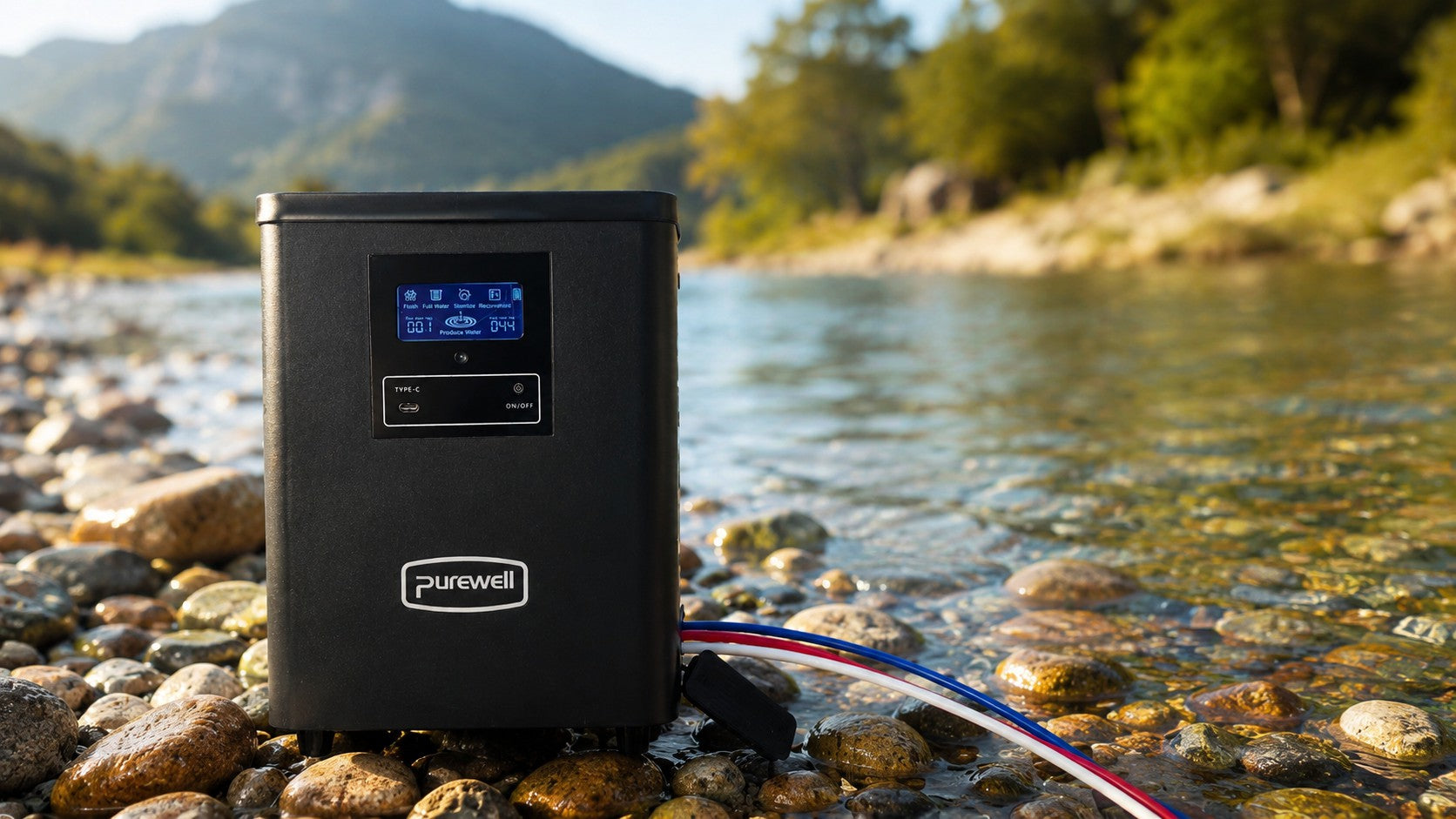
Outdoor, private-well, rain, river, or stream water may place a greater load on filters than ordinary treated tap water. Purewell notes that these sources can shorten filter life depending on water quality. (Purewell)
There is no reliable universal rule that well water shortens filter life by a fixed percentage. Well-water conditions vary too widely.
Higher Daily Consumption
More water processed means the filter approaches its rated capacity sooner.
Long Periods of Non-Use
Water left stagnant inside a system can create hygiene and storage problems.
Some Purewell carbon-filter instructions advise removing the elements and allowing applicable parts to dry when the system will not be used for more than three days. Always follow the guidance for the exact model. (Purewell)
Hot Water
Unless specifically approved, do not run hot water through a household filter. Elevated temperature can damage membranes, seals, filter housings, or filtration media.
Freezing
Water retained inside hollow fibers or ceramic pores can expand when frozen and damage the filter structure.
Store wet filters according to their instructions, particularly in RVs, cabins, garages, and emergency kits.
Maintenance Tips for Different Filter Types
Gravity Carbon Filters
-
Flush before first use.
-
Install all required matching core filters.
-
Keep sufficient water in the upper chamber for normal flow.
-
Use only cold or room-temperature water.
-
Do not use detergents on the filter elements.
-
Replace the full matched set when required.
Ceramic Filters
-
Clean only using the approved method.
-
Avoid aggressive sanding or removing excessive ceramic material.
-
Inspect for cracks before reinstalling.
-
Protect wet filters from freezing.
-
Replace at the rated capacity even when the surface can still be cleaned.
Specialty Add-On Filters
-
Track them separately from the main core filters.
-
Confirm that they remain attached to compatible core filters.
-
Do not assume their service life matches the core-filter pair.
-
Replace the add-on when its shorter capacity is reached.
SF Series Filters
-
Check the exact filtration option before purchasing.
-
Do not use the 100-gallon TDS-reduction rating for the 1,000-gallon alkaline or fluoride versions—or vice versa.
-
Confirm whether capacity is listed per individual filter.
Countertop RO Filters
-
Follow the on-screen filter-life indicator.
-
Use only model-specific replacement cartridges.
-
Replace secondary filters on their own schedules.
-
Complete the required flushing cycle after installation.
-
Do not remove a cartridge while the machine is producing water or flushing.
Portable Outdoor Filters
-
Use the clearest available freshwater source.
-
Avoid saltwater, industrial wastewater, fuel-contaminated water, and chemically polluted sources.
-
Clean or backwash only as directed.
-
Replace the cartridge when flow cannot be restored or the rated capacity is reached.
How to Replace a Water Filter Correctly
Step 1: Confirm Compatibility
Match the replacement filter to:
-
System series
-
Model number
-
Filter position
-
Required quantity
-
Physical dimensions
-
Item number
A filter that appears to fit is not automatically approved for the system.
Step 2: Review the Instructions
Check whether the new filter must be:
-
Primed
-
Rinsed
-
Flushed
-
Soaked
-
Installed in a specific orientation
Step 3: Empty and Clean the System
Drain the chambers or feed-water tank. Clean approved components before installing the new cartridge.
Step 4: Remove the Used Filter Carefully
The CDC recommends wearing gloves while changing household water filters and washing your hands afterward.
Step 5: Inspect Seals and Connections
Check washers, nuts, plugs, O-rings, threads, and filter mounts.
Step 6: Install the New Filter
Secure it according to the instructions without over-tightening.
Step 7: Flush Before Drinking
Discard the required first batch or complete the specified flushing cycles.
Step 8: Record the Replacement
Write down:
-
Installation date
-
Filter name
-
Item number
-
Rated capacity
-
Next inspection or replacement date
Common Water Filter Replacement Mistakes
Applying One Schedule to Every Filter
Core filters, specialty filters, ceramic filters, RO cartridges, and portable filters can have very different service lives.
Replacing Only One Filter From a Matched Pair
Uneven filter age can affect flow and make usage tracking difficult. Replace matching core elements together when the system instructions require a pair.
Treating Slow Flow as the Only Indicator
A filter may reach its adsorption or treatment capacity before it becomes completely blocked.
Assuming Cleaning Resets Filter Life
Cleaning can restore flow in selected products, but it does not reset the rated gallon capacity.
Buying by Appearance Alone
Similar-looking cartridges may use different dimensions, media, mounting threads, and system requirements.
Forgetting About Supplemental Filters
Add-on filters often have shorter capacities than the primary core filters and need their own tracking schedule.
Summary: When Should You Replace a Water Filter?
Replace a water filter when the first applicable condition occurs:
-
Its rated gallon capacity is reached.
-
Its recommended calendar period is reached.
-
Its electronic replacement indicator activates.
-
Normal flow cannot be restored.
-
Taste or odor reduction declines.
-
The filter becomes damaged or contaminated.
There is no universal six-month schedule for every filter.
A standard K Series carbon-filter pair may be rated for up to 6,000 gallons, while a K Series alkaline add-on is rated for up to 200 gallons. SF Series options range from 100 to 1,000 gallons per filter, and RO secondary cartridges may use a time-based schedule.
The simplest approach is to identify the exact filter, record its installation date, track approximate use, and keep the correct replacement available before the current cartridge reaches its limit.
Frequently Asked Questions
How often should a water filter be replaced?
Follow the manufacturer’s gallon capacity, calendar recommendation, replacement indicator, and condition-based guidance. Replace the cartridge at the first applicable limit.
Is six months a standard replacement interval?
No. Some filters use a six-month recommendation, but others may last more or less time. The exact model and service cycle determine the correct schedule.
Can I continue using a filter after its rated capacity?
It is not recommended. Once the rated capacity is reached, the filter is operating outside its published service cycle.
Does slow flow mean the filter is expired?
Not always. Sediment, low water level, trapped air, or incorrect preparation may also reduce flow. Follow the approved troubleshooting steps and replace the cartridge if normal performance cannot be restored.
Can I wash and reuse a carbon filter?
Do not assume that a carbon cartridge can be regenerated by washing. Approved cleaning may address surface buildup, but it does not restore exhausted adsorption media.
How often should Purewell K Series filters be replaced?
Current rated capacities depend on the model. Standard and Classic carbon-filter boxes are rated for up to 6,000 gallons, Pro carbon filters for up to 10,000 gallons, and ceramic filters for up to 10,000–15,000 gallons per box. Actual life may be shorter depending on water quality, use, and maintenance. (Purewell)
Should specialty filters be replaced with the main filters?
Not necessarily. Supplemental filters have their own capacities. Track them separately and replace each filter according to its applicable limit.
Does well water make filters expire faster?
It can, depending on sediment, turbidity, minerals, microorganisms, and other source-water conditions. There is no universal percentage that applies to every well.
Should both gravity filters be replaced together?
When the system uses a matched pair, replace both together as directed. This keeps filter age, flow, and capacity tracking consistent.
How do I know which replacement filter fits my system?
Check the system series, product model, filter item number, dimensions, package quantity, and compatibility information before ordering.
Keep the Correct Replacement Filter Ready
Timely replacement helps maintain water flow, taste, and normal system operation.
Explore Purewell replacement cartridges by system series and verify the filter model, package quantity, and rated capacity before purchasing.
Editorial Note
This article provides general product-maintenance information. Filter life varies by model, source-water quality, water volume, operating conditions, storage, and maintenance. Always follow the instructions and replacement guidance for the exact filter and system being used.