

Non-Electric vs. Electric RO Systems: What Homeowners Should Know
Reverse osmosis, or RO, is widely used for drinking water filtration because it can reduce many dissolved substances that ordinary carbon filters may not address. In many modern under-sink RO systems, electricity is used to power booster pumps, digital displays, leak sensors, auto-flush functions, or smart faucets.
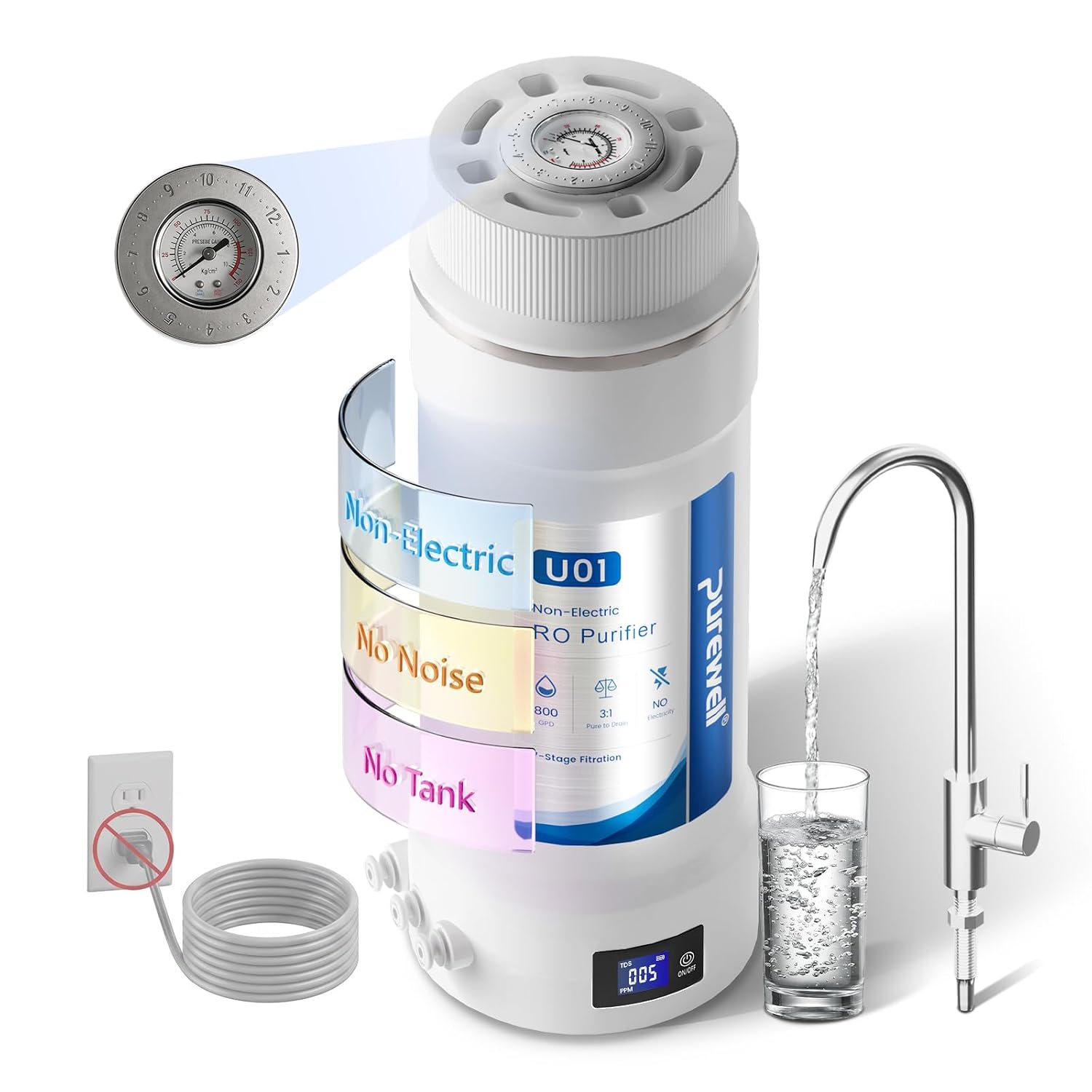
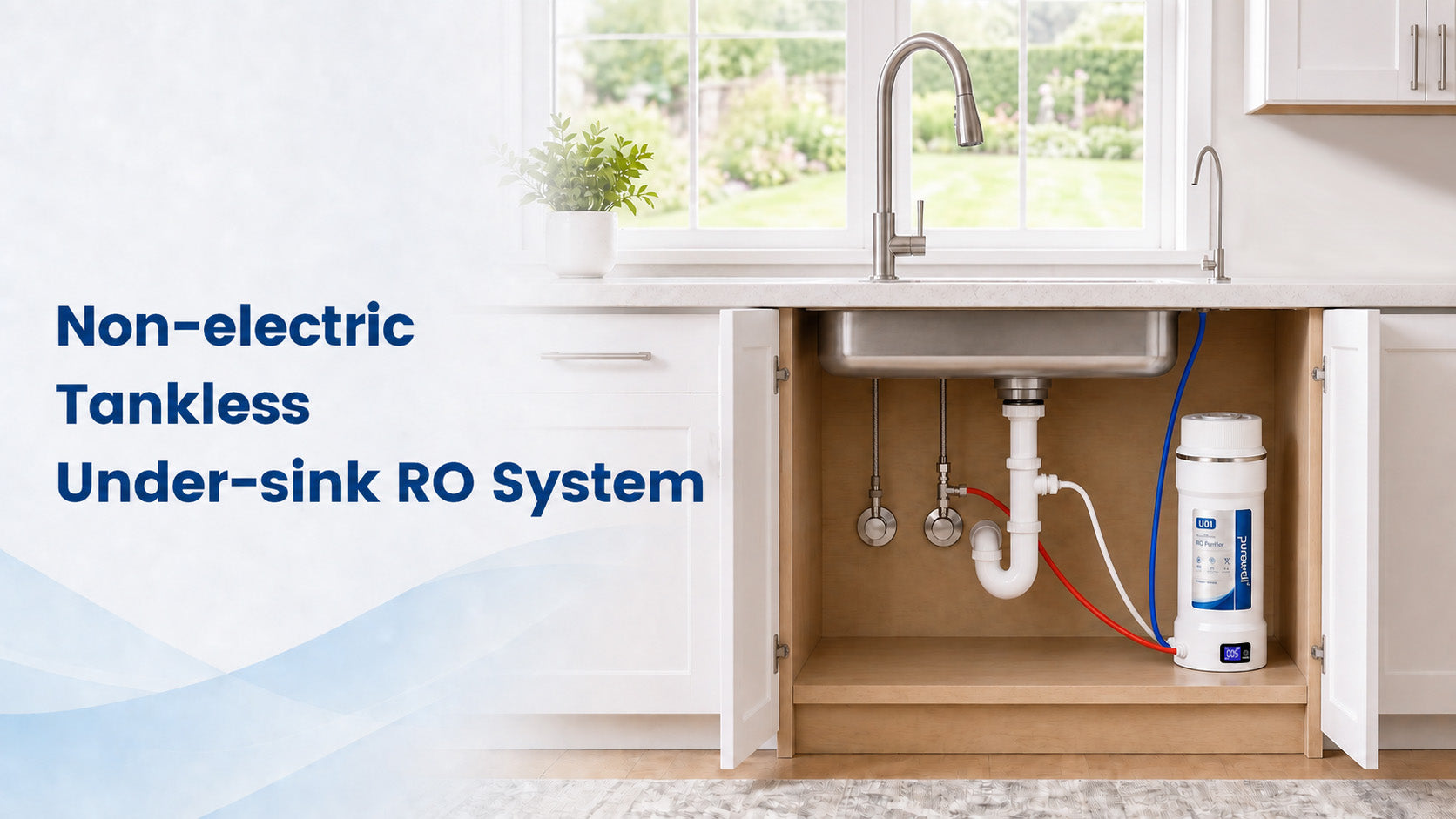
However, not every RO system needs electricity to move water through the membrane. Some systems use household water pressure alone. Purewell’s U01 Non-Electric Tankless RO System is designed around that approach.
This article compares non-electric and electric RO systems objectively, including how they work, where each type performs well, and what tradeoffs homeowners should consider.
Are Non-Electric RO Systems New?
Non-electric RO is not a completely new idea. Traditional under-sink RO systems with storage tanks have often used household water pressure without an electric pump. There are also non-electric permeate pumps and several pump-free or non-electric RO systems on the market.
What is more specific about products like Purewell U01 is the combination of:
- Under-sink installation
- Tankless design
- No electric drive
- Household water-pressure operation
- RO membrane filtration
- Compact form factor
Because similar non-electric RO concepts already exist, it is more accurate to describe U01 as a non-electric tankless under-sink RO system.
How Electric RO Systems Work
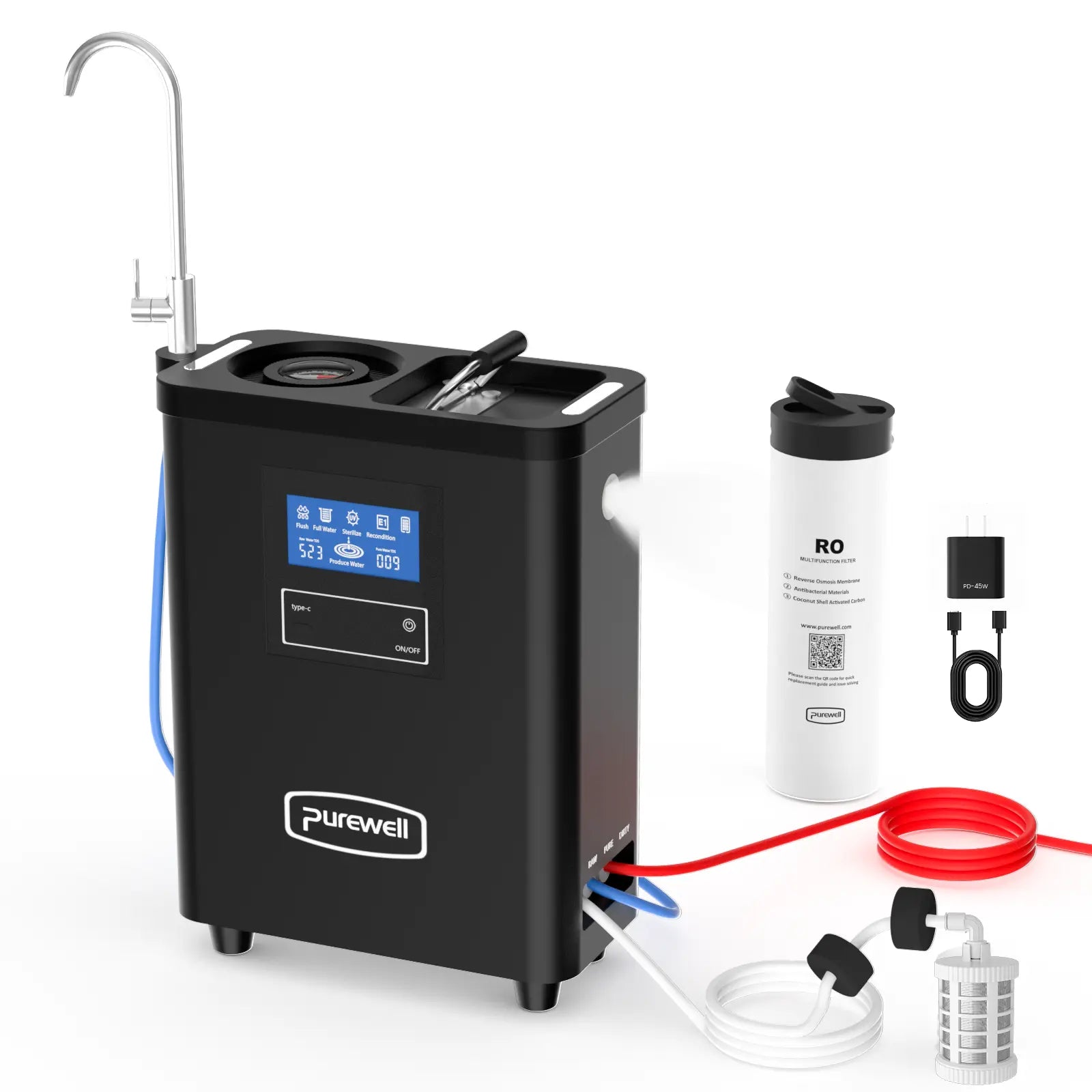
Electric RO systems usually use a powered booster pump to push water through the RO membrane at a stable pressure. This can help improve flow rate, reduce waiting time, and support higher-output tankless designs.
Many electric RO systems also include electronic features such as:
- TDS display
- Smart faucet reminders
- Auto-flush
- Leak detection
- Filter life tracking
- Booster pump control
These features can improve convenience, but they also require a power outlet under the sink.
Advantages of Electric RO Systems
Electric RO systems can be a strong fit when household water pressure is low or inconsistent. A booster pump can help maintain more stable membrane performance.
Common advantages include:
- More consistent flow under lower pressure
- Faster filtered water output
- Better support for high-capacity tankless systems
- Smart monitoring and maintenance reminders
- Auto-flushing in some models
For homes with weak water pressure, an electric RO system may perform more predictably than a pressure-only system.
Limitations of Electric RO Systems
The main tradeoff is dependence on power and electronics.
Potential limitations include:
- Requires an electrical outlet under the sink
- Pump may create noise or vibration
- More electronic components may increase complexity
- Installation may be less convenient in older kitchens
- System cannot fully operate during power outages if pump-dependent
Electric RO is not automatically better or worse. It depends on the home’s water pressure, usage needs, and installation conditions.
How Non-Electric RO Systems Work
A non-electric RO system uses incoming household water pressure to push water through the filtration path and RO membrane. No electric pump is used to drive the process.
Purewell U01 is designed for under-sink use and runs without electricity. According to Purewell’s product information, it uses 7-stage filtration, a tankless design, up to 800 GPD flow capacity under optimal conditions, and a 3:1 pure-to-drain ratio under proper operating conditions.
In simple terms, the system depends on:
- Cold-water supply pressure
- Filter condition
- Feed-water temperature
- Feed-water quality
- Correct installation and flushing
Advantages of Non-Electric RO Systems
A non-electric RO system can be practical for homes that want RO filtration without adding power under the sink.
Potential advantages include:
- No power outlet required
- No electric pump noise
- Lower electrical complexity
- Useful where under-sink outlets are unavailable
- Can continue operating without electricity if household water pressure remains available
- Simpler installation environment for some kitchens
For users who value quiet operation and a cleaner under-sink setup, non-electric RO can be appealing.
Limitations of Non-Electric RO Systems
The main limitation is pressure dependence.
If household water pressure is too low, a non-electric RO system may produce slower flow or reduced performance. Water temperature, source-water quality, clogged filters, and membrane condition can also affect output.
Potential limitations include:
- More dependent on local water pressure
- May be less suitable for low-pressure homes
- Flow can vary by season and water conditions
- No powered booster pump to stabilize performance
- Electronic smart features may be limited or mechanical rather than powered
For this reason, users should check the product’s pressure requirements before installation.
Electric vs. Non-Electric RO: Quick Comparison
| Factor | Electric RO System | Non-Electric RO System |
|---|---|---|
| Power | Requires electricity | No electricity required |
| Pressure support | Often uses booster pump | Uses household water pressure |
| Noise | Pump may create noise | Usually quieter |
| Flow stability | Often more stable under low pressure | Depends more on home water pressure |
| Installation | Needs outlet under sink | No outlet needed |
| Complexity | More electronic components | Simpler power setup |
| Best fit | Low-pressure homes, smart features, high output | Homes with adequate water pressure, quiet setup, no outlet |
Where Purewell U01 Fits
Purewell U01 fits into the non-electric, tankless, under-sink RO category. It is designed for everyday kitchen drinking water and may be useful for homes that want RO filtration without a power outlet or pump noise.
It may be a practical option if:
- Your under-sink area does not have an outlet
- Your household water pressure is suitable
- You prefer a tankless RO system
- You want a quieter setup
- You want RO filtration for drinking water, cooking, coffee, and ice
It may not be the best fit if:
- Your water pressure is low
- You want pump-assisted flow
- You need powered smart faucet features
- Your water quality requires a specialized treatment system
- You want whole-house filtration instead of point-of-use drinking water filtration
What To Check Before Choosing an RO System
Before choosing between electric and non-electric RO, check:
- Household water pressure
- Under-sink space
- Whether an outlet is available
- Desired flow rate
- Feed-water quality
- Replacement filter cost and schedule
- Certification and test documentation
- Whether you need point-of-use or whole-house treatment
No RO system should be selected only by headline claims. The right choice depends on the home’s actual installation conditions and water quality.
Final Takeaway
Electric RO systems and non-electric RO systems solve the same basic problem in different ways.
Electric RO systems can provide stable pump-assisted performance and smart features, but they require power and may add noise or complexity. Non-electric RO systems use household water pressure, which can simplify installation and reduce pump noise, but performance depends more directly on water pressure and local conditions.
Purewell U01 is best described as a non-electric tankless under-sink RO system for homes with suitable water pressure. The stronger and more credible message is that it offers a practical RO option for households that want under-sink filtration without an electric drive.
Disclaimer
This article is for general educational purposes only. Water filtration performance may vary based on source-water quality, water pressure, temperature, installation, filter condition, and maintenance. Product descriptions should be verified against the latest Purewell specifications, certifications, and test reports. A non-electric RO system may not be suitable for all homes, especially where water pressure is low or source water requires specialized treatment. For unsafe water, private well concerns, microbiological contamination, or regulatory questions, consult a certified laboratory, local health authority, or qualified water treatment professional.