

Best Gravity Water Filter UK: What to Look for in 2026
Best Gravity Water Filter UK: What to Look for in 2026
For most UK households, the best gravity water filter is one that matches your daily water volume, uses media with independent test documentation, and has replacement elements you can actually buy in the UK years from now. Look beyond marketing claims: check the filtration technology, verified performance data, capacity, flow rate, filter lifespan, long-term running cost and whether the unit is stainless steel. Get those right and a gravity system will quietly deliver filtered water every day with no plumbing, no electricity and very little maintenance.
What Is a Gravity Water Filter?
A gravity water filter is a countertop system that filters water using nothing but gravity. Water is poured into an upper chamber, passes down through one or more filter elements, and collects in a lower chamber ready to drink. Because there is no pump, no mains connection and no power supply, a gravity-fed unit can sit on a worktop, in a caravan, or anywhere else you need reliable filtered water.
How Does a Gravity Water Filter Work?
Water enters the upper chamber and trickles slowly through the filter elements under its own weight. That slow passage matters: contact time is what allows adsorptive media such as activated carbon to do its job. Most modern systems combine two mechanisms:
- Mechanical filtration — a physical barrier (such as a ceramic or hollow-fibre ultrafiltration membrane) that strains particles and sediment by size.
- Adsorptive filtration — activated carbon that binds certain organic compounds and chlorine-related taste and odour compounds to its surface.
Once through the elements, filtered water collects in the lower chamber and is drawn off through a tap or spigot.
What Should You Look for in a Gravity Water Filter?
Filtration technology
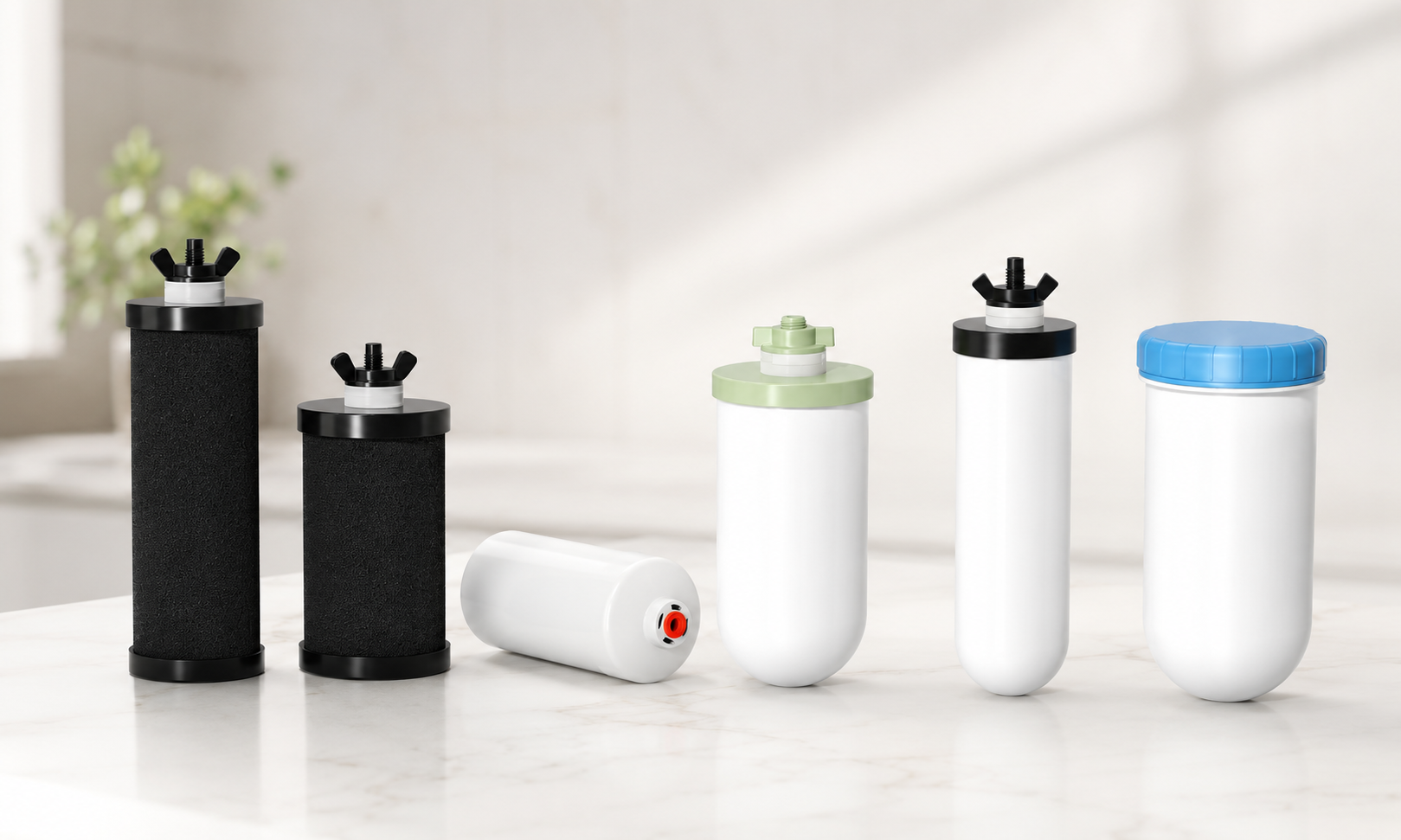
Look for exactly what the element is made of and in what order the water meets it. A single block of loosely specified carbon is not the same as a staged system pairing a fine mechanical barrier with high-density activated carbon. Ask how many stages the water passes through and what each stage targets.
Independent test evidence
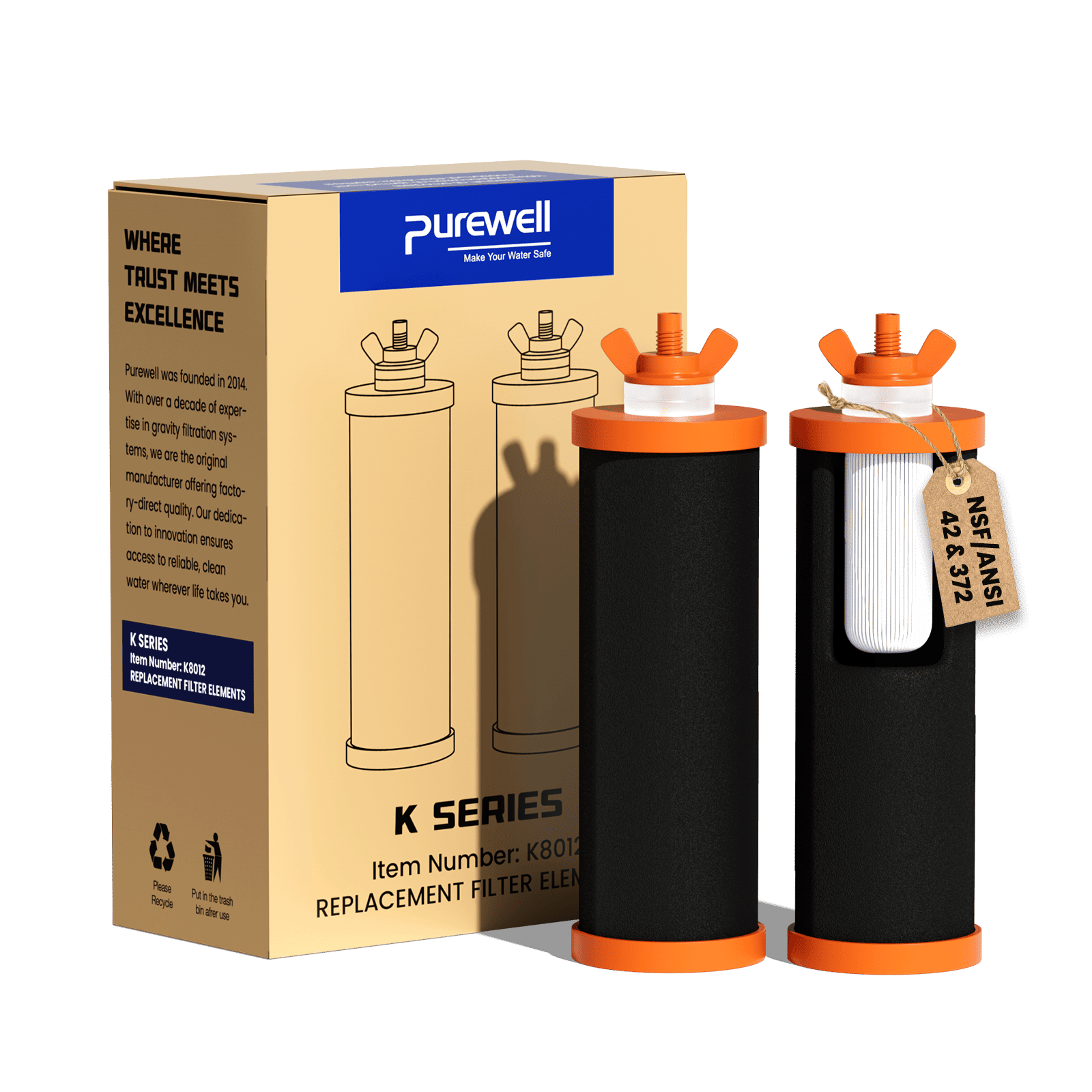
This is the single most important check. Reputable manufacturers publish which standard their media was tested against — for example NSF/ANSI 53 for health-related contaminant reduction, NSF/ANSI 42 for aesthetic effects such as chlorine taste and odour, and NSF/ANSI 372 for low-lead material compliance. If a seller cannot name the standard or show the report, treat claims as unverified. Never assume a result for one filter variant applies to every model in a range.
Capacity
Capacity is the volume of the lower chamber — typically quoted in litres or gallons. Match it to how much water your household actually drinks and cooks with each day, rather than buying the largest unit by default.
Flow rate
Gravity filters are slower than pressurised systems by design, because slower flow means longer contact time. Check the stated throughput per hour so you know whether the unit can refill itself between uses. If you regularly fill large pans or bottles, prioritise a larger element surface area.
Filter lifespan
Every element has a rated life, expressed in litres or months. Once the media is saturated it stops performing — and an element left in service past its rating can stop doing useful work altogether. Note the rated life in litres and months before you buy, and set a reminder.
Replacement-filter availability
A cheap system with filters you cannot buy in two years is a poor investment. Check that replacement elements are stocked in the UK, priced clearly, and available for the specific model you own. Browse our replacement filters range for compatible elements.
Running cost
Work out the cost per litre over a year, not the shelf price. Divide the element price by its rated capacity in litres, then multiply by your household's annual consumption. This is where a slightly more expensive system often wins.
Stainless-steel construction
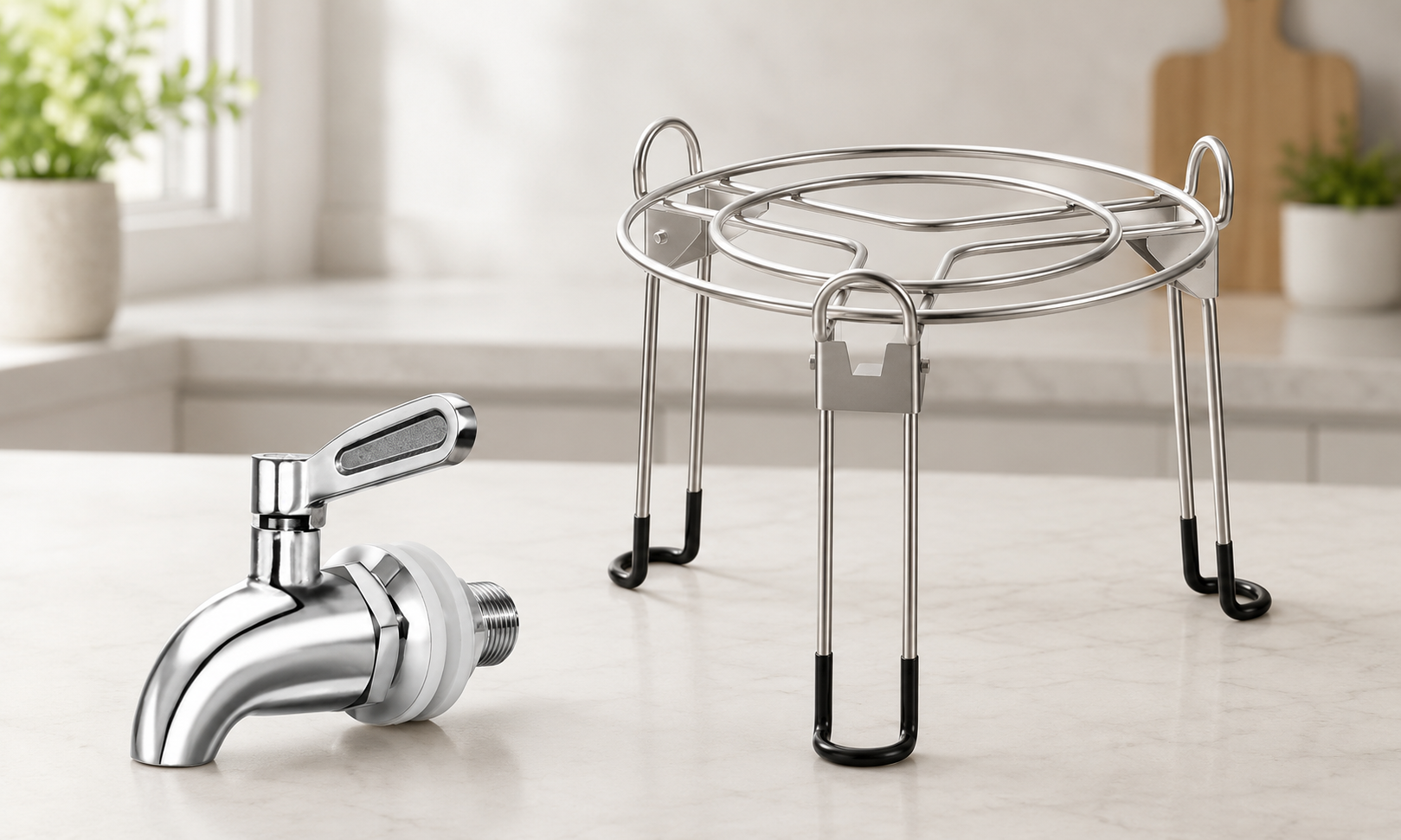
Stainless steel resists cracking, does not retain odours, and tolerates hot kitchens and outdoor use far better than thin plastic. Look for food-grade 304 stainless steel and check whether the body is seamless or welded.
Installation and electricity requirements
One of the main reasons UK households choose gravity systems is that they need no plumbing modification and no electricity. Assembly is typically a case of seating the elements and filling the top chamber — helpful if you rent, live in a flat, or want filtered water during a power cut.
Ceramic vs Carbon Gravity Water Filters
These two media do different jobs, and the best systems combine them rather than choosing one.
| Factor | Ceramic element | Activated carbon element |
|---|---|---|
| Primary mechanism | Mechanical straining by pore size | Adsorption onto a porous carbon surface |
| Typical strength | Particles, sediment, turbidity | Chlorine, taste and odour compounds, certain organic contaminants |
| Maintenance | Surface can often be gently cleaned | Cannot be regenerated at home — replace on schedule |
| End of life | Cleaning extends usability but the element is not unending | Defined by rated litres or months |
We explain exactly how porous ceramic strain works — and what it cannot do — in our ceramic water filter guide. Whichever you choose, always keep spare elements from our replacement filters collection so you never run past saturation.
Can Gravity Water Filters Reduce PFAS?
Some can — but only where the specific element has been tested for it, and the wording matters. PFAS ("forever chemicals") are a large family, and performance varies by compound and by media. Rather than claiming a blanket result, check whether the manufacturer publishes PFAS-specific test documentation for the exact element you are buying. For a full explanation of which technologies are validated, read our analysis on whether a water filter removes PFAS.
Gravity Water Filter vs Reverse Osmosis
Both are effective approaches with very different trade-offs.
- Gravity filtration — no electricity, no plumbing, no wastewater, portable, keeps minerals that are naturally present in the water. Lower throughput.
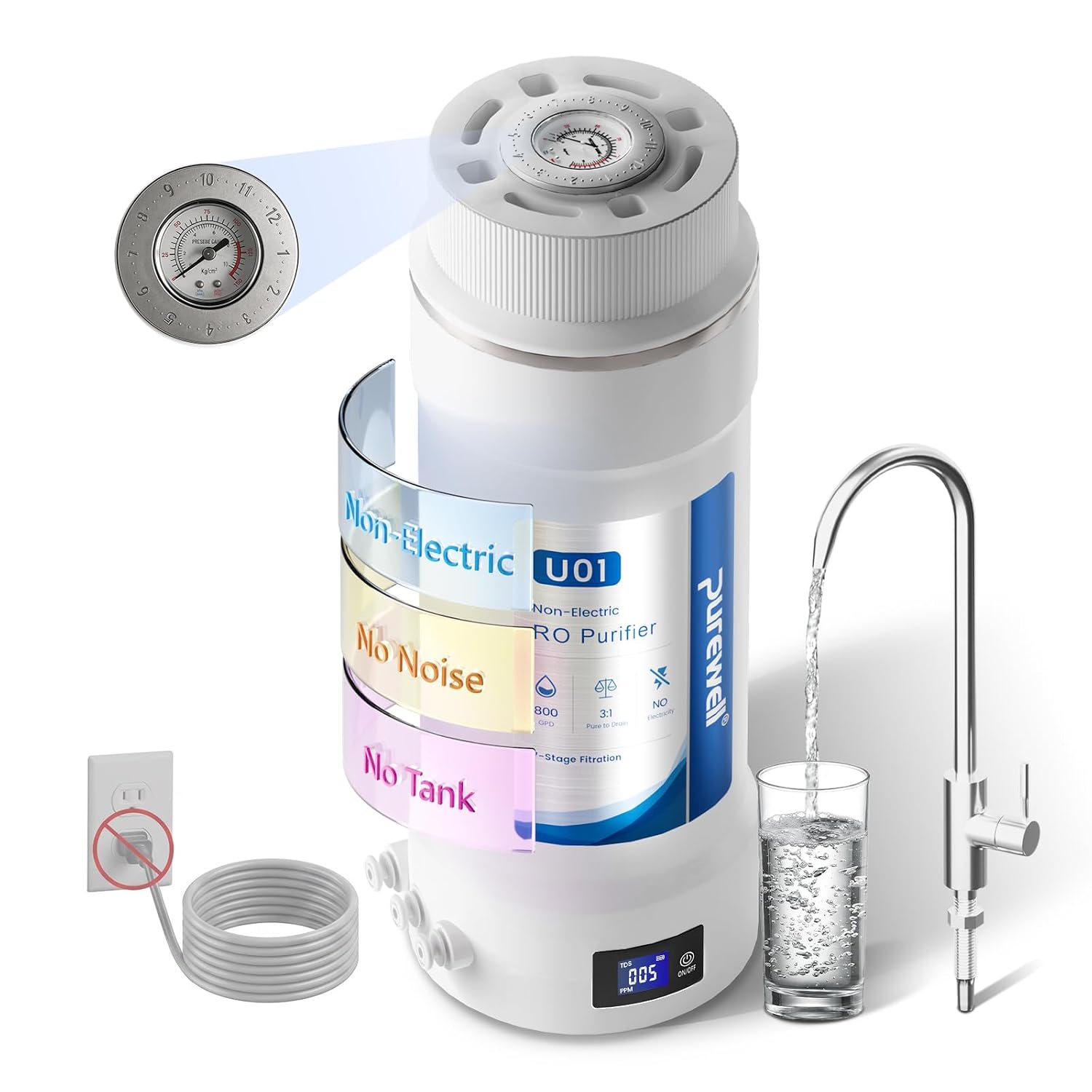
- Reverse osmosis — pushes water through a semi-permeable membrane under pressure, reducing total dissolved solids very substantially. Requires installation, produces some wastewater, and costs more to run.
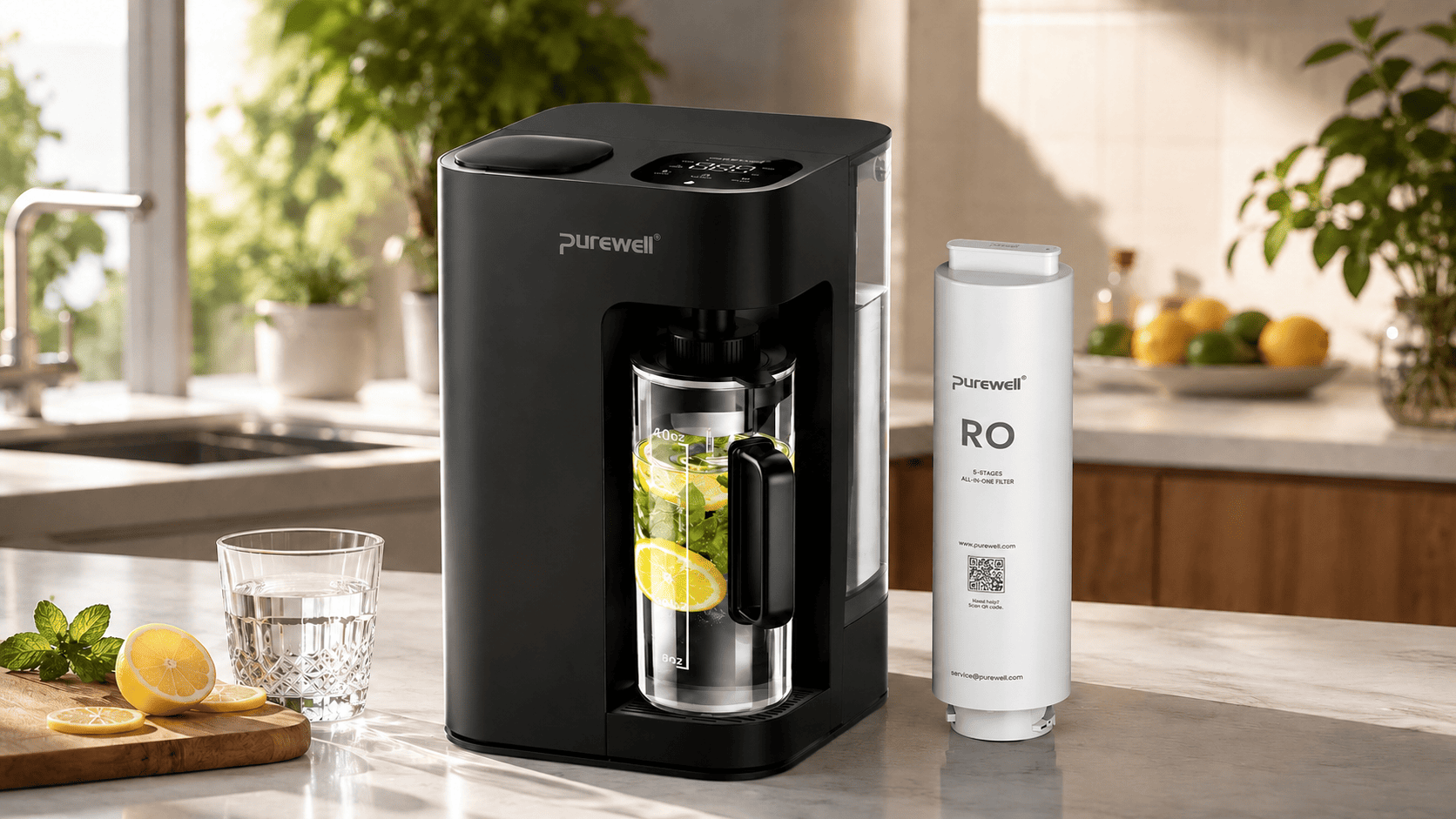
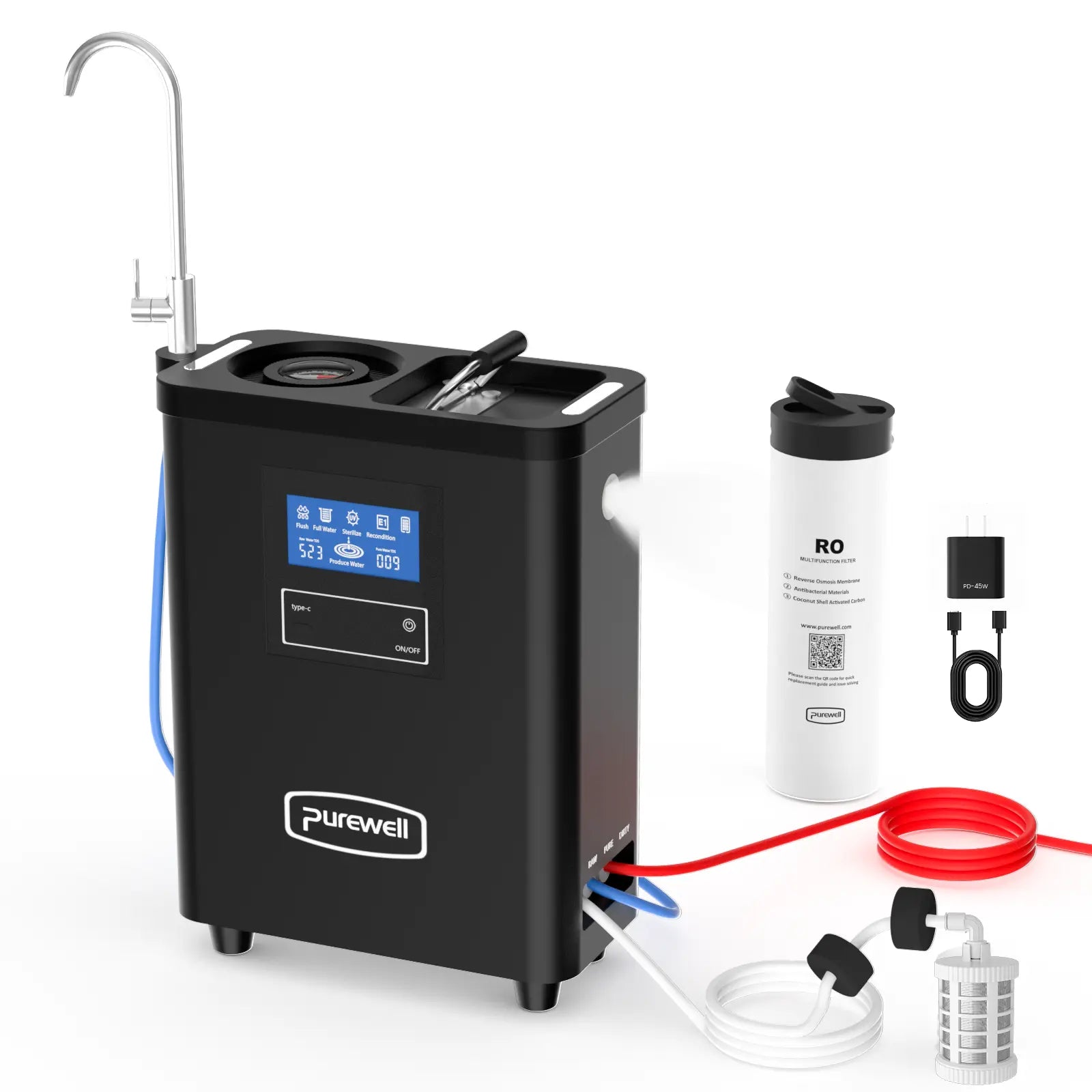
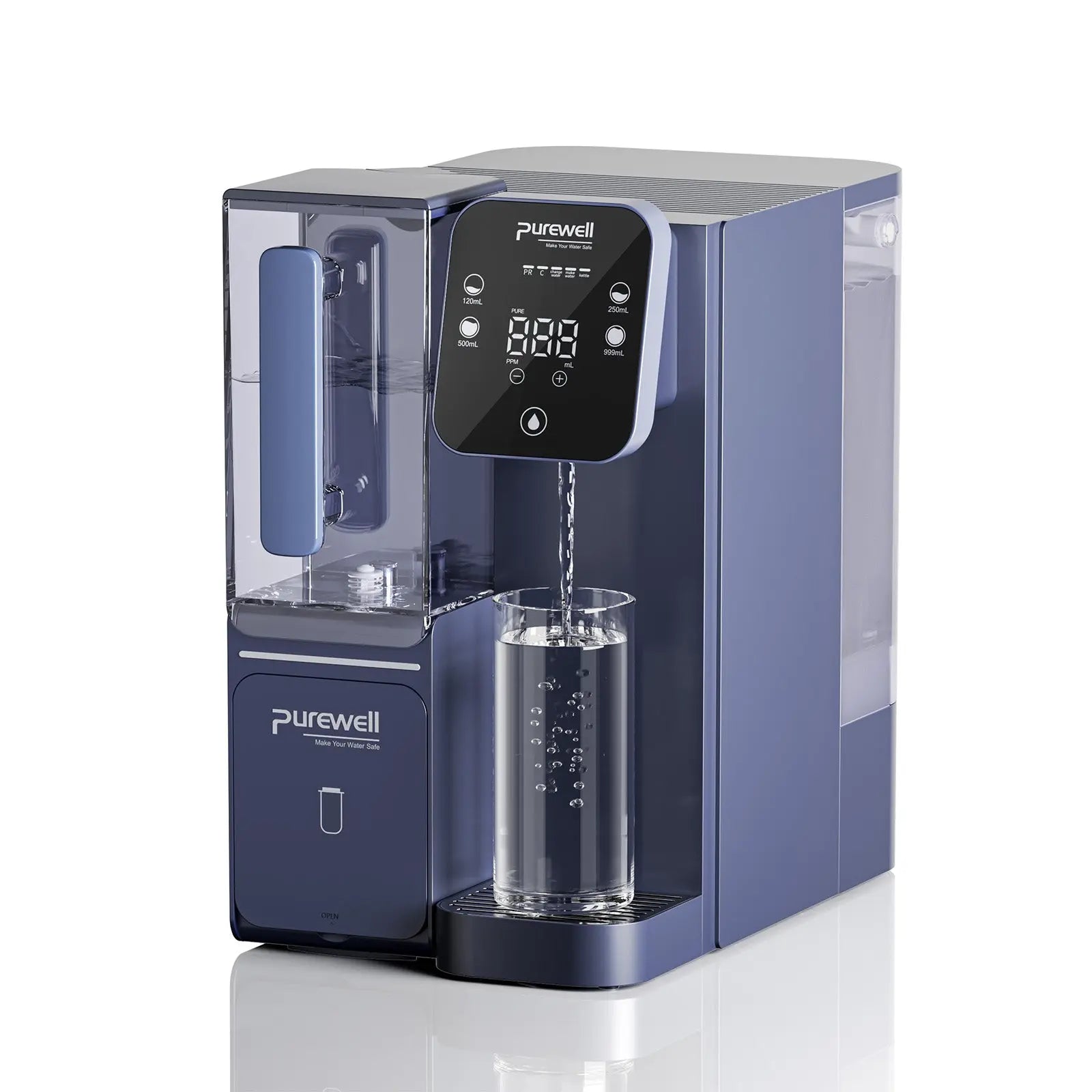
If you want a simple, low-running-cost unit with minimal installation, gravity is usually the better fit. If your priority is maximum dissolved-solids reduction regardless of cost and complexity, explore our countertop RO options.
Which Gravity Water Filter Size Is Right for You?
| Household | Typical daily need | Recommended capacity |
|---|---|---|
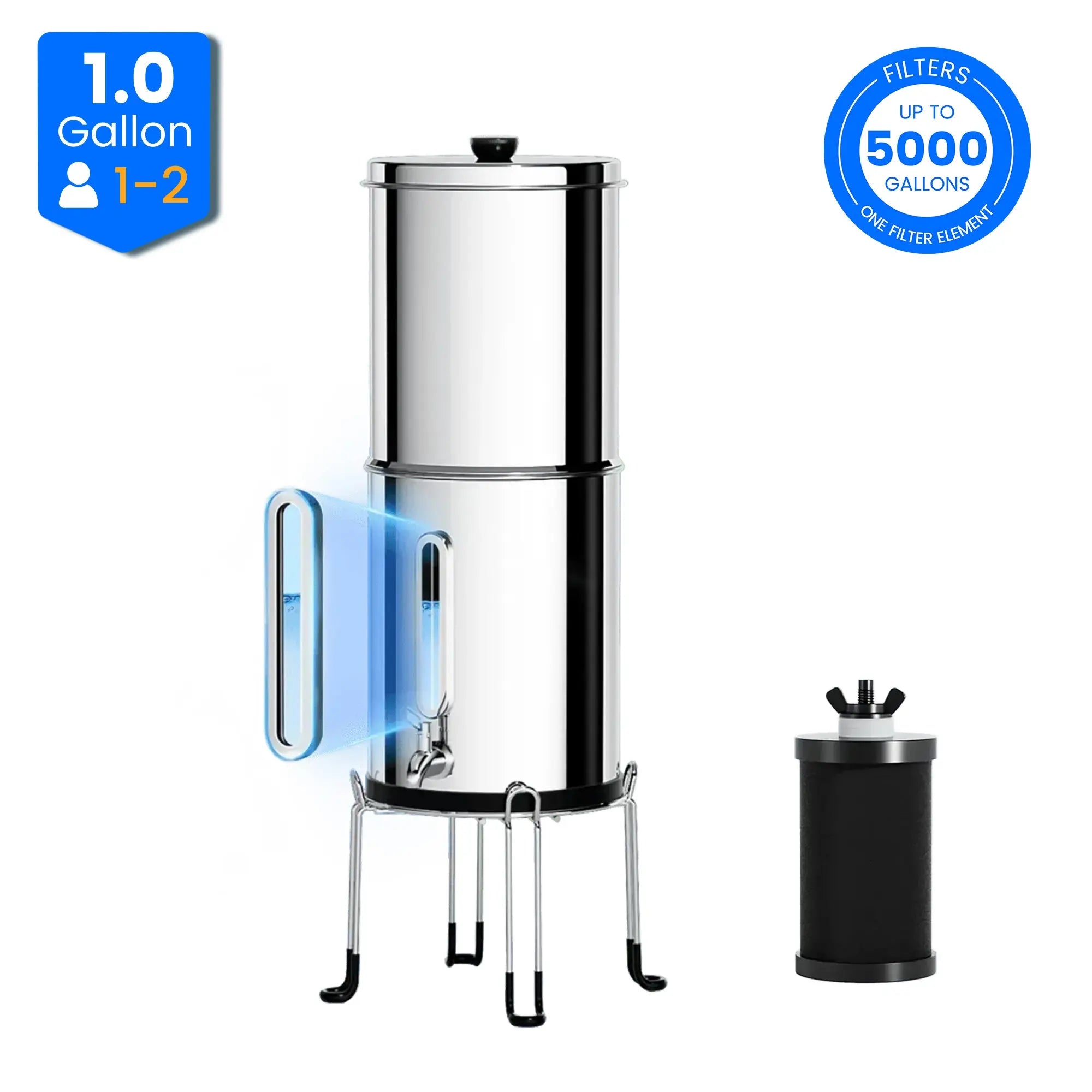
| 1–2 people | Drinking and a little cooking | Around 1.0 gallon — see the K Series 1.0 Gallon |
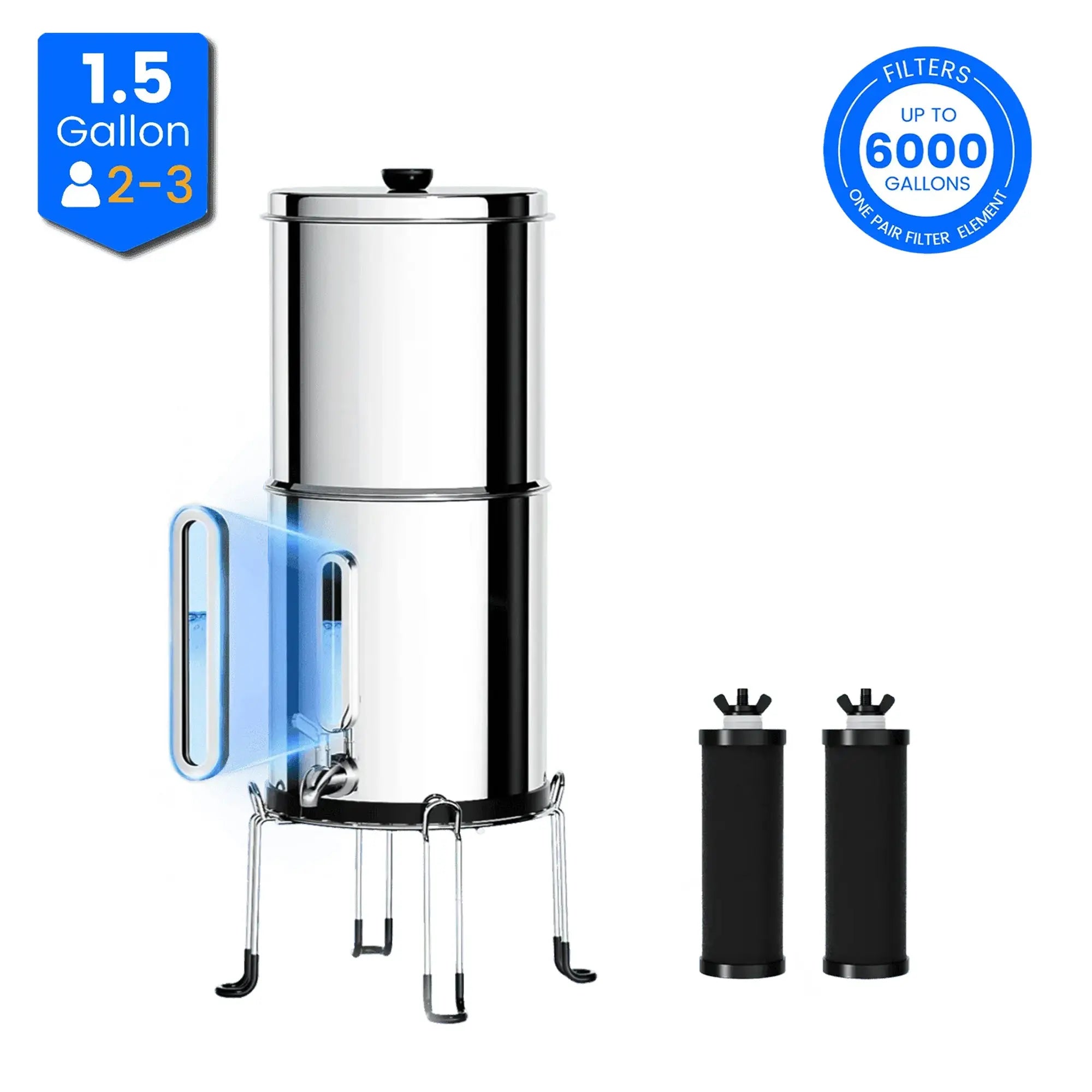
| 2–3 people | All drinking water plus daily cooking | Around 1.5 gallons — see the K Series 1.5 Gallon |
| Families | Drinking, cooking and filling bottles | 2.25 gallons or more — see the K Series 2.25 Gallon |
| Higher daily water use | Large households or batch cooking | Largest chambers with twin elements — see the K Series 2.9 Gallon stainless steel system |
Purewell Gravity Water Filter Options
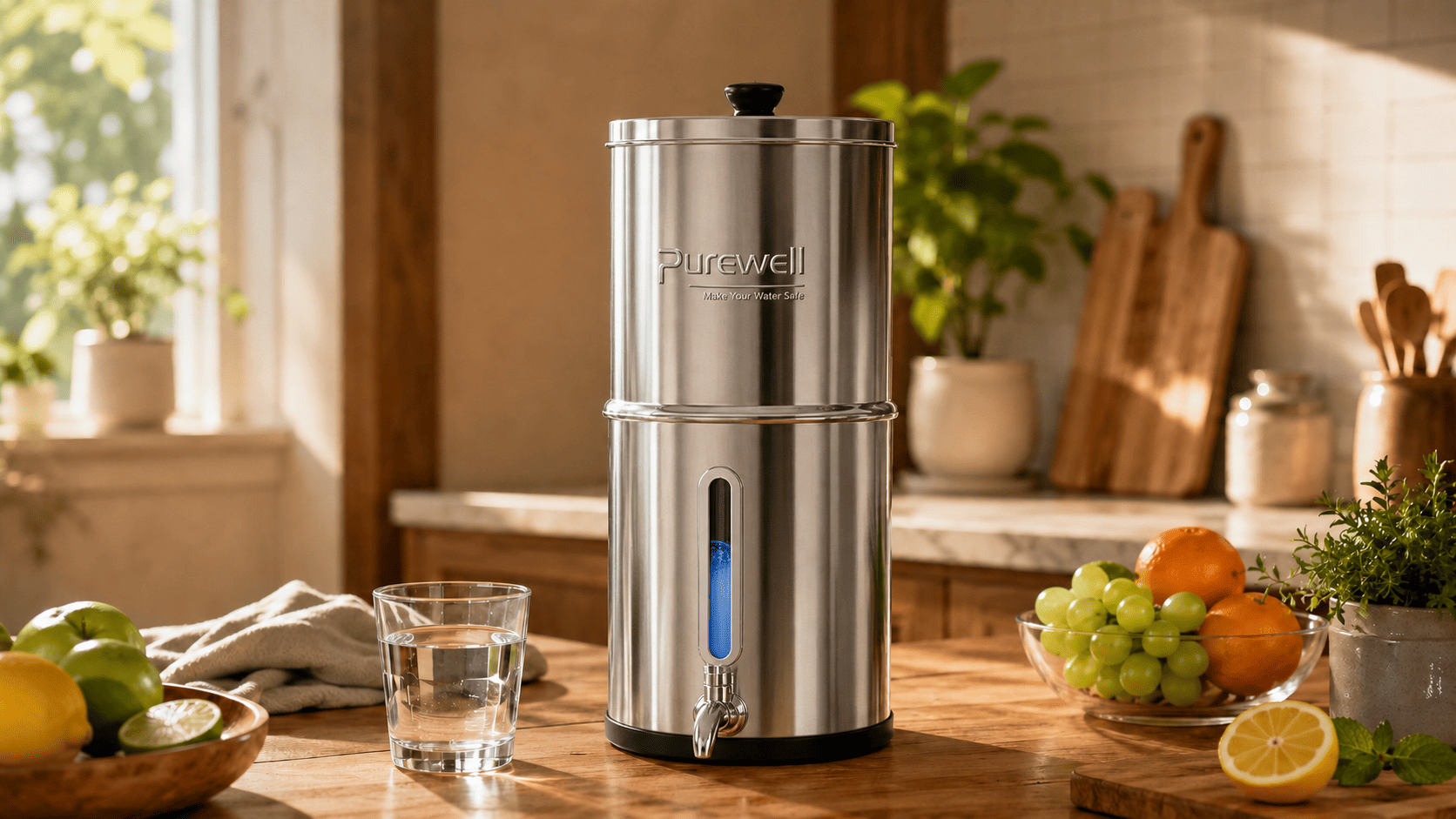
Purewell gravity systems pair high-density activated carbon with fine mechanical filtration inside 304 stainless steel housings, and every element has a published rated life. Current UK options include:
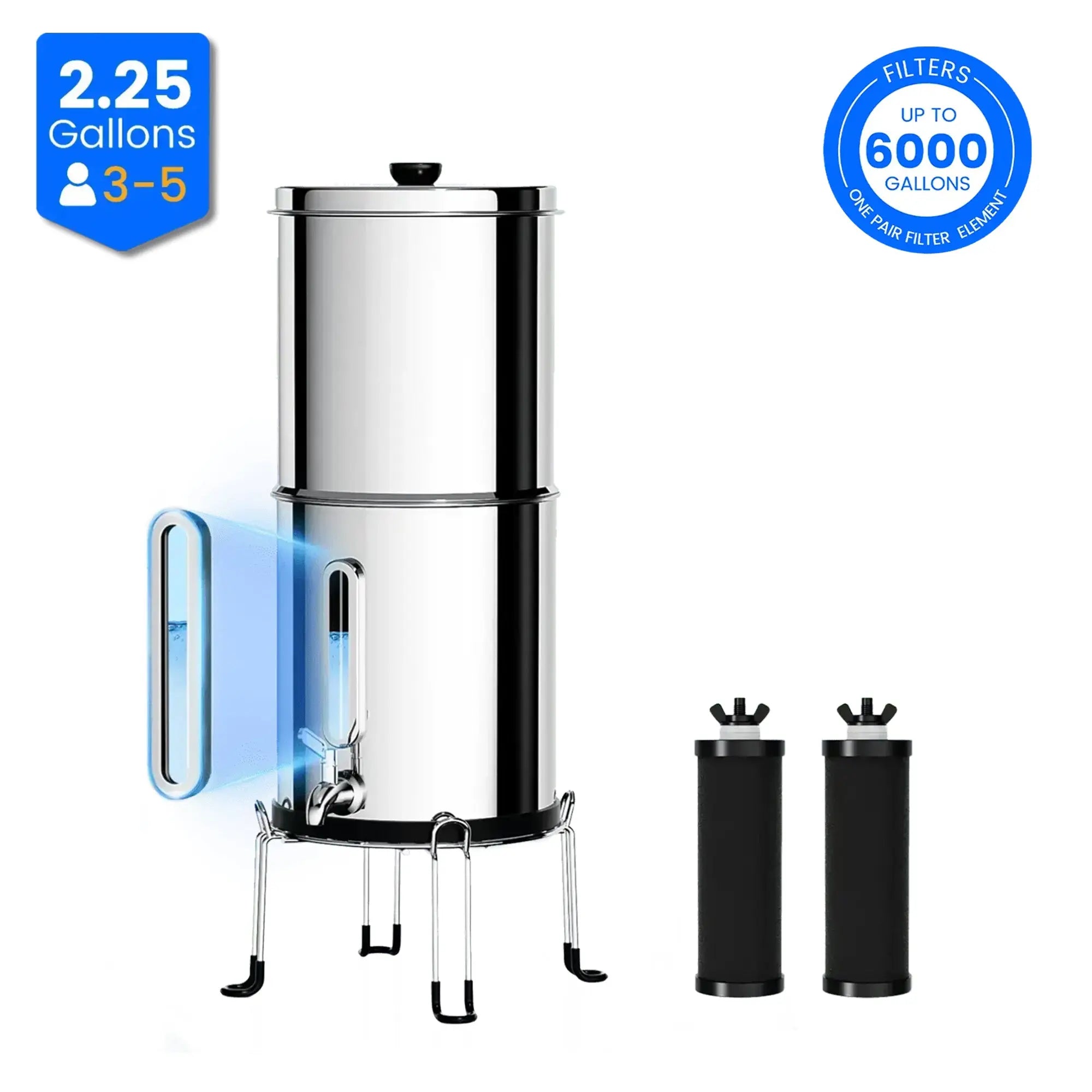
- K Series Countertop Gravity Water Filter System, 2.25 Gallon — the family-sized everyday workhorse.
- K Series 2.25 Gallon, 304 Stainless Steel — stainless construction with NSF-certified elements.
- K Series 2.9 Gallon, 304 Stainless Steel — the largest option for higher daily demand.
- K Series 1.5 Gallon and K Series 1.0 Gallon — compact sizes for smaller households.
- SF Series and SS Series 2.25 Gallon systems, plus the BO Series.
See the full line-up in the UK gravity water filter systems collection, and check each product page for current £ pricing.
Frequently Asked Questions
Are gravity water filters worth it?
Yes, if you want filtered water without plumbing work, electricity or wastewater. Compare the cost per litre rather than the purchase price, and confirm replacement elements are stocked in the UK for the model you choose.
Do gravity water filters need electricity?
No. Gravity systems operate entirely on the weight of the water column, so they keep working during a power cut and cost nothing to run.
What contaminants can gravity filters reduce?
It depends entirely on the element. Mechanical media address particles and sediment; activated carbon addresses chlorine, taste and odour compounds and, where tested, certain organic contaminants. Always check the specific test documentation for the element.
How often should filters be replaced?
Follow the rated life stated for your element, whether given in litres or months, whichever comes first. Keeping a spare set avoids running past saturation.
Are ceramic gravity filters washable?
Ceramic surfaces can usually be cleaned gently to restore flow, but cleaning is not the same as unlimited life. A cleaned element still has a rated service life and must eventually be replaced.
Can gravity filters reduce PFAS?
Only where the specific element carries PFAS-related test documentation. PFAS is a broad family and results do not transfer between models, so check the report for the exact filter you intend to buy.
Gravity filter or RO — which should I choose?
Choose gravity for simplicity, no installation, no wastewater and lower running cost. Choose reverse osmosis if your priority is maximum reduction of dissolved solids and you are comfortable with installation and higher running costs.