
How Often Should You Replace a Gravity Water Filter?
A gravity water filter does not have one universal replacement schedule.
Some filter elements are rated by gallons. Others include a recommended number of months, a maximum service period, or physical replacement indicators. Water quality, daily consumption, filter material, maintenance, and storage conditions can all affect how long a filter remains usable.
For that reason, the most accurate answer is:
Replace a gravity water filter when it reaches the manufacturer’s rated capacity or recommended service period—or sooner if it is damaged, normal flow cannot be restored, or the manufacturer identifies another replacement condition.
The Centers for Disease Control and Prevention recommends maintaining household water filters and replacing them according to the manufacturer’s instructions. NSF similarly explains that filter service cycles may be expressed as either a gallon capacity or an estimated number of months. plains how to interpret those recommendations, recognize meaningful warning signs, estimate your household’s filter usage, and choose the correct replacement filter for a Purewell gravity water filtration system.
Table of Contents
-
Why gravity water filter replacement matters
-
Why there is no universal replacement schedule
-
Gallon capacity vs. calendar replacement
-
Purewell gravity filter lifespan examples
-
What affects gravity filter life
-
Signs that a filter may need replacement
-
Cleaning vs. replacing a filter
-
How to track filter usage
-
Replacement guidance by user type
-
How to replace a gravity water filter
-
Summary
-
Frequently asked questions
Why Gravity Water Filter Replacement Matters
Gravity water filters move water through filtration media without using electricity or household water pressure. Depending on the model, the filter may contain activated carbon, ceramic material, hollow-fiber membranes, ion-exchange media, specialty adsorption media, or a combination of layers.
As water passes through the element, particles may collect on its surface or within its pores. Adsorption media such as activated carbon also have a limited number of available sites for capturing applicable substances.
Over time, several changes may occur:
-
Sediment can restrict the filter surface.
-
Gravity flow can become slower.
-
Adsorption media can approach their rated capacity.
-
Taste or odor reduction may become less noticeable.
-
Improperly maintained filters can support microbial growth.
-
Physical damage can allow water to bypass the intended filtration path.
CDC notes that germs can live and multiply in water filters that are not properly maintained or replaced. This does not mean every older filter automatically becomes contaminated, but it reinforces the importance of following the product’s cleaning, storage, and replacement instructions. ement helps the system continue operating under the conditions for which the filter was designed and evaluated. However, replacement alone does not guarantee that every water source is suitable for drinking. The installed filter must also be appropriate for the specific germs, chemicals, or other substances of concern.
Why There Is No Universal Gravity Filter Replacement Schedule
Advice such as “replace every six months” can be convenient, but it is not accurate for every gravity filtration system.
Filter life varies because products differ in:
-
Filter dimensions
-
Amount and type of filtration media
-
Pore structure
-
Number of filters installed
-
Rated contaminant-reduction capacity
-
Source-water conditions
-
Daily filtered-water volume
-
Cleaning and maintenance requirements
A small specialty filter rated for a few hundred gallons should not be treated the same as a pair of core carbon elements rated for several thousand gallons. A washable ceramic surface also requires different care from a non-washable carbon block.
NSF advises consumers to use the service cycle established for the specific product. That cycle may be defined by gallons, months, or both. e First Applicable Limit
When a manufacturer provides more than one limit, follow whichever applicable replacement point comes first.
For example:
-
Maximum rated gallons reached
-
Recommended number of months reached
-
Normal flow cannot be restored
-
Filter is cracked, chipped, loose, or otherwise damaged
-
Taste or odor reduction noticeably declines
-
Model-specific replacement indicator is triggered
Do not continue using a filter indefinitely simply because water is still flowing through it.
Gallon Capacity vs. Calendar Replacement
Understanding the difference between gallon capacity and calendar life makes replacement planning more accurate.
Rated Gallon Capacity
A gallon rating describes the maximum amount of water a filter may process under the manufacturer’s stated conditions.
It is not a guarantee that every household will reach that number. Source-water quality, sediment, contaminant concentration, temperature, maintenance, and usage can shorten actual service life.
Recommended Service Period
Some manufacturers also provide a calendar-based replacement period. This can account for factors that are not captured by gallon volume alone, such as long-term exposure to moisture, intermittent use, storage, and hygiene.
Condition-Based Replacement
Certain warning signs may require replacement before either the gallon or calendar limit is reached. Physical damage is the clearest example.
A cracked ceramic element should be replaced immediately, even if it has processed only a small amount of water. Purewell’s ceramic-filter instructions state that cracked, chipped, loose, or otherwise damaged elements should no longer be used. ell Gravity Water Filter Lifespan Examples
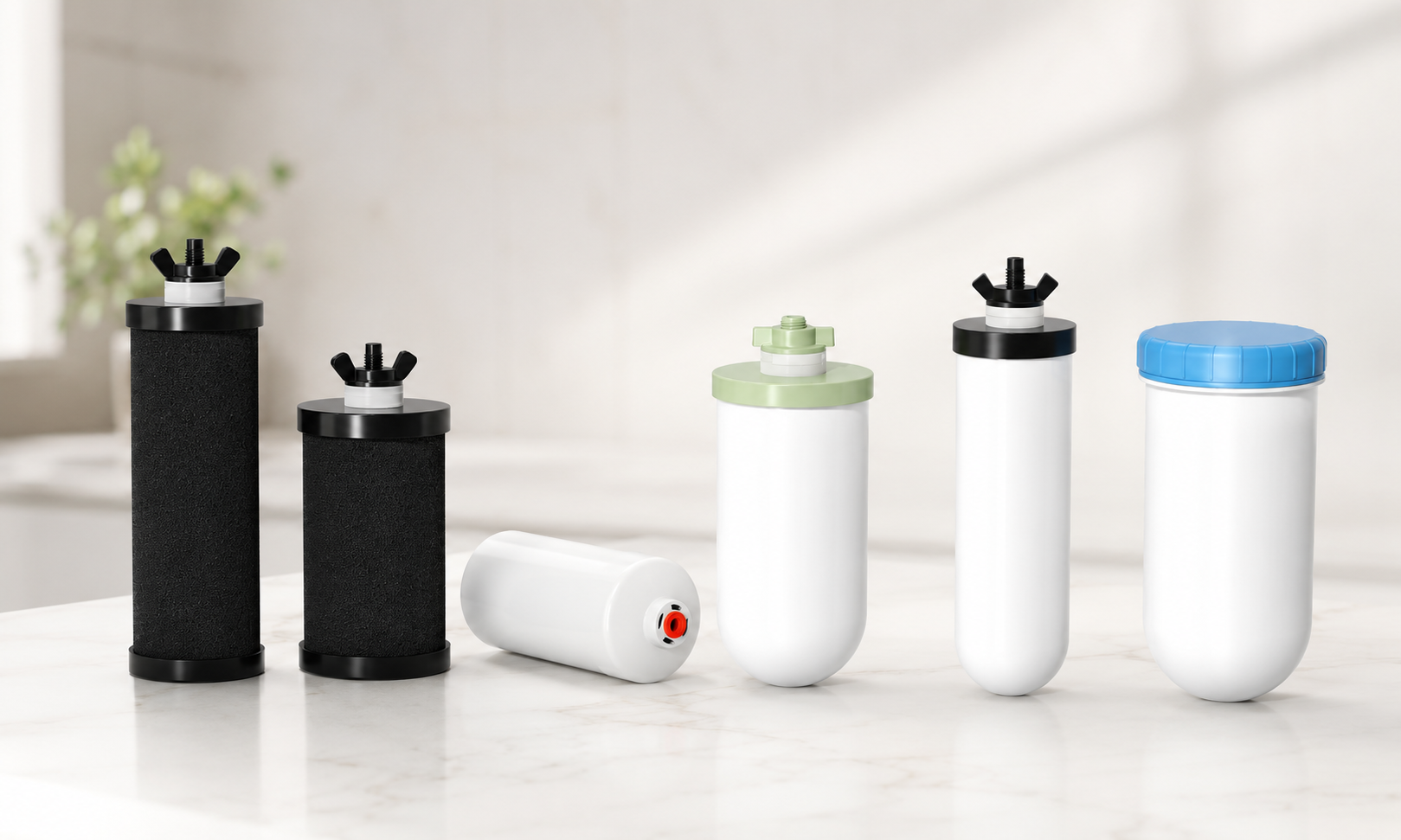
Purewell offers several filter structures for different gravity water filter systems. Their rated capacities vary significantly, so customers should check the exact filter name and item number before planning a replacement.
| Purewell Filter Type | System Compatibility | Published Rated Life |
|---|---|---|
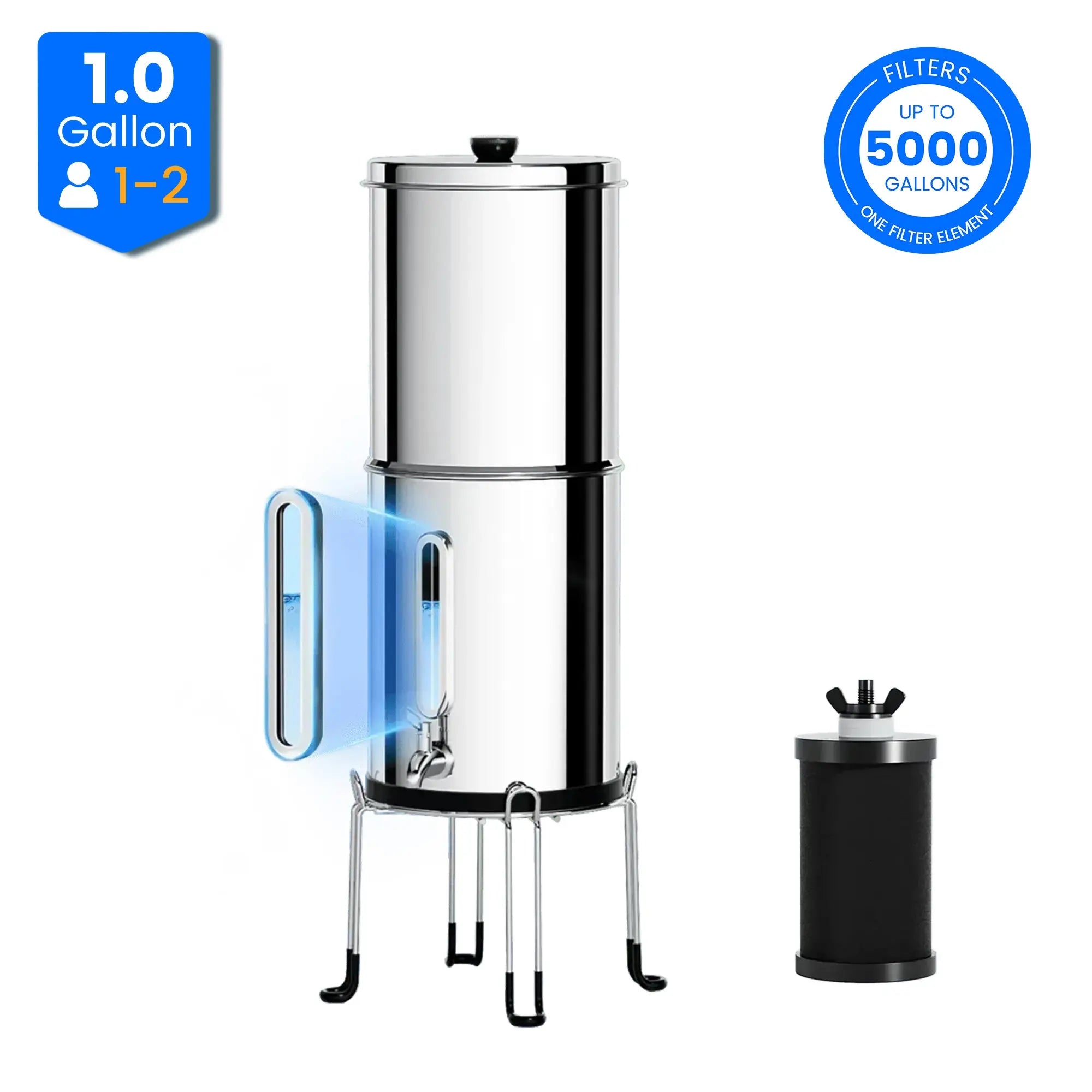
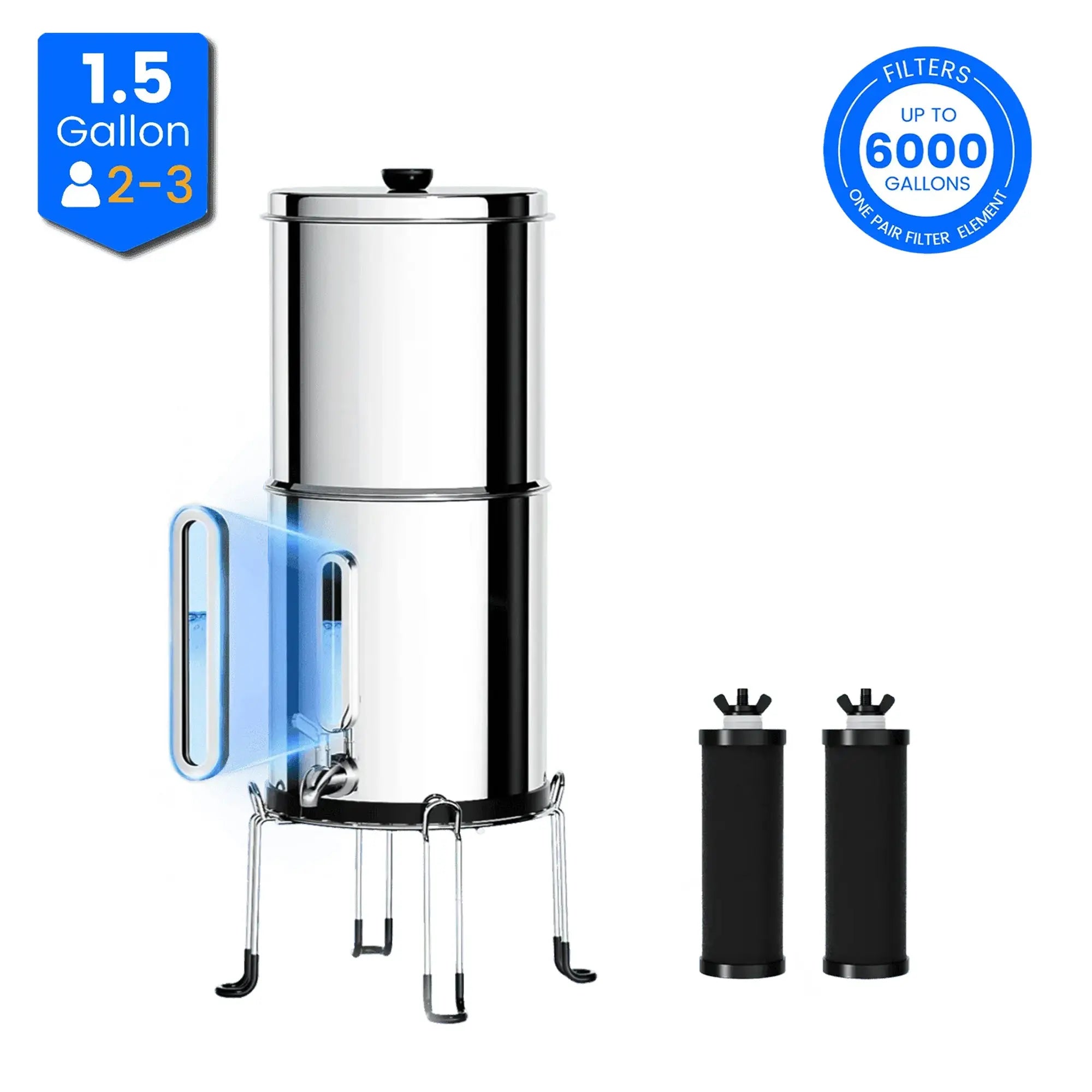
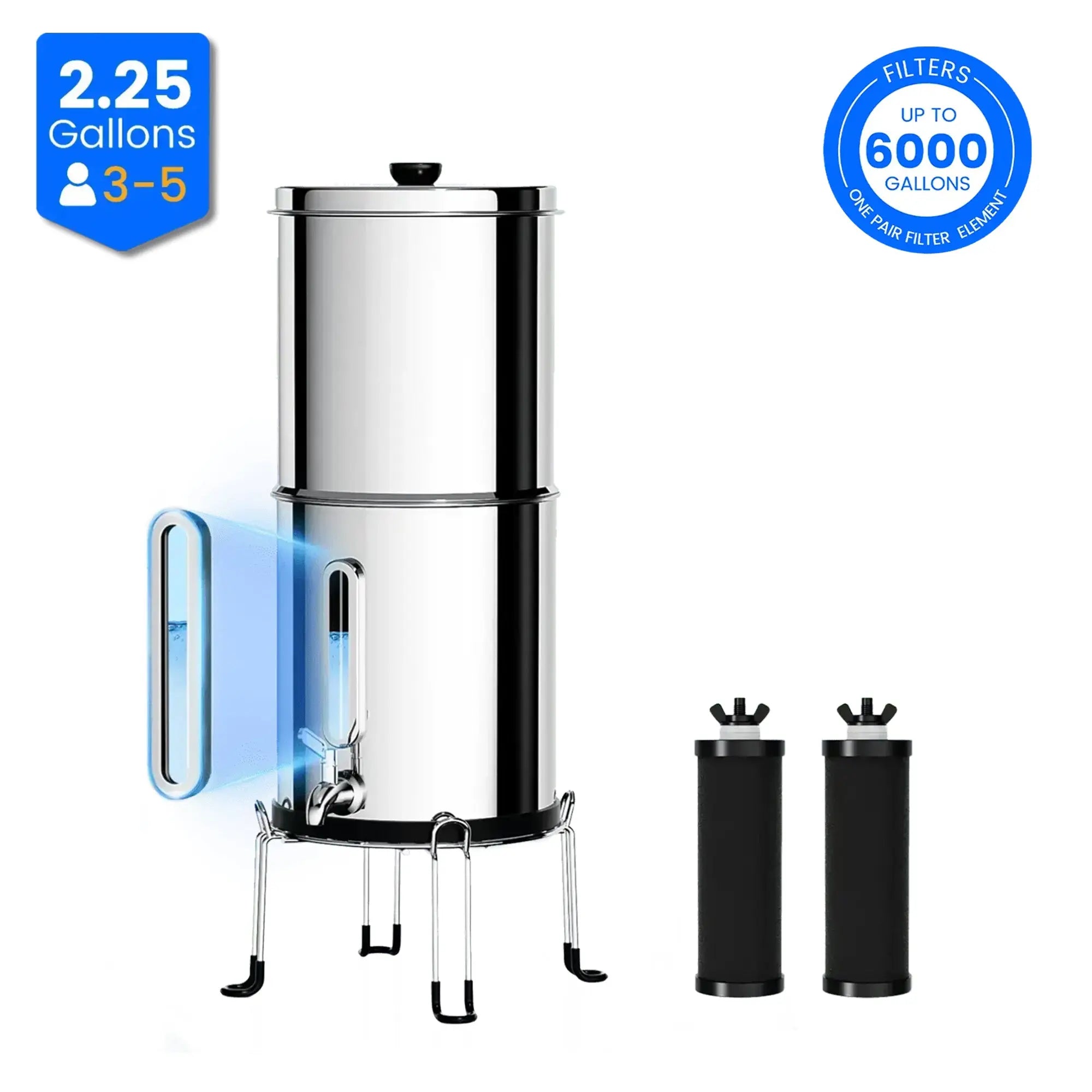
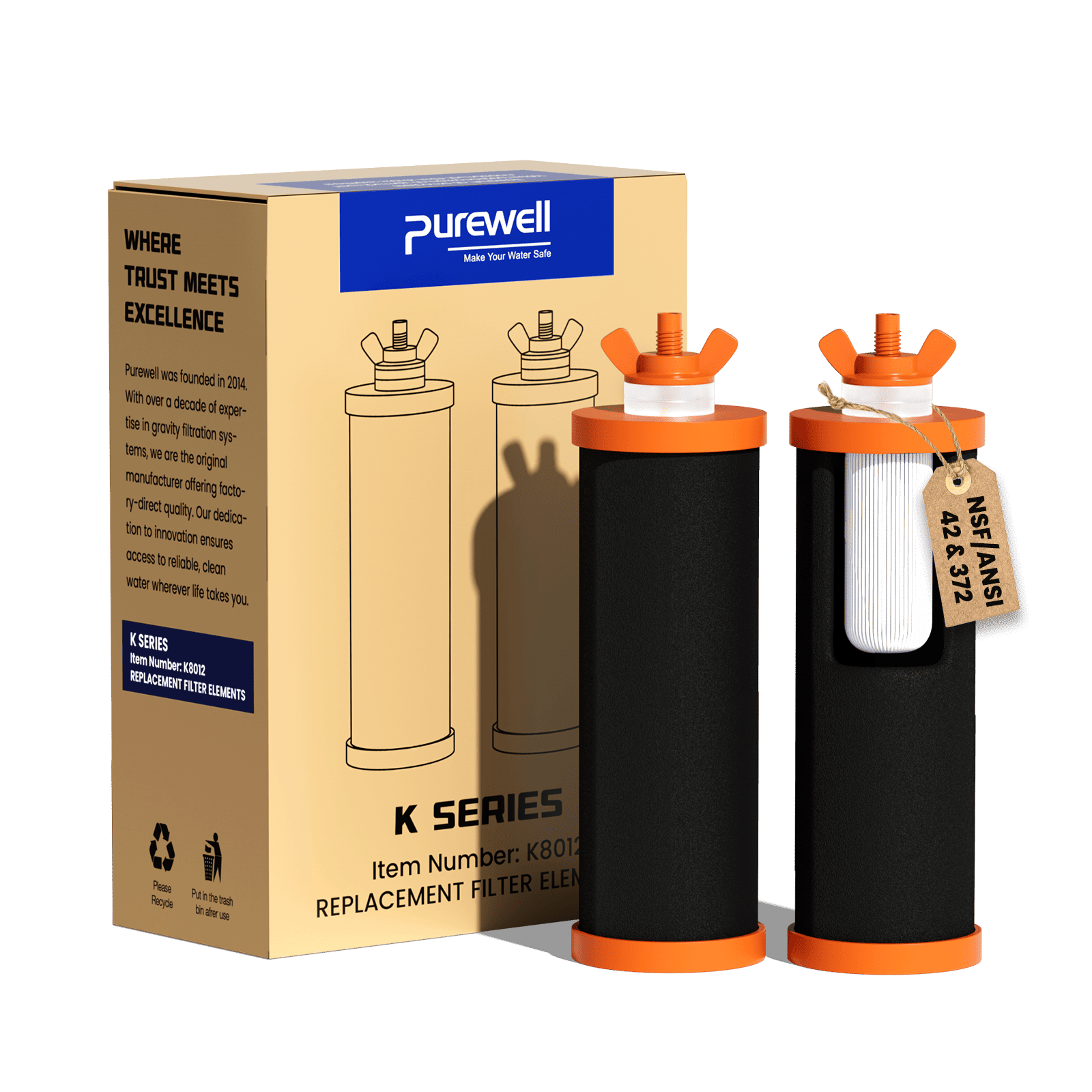
| K Series Carbon Filters | K Series and SS Series | Up to 6,000 gallons per two-filter box |
| K Series Carbon Filters Pro | K Series and SS Series | Up to 10,000 gallons per two-filter box |
| K Series Classic Carbon Filters | K Series and SS Series | Up to 6,000 gallons per two-filter box |
| K Series Ceramic Filters, 3-Stage | K Series and SS Series | Up to 10,000 gallons per two-filter box |
| K Series Ceramic Filters, 4-Stage | K Series and SS Series | Up to 15,000 gallons per two-filter box |
| K Series Fluoride-Reduction Add-On Filters | Used with compatible core filters | Up to 1,000 gallons per two-filter box |
| K Series Alkaline Add-On Filters | Used with compatible core filters | Up to 200 gallons per two-filter box |
| SF Series TDS-Reduction Filter | SF Series | Up to 100 gallons per filter |
| SF Series Alkaline Filter | SF Series | Up to 1,000 gallons per filter |
| SF Series Fluoride-Reduction Filter | SF Series | Up to 1,000 gallons per filter |
Purewell’s current product specifications show that K Series carbon filters are rated for up to 6,000 gallons per two-filter box, while K Series Pro filters are rated for up to 10,000 gallons. K Series ceramic options are rated for up to 10,000 or 15,000 gallons depending on the selected model. -on filters have shorter capacities because they perform a supplemental function and must be used with compatible core filters. Purewell currently lists up to 1,000 gallons for the fluoride-reduction add-on and up to 200 gallons for the alkaline add-on. ter life also varies by filtration option. The TDS-reduction filter is rated for up to 100 gallons per filter, while the alkaline and fluoride-reduction versions are rated for up to 1,000 gallons per filter. Capacity Note
“Up to” represents a maximum published capacity under applicable conditions. It should not be interpreted as a promise that every filter will process that volume in every location.
Always check:
-
The exact filter model
-
Package quantity
-
Whether the rating applies per filter or per box
-
Whether multiple elements must be installed together
-
Model-specific time recommendations
-
Source-water limitations
-
Cleaning and storage instructions
Explore current specifications through the Purewell Replacement Water Filters collection.
What Affects Gravity Water Filter Life?
1. Total Water Volume
The more water that passes through a filter, the faster it approaches its rated capacity.
A household that filters drinking water, cooking water, pet water, and water for filling reusable bottles will use more capacity than someone who filters only a few glasses each day.
Household size alone is not enough to calculate filter life. Two four-person households may have very different filtered-water consumption.
2. Sediment and Turbidity
Cloudy water, suspended particles, rust, sand, and sediment can collect on the filter surface and slow gravity flow.
Highly turbid source water may block ceramic surfaces more quickly. Purewell recommends using the clearest available source water and, where appropriate, allowing sediment to settle or using a suitable pre-filter. -Water Chemistry
Activated carbon and specialty media have limited adsorption or treatment capacities. Water with a higher concentration of the substances addressed by the filter may use those capacities more quickly.
This is why a filter-life estimate based only on household size can be misleading.
4. Water Source
Regularly treated municipal water may place different demands on a filter than rainwater, river water, private-well water, or another untreated source.
Purewell notes that outdoor, well, rain, river, or stream water may shorten filter life depending on the source-water condition. It does not assign one fixed percentage because water quality varies widely between locations. ells, testing should guide treatment decisions. Do not assume that a gravity filter addresses every contaminant that may be present.
5. Maintenance
Correct installation, flushing, cleaning, and storage can help prevent avoidable flow problems.
Maintenance does not reset the rated adsorption capacity of activated carbon. Cleaning a washable surface may restore flow by removing accumulated sediment, but it does not make the internal filtration media new again.
6. Long Periods Without Use
Water should not be left stagnant in the system longer than the manufacturer recommends. Before storing a filter, follow the model-specific cleaning and drying instructions.
RV owners, seasonal campers, and emergency-preparedness users should pay particular attention to storage because their filters may remain unused for weeks or months.
7. Temperature and Freezing
Do not run hot water through a gravity filter unless the product is specifically designed for it. CDC and EPA guidance for household filtration also emphasizes following manufacturer temperature and operating instructions. ilters should be protected from freezing. Water retained in the pores can expand and damage the ceramic structure. Your Gravity Water Filter May Need Replacement
Not every change means the filter has reached the end of its service life. Some problems can result from trapped air, incorrect installation, low water level, blocked surfaces, or loose seals.
Use the following signs as prompts to inspect the system and consult the product instructions.
The Rated Capacity Has Been Reached
This is the clearest planned replacement point. Track approximately how much water the household filters and replace the element before exceeding its rated service life.
The Manufacturer’s Time Limit Has Been Reached
Follow any calendar-based replacement period provided for the exact model, even when your estimated gallon usage is lower.
Flow Is Much Slower Than Normal
Gravity flow commonly becomes slower as the upper chamber empties, so compare performance under similar conditions.
Before replacing the filter, check whether:
-
The upper chamber contains enough water
-
The filters were prepared correctly
-
Air is trapped inside the filter
-
A washable ceramic surface needs approved cleaning
-
Sediment is blocking the element
-
Nuts or washers were installed too tightly
Replace the filter when normal flow cannot be restored through the approved maintenance steps.
Unwanted Taste or Odor Returns
A noticeable return of the taste or odor the filter was intended to reduce may indicate that the media is approaching the end of its useful life.
However, taste and smell are not reliable detectors for every contaminant. Water can contain substances that have no noticeable taste, odor, or color. Do not use sensory changes as the only method for deciding whether a filter remains effective.
The Filter Is Cracked or Damaged
Replace cracked, chipped, deformed, loose, or physically damaged elements immediately.
Do not attempt to repair filtration media with glue, sealant, tape, or an unapproved coating.
Water Bypasses the Filter
If washers, plugs, or filter stems are installed incorrectly, untreated water may pass through an open hole rather than through the element.
Correct the installation before using the water. Replace damaged seals or components with parts designed for the system.
The Filter Develops an Unusual Surface Condition
Visible slime, persistent biological growth, or contamination that cannot be removed using the approved cleaning process requires immediate attention.
Stop using the system, clean and sanitize the chambers according to the product instructions, and replace the filter when directed.
Cleaning a Filter Is Not the Same as Replacing It
Cleaning can sometimes improve water flow, especially with washable ceramic filter surfaces. It does not necessarily restore the filter’s original contaminant-reduction capacity.
Ceramic Filters
Applicable Purewell ceramic filters have a washable outer surface. Clean them gently using only the approved method and clean water.
Avoid:
-
Soap
-
Detergent
-
Bleach unless specifically authorized
-
Oils
-
Household cleaning chemicals
-
Aggressive sanding
-
Removing excessive ceramic material
Ceramic filters should be replaced when their rated life is reached, the minimum safe thickness is reached, they become damaged, or normal flow cannot be restored. lters
Carbon fines may appear during initial flushing. Continue rinsing according to the instructions until the water runs clear.
Do not scrub, cut open, chemically clean, or attempt to regenerate a carbon element unless the manufacturer specifically permits that process. Carbon adsorption sites are finite, and surface cleaning does not restore exhausted internal media.
How to Track Your Filter Usage
A simple record is more reliable than trying to remember when the filter was installed.
Record the following:
-
Installation date
-
Exact filter model and item number
-
Rated gallon capacity
-
Manufacturer’s calendar limit, when applicable
-
Approximate daily filtered-water use
-
Cleaning dates
-
Changes in flow, taste, or odor
-
Periods of storage or non-use
Estimate Household Usage
To estimate how quickly you are using the rated capacity:
Estimated service days = rated gallon capacity ÷ average gallons filtered per day
This calculation is only a planning tool. It does not override a shorter calendar limit, a replacement indicator, physical damage, source-water restrictions, or manufacturer instructions.
For more accurate tracking, measure how many times the upper chamber is filled during a typical week rather than relying only on the number of people in the household.
A filter subscription or calendar reminder can help prevent missed replacements, but the delivery schedule should match the exact filter model and your actual use.

Replacement Guidance by User Type
Home Users
Households using treated tap water should review their local water-quality report and choose a filter with documentation relevant to their concerns.
Track how much water is filtered for drinking and cooking. Do not assume that a larger family automatically requires replacement every few months without considering the filter’s rated capacity.
RV Users
CDC recommends checking what an RV water filter is designed to reduce and replacing it according to the instructions supplied with the filter. ld also:
-
Drain the system before driving
-
Prevent freezing
-
Avoid leaving stagnant water during storage
-
Clean the chambers after long trips
-
Store replacement filters for extended travel
Camping and Outdoor Users
Sediment-heavy outdoor water may slow a filter more quickly. Use the clearest available water and follow any required pre-treatment guidance.
Many filters do not reliably remove viruses, and filtration does not prevent water from being contaminated again during storage. CDC travel guidance notes that gravity and other portable filters eventually clog and may require maintenance or replacement. that a general gravity filter makes every river, lake, or stream source safe to drink. Match the treatment method to the identified risk.
Emergency-Preparedness Users
An emergency filter stored for future use should be inspected periodically.
Confirm that:
-
The filter is within any applicable storage or service period
-
Ceramic elements are not cracked
-
Seals and washers are present
-
Instructions are stored with the system
-
Replacement filters are compatible
-
The element has not been damaged by heat, moisture, pests, or freezing
A gravity filter should be part of a broader emergency water plan that also includes stored water and an appropriate backup treatment method.
How to Replace a Gravity Water Filter
The exact process varies by model, but a typical replacement includes these steps:
1. Confirm Compatibility
Match the replacement element to the correct system series, filter position, item number, and chamber configuration.
A filter that physically fits is not automatically approved for the system or supported by the same performance documentation.
2. Empty and Clean the System
Drain the upper and lower chambers. Clean the system according to its instructions before installing the new elements.
3. Remove the Used Filters
Wear gloves when appropriate and wash your hands after handling used filter elements. CDC recommends these hygiene steps when changing household water filters. t the Hardware
Check the spigot, washers, seals, plugs, nuts, and filter-mounting holes for damage or incorrect placement.
5. Prepare the New Filters
Prime, rinse, or flush the filters exactly as directed. Different carbon, ceramic, and specialty filters may require different preparation.
6. Install Without Over-Tightening
Secure the filter sufficiently to create the required seal, but do not over-tighten threaded components.
7. Run the Required Initial Cycle
Discard the first batch or amount of water specified in the product instructions.
8. Record the Installation Date
Save the filter name, item number, capacity, and installation date in a calendar, phone reminder, or filter-maintenance log.
Purewell installation and maintenance resources are available through the Gravity Water Filter Installation Guides.
Summary: When Should You Replace a Gravity Water Filter?
There is no single replacement interval that applies to every gravity water filter.
Use three types of information together:
-
Rated capacity: How many gallons the exact filter is designed to process
-
Calendar guidance: Any maximum number of months specified by the manufacturer
-
Condition indicators: Damage, unresolvable slow flow, exhausted media, contamination, or another model-specific warning
Replace the filter at the first applicable limit.
Water quality and daily usage can shorten actual service life, while cleaning may restore flow only when the filter is designed to be cleaned. Cleaning does not reset the gallon capacity or regenerate exhausted adsorption media.
Most importantly, choose a filter based on the water source and the specific substances you want to address. CDC recommends testing or understanding the water and selecting a filter designed for the germs or chemicals of concern. ently Asked Questions
How often should a gravity water filter be replaced?
Replace it according to the exact manufacturer’s rated gallon capacity, calendar service period, or condition-based guidance—whichever applicable limit comes first. A universal six- or twelve-month schedule does not apply to every model.
How long do Purewell gravity water filters last?
It depends on the filter. Current published capacities range from up to 100 gallons for an SF Series TDS-reduction filter to up to 15,000 gallons per box for a selected K Series ceramic filter. Check the exact product page because capacity may be listed per filter or per box. flow always mean the filter needs replacing?
No. Low water level, trapped air, incorrect preparation, sediment buildup, or installation problems may also slow the flow. Follow the approved troubleshooting and cleaning instructions. Replace the filter when normal flow cannot be restored or another replacement limit has been reached.
Can I clean a gravity water filter instead of replacing it?
Only filters specifically designed for cleaning should be cleaned. Certain ceramic surfaces are washable, but cleaning does not make the internal media new or reset the rated capacity.
Can I use taste to determine whether the filter still works?
Taste or odor changes may be useful warning signs, but they cannot confirm the absence of every contaminant. Some substances have no obvious taste, odor, or color.
Does well water shorten filter life?
It can, depending on sediment, minerals, turbidity, microorganisms, and other local conditions. There is no reliable universal percentage. Test the well water and follow model-specific guidance.
Should I replace all filters at the same time?
When a system is designed to use a matched pair of core filters, replace and install the pair as directed. Supplemental filters may have a different capacity and replacement schedule from the core elements.
Can an unused filter expire?
Some filters may have storage, hygiene, or calendar limitations even when gallon usage is low. Follow the packaging and manufacturer instructions, especially after the filter has been wetted or stored for a long period.
What happens if I use a filter beyond its rated life?
Flow and applicable reduction performance may decline, and poorly maintained filters can support microbial growth. Continuing beyond the stated service cycle also means the filter is operating outside the manufacturer’s recommended conditions. Your Gravity Filter Ready for Everyday Use
The easiest replacement schedule is one you can verify.
Check your filter model, record the installation date, track approximate usage, and keep a compatible replacement available before the current element reaches its limit.
Explore Purewell Replacement Water Filters to compare K Series carbon filters, ceramic filters, specialty add-on filters, and system-specific replacement options.
Before selecting a replacement, review the applicable Purewell Test Reports and Certificates and confirm that the filter is compatible with your system and appropriate for your water source.