
Winter Hydration Tips for Families During the Holidays
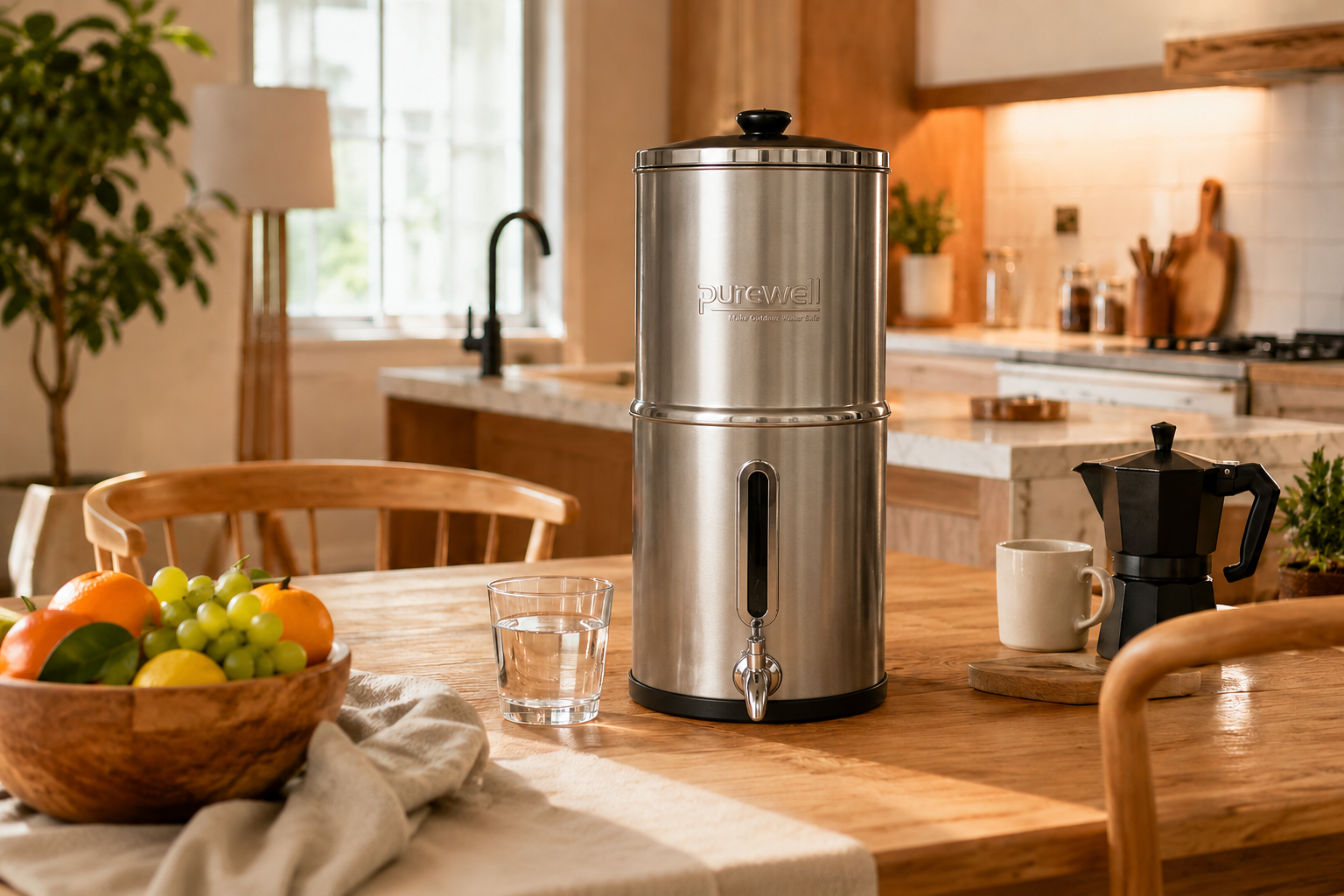
The holiday season changes the rhythm of everyday life.
Families spend more time preparing meals, welcoming guests, traveling, attending celebrations, and moving between warm indoor spaces and cold outdoor environments. With so much attention focused on food, gifts, and gatherings, drinking water can easily become an afterthought.
Hydration still matters in winter.
Cold weather does not stop the body from losing water. Water is continually lost through breathing, urination, physical activity, and sweating—even when sweat is less noticeable beneath winter clothing. Research on cold environments also indicates that thirst can feel less noticeable during cold exposure, which may make it easier to forget to drink.
A practical winter routine does not require forcing everyone to meet the same daily target. It starts with keeping appropriate drinking water visible, accessible, and easy to include in family routines.
This guide explains why winter hydration deserves attention, how family needs may differ, what “clean water” should mean in a responsible filtration discussion, and how a countertop gravity water filter can support—not replace—a thoughtful household water routine.
Table of Contents
-
Why hydration can be overlooked in winter
-
How much water does a family need?
-
Common signs of dehydration
-
Winter hydration for children and older adults
-
Does tap-water quality change during winter?
-
How filtered water fits a holiday routine
-
Practical winter hydration habits
-
Preparing water for holiday guests
-
Winter travel, RVs, and cabins
-
What a gravity water filter can and cannot do
-
Summary
-
Frequently asked questions
Why Hydration Can Be Overlooked in Winter
Most people associate dehydration with summer heat, intense exercise, and visible sweating. Winter can feel less demanding because the air is colder and thirst may not be as noticeable.
However, the body continues to lose water throughout the day.
NIH explains that water is lost when people sweat, use the bathroom, and even breathe out. Those losses must be replaced through fluids and water-containing foods. (NIH News in Health)
Cold Weather May Make Thirst Less Noticeable
Cold exposure can reduce the sensation of thirst, particularly during outdoor activity. At the same time, water loss may continue through respiration, sweating under insulated clothing, and increased urination in cold conditions.
This does not mean every person becomes dehydrated during winter. It means thirst alone may not always be the best reminder to drink during a busy or active day.
Holiday Routines Can Disrupt Normal Habits
Christmas and New Year celebrations often involve:
-
Longer meals
-
More time away from home
-
Additional coffee, tea, or seasonal beverages
-
Busy cooking schedules
-
Road trips and flights
-
Outdoor activities
-
Changes in children’s normal school routines
Water may still be available, but people may simply forget to reach for it.
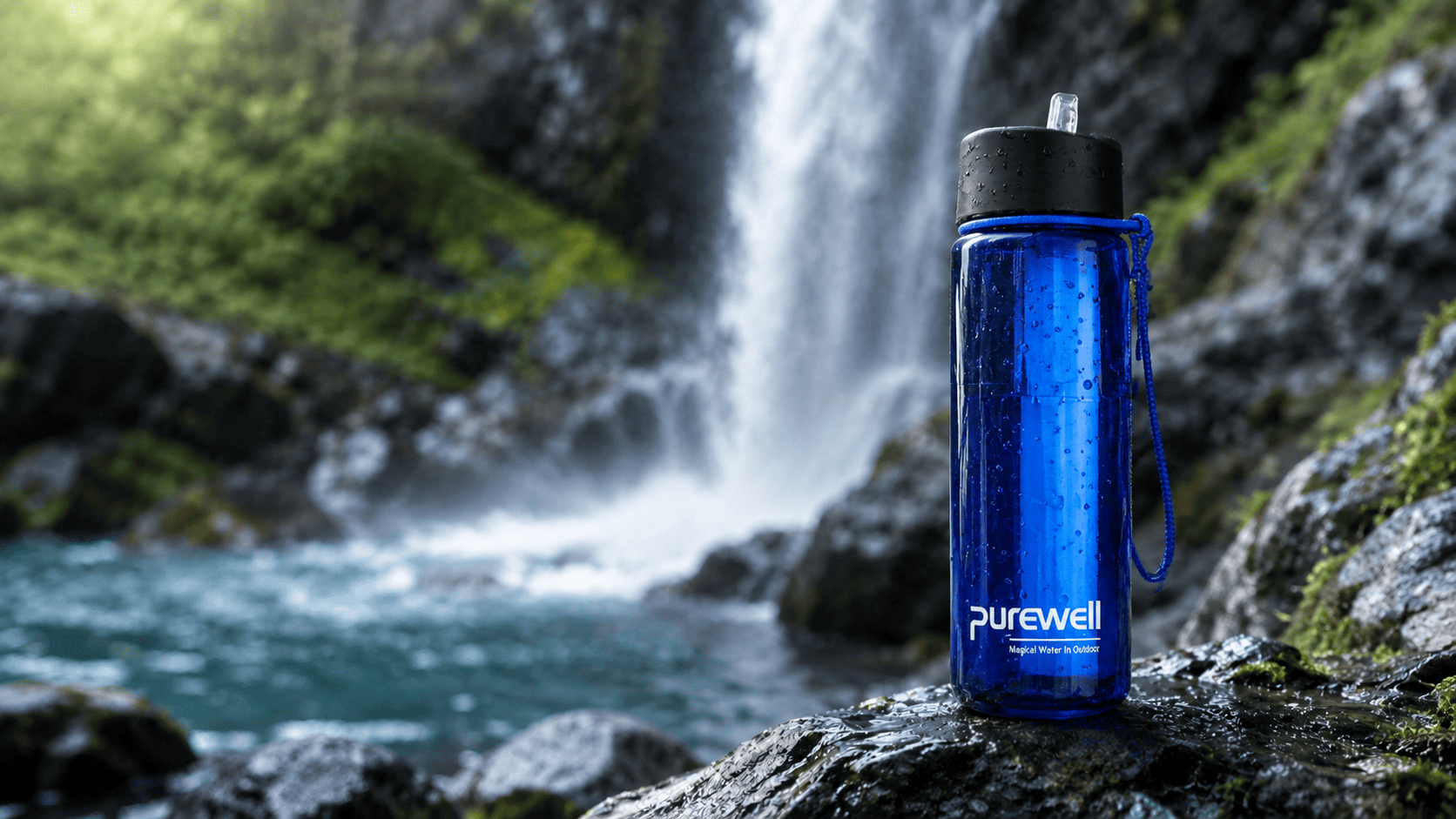
A visible pitcher, reusable bottle, or countertop dispenser can make drinking water easier to remember without turning hydration into another complicated holiday task.
How Much Water Does Your Family Need?
There is no single daily water amount that is appropriate for every person.
Fluid needs vary according to factors including:
-
Age
-
Body size
-
Activity
-
Environment
-
Diet
-
Pregnancy or breastfeeding
-
Medication use
-
Health conditions
NIH notes that daily fluid needs depend on several personal and environmental factors. Water and other low-calorie drinks can contribute to hydration, while some fluid also comes from food. (NIH News in Health)
For that reason, this article does not recommend one fixed number of glasses for every family member.
Anyone who has been advised to limit fluids because of a medical condition should follow the plan provided by their healthcare professional rather than general hydration advice.
Water Does Not Have to Be Ice Cold
During winter, some people may prefer:
-
Room-temperature water
-
Warm water
-
Unsweetened tea
-
Broth
-
Water with lemon or fruit
-
Sparkling water without added sugar
Plain coffee, tea, and other low-calorie beverages may contribute to total fluid intake, although water remains a straightforward everyday option. (NIH News in Health)
CDC also suggests adding lemon, lime, cucumber, or berries when people want more flavor without relying on sugary drinks.
Common Signs That Someone May Need More Fluids
Mild dehydration can present differently between individuals.
NIH identifies possible signs such as:
-
Strong thirst
-
Headache
-
Dry mouth
-
Dry-feeling skin
-
Darker urine
These signs do not prove that dehydration is the only cause, but they can be useful reminders to consider recent fluid intake. (NIH News in Health)
CDC notes that getting enough water helps prevent dehydration, which can affect normal physical and mental functioning.
Severe, persistent, or unexplained symptoms should not be managed solely by drinking more water. Seek appropriate medical advice when symptoms are concerning.
Winter Hydration for Children and Older Adults
Family members may not all respond to thirst in the same way.
Helping Children Remember to Drink
Children may become absorbed in games, travel, holiday activities, or time with relatives. Instead of repeatedly telling them to “drink more,” make water part of predictable moments:
-
With breakfast
-
Before leaving the house
-
After outdoor play
-
With lunch and dinner
-
Before a long car journey
-
When returning home
CDC data show that plain-water consumption differs substantially by age and other factors, so routines that improve access can be helpful.
Parents should use age-appropriate guidance for infants and young children. Water should not replace breast milk, formula, or other nutrition required at specific developmental stages.
Supporting Older Family Members
Older adults consume less plain water on average than some younger groups, according to CDC water-consumption data.
During a gathering, simple support may include:
-
Keeping a lightweight glass nearby
-
Offering water regularly without pressure
-
Providing room-temperature or warm options
-
Making the dispenser easy to reach
-
Checking whether medication instructions affect fluid intake
Do not encourage someone to exceed a clinician-directed fluid limit.
Does Tap-Water Quality Automatically Change in Winter?
The previous version of this article suggested that winter tap water generally contains more sediment, stronger chlorine, and more weather-related impurities.
That claim is too broad.
Drinking-water conditions vary by utility, source, treatment process, local infrastructure, household plumbing, maintenance work, and current advisories. Winter does not create one universal water-quality pattern across every community.
Review Your Local Water Report
Community water systems in the United States provide an annual Consumer Confidence Report, also known as a drinking-water quality report. It includes information about the local water source, testing, detected substances, and compliance with applicable requirements. (US EPA)
Your report is more useful than a general seasonal assumption.
It can help you understand:
-
Where the water comes from
-
Which substances were detected
-
Whether applicable standards were met
-
Which filtration claims may be relevant
-
Whom to contact with local questions
Respond to Sudden Changes Appropriately
A sudden change in color, odor, taste, or clarity can have several possible causes, including utility work or household plumbing.
Do not assume a countertop filter is the complete solution. Check local notices and contact the water utility when a change is unusual, persistent, or affects multiple faucets.
Taste, odor, and appearance alone cannot determine whether water is safe. CDC explains that harmful germs and chemicals may not produce a noticeable sensory change, while some harmless substances may affect taste or smell.
How Filtered Water Can Fit a Holiday Routine
A water filter does not hydrate anyone by itself. Its role is to make water treated according to the documented capabilities of that filter available for household use.
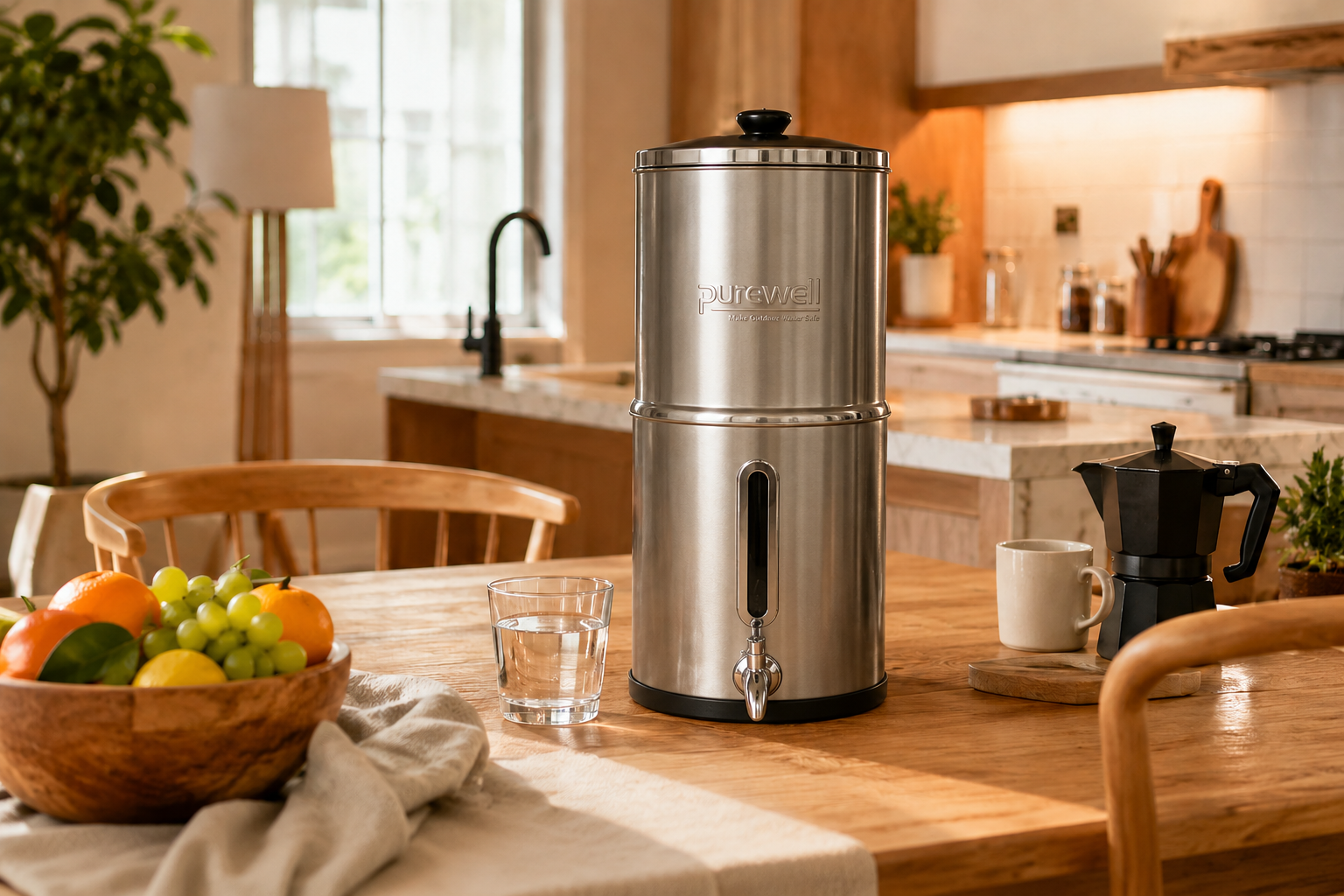
For some families, a countertop gravity system can make access more convenient because water can be dispensed without repeatedly opening the refrigerator or purchasing individual bottles.
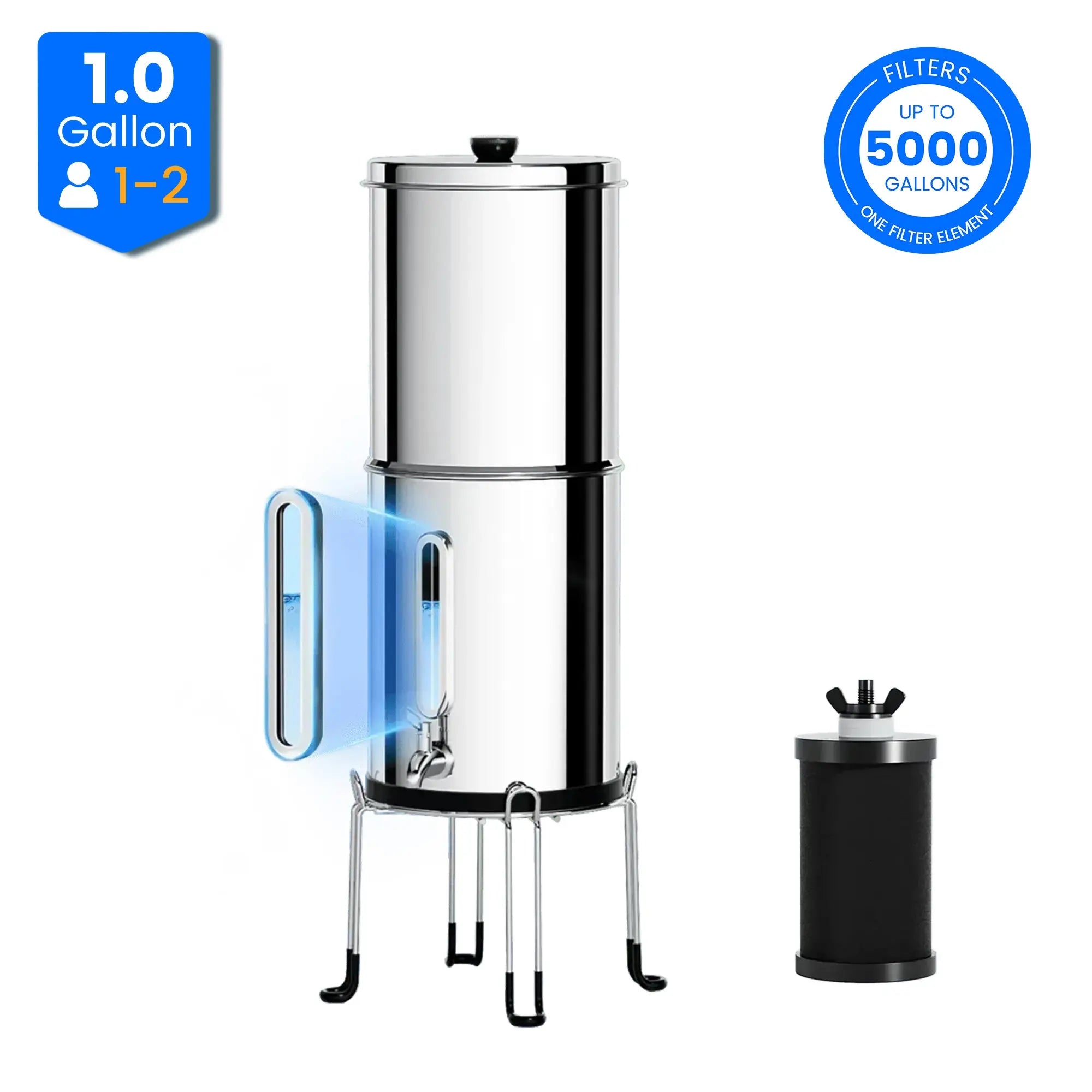
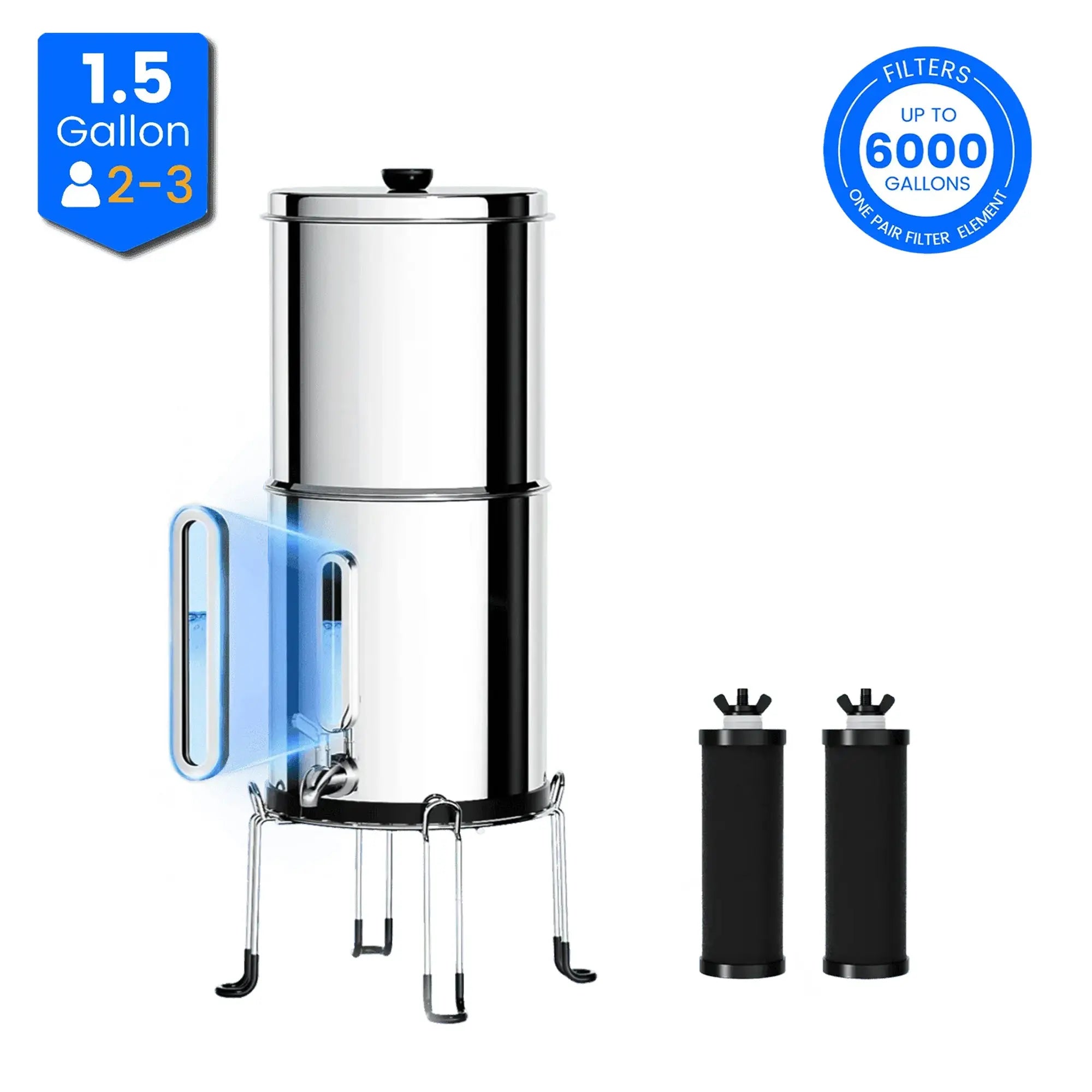
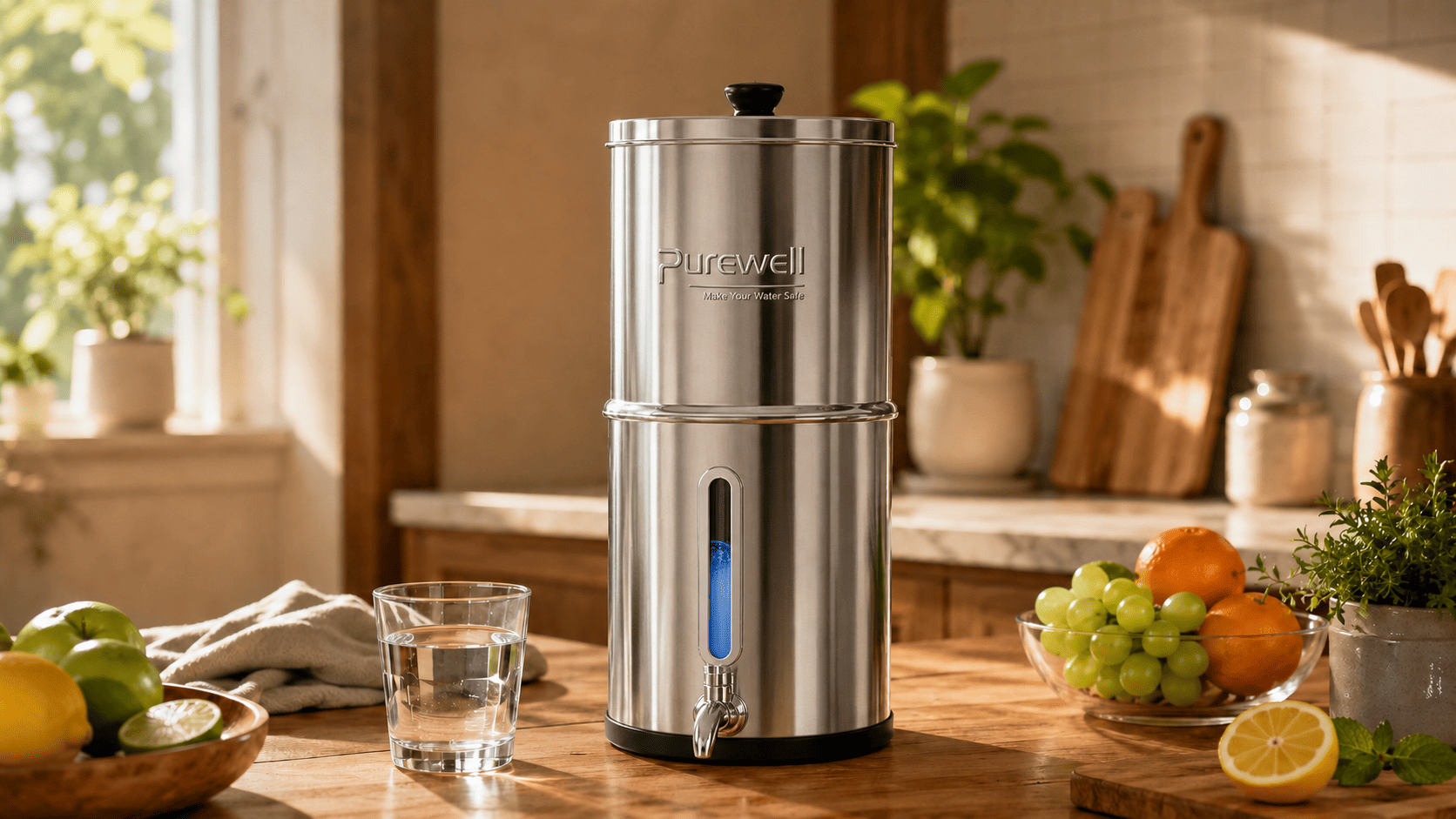
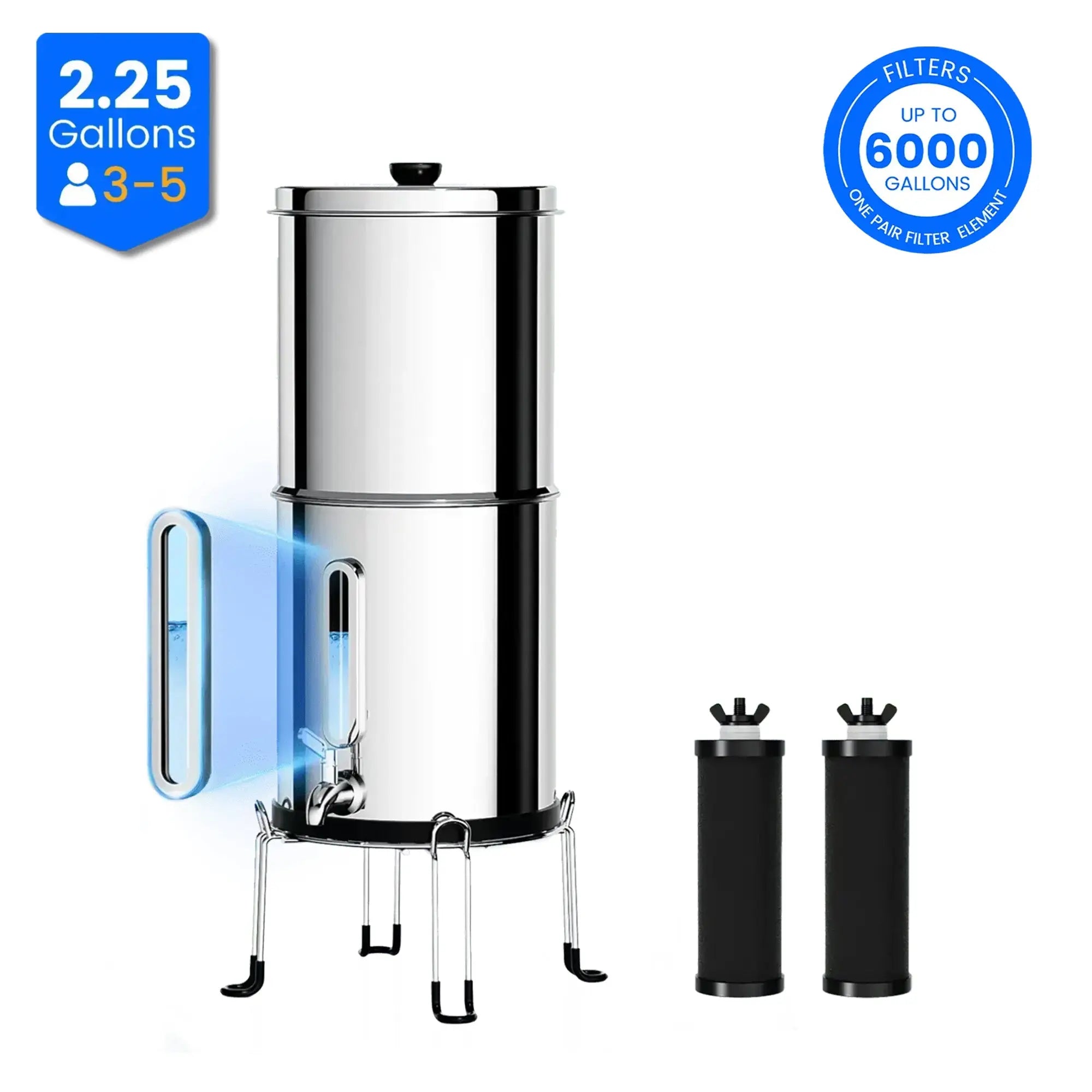
Purewell countertop gravity systems are designed to move water through compatible filter elements using gravity and do not require electricity during normal filtration. Product construction, capacity, filter configuration, and performance documentation vary by model. (Purewell)
A gravity system may be incorporated into:
-
Morning water-bottle preparation
-
Family meals
-
Coffee and tea preparation
-
Holiday cooking
-
Guest service
-
Pet-water routines
-
RV or cabin use
-
Emergency planning
The benefit is primarily convenience and accessibility—not a guaranteed change in how much every person drinks.
Practical Winter Hydration Habits for Families
The most useful habits are usually the simplest.
1. Begin the Day With Water Available
Fill the gravity system or a clean pitcher early in the day rather than waiting until someone asks for water.
During a holiday gathering, preparing water before cooking begins also keeps the filter from competing for counter space during meal preparation.
2. Place Water on the Table
Serving water with meals makes it a normal part of the gathering rather than something guests must request.
Use a clean glass pitcher when the filtration system is located away from the dining area.
3. Prepare Reusable Bottles Before Travel
Fill bottles before:
-
Shopping trips
-
Outdoor activities
-
School-break outings
-
Long drives
-
Flights
-
Visiting relatives
Clean reusable bottles regularly and allow them to dry between uses.
4. Offer Both Cool and Room-Temperature Water
Some people find very cold drinks less appealing in winter.
Providing room-temperature water, warm water, or unsweetened tea can make it easier for family members to choose an option that fits the weather.
5. Pair Water With Existing Habits
Instead of relying on memory, connect drinking water with regular activities:
-
After brushing teeth
-
With medication, when permitted
-
Before coffee
-
At every meal
-
After walking the dog
-
When returning indoors
-
Before beginning a road trip
6. Avoid Treating Hydration as a Competition
More water is not always better.
Encourage regular access without pressuring family members to consume excessive amounts or meet arbitrary social-media targets.
Preparing Filtered Water for Holiday Guests
More guests usually mean more water used for cooking, beverages, ice, and reusable bottles.
Check the Filter Before the Gathering
Review:
-
Filter installation date
-
Rated capacity
-
Any calendar-based replacement guidance
-
Current flow rate
-
Filter condition
-
Spigot operation
-
Washers and seals
Filters should be maintained and replaced according to the instructions for the exact model. Different filtration media have different cleaning and replacement requirements.
Clean the Chambers
Clean the upper and lower chambers according to the manufacturer’s directions.
Avoid using unapproved cleaning products on filter elements. Cleaning the stainless steel chambers is not the same as cleaning or regenerating the internal filtration media.
Prepare Water in Advance
When expecting several guests:
-
Fill the system early.
-
Allow time for gravity filtration.
-
Store an additional amount in a clean, covered pitcher.
-
Check the lower chamber before adding another complete batch.
-
Keep the lid closed between refills.
A built-in water-level window, available on selected Purewell models, can make it easier to see how much water remains before the upper chamber is refilled. Features vary by model. (Purewell)
Winter Travel, RVs, and Cabins
A household’s water routine may change significantly when Christmas is spent away from home.
Before Traveling
-
Empty the gravity system before moving it.
-
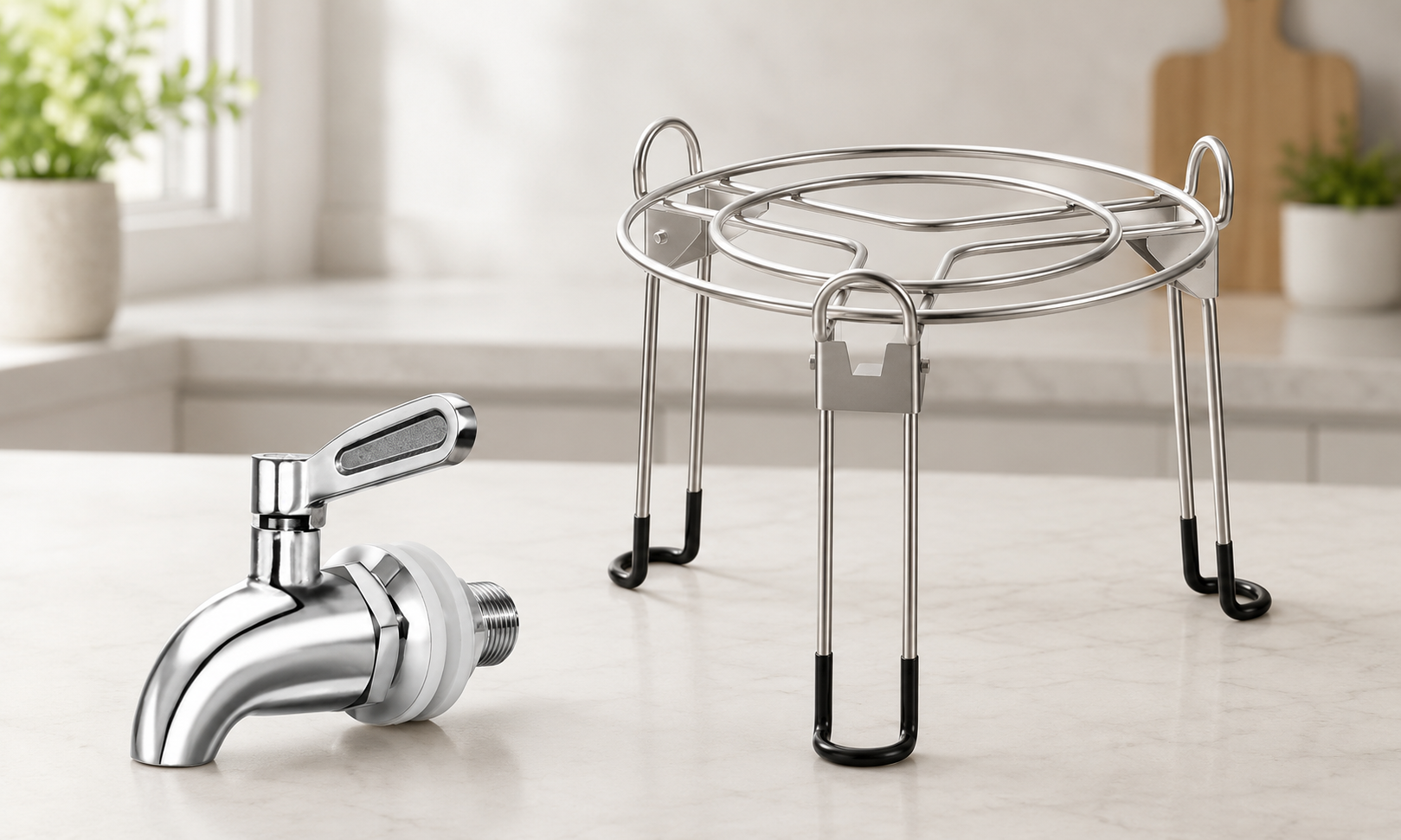
Secure the chambers, lid, spigot, and stand.
-
Follow the filter-specific storage instructions.
-
Protect wet filter elements from freezing.
-
Pack compatible replacement filters.
-
Check the water source at the destination.
At an RV Park or Cabin
Do not assume all campground, cabin, or well-water sources have the same quality.
The filter configuration should be selected according to the source water and the substances of concern. CDC advises testing or understanding the water and choosing a treatment product designed for the specific germs or chemicals involved.
A household gravity filter should not automatically be treated as a complete solution for every lake, river, private well, or emergency source.
What a Gravity Water Filter Can—and Cannot—Do
“Clean water” should not be used as an undefined promise.
Different filters may be designed to address different water-quality characteristics. Performance can depend on:
-
Filter material
-
Pore size
-
Adsorption media
-
Source-water conditions
-
Tested contaminant
-
Water volume
-
Flow conditions
-
Maintenance
-
Filter age
CDC emphasizes that water filters perform different functions. Some primarily improve taste, while others are designed for specified chemicals or germs. No filter should be assumed to address every possible hazard.
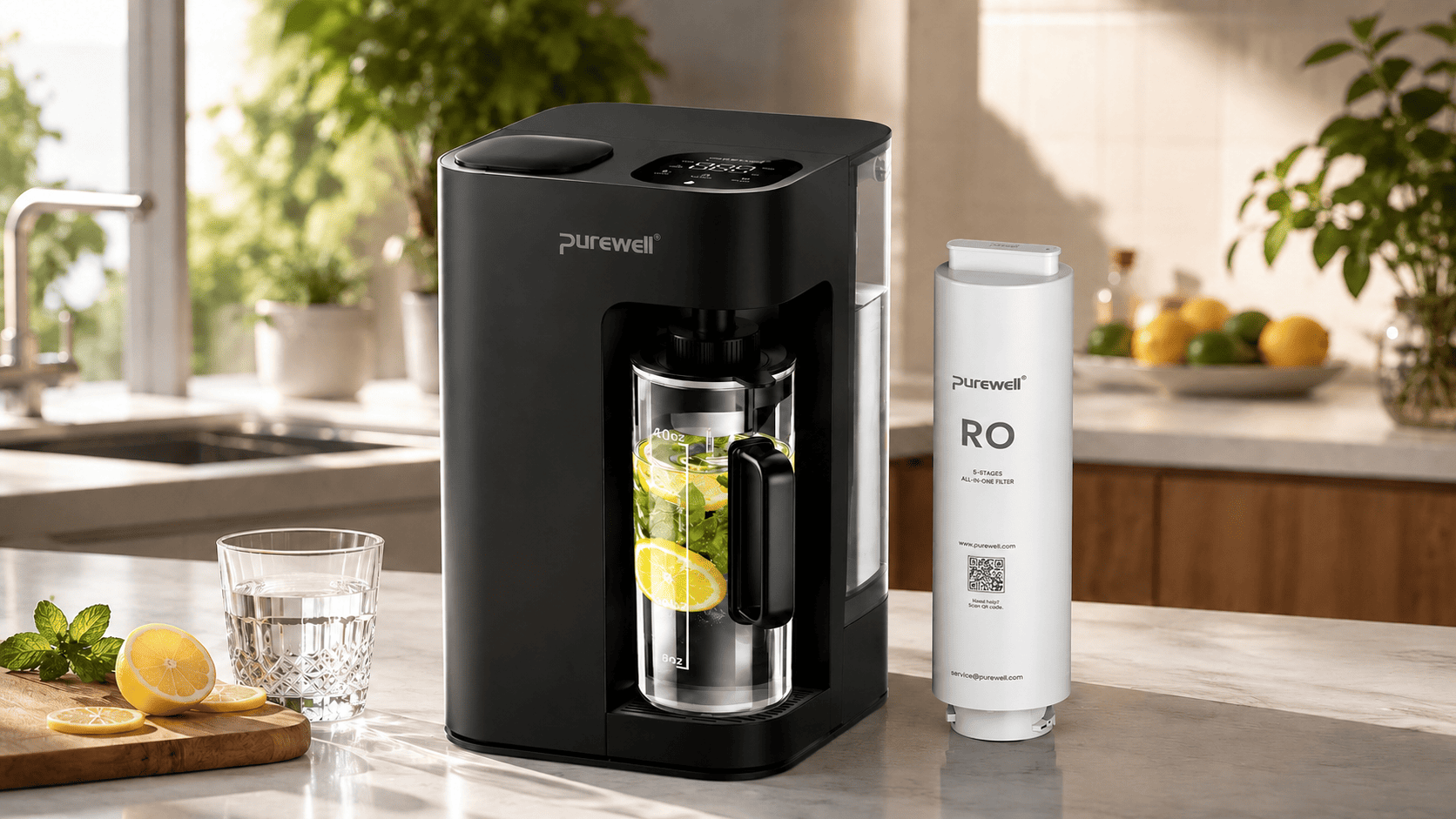
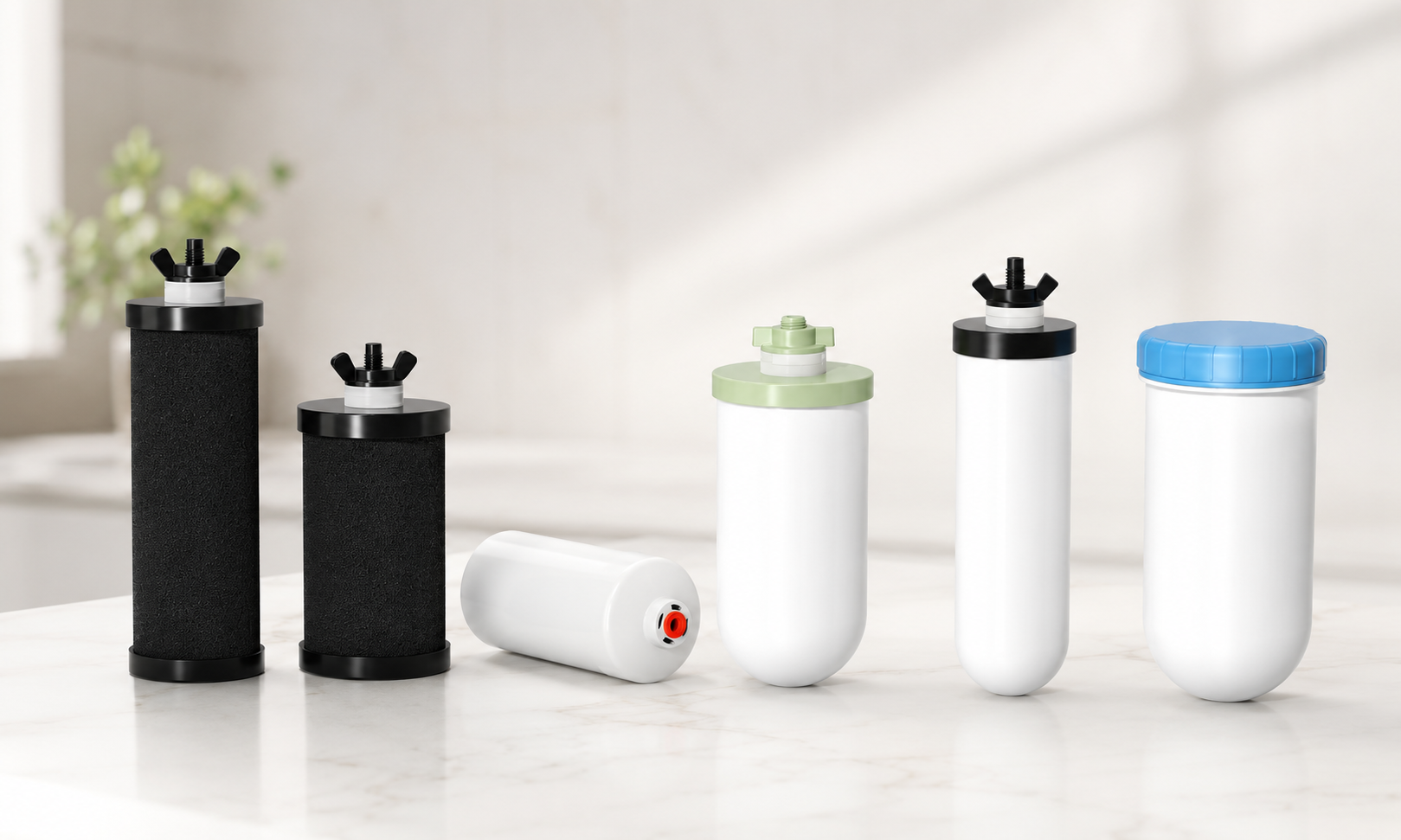
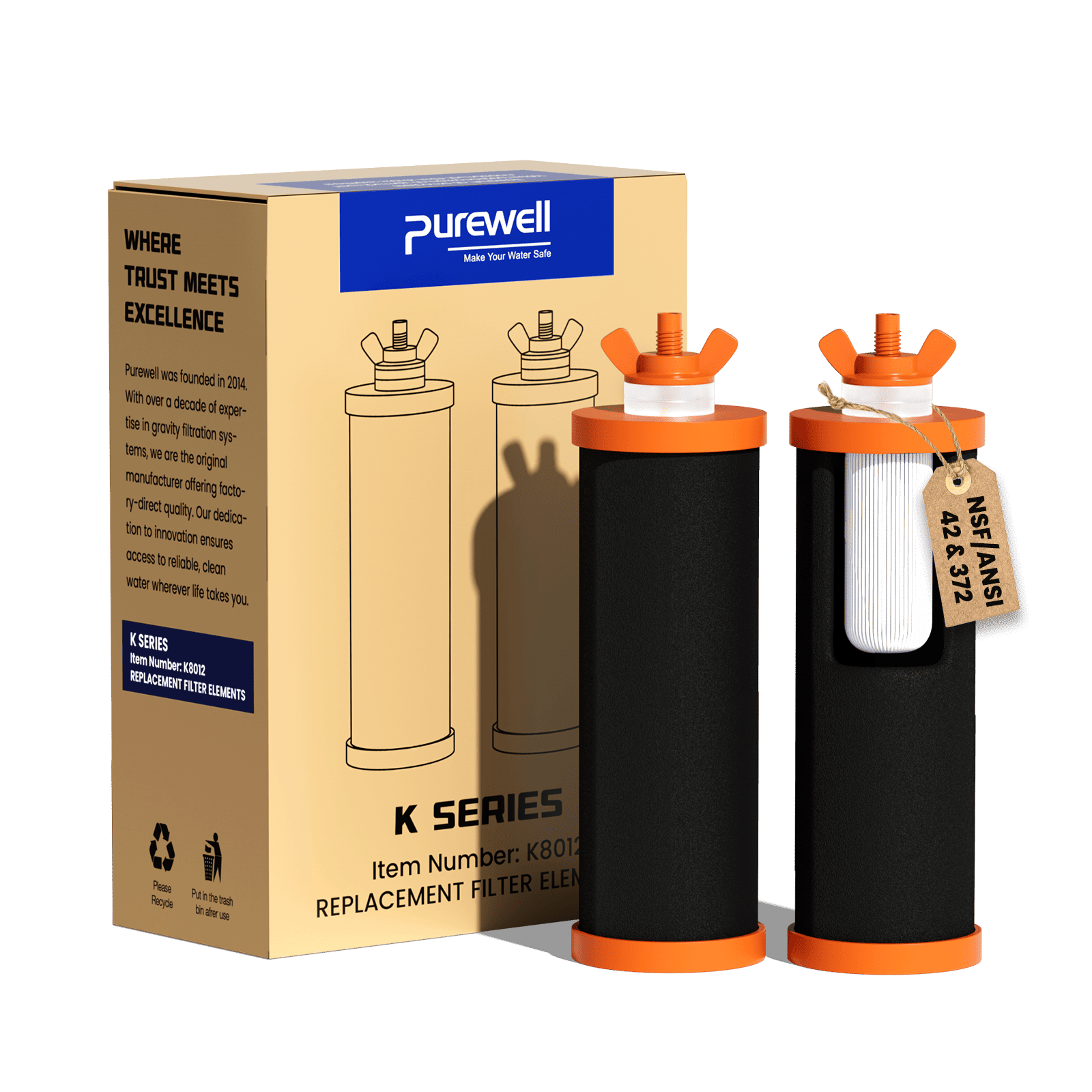
Purewell provides certificates and performance reports for applicable products and components. Coverage varies by model, configuration, document, and tested claim, so customers should review the file corresponding to the exact system or replacement filter they are considering. (Purewell)
A filter does not replace:
-
Local boil-water instructions
-
Private-well testing
-
Medical guidance
-
Emergency stored water
-
Treatment for hazards outside the filter’s documented scope
-
Regular cleaning and replacement
Summary: Make Water Easier to Remember This Winter
Winter hydration does not require rigid rules or one universal daily target.
A more practical family approach is to:
-
Keep water visible and accessible
-
Offer it with meals
-
Prepare bottles before travel
-
Provide room-temperature and warm options
-
Use reminders during busy holiday days
-
Maintain filtration equipment correctly
-
Match the filter to the source water
-
Follow individual medical guidance
Cold weather may make thirst less noticeable, but the body continues to lose water through normal daily processes. A consistent routine can help families remember water without adding stress to the holiday season.
A gravity water filter can support that routine by making treated water conveniently available. Its value, however, depends on selecting the right filter, understanding its documented performance, and maintaining it according to the manufacturer’s instructions.
Frequently Asked Questions
Is it easier to become dehydrated during winter?
Winter does not automatically cause dehydration, but cold exposure can make thirst less noticeable while the body continues to lose water through breathing, urination, sweating, and activity. Regular access to fluids remains important.
How much water should I drink in winter?
There is no single amount for everyone. Needs vary with age, size, activity, environment, diet, and health status. Water, other appropriate beverages, and water-containing foods can all contribute to total intake. (NIH News in Health)
Do coffee and tea count toward hydration?
Plain coffee and tea can contribute fluid, although drinks with large amounts of sugar or alcohol should not replace most everyday water intake. NIH identifies water and other low-calorie beverages as practical hydration options. (NIH News in Health)
Is winter tap water dirtier than summer tap water?
Not necessarily. Water-quality conditions vary by location, utility, treatment process, infrastructure, and household plumbing. Review your local Consumer Confidence Report and current utility notices rather than assuming a universal seasonal change. (US EPA)
Does filtered water guarantee better hydration?
No. A filter may make water more convenient or address documented water-quality characteristics, but it cannot guarantee that someone will drink more or achieve a specific health outcome.
Can a gravity filter remove every contaminant?
No. Filtration capabilities vary by product and media. Select a filter based on the water source and the exact germs, chemicals, or other substances of concern.
Should I replace the filters before a holiday gathering?
Replace them when they reach the stated gallon capacity, calendar limit, or another manufacturer-defined replacement condition. A holiday gathering alone does not mean a filter must be replaced, but it is a useful time to inspect the system.
Can I pour hot water into a gravity filter?
Do not pour hot water into the upper chamber unless the manufacturer specifically states that the filter is designed for it. Filter water at the approved temperature, then heat it separately.
Keep Water Ready for Winter Routines
Prepare your kitchen, RV, or holiday gathering space with a water filtration system that fits your household size, source water, and daily routine.
Explore Purewell gravity systems, compare compatible replacement filters, and review the applicable test documents before choosing a configuration.
Editorial Disclaimer
This article provides general educational information and is not medical advice. Individual fluid needs vary. People with kidney, heart, endocrine, or other conditions affecting fluid balance should follow guidance from a qualified healthcare professional. Filtration performance varies by product, filter configuration, source water, maintenance, and tested claim.