
How to Choose a Berkey Alternative: A Practical Gravity Water Filter Guide
Berkey has become one of the most recognizable names in countertop gravity water filtration. Its stainless steel systems, replaceable filter elements, and electricity-free operation have made the brand popular among families, campers, RV owners, and emergency-preparedness users.
However, Berkey is no longer the only option. Buyers searching for a Berkey alternative can now choose from several gravity-fed systems with different prices, filter technologies, capacities, certifications, and convenience features.
The challenge is determining which differences actually matter.
A lower price does not automatically make one filter a better value. A longer list of contaminant claims does not necessarily mean those claims apply to every filter configuration. Even two systems with the same 2.25-gallon capacity may provide noticeably different experiences when it comes to monitoring the water level, replacing filters, priming the elements, and finding compatible accessories.
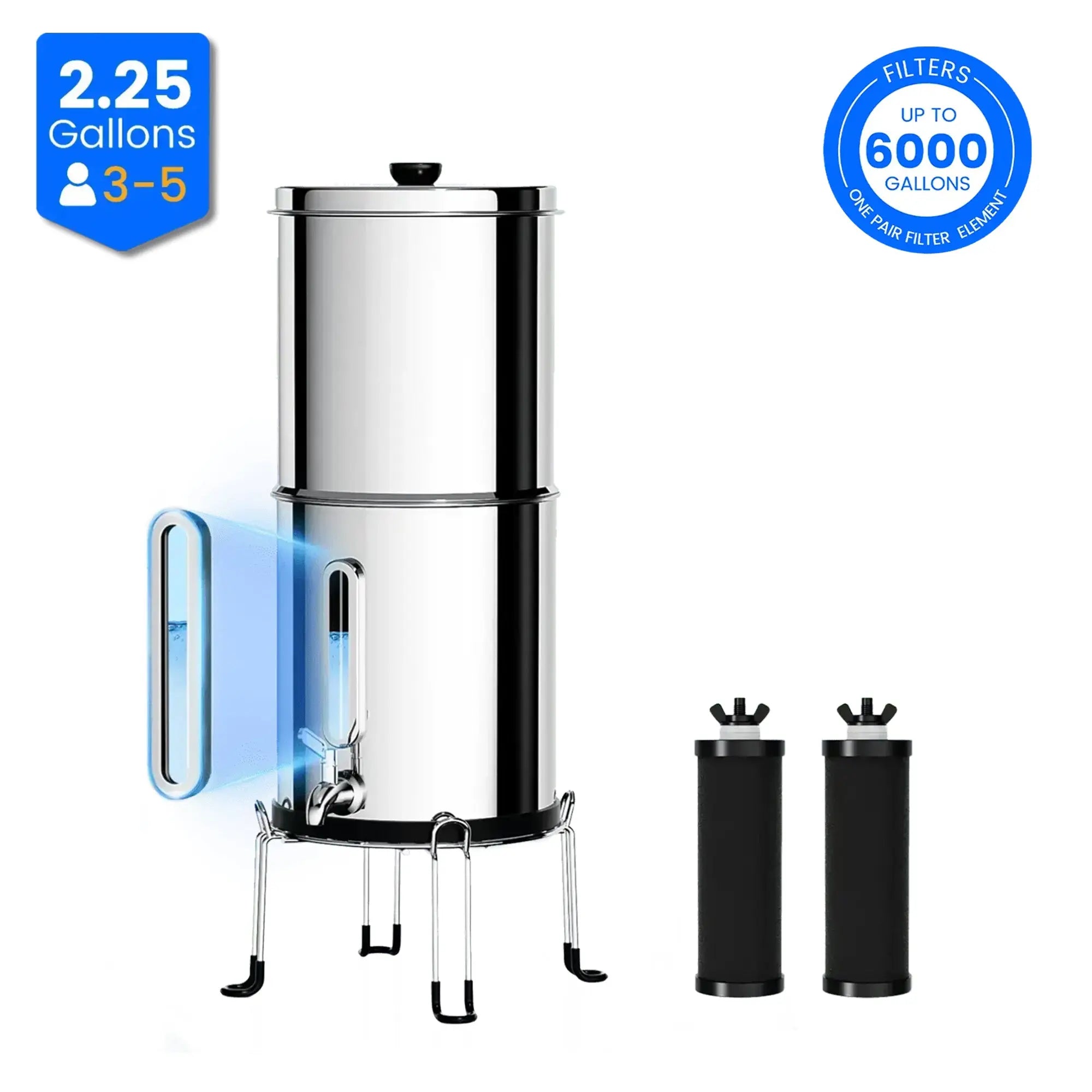
This guide explains how to evaluate a gravity water filter objectively. It also compares the Purewell K Series 2.25 Gallon system with the similarly sized Big Berkey so that you can decide which type of system better fits your household, RV, camping setup, or emergency plan.
Price and availability note: Product prices and inventory can change. At the time of this review, the Purewell K Series 2.25 Gallon system was listed at $189.99, while authorized Berkey retailers listed the Big Berkey at $367. Berkey’s manufacturer page also described the Big Berkey as having limited supply.
Table of Contents
- What qualifies as a good Berkey alternative?
- Start with your water source
- Understand what gravity filtration can do
- Check certifications and test reports
- Compare capacity and flow rate
- Calculate the long-term ownership cost
- Evaluate everyday usability
- Purewell vs. Big Berkey comparison
- Choosing a filter for home, camping, RVs, and emergencies
- Final buying checklist
- Frequently asked questions
What Qualifies as a Good Berkey Alternative?
A useful alternative should offer more than a similar-looking stainless steel container.
A gravity water filter should be evaluated as a complete system consisting of:
- The upper and lower water chambers
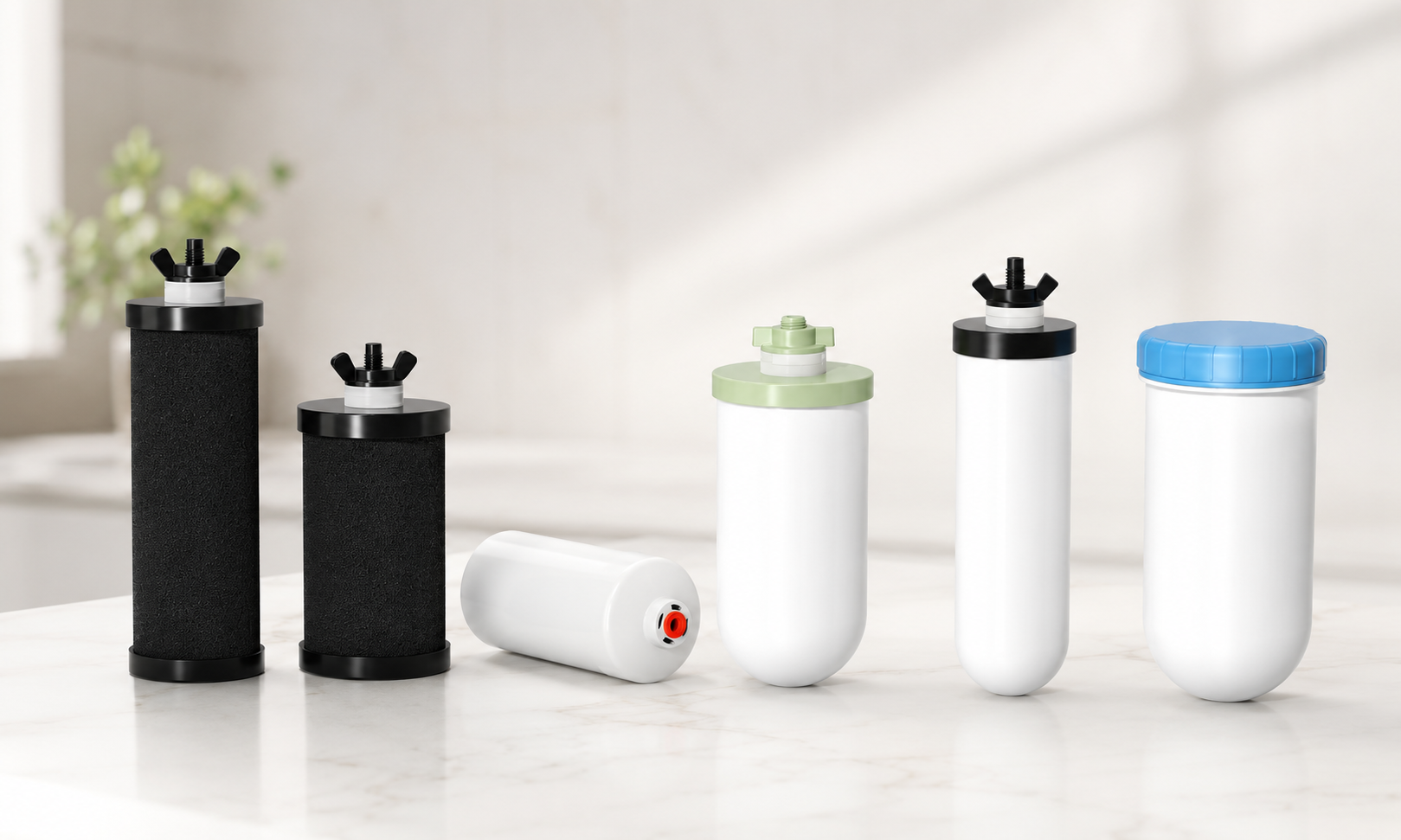
- The installed filter elements
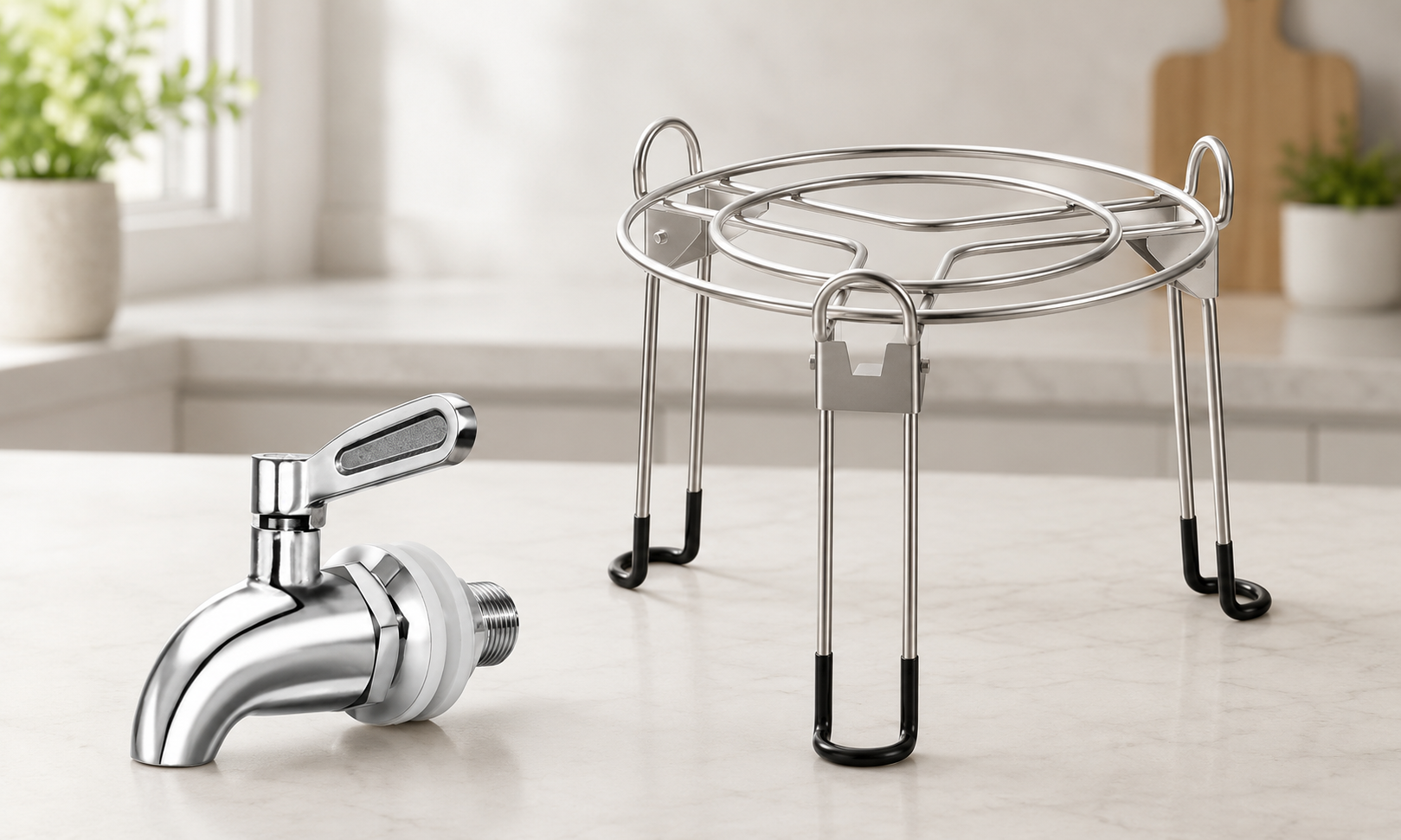
- The spigot, washers, seals, and plugs
- The available replacement filters
- The manufacturer’s installation and maintenance guidance
- The certification or laboratory documentation supporting its claims
The best Berkey alternative for one household may not be the best option for another.
For example, a family using treated municipal tap water may prioritize chlorine reduction, taste, capacity, and easy refilling. An RV owner may place more importance on compact storage and electricity-free operation. A household using private well water should first understand what is present in the water before choosing a treatment device.
The CDC advises consumers to identify the germs or chemicals they are concerned about and select a filter designed for those specific substances. Different filters perform different functions, and no single filter should be assumed to remove every possible contaminant.
A good comparison should therefore focus on six questions:
- What water source will you use?
- Which substances are you trying to reduce?
- Is the supporting evidence available and relevant?
- How much filtered water does your household need?
- How much maintenance are you comfortable performing?
- What will the system and replacement filters cost over time?
Start With Your Water Source, Not the Brand Name
Before comparing Purewell, Berkey, or any other gravity water filter, identify the type of water entering the system.
Municipal Tap Water
Municipal water in the United States is treated by public utilities before it reaches the home. Some households still use countertop filtration to address taste, odor, residual disinfectants, sediment, or specific contaminants identified in their local water report.
Start by reviewing your utility’s Consumer Confidence Report. Then choose a filter with documentation matching the substance you want to reduce.
For example, NSF/ANSI 42 commonly applies to aesthetic effects such as chlorine, taste, and odor. NSF/ANSI 53 applies to specified contaminants associated with health effects. These standard numbers are not rankings; a higher number does not mean a universally better filter.
Private Well Water
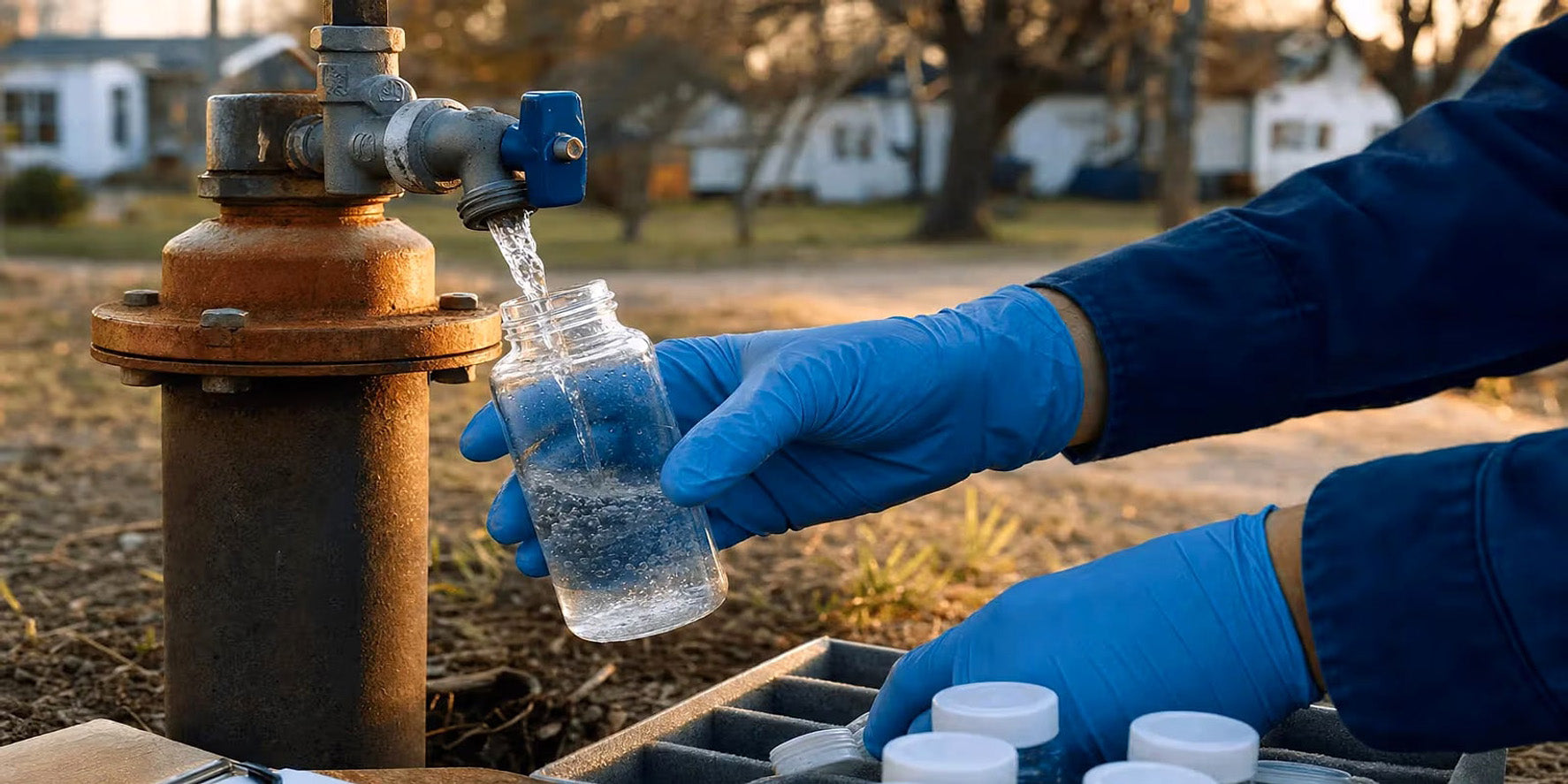
Private well owners are generally responsible for monitoring the safety of their own water. EPA notes that private domestic wells are not regulated by the federal government under the Safe Drinking Water Act in the same way as public water systems. Testing through an appropriate laboratory should come before choosing a treatment product.
A gravity filter should not be selected solely because its product page mentions “well water.” The filter configuration must address the actual results found in the well-water test.
Lakes, Rivers, and Streams
Untreated surface water presents a different level of risk. Clear-looking water can still contain bacteria, parasites, viruses, or chemical contamination.
The CDC recommends boiling as the best way to kill germs when water safety is uncertain. When boiling is not practical, its next recommended option is to filter the water and then disinfect the filtered water.
This means a countertop gravity system should not automatically replace an established outdoor water-treatment plan. Always review the exact microbial claims of the installed filter and follow public-health guidance for untreated water.
Emergency Water
A gravity filter can be useful during a power outage because it does not depend on electricity or household water pressure. However, an emergency can introduce hazards that ordinary filtration cannot solve.
CDC guidance warns that water contaminated with fuel, toxic chemicals, or radioactive material cannot be made safe simply by boiling or disinfecting it. A different water source may be required.
For emergency preparation, a gravity system should supplement—not replace—stored water, clean containers, disinfection supplies, and a clear treatment plan.

Understand How a Gravity Water Filter Works
A countertop gravity filter typically uses two chambers.
Water is poured into the upper chamber. Gravity draws it through one or more filter elements. The filtered water collects in the lower chamber and is dispensed through a spigot.
This design offers several practical advantages:
- No permanent plumbing installation
- No electricity during normal operation
- No connection to a pressurized water line
- Simple countertop placement
- Potential use in homes, cabins, RVs, and temporary locations
However, gravity also means that flow rate changes as the water level drops. Manufacturers commonly publish maximum flow rates measured with the upper chamber filled. Actual performance may be slower as the water level declines or as the filters collect sediment.
Purewell states that its K Series 2.25 Gallon system can provide up to four gallons per hour with two filters installed. Berkey lists up to 3.5 gallons per hour for the Big Berkey with two Black Berkey elements and up to seven gallons per hour when four elements are installed. Both companies note that real flow can vary with conditions.
When comparing flow rates, check:
- How many filters were installed during testing
- Whether the upper chamber was kept full
- Whether the figure is a maximum or typical rate
- The quality and temperature of the source water
- Whether the filters were new, cleaned, or partially used
A headline flow-rate number is less useful without those conditions.
Check Certifications and Test Reports Carefully
Certification language is one of the most misunderstood parts of water-filter shopping.
NSF/ANSI 42
NSF/ANSI 42 covers drinking-water treatment products intended to improve specified aesthetic characteristics. Depending on the exact certification scope, this may include chlorine, taste, odor, or particulate reduction.
It does not automatically mean that the filter reduces lead, bacteria, PFAS, fluoride, or every other substance mentioned in an advertisement.
NSF/ANSI 53
NSF/ANSI 53 covers certified reduction claims for contaminants with recognized health effects. A buyer should still check which specific contaminant claims appear in the official listing.
NSF/ANSI/CAN 372
NSF/ANSI/CAN 372 evaluates lead content in components that contact drinking water. It does not by itself certify that a filter removes lead already present in the source water.
Certification vs. Laboratory Testing
A certification, a component certification, and a laboratory performance report are not the same thing.
Before relying on a document, confirm:
- The manufacturer named in the document
- The model or component tested
- The filter configuration
- The contaminant or material requirement evaluated
- The tested water volume
- The date and laboratory
- Whether the claim applies to the complete system or only one component
Purewell provides a public document center containing NSF-related certificates, material evaluations, and third-party performance reports. The page also explains that coverage varies by product, component, model, and test condition.
Berkey publishes independent laboratory testing and directs customers to purchase through authorized dealers to reduce the risk of receiving counterfeit or incompatible filter elements.
The responsible approach is not to assume that one logo proves everything. Open the supporting file and read the scope.
Compare Capacity and Flow With Your Daily Water Use
System capacity describes how much water the lower chamber can hold, not necessarily how much water the system can produce in one day.
A household may use filtered water for:
- Drinking
- Coffee and tea
- Cooking
- Pet water
- Filling reusable bottles
- RV travel
- Emergency storage rotation
A 2.25-gallon system can be suitable for many small and medium households, but the practical experience depends on how frequently the upper chamber is refilled.
Both the Purewell K Series 2.25 Gallon and the Big Berkey hold approximately 2.25 gallons. Purewell recommends its model for approximately three to five people, while Berkey describes the Big Berkey as suitable for approximately one to four people. These recommendations are manufacturer guidance rather than fixed daily-use limits.
For households with high consumption, consider:
- Refilling before the lower chamber becomes empty
- Keeping the upper chamber sufficiently full
- Choosing a larger-capacity system
- Using additional supported filter elements when the design allows
- Keeping filtered water in a separate clean container during high-demand periods
Calculate the Long-Term Ownership Cost
The purchase price is only one part of the cost.
A more useful comparison includes:
- Initial system price
- Number of filters included
- Replacement-filter price
- Rated filter capacity
- Optional specialty filters
- Accessories such as stands or sight-glass spigots
- Shipping and availability
As of July 21, 2026, Purewell listed the K Series 2.25 Gallon system at $189.99. Authorized Berkey retailers listed the Big Berkey at $367. That represents an upfront difference of approximately $177 before optional accessories or specialty filters.
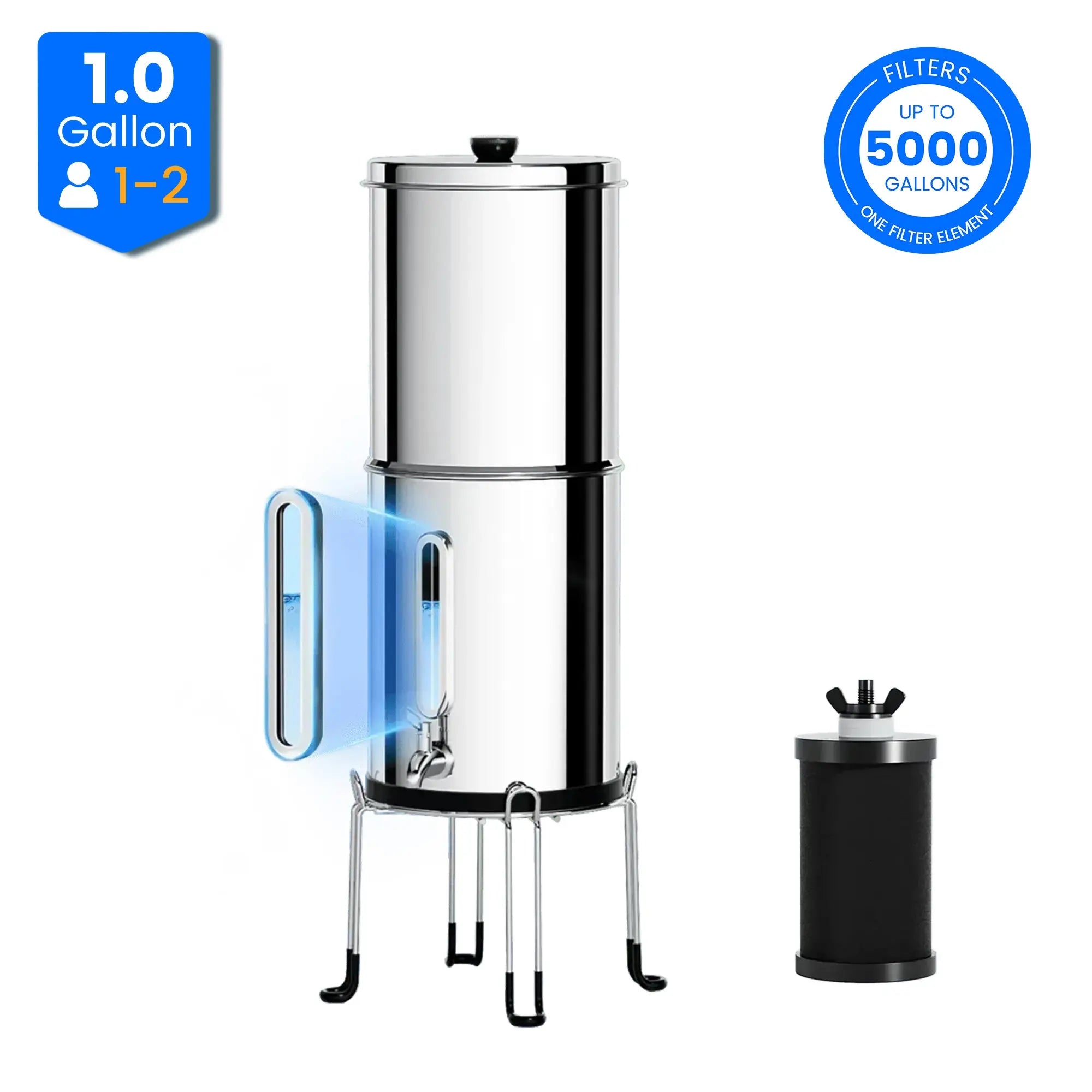
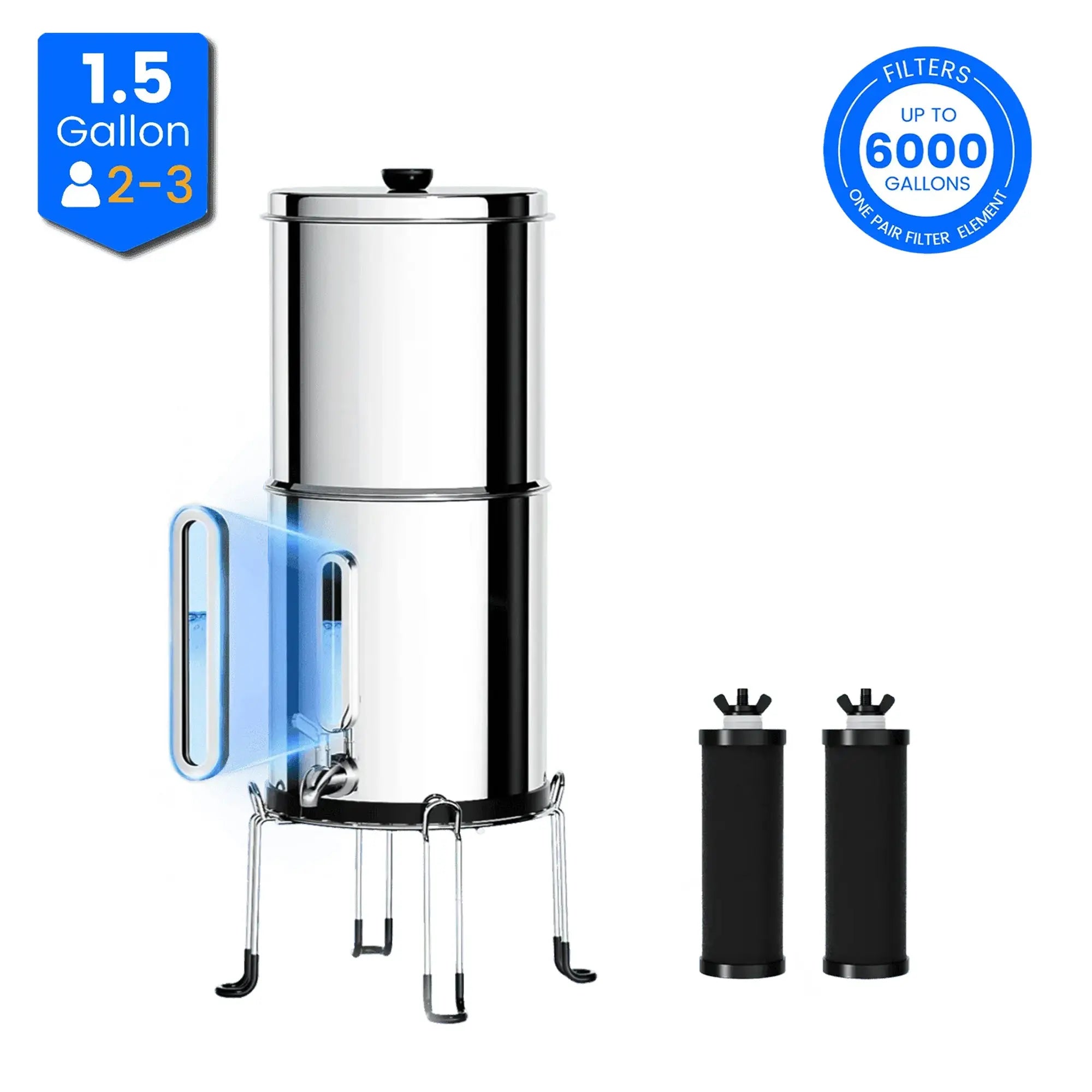
Purewell listed a two-filter box of K Series carbon filters at $69.99, with a rated capacity of up to 6,000 gallons per box under the stated conditions. Berkey recommends replacement of two Black Berkey elements after a combined 6,000 gallons, although source-water quality may shorten actual service life.
Rated capacity should never be treated as a guaranteed number of gallons. Sediment, source-water chemistry, maintenance, usage frequency, and filter condition can all affect service life.
A lower-priced filter may become expensive if it requires frequent replacement. A higher-priced filter may not provide good value if its features do not match your water source. Compare the complete ownership cycle rather than only the first checkout price.
Purewell K Series vs. Big Berkey: Side-by-Side Comparison
The following comparison uses the Purewell K Series 2.25 Gallon system and the Big Berkey because they share the same nominal storage capacity.
| Comparison Point | Purewell K Series 2.25 Gallon | Big Berkey 2.25 Gallon |
|---|---|---|
| Current listed price | $189.99 | $367 |
| System capacity | 2.25 gallons | 2.25 gallons |
| Recommended users | Approximately 3–5 | Approximately 1–4 |
| Chamber material | 304 stainless steel | AISI 304 stainless steel |
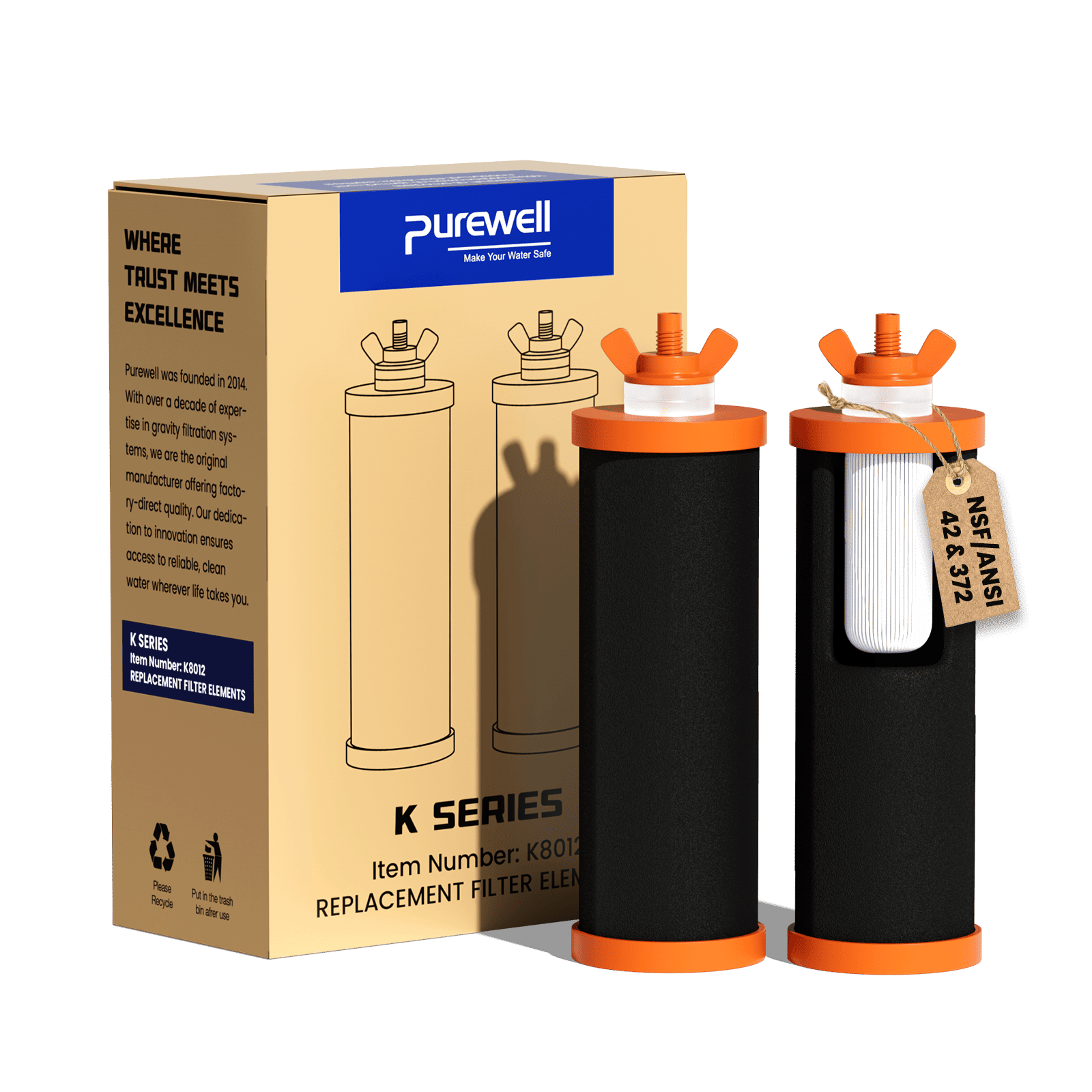
| Included core filters | Two K Series carbon filters | Two Black Berkey elements |
| Published maximum flow | Up to 4 gallons per hour | Up to 3.5 gallons per hour with two elements |
| Published filter capacity | Up to 6,000 gallons per two-filter box | Approximately 6,000 gallons per two-element set |
| Water-level visibility | Built-in viewing window | Sight-glass spigot available separately |
| Filter expansion | Core-filter variants and specialty options | Can expand from two to four primary elements |
| Electricity or plumbing | Not required | Not required |
| Current availability notes | Listed in stock at time of review | Manufacturer lists limited supply; dealer availability varies |
| Regional sales notes | Check current shipping coverage | Not available for consumer sale in California or Iowa |
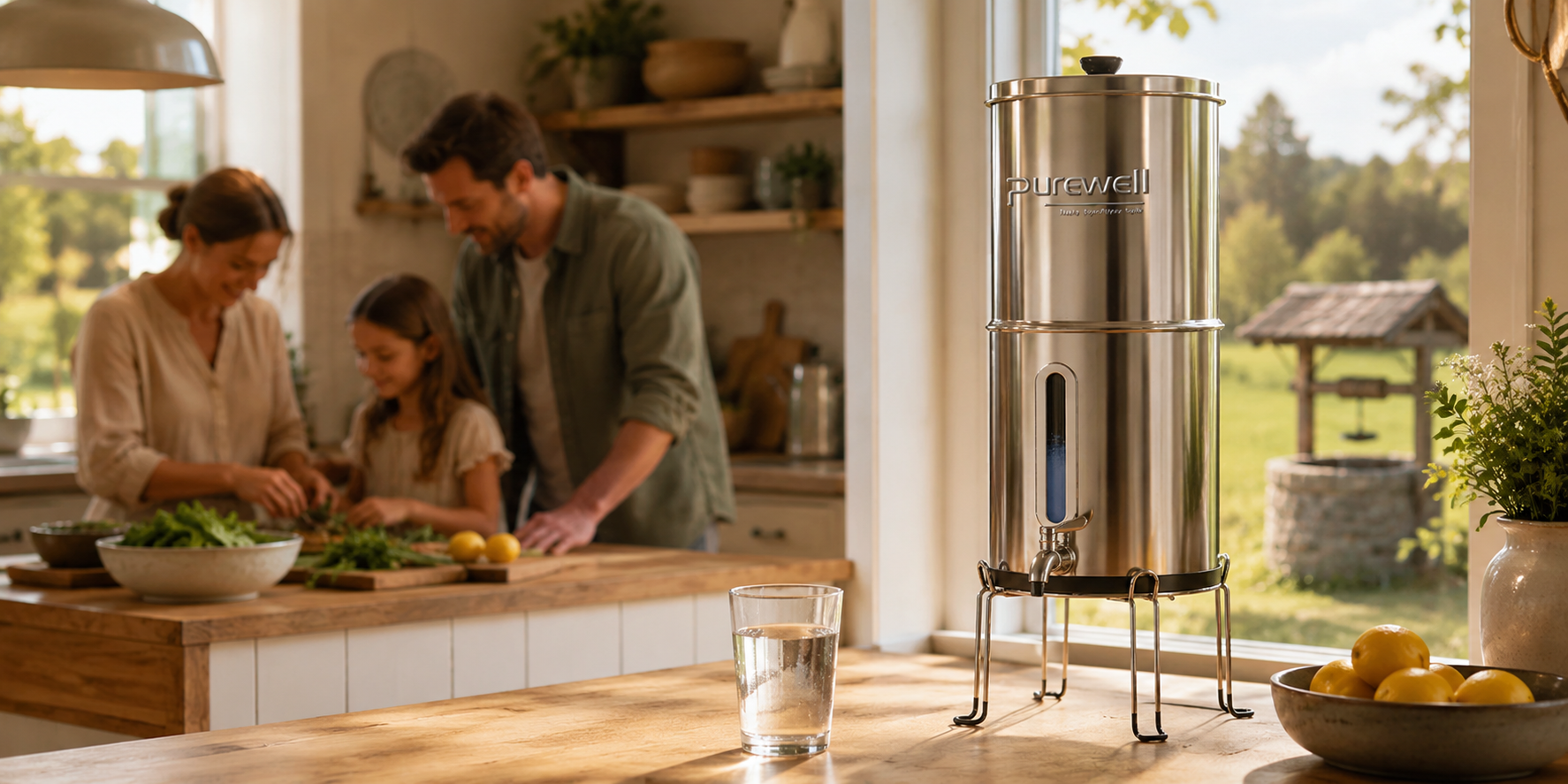
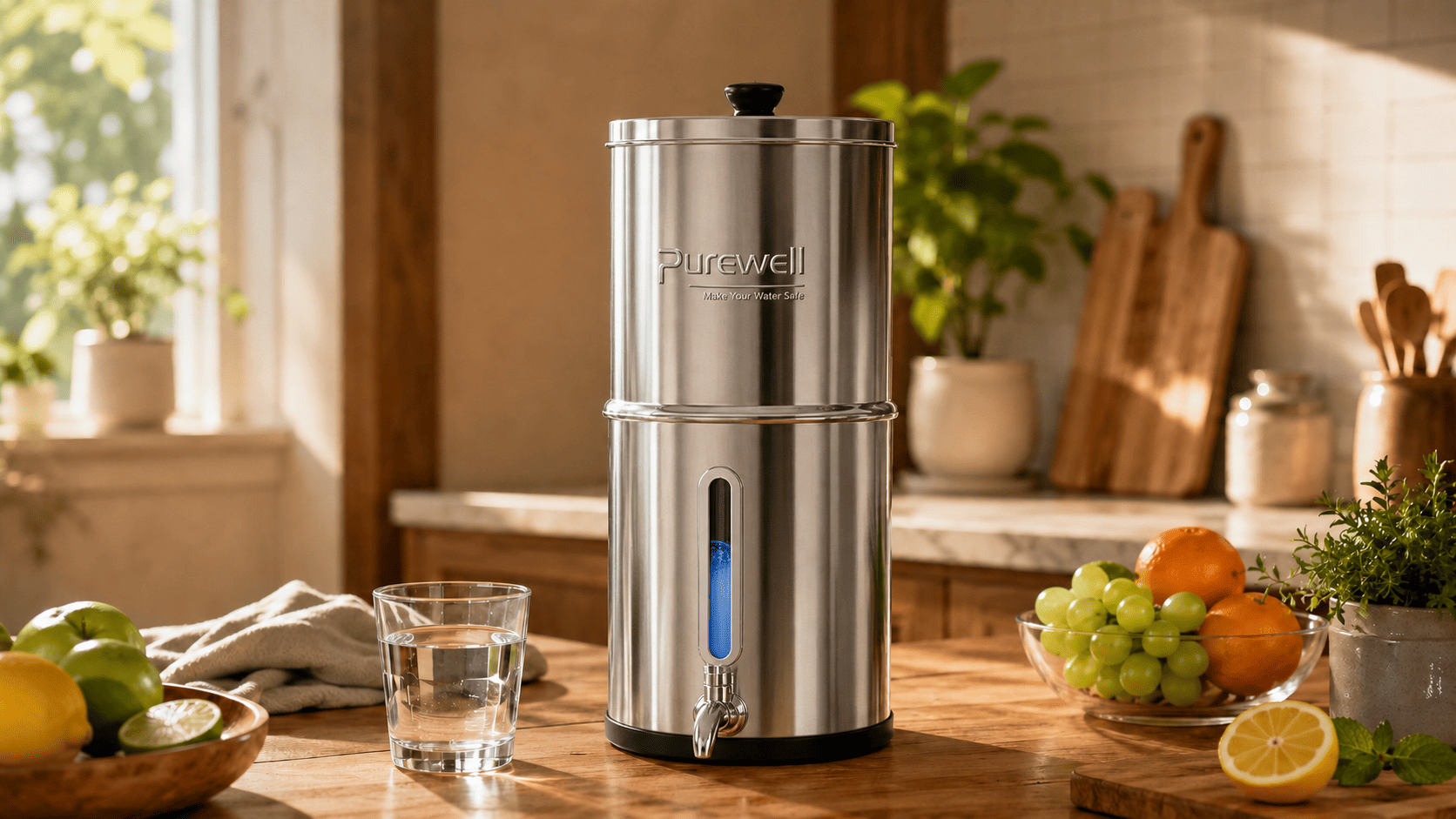
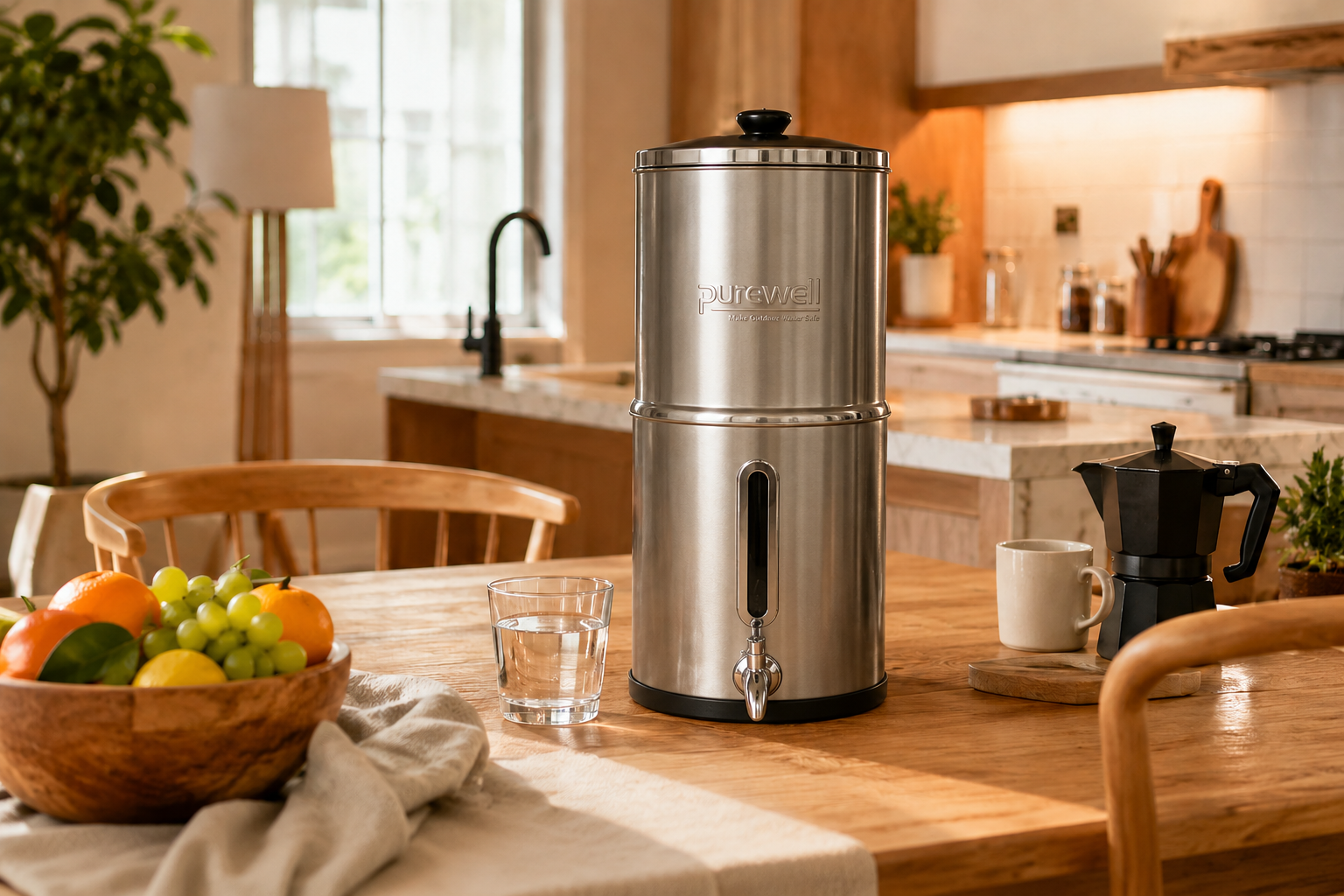
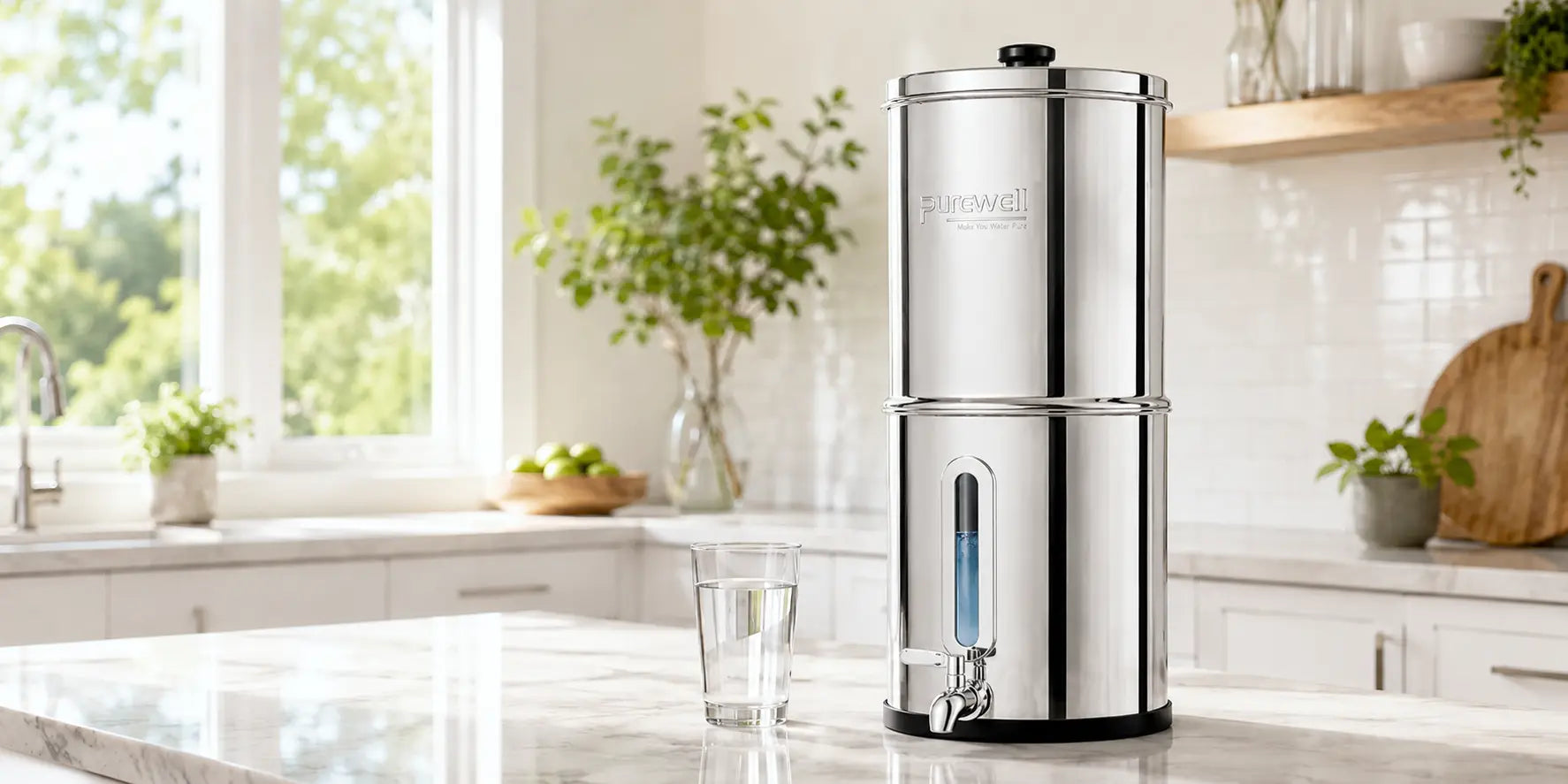
Purewell product specifications list 304 stainless steel, a built-in water-level window, two 0.01-micron UF carbon filters, and a system size of approximately 22 × 66 centimeters with the stand installed.
The Big Berkey uses AISI 304 stainless steel, includes two Black Berkey elements, and can accommodate up to four primary elements. Berkey lists a height of approximately 19.25 inches for the manufacturer configuration, while authorized retailer configurations may include a stand or differ slightly in listed total height.
Prices, configurations, and inventory should be reconfirmed immediately before publication or purchase.

Everyday User Experience: Small Features Matter
Technical specifications are important, but daily usability often determines whether a filter continues to be used correctly.
Monitoring the Lower Chamber
A common challenge with two-chamber gravity systems is knowing how much water remains in the lower chamber.
Adding too much water to the upper chamber while the lower chamber is already full can cause water to escape between the chambers. A built-in water-level window allows the user to check the lower chamber before refilling.
The Purewell K Series includes an integrated viewing window. The standard Big Berkey package includes a conventional spigot, while a sight-glass spigot is available as a separate accessory.
This does not change filtration performance, but it can improve refill management.
Filter Priming
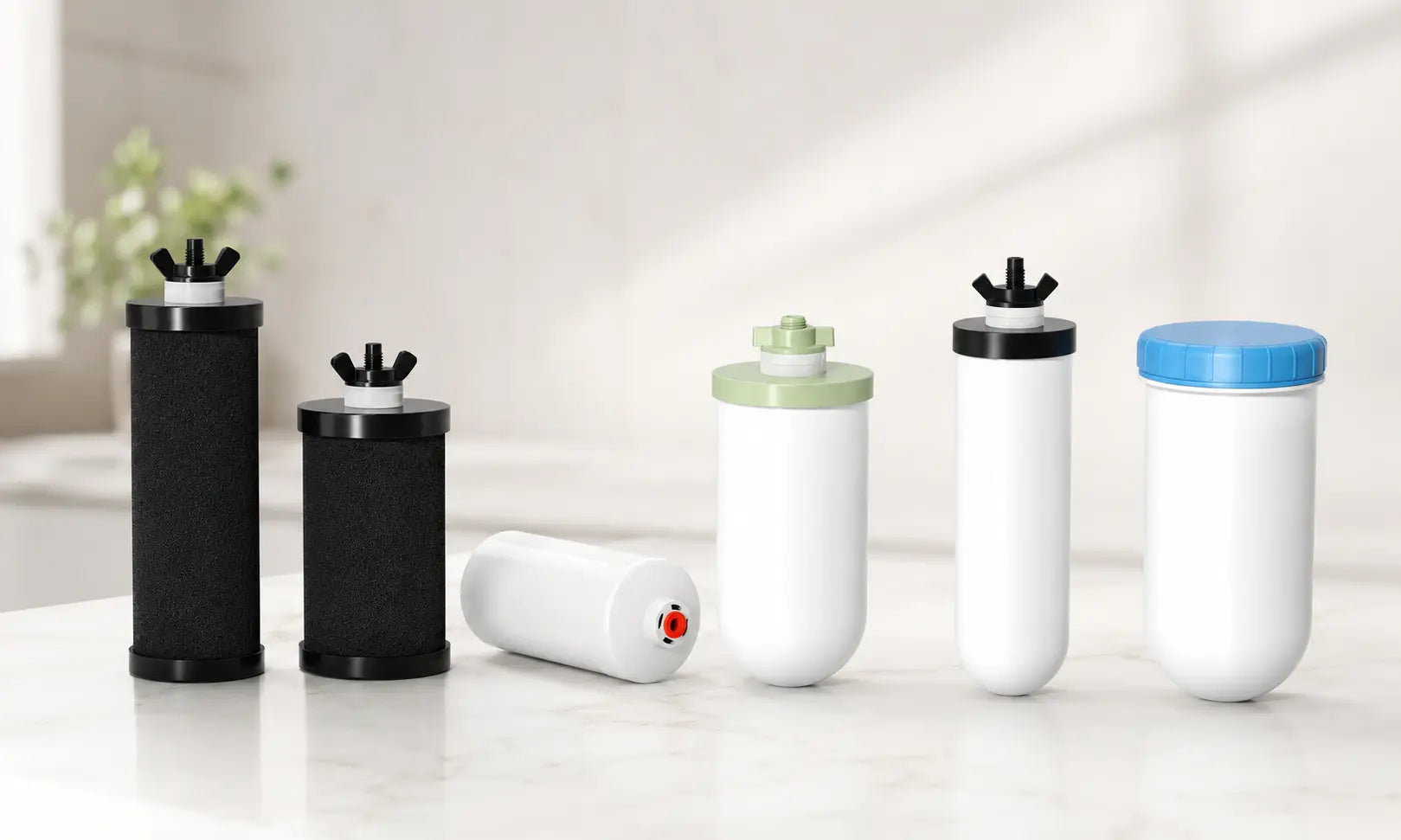
Carbon filter elements commonly require rinsing or priming before first use. Proper preparation removes loose manufacturing dust and helps displace trapped air that could restrict water flow.
Purewell instructs users to rinse its carbon filters before installation and discard the first batch of filtered water. Berkey also provides priming tools and instructions for its elements.
Whichever system you choose, follow the model-specific instructions rather than using a generic online tutorial.
Cleaning and Maintenance
The chambers should be emptied and cleaned periodically. Washers, seals, spigots, and threaded connections should be checked for correct installation.
Replace filters when:
- Their rated capacity has been reached
- Normal flow cannot be restored
- Unwanted taste or odor returns
- A filter is cracked or damaged
- The manufacturer’s recommended service period has passed
Do not assume that an old filter remains effective simply because water is still passing through it.

Which System Fits Each Type of User?
For Everyday Household Use
A household looking for an affordable Berkey alternative may prefer Purewell because of its lower initial price, comparable 2.25-gallon capacity, built-in water-level window, and multiple K Series filter configurations.
The Big Berkey may appeal to buyers who prefer the established Berkey system format, want the option to expand to four primary elements, or already own compatible Berkey accessories.
For Apartments and Rental Homes
Both systems can operate without modifying plumbing, making them relevant for renters.
Before purchase, measure the full height of the system, including the stand and the clearance needed to remove the lid and refill the upper chamber.
For RV Users
An RV user should consider more than capacity.
Check:
- Cabinet and countertop clearance
- Filled system weight
- Whether the chambers can nest for storage
- Whether the unit can be secured while driving
- Access to replacement filters during long trips
- The safety of campground or off-grid water sources
Do not operate or transport a filled gravity system while the vehicle is moving unless the manufacturer specifically provides a secure method.
For Camping
A countertop gravity filter can work well at a base camp where weight and space are less restrictive.
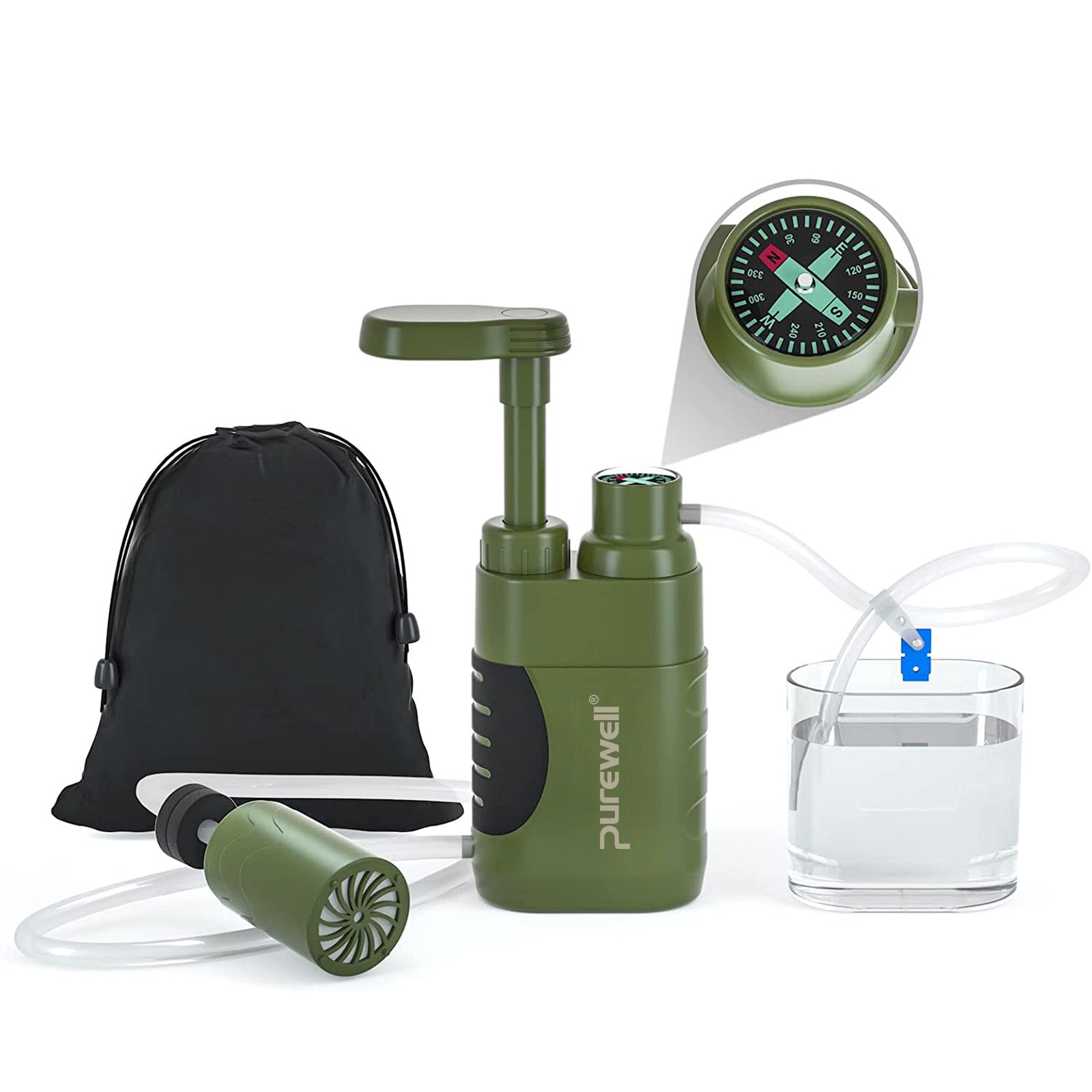
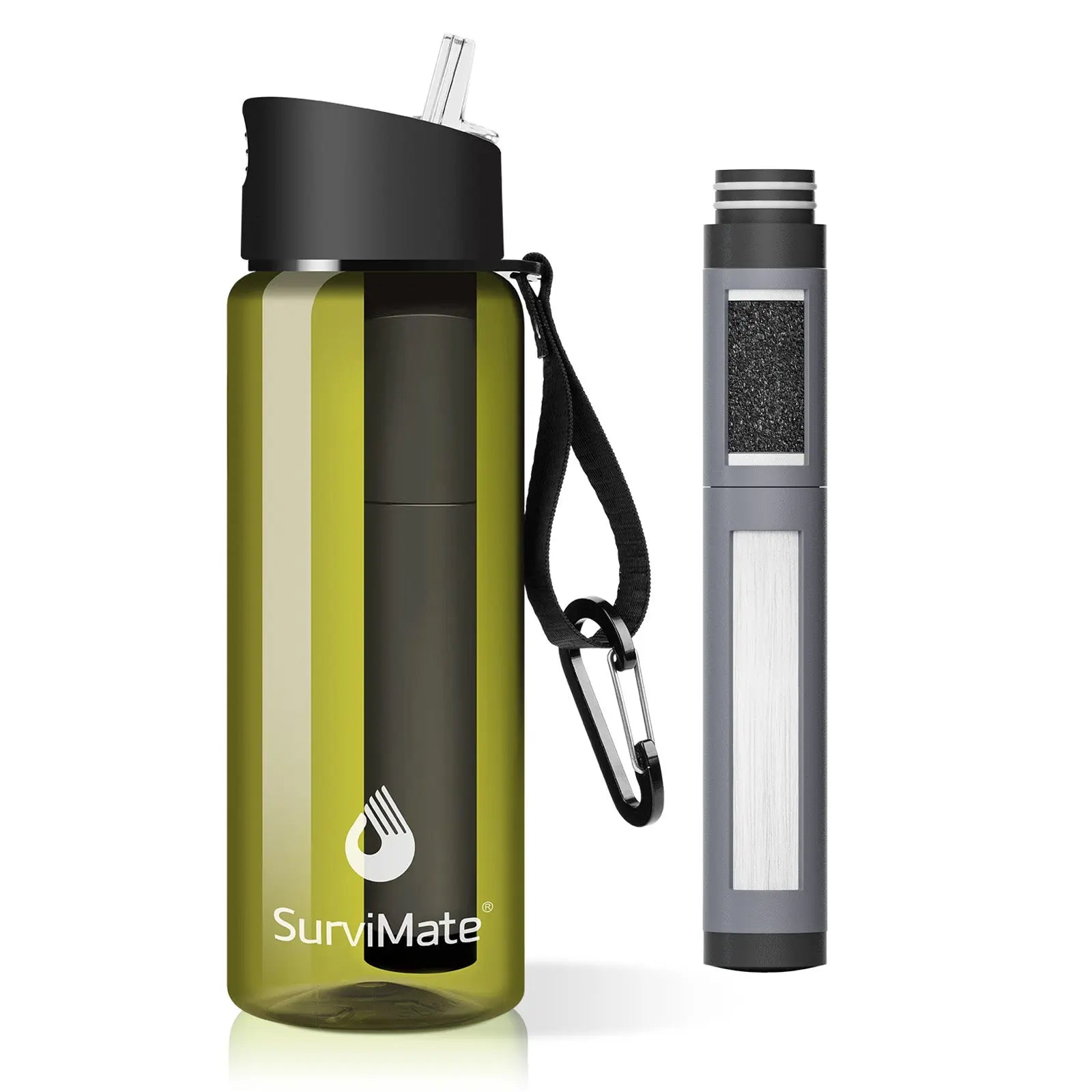
For backcountry use, however, a full stainless steel countertop unit is generally less portable than a compact pump, squeeze filter, purifier, or treatment kit.
When collecting water from lakes, rivers, or streams, follow CDC guidance: boiling is the preferred method for killing germs, and filtering followed by disinfection is the next recommended approach when boiling is not possible.
For Emergency Preparedness
A gravity system is valuable because it can continue operating without electricity. It can also process more water than many small personal filters.
Still, it should be one part of a broader plan that includes:
- Stored drinking water
- Sanitized containers
- A backup treatment method
- Fuel or disinfection supplies
- Replacement filters
- Instructions stored with the system
- A method for identifying chemical contamination or official advisories
During a boil-water advisory, follow the advisory even when using a household filter. CDC guidance states that tap water should still be boiled during such advisories unless authorities provide different instructions.
Final Buying Checklist
Before selecting a Berkey alternative, confirm the following:
Water and Performance
- What is the source of the water?
- Have you reviewed a municipal water report or tested your well?
- Which exact substances do you want to reduce?
- Does the selected filter configuration address those substances?
- Is the claim supported by an accessible certificate or test report?
System Design
- Does the capacity match your daily use?
- Can the system fit under your cabinets?
- Is the lower-chamber water level visible?
- How many filters are required?
- Can flow be expanded if your household needs more water?
Ownership Cost
- What is included in the initial purchase?
- What does a full replacement set cost?
- Are specialty filters required?
- Are replacement elements consistently available?
- Are optional stands, spigots, or primers needed?
Maintenance
- How are the filters primed?
- How often should the chambers be cleaned?
- How will you track filter age and estimated water volume?
- What signs indicate that the filters need replacement?
- Are installation videos and support documents available?
The best gravity water filter alternative is the one whose verified performance, size, maintenance requirements, and ownership cost match your real water situation.
Summary: Is Purewell a Good Berkey Alternative?
Purewell and Berkey both offer stainless steel, countertop gravity water filters that operate without electricity or permanent plumbing.
The Big Berkey remains a recognizable option with a 2.25-gallon capacity, an expandable filter configuration, and an established accessory ecosystem.
The Purewell K Series 2.25 Gallon offers the same nominal capacity at a substantially lower current listed price. It also includes a built-in water-level window, 304 stainless steel construction, two core filters, and several filtration configurations.
Purewell may be the stronger choice for buyers prioritizing:
- Lower upfront cost
- Built-in water-level visibility
- Multiple core-filter options
- Accessible certification and testing documents
- A system designed for approximately three to five users
Berkey may remain attractive for buyers prioritizing:
- The Berkey product ecosystem
- Expansion to four primary elements
- Existing Berkey-compatible parts
- Familiarity with the brand and system design
Neither brand should be selected on reputation, price, or a long list of claims alone. Match the exact filter to your water source and confirm the supporting evidence.
Frequently Asked Questions
What is the best Berkey alternative?
The best alternative depends on your water source, household size, budget, desired filter claims, and maintenance preferences. For buyers seeking a similarly sized stainless steel gravity system at a lower upfront price, the Purewell K Series 2.25 Gallon is one option to consider.
Is Purewell cheaper than Berkey?
At the time of this comparison, Purewell listed its K Series 2.25 Gallon system at $189.99, while authorized Berkey retailers listed the Big Berkey at $367. Prices and promotions can change.
Do Purewell and Big Berkey have the same capacity?
The compared models both have a nominal lower-chamber capacity of approximately 2.25 gallons.
Do gravity water filters remove every contaminant?
No. Filter performance depends on pore size, media, contact time, system design, water quality, and maintenance. Review the exact certification or test report for the installed filter rather than assuming broad protection.
Is NSF/ANSI 372 proof that a filter removes lead?
No. NSF/ANSI/CAN 372 evaluates the lead content of wetted product materials. Lead reduction from source water requires a separate performance claim supported by the appropriate certification or testing.
Can I use a countertop gravity filter with river or lake water?
Only when the installed filter is specifically designed and documented for the relevant risks. The CDC recommends boiling uncertain water or filtering and then disinfecting it. Do not assume that clear water or a general “outdoor” claim means the water is safe to drink.
How long do gravity water filter elements last?
Service life varies by filter model, source-water quality, sediment, usage, and maintenance. Both compared two-filter configurations publish capacities around 6,000 gallons under their stated conditions, but actual replacement may be needed sooner.
Are gravity filters suitable for emergencies?
They can be useful because they do not require electricity. However, they should be combined with stored water and backup treatment methods. Ordinary filtration cannot make water contaminated with fuel, toxic chemicals, or radioactive substances safe.
Choose a Gravity Filter That Fits Your Routine
A dependable water-filter system should fit the way you actually live—not just look impressive on a countertop.
Explore the full range of Purewell Gravity Water Filter Systems, or review the Purewell K Series 2.25 Gallon Gravity Water Filter for a stainless steel, electricity-free system with an integrated water-level window.
Before choosing a filter configuration, review the corresponding Purewell Water Filter Test Reports and Certificates and select the option that matches your source water and filtration priorities.
Editorial and Trademark Disclosure
Purewell manufactures and sells gravity water filtration products and is therefore a commercial participant in the category discussed in this article. Product specifications were compared using publicly available manufacturer, authorized-retailer, NSF, EPA, and CDC information.
Berkey and Big Berkey are trademarks of their respective owner. References to Berkey are used only for factual comparison and product-identification purposes. Purewell is not affiliated with or endorsed by Berkey or New Millennium Concepts, Ltd.